listicle
Best Epoxy Floor Coating for Industrial Use
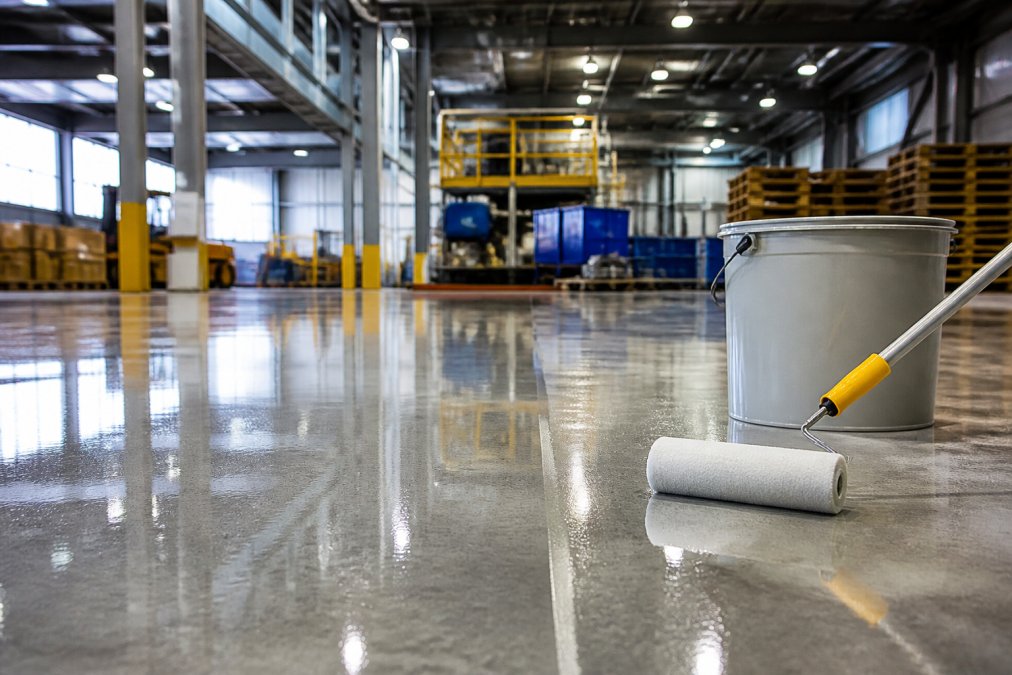
Table of Contents
- Top Epoxy Floor Coatings for Industrial Environments
- Feature Comparison Table
- How We Evaluated These Coatings
- Industrial Epoxy Floor Coating Cost Per Square Foot
- Chemical Resistant Floor Coatings for Warehouses
- Epoxy vs Polyurea for Industrial Floors
- Surface Preparation and Application Requirements
- Common Application Failures and How to Avoid Them
Last Updated: August 21, 2026
Top Epoxy Floor Coatings for Industrial Environments
When your warehouse floor takes a beating from heavy machinery, chemical spills, and constant foot traffic, a standard concrete coating won't cut it. You need something engineered for punishment. The best epoxy floor coating for industrial use combines high-solids content, chemical resistance, and durability that lasts years, not months.
The challenge most facility managers face is finding the right coating for their specific environment. A coating that excels in a food processing plant might fail in a manufacturing facility exposed to solvents. The wrong choice leads to peeling, cracking, and costly reapplication within a year. The right choice protects your investment for a decade or more.
At Concrete-Enhancements, we've worked with commercial property managers across the region for over 20 years. Below, we've evaluated the leading industrial epoxy floor coatings based on abrasion resistance, chemical tolerance, curing times, and real-world durability.
1. Rust-Oleum 9100 High Solids Epoxy
Rust-Oleum's 9100 is the workhorse choice for facilities that can't afford downtime. This two-component, high-solids epoxy builds thick protective layers in a single coat. The 1:1 mixing ratio simplifies field application, and multiple activator options (standard, immersion, low-temp, fast cure) let you adapt to your environment.
You can apply it directly to rusted steel, clean metal, concrete, and slightly damp surfaces, a significant advantage if your facility can't be shut down for days of surface prep. Superior corrosion protection, thick single-coat coverage, and proven performance in manufacturing plants and indoor parking structures make it reliable.
You'll need a separate polyurethane topcoat if outdoor UV exposure is a factor. The activator must be purchased separately, adding to your total material cost.
2. Versatile Building Products 4800 100% Solids Epoxy
If VOC compliance and environmental impact matter to your facility, the Versatile 4800 eliminates the problem entirely. This 100% solids, solvent-free epoxy produces zero volatile organic compounds, allowing adjacent work areas to stay operational while you're coating.
The 100% solids formulation means maximum film thickness with zero shrinkage. What you apply is what you get. That translates to superior durability and a finish that holds up under heavy machinery traffic and chemical spills. The high-gloss finish resists staining and cleans easily, which matters in food production, pharmaceutical, or chemical storage facilities.
Surface preparation is non-negotiable. Concrete must be properly profiled and free of moisture. If your substrate is compromised, this coating will highlight every flaw.
3. Sherwin-Williams General Polymers 3745 Epoxy
Sherwin-Williams 3745 is the choice for facilities demanding extreme hardness and chemical tolerance. This self-leveling, two-component epoxy builds an exceptionally hard surface that resists impact, abrasion, and a broad spectrum of industrial chemicals, solvents, oils, salts, and caustics.
The self-leveling property flows out and settles into uniform thickness without brush marks or application defects, critical in high-visibility areas. It can be applied directly over a properly primed substrate or used as a gloss seal coat over broadcast floors.
Pricing requires direct contact with Sherwin-Williams. Proper priming is essential; the coating won't perform without it.
4. KOSTER MPE Multi-Purpose Epoxy
KOSTER MPE is the low-odor option for facilities where worker comfort and adjacent operations matter. This 100% solids, two-component epoxy produces minimal odor during application, allowing surrounding areas to remain occupied, a major advantage in multi-tenant facilities, hospitals, or food production plants.
You can use it as an embedding coat for colored chips or quartz aggregates, as a seal coat, or as a finish topcoat. That flexibility means you can adjust your design on the fly or adapt to budget constraints by phasing applications.
For maximum scratch and UV resistance, topcoat with a urethane product, adding cost and complexity. Pricing requires direct contact with KOSTER USA.
5. Sikafloor-264 N LO
Sikafloor-264 N LO is the economical choice for facilities with normal to medium mechanical and chemical stress, warehouses, distribution centers, workshops, and parking garages where you need solid protection without the premium price tag.
This low-odor, two-component epoxy resin delivers good chemical and mechanical resistance while keeping material costs reasonable. The self-leveling property produces a smooth, glossy finish, and you can add aggregate or broadcast materials for slip resistance where needed.
Proper surface preparation is critical; the substrate must be diamond-ground or acid-etched. The coating performs best in normal to medium-stress environments; for heavy-traffic or high-chemical-exposure settings, a higher-performance option is worth the investment.
Feature Comparison Table
| Coating | Type | Solids Content | VOC Status | Best For | Key Advantage |
|---|---|---|---|---|---|
| Rust-Oleum 9100 | High-solids epoxy | 70%+ | Contains VOCs | General industrial | Versatile surface compatibility |
| Versatile 4800 | 100% solids epoxy | 100% | Zero VOC | Regulated environments | Maximum durability, no emissions |
| Sherwin-Williams 3745 | Self-leveling epoxy | High | Contains VOCs | Chemical-intensive facilities | Extreme hardness, broad chemical resistance |
| KOSTER MPE | 100% solids epoxy | 100% | Zero VOC | Multi-use applications | Low odor, fast cure |
| Sikafloor-264 N LO | Two-component epoxy | Standard | Low odor | Medium-stress warehouses | Cost-effective, good performance |
How We Evaluated These Coatings
We assessed each coating across five critical dimensions: abrasion resistance, chemical resistance, application flexibility, curing time, and real-world durability. Solids content emerged as the primary performance indicator. Coatings with 70% or higher solids content build thicker protective layers per coat, translating to longer service life. 100% solids formulations eliminate VOC concerns entirely, making them essential for regulated environments.
We also weighted surface preparation requirements heavily. A coating that performs brilliantly on properly prepared concrete but requires extensive grinding is less practical than one offering flexibility, especially in commercial settings where downtime costs money.
Industrial Epoxy Floor Coating Cost Per Square Foot
Material costs for the best epoxy floor coating for industrial use vary significantly based on solids content, brand, and application method. Higher-performance coatings with 100% solids formulations typically command a premium, but the longer service life often justifies the investment.
Labor costs depend on substrate condition and facility size. A warehouse with well-maintained concrete costs less per square foot than a facility with cracks, moisture issues, or complex layouts requiring detailed surface prep.
For accurate pricing on Concrete-Enhancements services, contact us directly at (919) 824-5403 or email craigrfear@gmail.com for a free estimate. We'll assess your specific substrate, traffic patterns, and chemical exposure to recommend the right coating and provide transparent pricing.
Call (919) 824-5403 or email craigrfear@gmail.com for a free estimate →
Chemical Resistant Floor Coatings for Warehouses
Warehouses storing chemicals, oils, solvents, or caustic compounds need coatings engineered specifically for chemical resistance. The best epoxy floor coating for industrial use in chemical-heavy environments must resist not just contact but also vapor penetration and long-term degradation.
Look for coatings explicitly rated for the specific chemicals you store. Rust-Oleum 9100 and Sherwin-Williams 3745 both deliver broad-spectrum chemical tolerance, making them reliable choices for multi-use warehouses where the chemical inventory shifts.
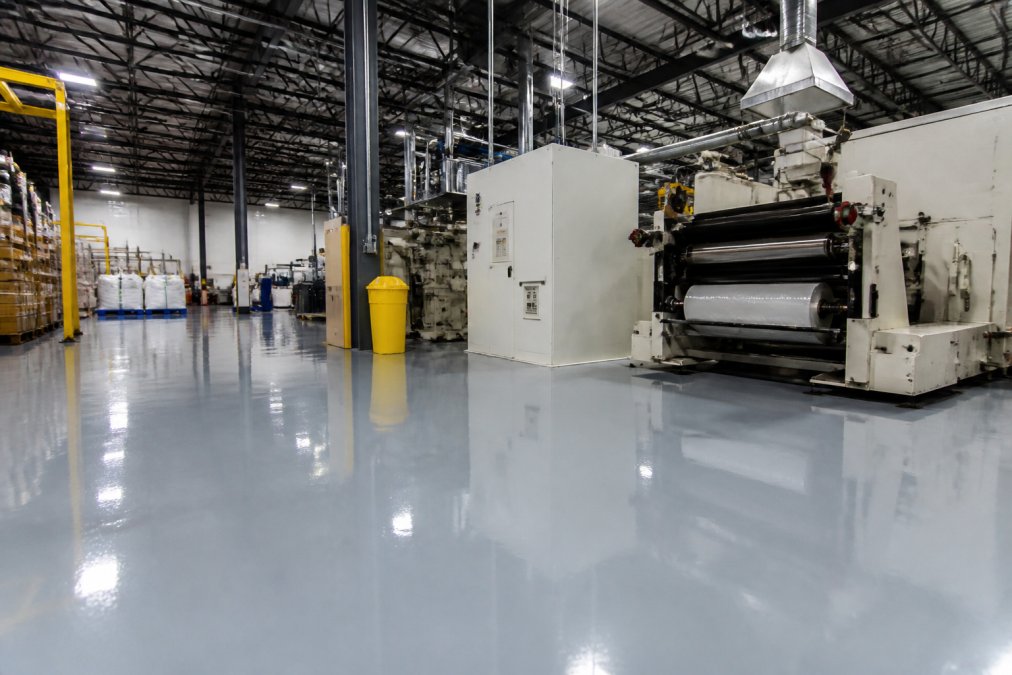
100% solids coatings like Versatile 4800 and KOSTER MPE eliminate VOC emissions while providing superior chemical barriers. The gloss finish makes spills visible immediately, and the smooth, non-porous surface prevents chemicals from soaking into concrete, which would otherwise compromise the substrate over time.
Epoxy vs Polyurea for Industrial Floors
Epoxy coatings cure through a chemical reaction between resin and hardener. They're rock-hard when cured, offering exceptional durability and chemical resistance. They require 24-72 hours of cure time before the floor can handle traffic (astm.org).
Polyurea coatings cure much faster, often within 4-8 hours, and remain more flexible even when fully cured. That flexibility means polyurea tolerates thermal shock better, and it's more forgiving on substrates with minor movement.
For industrial facilities, epoxy wins on cost-effectiveness and chemical resistance. Polyurea wins on speed and thermal tolerance. Concrete-Enhancements specializes in epoxy applications because the chemical resistance, durability, and cost-effectiveness align with what most industrial facilities actually need.
Surface Preparation and Application Requirements
The best epoxy floor coating for industrial use will fail catastrophically if applied to a poorly prepared substrate. Surface preparation determines 80% of coating success.
Concrete substrate must be profiled to open the pores and remove contaminants through diamond grinding, shot blasting, or acid etching. Diamond grinding is the most common method in industrial settings, removing the top layer of concrete and creating mechanical texture for the coating to grip.
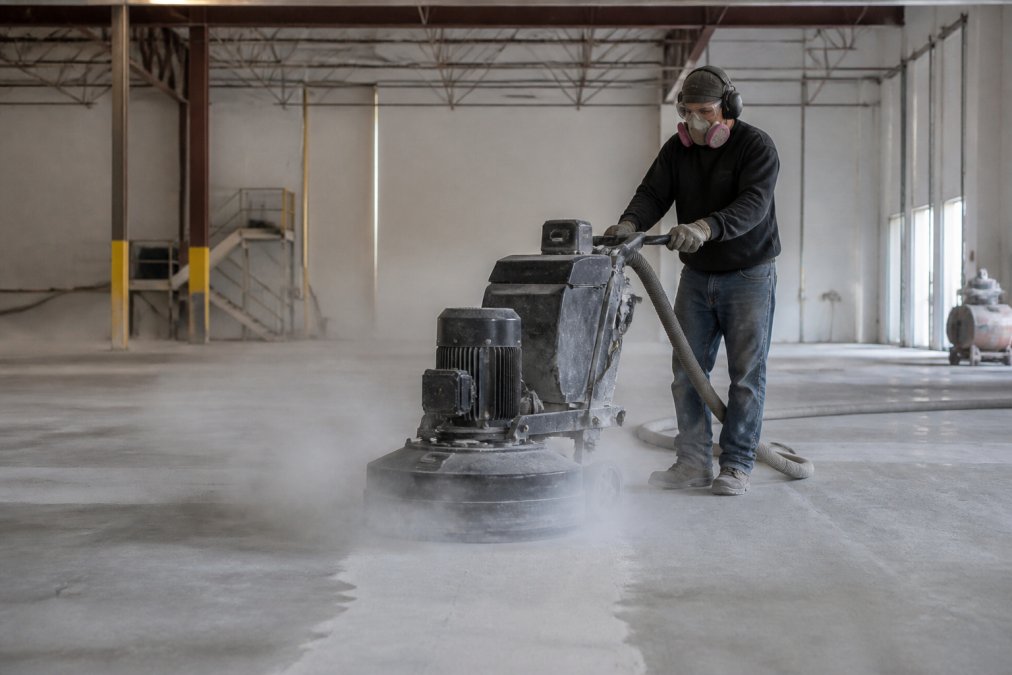
Moisture is the silent killer. Concrete that appears dry can contain moisture vapor that will cause the coating to blister, peel, or fail within months. Moisture vapor transmission testing (MVTR) should be performed before application.
Application temperature matters. Most epoxies perform best between 50-85°F. Check the technical data sheet for your specific product; application windows are narrow. Two-component coatings must be mixed at the exact ratio specified. Application thickness is critical, most industrial epoxies require 3-6 mils dry film thickness.
Common Application Failures and How to Avoid Them
Peeling and blistering within 12 months is almost always caused by moisture in the substrate or trapped during application. Solution: perform moisture vapor transmission testing before application. If MVTR exceeds limits, install a moisture mitigation system or choose a moisture-tolerant primer.
Yellowing and discoloration occur when the coating is exposed to UV light without a UV-stable topcoat. Solution: if your facility has windows or outdoor exposure, specify a polyurethane topcoat over the epoxy.
Cracking occurs when the coating is too thick or applied in cold conditions. Solution: apply within the recommended temperature range and don't exceed the maximum dry film thickness.
Poor adhesion happens when the substrate is contaminated or insufficiently profiled. Solution: perform thorough surface prep with diamond grinding to at least a CSP (Concrete Surface Profile) of 3.
Slipperiness on glossy finishes is a safety issue in wet environments. Solution: add non-skid aggregate during application or specify a textured topcoat.
Choosing the best epoxy floor coating for industrial use requires matching the product to your specific environment. Chemical exposure, traffic load, temperature swings, and downtime tolerance all factor in. Rust-Oleum 9100 and Versatile 4800 are the top performers across most industrial settings, but Sherwin-Williams 3745 and KOSTER MPE excel in specialized applications.
Concrete-Enhancements has installed hundreds of industrial epoxy systems across the region. Material choice is only half the battle. Proper surface preparation, correct application technique, and realistic curing conditions determine whether your coating lasts five years or fifteen. Call (919) 824-5403 or email craigrfear@gmail.com for a free estimate and consultation on which coating system makes sense for your operation.
Frequently Asked Questions
What is the best epoxy floor coating for industrial floors?
The best choice depends on your specific environment. Rust-Oleum 9100 and Versatile Building Products 4800 excel in high-traffic warehouses with heavy machinery. For chemical exposure, Sherwin-Williams General Polymers 3745 offers superior resistance. KOSTER MPE works well as a versatile, cost-effective option. Assess your concrete substrate condition, chemical exposure, traffic load, and curing time requirements before deciding. Professional installation ensures proper surface preparation and adhesion, preventing peeling or premature failure.
What kind of epoxy do professionals use for high-traffic areas?
Professionals typically specify high-solids or 100% solids epoxy formulations for high-traffic industrial floors. These include Rust-Oleum 9100 (high solids with excellent abrasion resistance), Versatile Building Products 4800 (100% solids for maximum durability), and Sherwin-Williams General Polymers 3745 (self-leveling with extreme hardness). High-solids formulas create thicker coatings with better impact and abrasion resistance than thin-mil options. Many professionals apply a primer coat followed by a topcoat system to maximize performance and longevity under constant foot and equipment traffic.
How long does industrial epoxy floor coating last?
Industrial-grade epoxy coatings typically last 5-10 years in high-traffic warehouses and manufacturing plants, depending on traffic intensity, chemical exposure, and maintenance. Heavy machinery and constant foot traffic accelerate wear. Proper surface preparation, correct application thickness, and regular cleaning extend lifespan significantly. Moisture control is critical; high humidity or moisture vapor transmission through the concrete substrate causes premature peeling. Professional installation and using high-build formulations (rather than thin-mil coatings) generally result in longer-lasting protection.
What are the key differences between epoxy and polyurea floor coatings?
Epoxy coatings offer excellent chemical resistance, durability, and cost-effectiveness, with longer working times that allow proper application on large areas. Polyurea coatings cure much faster (hours instead of days), minimizing downtime, and provide superior flexibility for thermal shock resistance. Polyurea is better for temperature-sensitive environments; epoxy is better for chemical exposure and budget-conscious projects. Both require proper surface preparation. Epoxy is more forgiving for DIY or first-time applications, while polyurea demands professional expertise due to rapid cure times.
What should I look for when choosing an industrial epoxy floor coating?
Evaluate these factors: (1) Chemical exposure, select formulations rated for specific chemicals in your facility; (2) Traffic type, heavy machinery requires high-build, abrasion-resistant coatings; (3) Substrate condition, moisture issues demand moisture-cured urethane or epoxy primers; (4) Curing time, fast-cure systems minimize downtime but require professional application; (5) Slip resistance, important for safety in wet areas; (6) VOC compliance, low-VOC options meet environmental regulations. Concrete substrate porosity and moisture vapor transmission rates also affect coating selection and longevity.
This article was written using GrandRanker
Frequently Asked Questions
The best choice depends on your specific environment. Rust-Oleum 9100 and Versatile Building Products 4800 excel in high-traffic warehouses with heavy machinery. For chemical exposure, Sherwin-Williams General Polymers 3745 offers superior resistance. KOSTER MPE works well as a versatile, cost-effective option. Assess your concrete substrate condition, chemical exposure, traffic load, and curing time requirements before deciding. Professional installation ensures proper surface preparation and adhesion, preventing peeling or premature failure.
Professionals typically specify high-solids or 100% solids epoxy formulations for high-traffic industrial floors. These include Rust-Oleum 9100 (high solids with excellent abrasion resistance), Versatile Building Products 4800 (100% solids for maximum durability), and Sherwin-Williams General Polymers 3745 (self-leveling with extreme hardness). High-solids formulas create thicker coatings with better impact and abrasion resistance than thin-mil options. Many professionals apply a primer coat followed by a topcoat system to maximize performance and longevity under constant foot and equipment traffic.
Industrial-grade epoxy coatings typically last 5-10 years in high-traffic warehouses and manufacturing plants, depending on traffic intensity, chemical exposure, and maintenance. Heavy machinery and constant foot traffic accelerate wear. Proper surface preparation, correct application thickness, and regular cleaning extend lifespan significantly. Moisture control is critical; high humidity or moisture vapor transmission through the concrete substrate causes premature peeling. Professional installation and using high-build formulations (rather than thin-mil coatings) generally result in longer-lasting protection.
Epoxy coatings offer excellent chemical resistance, durability, and cost-effectiveness, with longer working times that allow proper application on large areas. Polyurea coatings cure much faster (hours instead of days), minimizing downtime, and provide superior flexibility for thermal shock resistance. Polyurea is better for temperature-sensitive environments; epoxy is better for chemical exposure and budget-conscious projects. Both require proper surface preparation. Epoxy is more forgiving for DIY or first-time applications, while polyurea demands professional expertise due to rapid cure times.
Evaluate these factors: (1) Chemical exposure—select formulations rated for specific chemicals in your facility; (2) Traffic type—heavy machinery requires high-build, abrasion-resistant coatings; (3) Substrate condition—moisture issues demand moisture-cured urethane or epoxy primers; (4) Curing time—fast-cure systems minimize downtime but require professional application; (5) Slip resistance—important for safety in wet areas; (6) VOC compliance—low-VOC options meet environmental regulations. Concrete substrate porosity and moisture vapor transmission rates also affect coating selection and longevity.