ultimate-guide
Best Epoxy Primer for Concrete: 2026 Guide
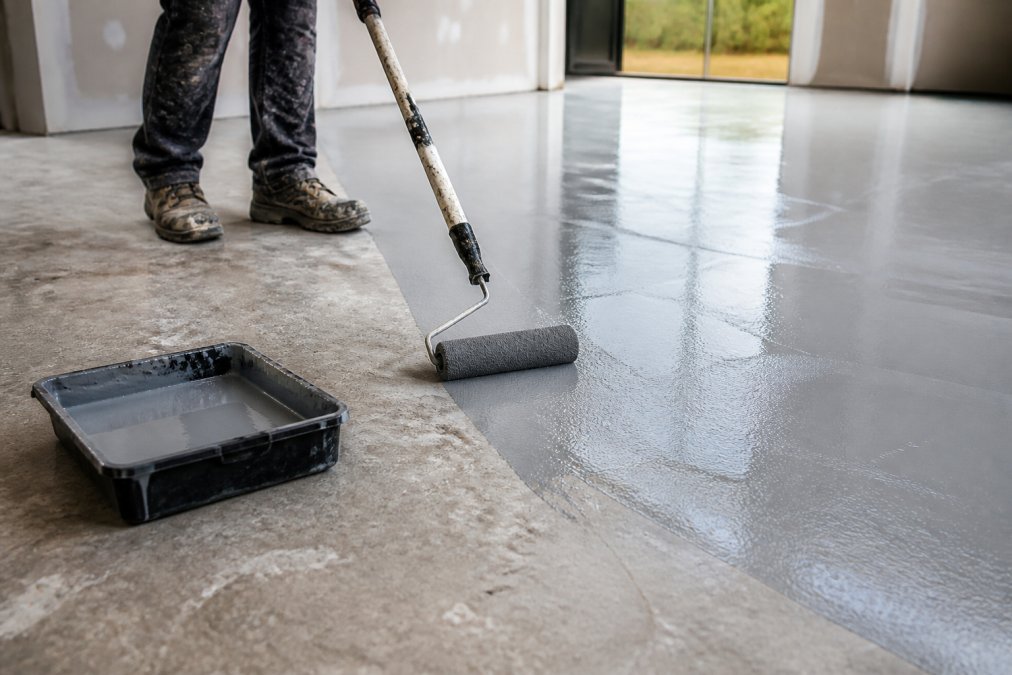
Table of Contents
- What Is Epoxy Primer for Concrete?
- Why Epoxy Primer Matters for Concrete Floors
- How to Prepare Concrete for Epoxy Primer
- Best Tools for Applying Concrete Primer
- Epoxy Primer Drying Time and Cure Schedules
- Common Application Failures and How to Avoid Them
- Epoxy Primer Options: Two-Component vs. Water-Based
- Compatibility with Topcoats and Concrete Sealers
- Frequently Asked Questions
Last Updated: September 25, 2026
What Is Epoxy Primer for Concrete?
Epoxy primer for concrete is a two-part coating system designed to create a durable bonding layer between raw concrete and protective topcoats. It works by chemically adhering to the concrete substrate, filling surface porosity, and establishing a stable foundation for floor coatings, sealers, and decorative overlays.
The primer consists of epoxy resin and a hardening agent that cure together, forming a rigid plastic coating with exceptional adhesion properties. This bonding strength is what separates epoxy primers from paint-based alternatives, they don't just sit on top of concrete, they become part of the substrate itself.
Epoxy primers serve two critical functions. First, they seal the concrete's porous surface, preventing moisture vapor transmission that would otherwise cause topcoats to peel or fail. Second, they provide mechanical and chemical resistance that protects the underlying slab from automotive fluids, cleaning agents, and environmental stress.
Most epoxy primer systems are available in standard formulations (higher solids content, stronger odor) and low VOC versions that meet air quality regulations while maintaining performance. The choice between them depends on your application, local environmental requirements, and project timeline.
Why Epoxy Primer Matters for Concrete Floors
Skipping the primer step is where most DIY epoxy projects fail. A common mistake is applying topcoat directly to bare concrete, assuming the concrete itself will provide adhesion. It won't.
Concrete is inherently porous and often contains residual moisture, dust, and contaminants that prevent chemical bonding. Without primer, topcoats sit on the surface rather than adhering to it. Within months, sometimes weeks, the coating delaminates, peels, and eventually fails completely.
The real difference between a job that lasts 10 years and one that fails in one year comes down to surface preparation and primer selection. Concrete-Enhancements has spent over 20 years perfecting this process.
Epoxy primer also manages one of concrete's biggest challenges: moisture. Even "dry" concrete contains water vapor trapped in the slab. As temperature and humidity fluctuate, this vapor migrates upward. Without a moisture-mitigating primer, vapor pressure builds beneath the topcoat, causing blistering and failure. A quality primer blocks this vapor transmission before it becomes a problem.
How to Prepare Concrete for Epoxy Primer
Surface preparation determines whether your epoxy primer bonds or fails. This is non-negotiable.
Start by assessing the concrete's condition. Look for cracks, spalling, or areas where the surface is soft or friable. These must be repaired before priming, the primer can only bond to solid substrate. Fill cracks with concrete patching compound and allow it to cure fully.
Next, address contamination. Concrete collects dust, dirt, oil residue, and efflorescence (white mineral deposits). All of this must be removed. Sweep thoroughly, then use a degreaser on any oil-stained areas. For heavy contamination, pressure wash at 3000 PSI or higher, but avoid excessive water that saturates the slab.
Moisture Testing and Vapor Barriers
Before primer application, test concrete moisture content. High moisture is the silent killer of epoxy systems.
The calcium chloride test is industry standard. It measures moisture vapor emission rate (MVER) in pounds per 1,000 square feet per 24 hours. Most epoxy primers require MVER readings below 3 lbs/1000 sq ft/24 hrs. If your concrete exceeds this, you have two options: wait longer for the slab to dry naturally, or apply a moisture-mitigating primer specifically formulated to manage vapor transmission.
Moisture-mitigating primers are often recommended for basements, below-grade spaces, and any concrete with a history of dampness. These specialized formulations contain hydrophobic components that resist moisture vapor while still allowing the epoxy system to cure properly.
A vapor barrier isn't always necessary if you're using the right primer. However, in extreme moisture conditions, a polyethylene sheet or epoxy-based vapor barrier applied before priming provides additional protection.
Mechanical Grinding vs. Acid Etching
Two methods prepare concrete surface porosity for primer adhesion: mechanical grinding and acid etching.
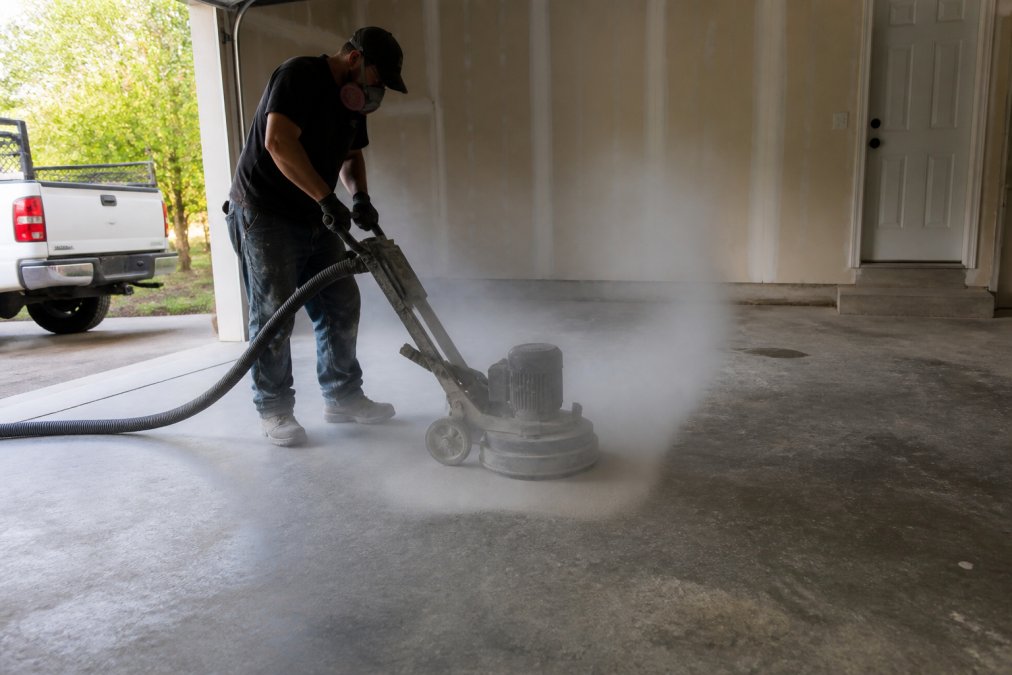
Mechanical grinding uses diamond-tipped equipment to remove the concrete's top layer, exposing fresh aggregate and increasing surface porosity. This method is superior for most applications. It removes contaminants more effectively, creates consistent surface texture, and leaves no chemical residue. The downside is dust generation and equipment cost.
Acid etching uses muriatic acid to chemically etch the concrete surface. It's cheaper and requires less equipment, but it's messier and leaves acid residue that must be neutralized and rinsed thoroughly. Incomplete rinsing causes bonding failure. Acid etching also doesn't remove oil or heavy contamination, you must degrease first anyway.
For residential applications, grinding is worth the investment. For commercial spaces where cost matters, acid etching works if you're meticulous about rinsing and drying.
Best Tools for Applying Concrete Primer
Application equipment matters as much as the primer itself. Poor application technique causes adhesion loss, uneven curing, and premature failure.
For small areas (under 500 square feet), a quality paint roller with a 3/8-inch nap works adequately. Use a roller frame with an extension pole to maintain consistent pressure. For larger areas or commercial spaces, a plural-component sprayer delivers superior results. Sprayers apply primer at uniform thickness, reduce application time, and minimize brush marks or roller lines.
Brushes are useful only for cutting in edges and filling small voids. Rollers and sprayers handle the main application. What most guides miss is that primer thickness matters, you need 3-6 mils dry film thickness (DFT) for adequate protection. A mil thickness gauge ensures you're applying enough material.
Temperature and humidity during application affect cure time and adhesion. Apply epoxy primer when concrete temperature is above 50°F and rising. High humidity can cause moisture entrapment. Avoid application in direct sunlight, which accelerates solvent evaporation and can cause surface-level curing that traps uncured material underneath.
Epoxy Primer Drying Time and Cure Schedules
Understanding the difference between drying time and full cure time prevents costly mistakes.
Drying time is when the primer surface feels hard to the touch, typically 4-8 hours for standard epoxy primers, faster for low VOC formulations. However, the primer isn't fully cured. Applying topcoat too early traps uncured material, causing adhesion failure and coating delamination.
Full cure takes 7-14 days depending on temperature, humidity, and primer formulation. During this period, the epoxy continues to harden and reach full chemical resistance. Do not subject the primed surface to moisture, traffic, or chemical exposure during cure.
A common mistake is applying topcoat after 24 hours because the surface feels dry. This is premature. Wait the full recommended cure window, usually 7 days minimum before topcoat application. Some primers require 14 days for full cure in cool or humid conditions.
The pot life of two-component primers (the time you have to apply mixed material) is typically 2-4 hours. Mix only what you can apply in this window. Partially used batches cannot be saved, they'll cure in the bucket and waste material.
Common Application Failures and How to Avoid Them
Most epoxy primer failures fall into predictable categories. Understanding these prevents expensive rework.
Peeling and delamination occur when the primer doesn't bond to concrete. Causes include inadequate surface preparation, residual dust or moisture, or applying primer to incompatible substrates. The fix: aggressive surface prep, grind or acid etch, degrease, test moisture, and allow concrete to dry completely before priming.
Blistering happens when moisture vapor escapes from beneath the primer, pushing the coating away from the substrate. This indicates either high concrete moisture or insufficient primer thickness. Prevention requires moisture testing before application and using moisture-mitigating primers in damp conditions.
Uneven cure or soft spots result from improper mixing (incorrect resin-to-hardener ratio) or contaminated material. Always mix according to manufacturer specifications. Use a scale if volume measurements are unclear. Never mix different brands or formulations.
Yellowing or discoloration occurs with some epoxy primers exposed to UV light. This is cosmetic unless the primer is also becoming soft or tacky, that indicates UV degradation of the epoxy matrix. Use UV-stable primers if the primed surface will be exposed to sunlight before topcoat application.
Fish-eye or cratering (small divots in the cured surface) happens when the primer encounters silicone contamination on the concrete. This is rare but devastating. Prevention: use a silicone-free degreaser and avoid contact with silicone-based products during application and cure.
Epoxy Primer Options: Two-Component vs. Water-Based
The best epoxy primer for concrete depends on your specific needs, environment, and regulatory constraints.
Standard two-component epoxy primers deliver maximum adhesion, chemical resistance, and durability.
| Primer Type | Solids Content | Coverage | Cure Time | Best For |
|---|---|---|---|---|
| Standard Two-Component | 70-80% | 300-400 sq ft/gal | 7-14 days | Commercial, high-traffic areas |
| Low VOC Epoxy | 65-75% | 300-400 sq ft/gal | 7-14 days | Regulated areas, eco-conscious projects |
| Water-Based Epoxy | 45-55% | 250-350 sq ft/gal | 10-21 days | Residential, climate-controlled spaces |
Compatibility with Topcoats and Concrete Sealers
Not every topcoat bonds well to every primer. Primer-topcoat compatibility determines whether your system lasts or fails.
Frequently Asked Questions
Should I prime concrete before applying epoxy topcoat?
Yes, epoxy primer is essential for concrete floors. It creates a high-bond foundation that improves adhesion between the concrete substrate and topcoat, preventing peeling and failure. Skipping primer is the leading cause of epoxy coating failure within the first year. A quality epoxy primer fills surface porosity, seals out moisture vapor transmission, and ensures the topcoat lasts 10+ years with proper maintenance.
What is the difference between water-based and solvent-based epoxy primers?
Water-based epoxy primers have lower VOC emissions, making them safer for indoor spaces and easier to clean up. Solvent-based primers offer superior penetrating power and chemical resistance, making them better for harsh commercial environments. Two-component epoxy primers (whether water or solvent-based) cure harder and bond stronger than single-component options. Choose based on your space's ventilation, regulatory requirements, and expected traffic intensity.
How do I know if my concrete needs a moisture-mitigating primer?
Perform a calcium chloride or relative humidity test on your concrete before priming. If moisture vapor transmission exceeds 3 lbs per 1,000 sq ft per 24 hours, use a moisture-mitigating primer to prevent coating failure. Signs of high moisture include efflorescence (white powder), damp spots, or a history of peeling coatings. Basement floors, pool decks, and ground-level commercial spaces almost always benefit from moisture-mitigating formulations.
What causes epoxy primer to peel, and how can I prevent it?
Peeling occurs from inadequate substrate preparation, high moisture, incompatible topcoats, or insufficient cure time before foot traffic. Prevent peeling by mechanically grinding or acid etching the concrete to proper profile, testing and mitigating moisture, using primers rated for your concrete's porosity, and allowing full cure time before topcoat application.
Tags: best epoxy primer for concrete, how to prepare concrete for epoxy primer, epoxy primer drying time, best tools for applying concrete primer
Frequently Asked Questions
Yes, epoxy primer is essential for concrete floors. It creates a high-bond foundation that improves adhesion between the concrete substrate and topcoat, preventing peeling and failure. Skipping primer is the leading cause of epoxy coating failure within the first year. A quality epoxy primer fills surface porosity, seals out moisture vapor transmission, and ensures the topcoat lasts 10+ years with proper maintenance.
Water-based epoxy primers have lower VOC emissions, making them safer for indoor spaces and easier to clean up. Solvent-based primers offer superior penetrating power and chemical resistance, making them better for harsh commercial environments. Two-component epoxy primers (whether water or solvent-based) cure harder and bond stronger than single-component options. Choose based on your space's ventilation, regulatory requirements, and expected traffic intensity.
Perform a calcium chloride or relative humidity test on your concrete before priming. If moisture vapor transmission exceeds 3 lbs per 1,000 sq ft per 24 hours, use a moisture-mitigating primer to prevent coating failure. Signs of high moisture include efflorescence (white powder), damp spots, or a history of peeling coatings. Basement floors, pool decks, and ground-level commercial spaces almost always benefit from moisture-mitigating formulations.
Peeling occurs from inadequate substrate preparation, high moisture, incompatible topcoats, or insufficient cure time before foot traffic. Prevent peeling by mechanically grinding or acid etching the concrete to proper profile, testing and mitigating moisture, using primers rated for your concrete's porosity, and allowing full cure time before topcoat application.