ultimate-guide
Commercial Epoxy Floor Installation: A 2026 Guide
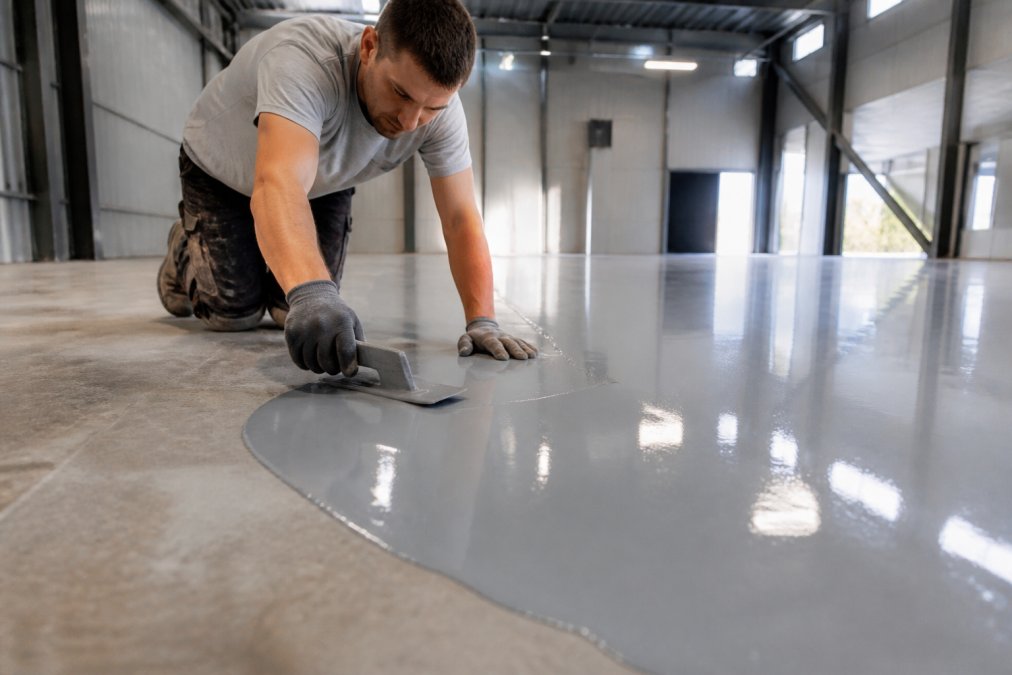
Table of Contents
- What Commercial Epoxy Floor Installation Actually Does
- The Epoxy Floor Installation Process: Step-by-Step
- Commercial Epoxy Flooring Cost Per Square Foot
- OSHA Flooring Safety Standards and Compliance
- Commercial Epoxy Floor Maintenance Tips for Longevity
- Why Professional Installation Outperforms DIY
- Conclusion
Last Updated: August 10, 2026
What Commercial Epoxy Floor Installation Actually Does
Commercial epoxy floor installation transforms worn, damaged, or bare concrete into durable, seamless flooring systems built to withstand heavy foot traffic, machinery, chemical spills, and thermal shock. Unlike paint, epoxy creates a resinous bond that becomes part of the concrete substrate itself, not just sitting on top of it. This distinction determines whether your floor lasts five years or fifteen.
The difference between success and failure usually isn't the product, it's the preparation. A warehouse owner can invest in premium epoxy resin, but if the concrete hasn't been properly assessed for moisture, ground, and primed, that coating will bubble, peel, and separate within a year. Most DIY attempts and budget contractors skip these critical steps because they're tedious and require specialized equipment.
Commercial epoxy flooring serves multiple purposes simultaneously. It protects concrete from damage while creating a seamless, easy-to-clean surface that resists oils, chemicals, standing water, and thermal cycling. For retail spaces, it provides an aesthetic upgrade signaling professionalism. For warehouses and industrial facilities, it eliminates concrete dust, improves safety through slip-resistant finishes, and simplifies maintenance. For healthcare and food production environments, it meets strict hygiene standards and supports antimicrobial surfaces.
The Epoxy Floor Installation Process: Step-by-Step
The installation process for commercial epoxy flooring is methodical and time-sensitive. Each phase builds on the previous one, and shortcuts in early stages create problems that no amount of premium topcoat can fix.
Substrate Assessment and Moisture Testing
Before any coating goes down, the concrete substrate must be thoroughly evaluated. A professional assessment checks for cracks, spalling, uneven surfaces, and most critically, moisture content. Concrete that appears dry on the surface can harbor moisture deeper in the slab, which will migrate upward and destroy the epoxy bond.
Moisture testing requires specialized equipment. Many contractors skip this step or use inaccurate methods like the calcium chloride test, which only measures surface moisture. The Tramex CME5 provides non-destructive readings to approximately 3/4 inch depth. If moisture levels exceed acceptable thresholds, typically below 3 pounds per 1,000 square feet per 24 hours for epoxy systems, the concrete must be allowed to dry further or treated with a moisture mitigation primer before proceeding.
Surface condition assessment identifies whether the concrete can bond properly. Smooth, sealed, or painted surfaces won't accept epoxy. Damaged areas, spalling concrete, and structural cracks must be addressed before coating.
Surface Preparation: Grinding and Shot Blasting
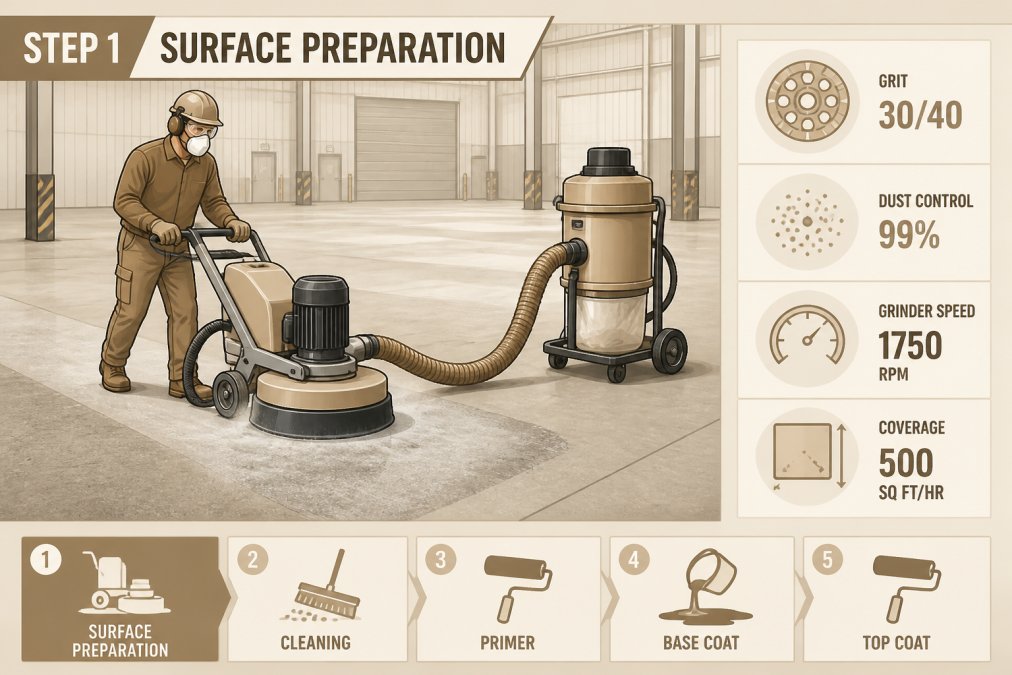
Surface preparation determines whether epoxy bonds properly to concrete. The goal is to remove all contaminants, old coatings, sealers, dirt, and oil residue while creating a profile that allows epoxy resin to mechanically lock into the concrete.
Diamond grinding removes old coatings and creates uniform surface texture. A diamond grinder with dust extraction cuts away failed epoxy, paint, or sealers while polishing the concrete to a consistent profile. This process generates substantial dust, which is why professional contractors use HEPA-filtered dust collection systems. The grinding creates microscopic valleys that allow epoxy to penetrate and bond.
Shot blasting offers an alternative approach, particularly for heavy-duty industrial applications. Steel shot propelled at high velocity impacts the concrete surface, removing contaminants and creating a rough profile in a single pass. Shot blasting is faster than grinding on large areas but generates more noise and requires careful debris containment.
Primer Application and Cure Time
Once the surface is prepared, a primer coat is applied. The primer seals the porous concrete, prevents moisture from rising through the substrate, and creates an intermediate bond layer between concrete and the base epoxy coat. Skipping the primer or applying it too thin is a common cause of epoxy failure.
Primer application typically uses a roller or squeegee. Professional contractors use heavy-duty 18-inch rollers to ensure even coverage and minimize roller marks. The primer must cure completely before the base coat is applied. Cure time varies by product, typically 4 to 24 hours depending on temperature and humidity. Temperature below 50°F or above 85°F slows or prevents proper curing, which is why many contractors schedule installation during spring or fall.
Base Coat and Topcoat Application
The base coat builds thickness and durability. This is typically a 100% solids epoxy applied with a squeegee to ensure consistent mil thickness, usually 8 to 10 mils. The base coat cures for 16 to 48 hours depending on the product. During this time, the facility must remain closed to foot and vehicle traffic.
The topcoat is the final protective layer, providing UV protection, chemical resistance, and the final aesthetic finish. Topcoat options include standard polyurethane, aliphatic polyurethane for UV resistance, or polyaspartic for rapid cure. The topcoat is applied by roller and typically cures to full hardness within 24 to 48 hours.
Commercial Epoxy Flooring Cost Per Square Foot
Pricing for commercial epoxy floor installation services varies significantly based on substrate condition, system type, facility size, and geographic location. Basic surface preparation and a standard two-coat epoxy system typically cost more per square foot than paint but less than tile or polished concrete. High-end systems with decorative finishes, antimicrobial properties, or specialized chemical resistance cost substantially more.
Concrete-Enhancements provides custom quotes based on your specific site conditions, square footage, and performance requirements. Contact us at (919) 824-5403 or craigrfear@gmail.com for a free estimate that accounts for your facility's unique needs. When comparing quotes, verify that they include all preparation steps, not just material and application. A suspiciously low quote often reflects skipped preparation, which leads to premature failure. A professional estimate should itemize substrate assessment, surface preparation hours, primer application, base coat application, topcoat application, and any specialty treatments.
OSHA Flooring Safety Standards and Compliance
Workplace flooring must meet OSHA safety standards, which specify requirements for slip resistance, impact resistance, and chemical resistance depending on the work environment. Commercial epoxy flooring can meet or exceed these standards when properly specified and installed.
Call (919) 824-5403 or email craigrfear@gmail.com for a free estimate →
OSHA regulations require that floors be kept clean, orderly, and in a sanitary condition to prevent accidents. For wet or oily environments, slip-resistant surfaces are mandatory. Epoxy systems can incorporate slip-resistant additives, typically aluminum oxide or silica aggregate, that provide friction without creating a rough texture that's difficult to clean.
Impact resistance is critical in warehouses and manufacturing facilities where heavy equipment, dropped tools, and vehicle traffic occur daily. Chemical resistance depends on the specific chemicals present in your facility. Food processing requires surfaces resistant to acids, alkalies, and thermal shock. Manufacturing plants may need resistance to oils, solvents, or caustic cleaners. Pharmaceutical facilities require antimicrobial surfaces.
Your epoxy contractor should provide technical data sheets for all products used and certify that the system meets applicable OSHA requirements. This documentation protects your facility in the event of an accident investigation and demonstrates due diligence in maintaining safe working conditions.
Commercial Epoxy Floor Maintenance Tips for Longevity
Epoxy floors are low-maintenance compared to other commercial flooring options, but they still require proper care to reach their full lifespan. Daily maintenance involves sweeping and damp mopping with neutral pH cleaners. Avoid acidic or alkaline cleaners, which can degrade the epoxy surface over time.
Weekly deep cleaning should address areas where dust, oils, or residue accumulate. This typically involves mopping with hot water and a mild detergent, followed by rinsing with clean water. Monthly inspections identify developing problems before they become serious. Look for areas where the coating appears duller than surrounding surfaces, which often indicates early degradation. Check for cracks, chips, or peeling edges, particularly in high-traffic zones. Small damage can be repaired with epoxy touch-up kits.
Heavy equipment and machinery require attention. Forklifts and pallet jacks should have clean tires to avoid tracking dirt and oils onto the floor. Chemical spills should be cleaned immediately. While epoxy resists most common industrial chemicals, prolonged exposure to concentrated solvents or caustic materials can cause damage.
Why Professional Installation Outperforms DIY
The difference between a professional epoxy floor and a DIY attempt comes down to substrate preparation, environmental control, and system knowledge. These factors determine whether the floor lasts 15 years or peels away within months.
Professional contractors have invested in specialized equipment that DIY enthusiasts typically lack. Diamond grinders with dust collection, moisture meters, squeegees, and proper rollers cost thousands of dollars. Poor grinding leaves contaminants on the surface. Inadequate moisture testing misses subsurface water. Budget rollers leave marks and create uneven thickness.
Environmental control is another critical difference. Professional contractors understand how temperature and humidity affect epoxy cure and take steps to manage conditions. They know that epoxy applied when concrete temperature is below 50°F won't cure properly. They schedule installation during optimal weather windows and use portable heaters or dehumidifiers when necessary.
System knowledge separates professionals from amateurs. Choosing the right primer, base coat, and topcoat for your specific substrate and use case requires understanding how different resin chemistries perform. A professional contractor specifies the system that matches your requirements.
Concrete-Enhancements brings 20 years of experience in substrate assessment, system selection, and installation technique. As a CTi Certified Dealer, we've completed hundreds of commercial installations across the Raleigh-Durham Triangle, NC Triad, and Coastal SC. That experience translates to knowing which preparation methods work best for different concrete conditions and how to ensure the finished floor performs as intended.
Professional installations typically come with warranties covering material and workmanship. DIY installations have no warranty; if something fails, you're replacing the entire floor at your own expense.
Commercial epoxy floor installation services transform concrete from a liability into a durable, low-maintenance asset. The process requires precision at every stage, from initial substrate assessment through final topcoat application. When you're ready to upgrade your facility's flooring, contact Concrete-Enhancements at (919) 824-5403 or craigrfear@gmail.com for a free estimate. As a CTi Certified Dealer with over 20 years of experience, we'll assess your specific needs, specify the right system, and deliver professional installation that lasts.
| Installation Phase | Duration | Key Consideration |
|---|---|---|
| Substrate Assessment & Moisture Testing | 1-2 days | Moisture levels must be below threshold before proceeding |
| Surface Preparation (Grinding/Shot Blasting) | 1-3 days | Depends on area size and existing coating condition |
| Primer Application & Cure | 1 day + 4-24 hours cure | Temperature and humidity must be within range |
| Base Coat Application & Cure | 1 day + 16-48 hours cure | Facility must remain closed during cure period |
| Topcoat Application & Cure | 1 day + 24-48 hours cure | Light traffic permitted sooner with some systems |
Frequently Asked Questions
How much does commercial epoxy floor installation cost per square foot?
Commercial epoxy flooring cost per square foot depends on substrate condition, surface preparation requirements, epoxy system type (standard epoxy, polyaspartic, or urethane), and customization options like anti-slip finishes or decorative elements. Request a free estimate from Concrete-Enhancements to get accurate pricing for your specific project. Contact (919) 824-5403 or email craigrfear@gmail.com.
What makes professional epoxy floor installation last longer than DIY attempts?
Professional installation ensures proper substrate assessment, moisture mitigation, correct surface preparation through diamond grinding or shot blasting, and precise application of primer, base coat, and topcoat at proper mil thickness. Improper moisture testing, inadequate surface prep, or incorrect resin mixing causes peeling and failure. Concrete-Enhancements' CTi Certified expertise and 20+ years of experience guarantee lasting results where DIY efforts often fail within one to two years.
What are the OSHA requirements for commercial epoxy flooring?
OSHA standards require commercial floors to meet slip-resistance ratings based on workplace hazards. Wet environments demand higher slip-resistance; dry commercial spaces need lower coefficients. Epoxy systems can be formulated with anti-slip additives or textured finishes to meet OSHA compliance. Professional installers ensure your flooring meets safety standards for your specific industry, whether warehouse, retail, healthcare, or food production.
How often do commercial epoxy floors need maintenance?
Commercial epoxy floors require regular sweeping and damp mopping with pH-neutral cleaners. High-traffic areas may need monthly deep cleaning. Avoid acidic cleaners and harsh chemicals that degrade the topcoat. With proper maintenance, commercial epoxy flooring lasts 10+ years. Concrete-Enhancements provides detailed maintenance schedules tailored to your facility's traffic level and industry requirements.
This article was written using GrandRanker
Frequently Asked Questions
Commercial epoxy flooring cost per square foot depends on substrate condition, surface preparation requirements, epoxy system type (standard epoxy, polyaspartic, or urethane), and customization options like anti-slip finishes or decorative elements. Request a free estimate from Concrete-Enhancements to get accurate pricing for your specific project. Contact (919) 824-5403 or email craigrfear@gmail.com.
Professional installation ensures proper substrate assessment, moisture mitigation, correct surface preparation through diamond grinding or shot blasting, and precise application of primer, base coat, and topcoat at proper mil thickness. Improper moisture testing, inadequate surface prep, or incorrect resin mixing causes peeling and failure. Concrete-Enhancements' CTi Certified expertise and 20+ years of experience guarantee lasting results where DIY efforts often fail within one to two years.
OSHA standards require commercial floors to meet slip-resistance ratings based on workplace hazards. Wet environments demand higher slip-resistance; dry commercial spaces need lower coefficients. Epoxy systems can be formulated with anti-slip additives or textured finishes to meet OSHA compliance. Professional installers ensure your flooring meets safety standards for your specific industry, whether warehouse, retail, healthcare, or food production.
Commercial epoxy floors require regular sweeping and damp mopping with pH-neutral cleaners. High-traffic areas may need monthly deep cleaning. Avoid acidic cleaners and harsh chemicals that degrade the topcoat. With proper maintenance, commercial epoxy flooring lasts 10+ years. Concrete-Enhancements provides detailed maintenance schedules tailored to your facility's traffic level and industry requirements.