comparison
Concrete Patch vs Filler: Which to Use for Your Repair
Last Updated: November 12, 2026
Quick Summary
Use concrete patch vs filler by checking whether the damage is a narrow crack or a missing chunk of surface. Crack filler closes narrow, stable gaps, while concrete patch rebuilds larger damaged areas so they sit level with the slab.
- Concrete filler is generally recommended for small cracks and gaps.
- Concrete patch is recommended for larger repairs and spalled or broken surfaces.
- Repair or resurfacing is suggested when cracks are less than 1/4 inch wide.
- Rigid fillers suit stable cracks, while moving cracks need a flexible sealant.
- Measure crack width and re-check movement before choosing a product.
Table of Contents
- Concrete Patch vs Filler: What Each Material Is Built to Do
- When Concrete Crack Filler Is the Right Choice
- Concrete Patch for Spalling and Larger Damaged Areas
- Stable Cracks vs Moving Cracks: Rigid Fillers and Flexible Sealants
- Concrete Patio Crack Repair: Matching the Material to the Damage
- Comparison Table and Decision Guide: Patch, Filler, or Sealant
- Get a Free Estimate for Concrete Repair in the Triangle and Triad
- Frequently Asked Questions
Concrete Patch vs Filler: What Each Material Is Built to Do
Choosing between a concrete patch and a crack filler comes down to one question: is the damage a narrow crack or a missing chunk of surface? Knowing when to use concrete patch vs filler starts with that distinction. At Concrete-Enhancements, we see homeowners reach for the wrong product all the time, and the mistake is usually easy to spot once you know what each material is designed to do. Concrete filler is generally recommended for small cracks and gaps, while concrete patch is recommended for larger repairs. Concrete Filler vs. Concrete Patch guidance
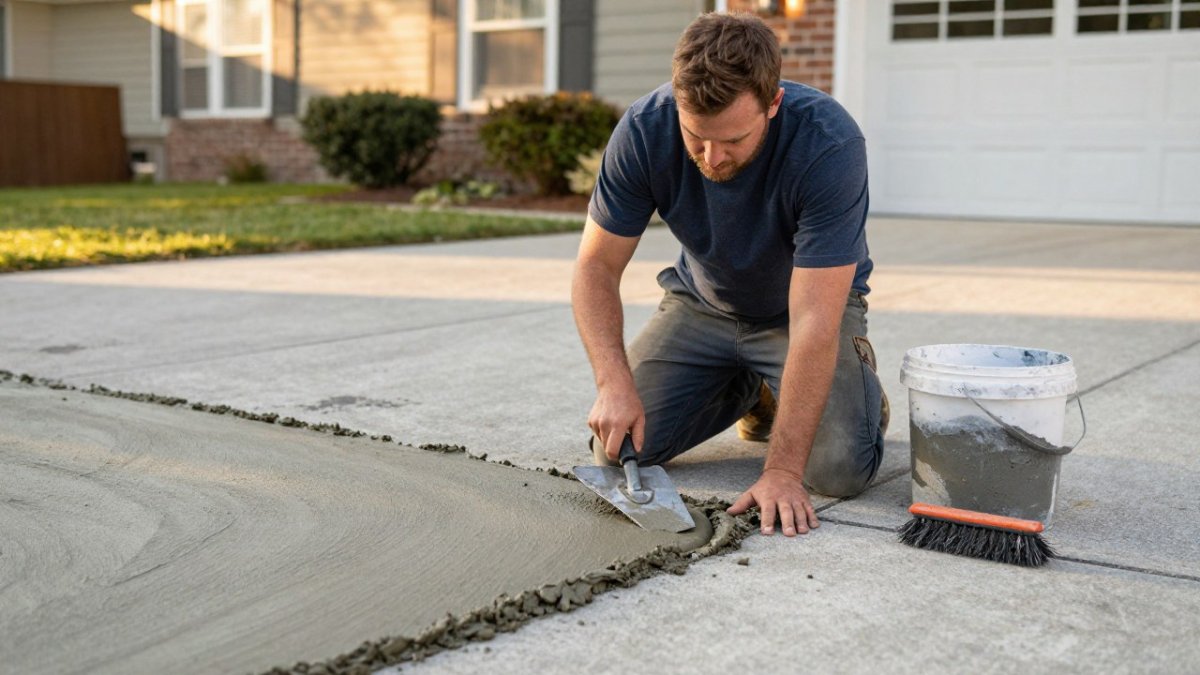
Filler is typically a flexible or semi-rigid material that goes into a gap and bonds to its walls. A patch is a cement-based repair compound meant to rebuild a damaged area so it sits level with the surrounding slab. Both can be used on a patio or driveway, but they handle stress differently.
Think of it this way: filler closes a gap, and patch rebuilds a surface.
When Concrete Crack Filler Is the Right Choice
Filler fits cracks that are wider, deeper, and no longer moving. Guidance from ACI Indiana describes filling for exactly this condition, and sealing for cracks that still shift with the slab. Concrete Crack Repair: Should You Fill It or Seal It?
A repair-versus-replacement guide suggests repair or resurfacing when cracks are less than 1/4 inch wide, the slab is level or can be leveled, and the concrete is not deeply crumbling. When to Repair vs Replace Concrete guide Cracks wider than that may need a different approach, which is why measuring first matters.
Before buying any crack-repair product, confirm its specifications, price and cure time on the manufacturer's label. For a step-by-step walkthrough, read how to apply concrete crack filler correctly.
Concrete Patch for Spalling and Larger Damaged Areas
A patch is the better choice when the surface itself has broken away. Spalling, holes and larger divots need material that can rebuild the top layer. Quikrete Concrete Patch is one option named in the research for this kind of repair, and it is compared directly against polyurethane sealant in the patch-versus-filler discussion. Concrete patch versus polyurethane sealant comparison
Patch material generally needs a clean, sound base. Loose debris and crumbling edges should be removed first, or the new material will fail at the boundary. If the damage is spreading or the slab is deeply scaling, a patch may only be a temporary fix. For a fuller walkthrough, see how to fix spalling concrete driveway.
Watch out: A patch laid over a crack that is still moving will often crack again at the same line.
Stable Cracks vs Moving Cracks: Rigid Fillers and Flexible Sealants
Movement is the factor most DIY repairs miss. Repair guidance from U.S. Made Supply matches rigid fillers to cracks that have stopped moving, and flexible sealants to cracks or joints that have not stopped moving. U.S. Made Supply concrete repair guidance A rigid concrete patch placed over a crack that keeps shifting can break free of its edges.
The practical test is simple. Check whether the crack has changed width over several months, or whether it looks the same after a freeze-thaw cycle. A stable crack can take a rigid filler. A moving one usually needs a flexible sealant.
Measuring Crack Width, Depth, and Movement
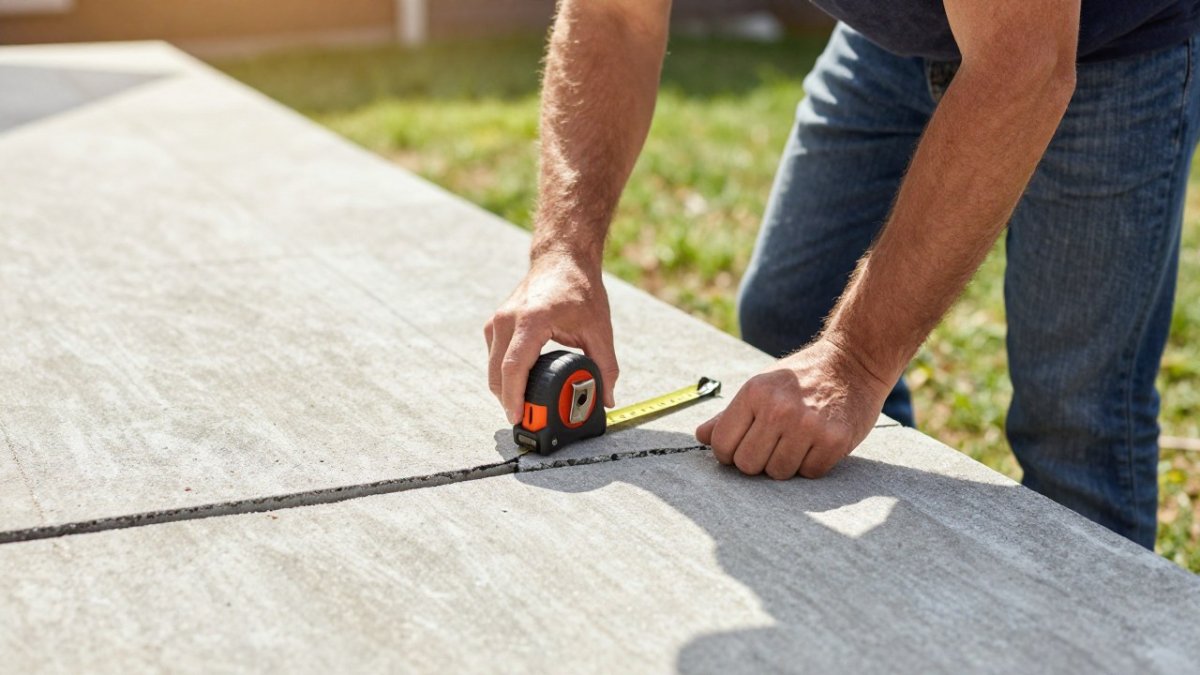
Measure width at the widest point with a tape measure or a set of feeler gauges, and record the reading in a log with the date. Probe depth with a thin rod or a piece of stiff wire, and note whether the crack reaches the subbase or stops within the slab. Repeat the width reading after a few weeks and again after a freeze-thaw cycle. A change of 1/16 inch or more between readings is a working crack, not a stable one. A working crack may signal movement that a surface patch cannot resolve, so weigh the slab’s overall condition when deciding whether repair or replacement makes sense, with Carters Precision Pressure Washing as a related point of reference.
Classify the crack consistently so the product choice follows the measurement, not a guess. A workable scheme is: hairline, narrow, and wide cracks by width; shallow versus deep cracks by depth; and stable versus moving cracks by measured change. A hairline, shallow, stable crack is a filler candidate. A narrow, deep, stable crack is a sealant candidate. A wide or moving crack is a patch or assessment candidate.
Know when the repair is covering up a bigger problem. Cracks that step vertically, cracks that radiate from a corner, cracks that keep reopening after repair, and slabs that are heaving or sinking point to settlement, drainage, or structural movement rather than a surface defect. Those conditions call for professional assessment before any filler or patch goes down, because a cosmetic repair will fail again and can hide a worsening problem.
Watch out: A crack that has widened since your last reading is a moving crack, and a rigid filler will re-crack along the same line. Re-measure before you buy the product.
Concrete Patio Crack Repair: Matching the Material to the Damage
A patio crack is rarely just a crack. Before you pick a product, classify the damage on three axes: width, movement, and whether water is reaching the subbase. A hairline crack that has not changed width over time is generally a filler job. A stable crack deep enough to trap water is generally a sealant job. Wider cracks, or cracks with a vertical offset between the two sides, generally call for a patch or professional assessment rather than a filler.
Match the material to the patio's exposure. A shaded patio that stays damp needs a sealant rated for wet or green concrete; a sun-baked patio that swings through freeze-thaw cycles needs a flexible sealant with a stated joint-movement rating, not a rigid patch. A rigid patch placed over a working patio crack can re-crack along the same line, which is why the movement test matters on outdoor slabs.
Application conditions decide whether the repair lasts. Read the label for the minimum and maximum application temperature, the maximum moisture content of the concrete, and the recoat and traffic-ready windows. A common pattern is a minimum of 40°F and a 24-hour cure before foot traffic, but those numbers vary by product chemistry, so confirm them on the label rather than assuming. Atlanta Concrete Solutions repair guide
Watch out: Do not fill a patio crack that is still widening after a freeze-thaw cycle. That is a moving crack, and a rigid filler will bond to the walls and then tear free when the slab moves again.
For a full process, read how to repair cracked concrete driveway.
Comparison Table and Decision Guide: Patch, Filler, or Sealant
| Damage Type | Best Material | Movement | Typical Use |
|---|---|---|---|
| Narrow, stable crack (under 1/4 inch) | Crack filler | Stopped | Patio or driveway hairline cracks |
| Moving crack or joint | Flexible sealant | Ongoing | Expansion joints, active cracks |
| Spalling or small hole | Concrete patch | Stopped | Surface flaking, divots |
| Large damaged area | Concrete patch | Stopped | Broken edges, larger repairs |
Choose filler if the crack is narrow, deep and no longer moving. Choose a sealant if the crack or joint still shifts. Choose patch if the surface has broken away or the area is larger.
Best for: Homeowners repairing a single stable crack with a clear, measurable width. Skip if: The slab is heaving, sinking or deeply crumbling, since those conditions call for professional assessment.
Get a Free Estimate for Concrete Repair in the Triangle and Triad
When the damage is larger than a simple DIY job, or you are unsure which material applies, it is worth having it assessed. Concrete-Enhancements, a CTi Certified Dealer with over 20 years of experience, offers professional concrete repair and resurfacing. Get a free estimate for driveway repair and resurfacing or check whether we serve your area. Call (919) 824-5403 for a free estimate.
Frequently Asked Questions
What is the difference between concrete patch and concrete filler?
Concrete filler is generally used for small cracks and narrow gaps, while concrete patch is used for larger repairs such as holes and damaged areas. Filler is typically a flexible or rigid material poured or injected into a crack, whereas patch is a cement-based compound applied to rebuild a missing section of surface. Fillers suit cracks that have stopped moving, while patches restore surface mass. Always check the product label for crack width limits and cure time before application, since specifications vary by manufacturer.
Can concrete filler repair a hole or spalled area?
Concrete filler is not designed for holes or spalled areas. Spalling is surface flaking or breakage that leaves a depression, and it usually needs a patch compound that bonds to sound concrete and can be built up to the surrounding level. Using filler in a spalled area often leads to the material popping out under traffic or freeze-thaw cycles. Clean out loose material first, then choose a repair product rated for the depth of the damage. Deep or widespread spalling may call for professional assessment.
Should you fill or seal a crack in concrete?
Fill a crack when it is wider, deeper, and no longer moving. Seal it when the crack is still active or when the goal is to keep water out of a joint that expands and contracts. Fillers provide structural support for stable cracks, while flexible sealants such as polyurethane sealants accommodate movement. Measure the crack width and check whether it has changed over several months. If you are unsure, start with a flexible sealant on a moving crack and reassess after a season.
Can you use concrete patch on a moving crack?
A rigid concrete patch is usually a poor choice for a crack that continues to move, because it can crack again or debond as the slab shifts. Flexible sealants are generally recommended for moving cracks and joints. Some guidance describes self-leveling sealants for joints that must accommodate movement. Confirm movement by marking the crack ends and checking after a few weeks. Movement tolerances for any product should be verified on its label.

Tags: concrete patch vs filler, when to use concrete patch vs filler, concrete crack filler, concrete patch for spalling, self-leveling concrete sealant, concrete patio crack repair
Frequently Asked Questions
Concrete filler is generally used for small cracks and narrow gaps, while concrete patch is used for larger repairs such as holes and damaged areas. Filler is typically a flexible or rigid material poured or injected into a crack, whereas patch is a cement-based compound applied to rebuild a missing section of surface. Fillers suit cracks that have stopped moving, while patches restore surface mass. Always check the product label for crack width limits and cure time before application, since specifications vary by manufacturer.
Concrete filler is not designed for holes or spalled areas. Spalling is surface flaking or breakage that leaves a depression, and it usually needs a patch compound that bonds to sound concrete and can be built up to the surrounding level. Using filler in a spalled area often leads to the material popping out under traffic or freeze-thaw cycles. Clean out loose material first, then choose a repair product rated for the depth of the damage. Deep or widespread spalling may call for professional assessment.
Fill a crack when it is wider, deeper, and no longer moving. Seal it when the crack is still active or when the goal is to keep water out of a joint that expands and contracts. Fillers provide structural support for stable cracks, while flexible sealants such as polyurethane sealants accommodate movement. Measure the crack width and check whether it has changed over several months. If you are unsure, start with a flexible sealant on a moving crack and reassess after a season.
A rigid concrete patch is usually a poor choice for a crack that continues to move, because it can crack again or debond as the slab shifts. Flexible sealants are generally recommended for moving cracks and joints. Some guidance describes self-leveling sealants for joints that must accommodate movement. Confirm movement by marking the crack ends and checking after a few weeks. Movement tolerances for any product should be verified on its label.