ultimate-guide
Concrete Restoration for Retail Spaces: A Complete Guide
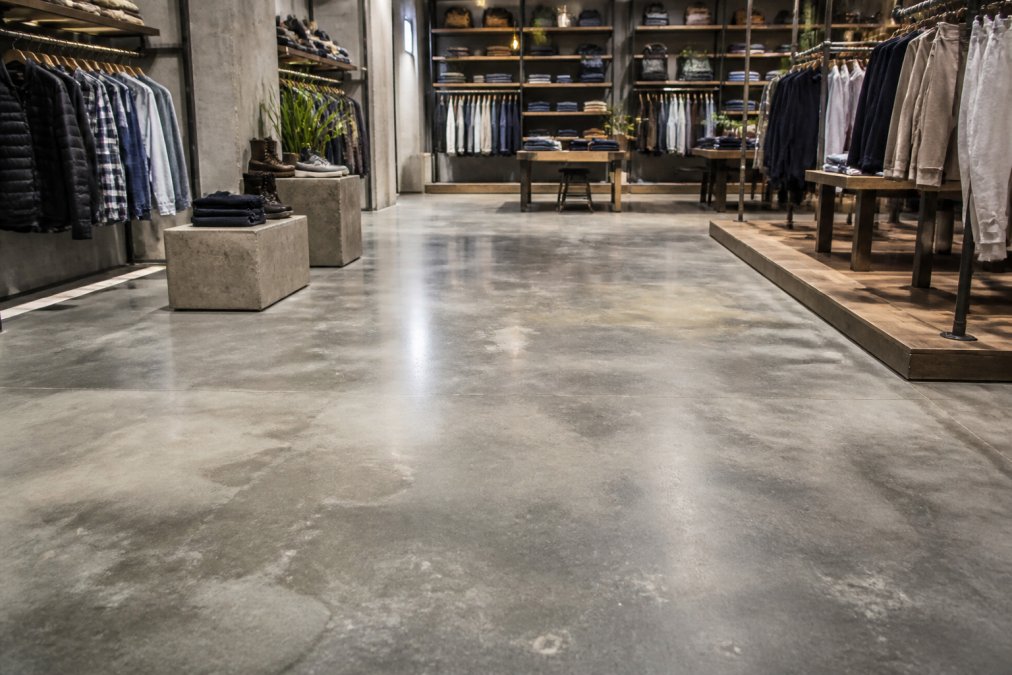
Table of Contents
- Why Concrete Restoration Matters for Retail Operations
- Types of Concrete Damage in Retail Environments
- Best Concrete Repair Methods for Retail Spaces
- How Long Does Concrete Restoration Take in Retail Settings
- Commercial Concrete Floor Resurfacing Cost and ROI Analysis
- ADA Compliance for Retail Concrete Floors
- Concrete Resurfacing Benefits for High-Traffic Retail Areas
- Concrete Restoration for Retail Spaces: Maintenance and Longevity
Last Updated: August 4, 2026
Why Concrete Restoration Matters for Retail Operations
Retail spaces face relentless foot traffic, weather exposure, and operational demands that deteriorate concrete quickly. Concrete restoration protects asset value and customer experience. Facilities managers who address concrete damage early avoid emergency closures, liability claims, and compounding costs of deferred maintenance.
Damaged concrete signals poor maintenance to customers and creates genuine safety hazards. According to research from the National Retail Federation on facility maintenance trends, retail property managers cite flooring condition as the second-highest factor influencing customer perception of cleanliness and professionalism. Concrete restoration directly impacts foot traffic patterns, dwell time, and repeat visits.
This guide covers restoration strategies for high-traffic retail environments, from identifying damage types to minimizing operational downtime and managing long-term durability.
Types of Concrete Damage in Retail Environments
Retail concrete fails in predictable patterns. Understanding what you're looking at determines which repair approach works.
Spalling and Surface Degradation
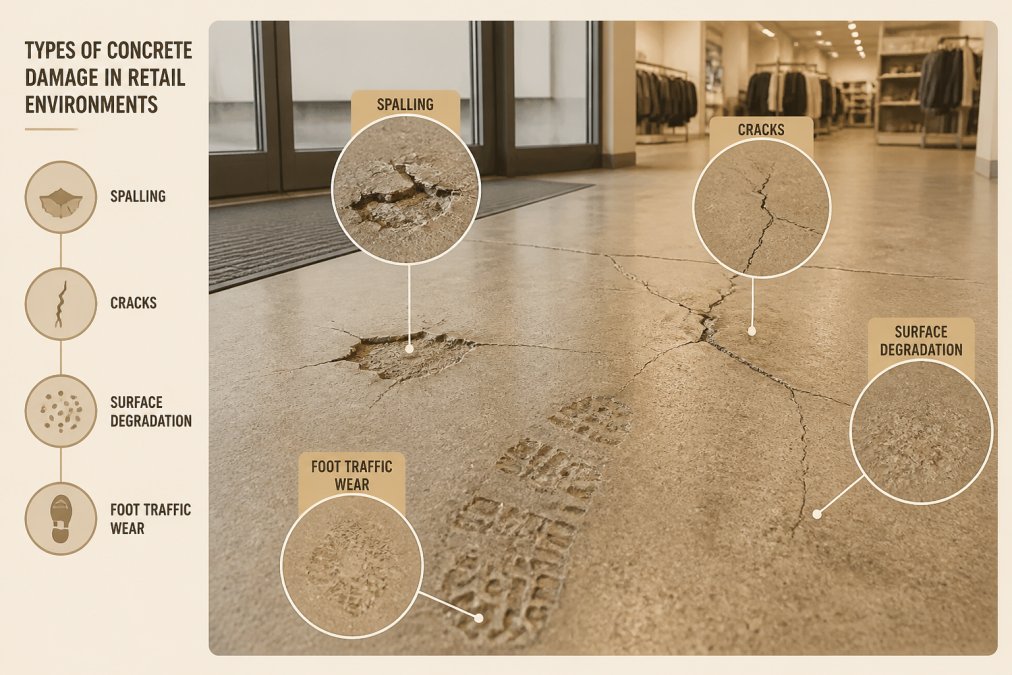
Spalling is progressive flaking or chipping of concrete surface layers. In retail spaces, it starts at edges where foot traffic concentrates, doorways, and checkout areas. Salt from winter boots, freeze-thaw cycles, and moisture penetration accelerate spalling. Early intervention, before spalling reaches ½ inch depth, costs 40-60% less than waiting for structural repair.
Cracking and Structural Concerns
Not all cracks carry equal risk. Hairline cracks (less than 1/8 inch wide) are benign. Cracks wider than ¼ inch signal movement, settlement, or load-bearing problems requiring professional assessment. Structural cracks typically run at angles or show widening patterns, indicating the concrete slab is shifting under stress and demanding immediate evaluation.
Pitted Concrete and Wear Patterns
Pitted concrete develops from moisture exposure, salt damage, and chemical attack. Each pit traps water, accelerating the next failure cycle and becoming a dirt and bacteria trap that increases cleaning costs and persistent staining. Resurfacing eliminates pits entirely and restores cleanability.
Best Concrete Repair Methods for Retail Spaces
The repair method you choose depends on damage severity, the concrete's structural role, and tolerable downtime.
Structural vs. Cosmetic Repair Approaches
Cosmetic repairs address surface appearance without affecting load-bearing capacity. These include decorative overlays, epoxy coatings, and polishing. Structural repairs address underlying concrete integrity through crack injection with epoxy or polyurethane, or concrete patching with structural-grade compounds.
The critical distinction: cosmetic repairs are only appropriate after structural damage is resolved. A retail manager who applies epoxy coating over a ¾-inch crack will see the coating fail within months because the crack continues to move beneath it. Most retail concrete restoration involves both approaches: first address structural issues, then apply cosmetic finishes.
Concrete Patching and Crack Injection Techniques
Concrete patching fills voids left by spalling or deterioration. Shallow patches (under ½ inch depth) use self-leveling repair compounds. Deep patches (½ inch to 2 inches) require structural-grade concrete repair compounds with higher compressive strength. For patches deeper than 2 inches, professionals use hydraulic cement or epoxy-based repair mortars matching the original concrete's strength.
Crack injection addresses cracks without removing concrete. Epoxy injection works for structural cracks because it hardens to strength exceeding surrounding concrete.
Epoxy Coatings and Surface Bonding
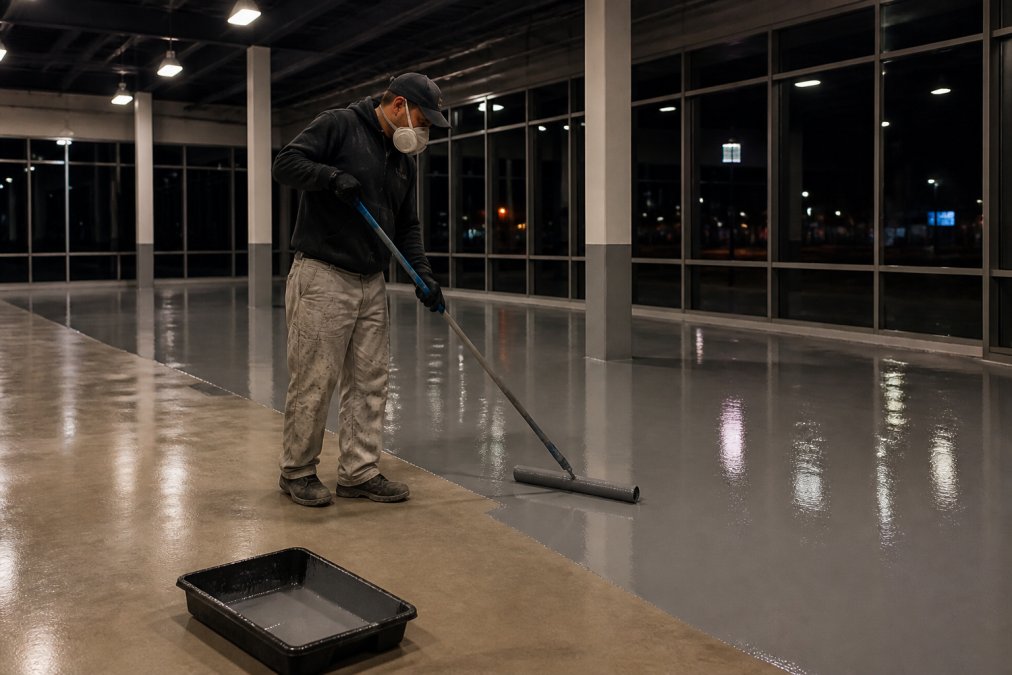
Epoxy coatings create a protective layer over concrete that resists moisture, chemicals, and foot traffic. Success depends entirely on substrate preparation. If concrete is damp, contains contaminants, or has loose material, epoxy won't bond properly. Proper substrate preparation typically takes 50-70% of installation time.
Professional-grade epoxy typically runs 4-6 mils thick with slip-resistant additives critical for retail spaces. Polyurethane coatings offer an alternative, more flexible and handling substrate movement better than epoxy, though typically costing 20-30% more.
How Long Does Concrete Restoration Take in Retail Settings
Timeline matters enormously in retail. Every hour your space is closed costs revenue.
Minimizing Business Downtime During Restoration
Simple cosmetic repairs can often happen during business hours with proper containment and dust control. Professional crews use negative air systems to prevent dust migration into retail areas. Structural repairs require more time. Crack injection typically takes 1-3 days depending on crack length and complexity. Epoxy coating projects typically require 3-5 days: 1 day for substrate preparation, 1-2 days for application, and 1-2 days for curing before foot traffic.
Most retail managers schedule restoration during off-hours or low-traffic periods.
Night-Shift and After-Hours Execution Strategies
Night-shift concrete work requires careful planning. Temperature drops at night, slowing epoxy curing. Humidity often rises overnight, interfering with moisture-sensitive coatings. Successful after-hours projects maintain ambient temperature above 50°F and avoid application if humidity will exceed 85% overnight.
Night crews typically move slower than day crews due to less ideal lighting. Budget for 15-25% longer timelines on night projects. Phased restoration divides the retail space into zones and restores one zone at a time, keeping most of your space operational while one section undergoes work.
Commercial Concrete Floor Resurfacing Cost and ROI Analysis
Concrete restoration budgets vary dramatically based on damage severity and restoration method chosen.
Factors That Affect Restoration Pricing
Damage extent is the primary cost driver. Minor cosmetic work might run $3-8 per square foot for epoxy coating. Structural restoration with crack injection, leveling, and epoxy coating might run $15-35 per square foot.
Substrate condition determines preparation costs. Concrete that's clean and structurally sound requires minimal prep. Moisture testing is essential before epoxy application; if concrete is damp, you must either wait for it to dry or use moisture-tolerant epoxy systems, which cost more.
Location and accessibility affect labor costs. Ground-level retail spaces are faster and cheaper to work on than elevated mezzanines. Timeline urgency increases cost. Fast-track projects with tight deadlines require premium labor rates and often require night-shift work.
Long-Term Asset Value and Operational Impact
Concrete restoration extends asset life and reduces operational costs. Reduced maintenance is a significant operational benefit. Sealed, epoxy-coated concrete requires minimal maintenance compared to damaged, pitted concrete requiring frequent cleaning and ongoing patching.
Slip-and-fall liability is a major hidden cost. A single liability claim can exceed $50,000-100,000. Properly restored concrete with slip-resistant coating reduces this risk significantly.
Customer experience impacts revenue. Retail spaces with clean, well-maintained flooring see higher dwell times and repeat visits. For most retail applications, professionally restored concrete delivers positive ROI within 3-5 years through reduced maintenance, lower liability exposure, and improved customer experience.
ADA Compliance for Retail Concrete Floors
Concrete restoration for retail spaces must address accessibility requirements. The Americans with Disabilities Act (ADA) establishes specific standards for floor surfaces that affect how you restore concrete.
Slip Resistance Standards and Safety Requirements
The ADA requires that floor surfaces be stable, firm, and slip-resistant. Slip resistance is measured using the coefficient of friction (COF). Accessibility guidelines recommend a minimum COF of 0.6 for level surfaces and 0.8 for ramps. Most epoxy coatings and decorative overlays can achieve these standards by incorporating anti-slip additives.
Slip resistance must be maintained over time. Textured finishes and anti-slip additives degrade with foot traffic, so you must choose systems designed for high-traffic retail environments. Moisture management is essential for slip resistance. Proper drainage, waterproofing, and moisture mitigation prevent water accumulation that creates slip hazards.
Accessibility and Load-Bearing Capacity
The ADA requires that floor surfaces accommodate wheelchairs and mobility devices. Concrete must be level (within 1/4 inch variation over 10 feet), free of tripping hazards, and capable of supporting wheeled equipment.
Concrete leveling is often necessary during restoration. Transitions between different flooring types must be handled carefully. The ADA allows a maximum 1/4-inch vertical step between surfaces. Structural repairs must restore the concrete's ability to safely carry equipment loads.
Concrete Resurfacing Benefits for High-Traffic Retail Areas
High-traffic retail spaces experience accelerated concrete degradation. Durability depends on coating system selection and substrate preparation. Standard epoxy works for moderate traffic but fails quickly under heavy foot traffic. High-traffic retail spaces require commercial-grade epoxy systems, often polyurethane-based, that withstand thousands of daily footsteps.
Concrete polishing is another option for high-traffic retail. Polished concrete is durable, attractive, and relatively low-maintenance, providing natural light reflection that reduces lighting costs. Decorative concrete overlays work well for retail spaces where appearance is critical and can last 10+ years in high-traffic environments.
Enhanced Durability and Preventative Maintenance
Preventative maintenance is far cheaper than emergency repair. Concrete restoration includes establishing a maintenance plan that extends your investment's life through periodic cleaning, regular inspection for new damage, prompt repair of minor issues, and recoating when the surface coating begins to wear.
Most epoxy-coated concrete in retail environments benefits from periodic recoating every 5-7 years. Moisture management is critical for long-term durability. Proper waterproofing and moisture mitigation during restoration prevents failure from moisture wicking beneath the surface.
Improved Curb Appeal and Customer Experience
Retail spaces with clean, well-maintained concrete attract more customers. Facility appearance significantly influences customer behavior. Concrete restoration often includes aesthetic improvements, color selection, decorative elements, or polishing that enhance visual appeal and influence customer perception and behavior.
Concrete Restoration for Retail Spaces: Maintenance and Longevity
The restoration work is only the beginning. Long-term success depends on proper maintenance and understanding what affects concrete longevity.
Substrate Preparation and Curing Time
Substrate preparation determines whether your restoration will succeed or fail. Proper preparation involves removing loose concrete and contaminants, grinding the surface to open the concrete's pores, cleaning thoroughly, testing for moisture, and applying bonding agents if necessary.
Inadequate substrate preparation is the #1 reason epoxy coatings fail prematurely. Curing time varies by material and environmental conditions. Epoxy typically requires 24-48 hours before light foot traffic and 7 days before full operational loads. Temperature affects curing significantly, with epoxy curing much faster in warm conditions and much slower in cool conditions.
Many retail managers reopen spaces too early, thinking "it looks dry." Visual appearance is misleading. Epoxy that looks dry on the surface may not be fully cured beneath.
Moisture Mitigation and Waterproofing Solutions
Moisture is the silent killer of concrete restoration projects. Concrete absorbs water from below, sides, and above. If moisture pathways aren't addressed during restoration, the concrete will continue to deteriorate beneath the new coating.
Moisture testing before coating application is essential. Concrete moisture levels above 3 pounds per 1,000 square feet per 24 hours will cause epoxy coating failure. If moisture testing shows high levels, you must either allow the concrete to dry, use moisture-tolerant epoxy systems, or address the moisture source.
Waterproofing solutions include epoxy sealers that block moisture penetration, polyurethane coatings that flex with concrete movement, and subsurface drainage systems that direct water away from the concrete. Proper drainage around the building perimeter is critical.
Maintenance Summary
| Maintenance Task | Frequency | Expected Benefit |
|---|---|---|
| Routine cleaning | Weekly | Prevents dirt accumulation and staining |
| Moisture inspection | Monthly | Identifies water damage before it spreads |
| Surface inspection | Quarterly | Catches new cracks or damage early |
| Recoating | Every 5-7 years | Extends coating life and maintains protection |
| Drainage system cleaning | Twice yearly | Prevents water pooling and moisture issues |
| Slip resistance testing | Annually | Maintains ADA compliance and safety |
Concrete restoration for retail spaces is an investment in long-term asset protection and operational efficiency. The key is choosing the right repair approach, ensuring proper installation with adequate substrate preparation, and establishing a maintenance plan that prevents future deterioration.
Retail managers who treat concrete restoration as preventative maintenance, addressing issues early before they become structural problems, avoid emergency repairs and achieve the best ROI.
If your retail space shows signs of concrete damage, spalling, cracking, pitting, or surface degradation, professional assessment is the logical first step. A qualified concrete contractor can evaluate the damage, identify root causes, and recommend the most cost-effective restoration approach for your specific situation.
At Concrete-Enhancements, we specialize in transforming damaged concrete through expert decorative overlays, epoxy floor coatings, and professional repair services. With over 20 years of experience and CTi Certified Dealer credentials, we've restored hundreds of retail spaces across the Raleigh-Durham Triangle, NC Triad, and Coastal SC. Our approach combines thorough substrate assessment, high-performance materials, and attention to ADA compliance and safety standards. Contact us today at (919) 824-5403 or email craigrfear@gmail.com for a free estimate and professional evaluation of your retail concrete restoration needs.
Frequently Asked Questions
What is the difference between concrete repair and concrete restoration?
Concrete repair typically addresses specific damage like cracks or spalling through patching or crack injection. Concrete restoration is more comprehensive, restoring the entire surface through resurfacing, epoxy coatings, or overlays to improve structural integrity, appearance, and functionality. Restoration often includes substrate preparation, waterproofing, and preventative maintenance to extend asset longevity.
How long does concrete resurfacing last in high-traffic retail environments?
Durability depends on the restoration method and maintenance. Epoxy coatings typically last 5-10 years with proper care in retail spaces. Decorative overlays and concrete polishing can last 7-15 years. Curing time varies: epoxy coatings usually cure within 24-72 hours, while overlays may require 7-14 days. After-hours application minimizes business downtime while allowing proper curing time before customer traffic resumes.
Can you restore retail concrete floors without closing the store?
Yes, with proper planning. Night-shift and after-hours execution strategies allow restoration work outside business hours. Contractors can apply epoxy coatings, perform crack injection, or conduct joint sealant work during evening closures. However, some methods require curing time, so temporary closures or restricted access areas may be necessary. Work with contractors experienced in minimizing business downtime to schedule restoration in phases that don't interrupt customer access.
What concrete restoration methods work best for retail spaces with heavy foot traffic?
For high-traffic retail areas, epoxy coatings provide excellent slip resistance and durability while protecting the concrete slab. Concrete polishing offers aesthetic appeal with improved safety. Polyurethane injection addresses moisture mitigation and structural issues. Decorative overlays combine functionality with curb appeal. The best method depends on your specific damage type, budget, and desired finish. Substrate preparation is critical regardless of method to ensure surface bonding and long-term performance.
What are the ADA compliance requirements for retail concrete floors?
Retail concrete floors must meet Americans with Disabilities Act standards for slip resistance, surface evenness, and accessibility. Surfaces should have a coefficient of friction appropriate for pedestrian safety, typically measured using standardized testing. Concrete must be level to prevent tripping hazards, and any restoration work should maintain or improve accessibility. Joint sealant and surface treatments should not create obstacles for mobility devices. Consult with ADA compliance specialists during planning to ensure restoration meets federal accessibility requirements.
This article was written using GrandRanker
Frequently Asked Questions
Concrete repair typically addresses specific damage like cracks or spalling through patching or crack injection. Concrete restoration is more comprehensive, restoring the entire surface through resurfacing, epoxy coatings, or overlays to improve structural integrity, appearance, and functionality. Restoration often includes substrate preparation, waterproofing, and preventative maintenance to extend asset longevity.
Durability depends on the restoration method and maintenance. Epoxy coatings typically last 5-10 years with proper care in retail spaces. Decorative overlays and concrete polishing can last 7-15 years. Curing time varies: epoxy coatings usually cure within 24-72 hours, while overlays may require 7-14 days. After-hours application minimizes business downtime while allowing proper curing time before customer traffic resumes.
Yes, with proper planning. Night-shift and after-hours execution strategies allow restoration work outside business hours. Contractors can apply epoxy coatings, perform crack injection, or conduct joint sealant work during evening closures. However, some methods require curing time, so temporary closures or restricted access areas may be necessary. Work with contractors experienced in minimizing business downtime to schedule restoration in phases that don't interrupt customer access.
For high-traffic retail areas, epoxy coatings provide excellent slip resistance and durability while protecting the concrete slab. Concrete polishing offers aesthetic appeal with improved safety. Polyurethane injection addresses moisture mitigation and structural issues. Decorative overlays combine functionality with curb appeal. The best method depends on your specific damage type, budget, and desired finish. Substrate preparation is critical regardless of method to ensure surface bonding and long-term performance.
Retail concrete floors must meet Americans with Disabilities Act standards for slip resistance, surface evenness, and accessibility. Surfaces should have a coefficient of friction appropriate for pedestrian safety, typically measured using standardized testing. Concrete must be level to prevent tripping hazards, and any restoration work should maintain or improve accessibility. Joint sealant and surface treatments should not create obstacles for mobility devices. Consult with ADA compliance specialists during planning to ensure restoration meets federal accessibility requirements.