comparison
Concrete Resurfacing vs Replacement: Cost & Decision Guide
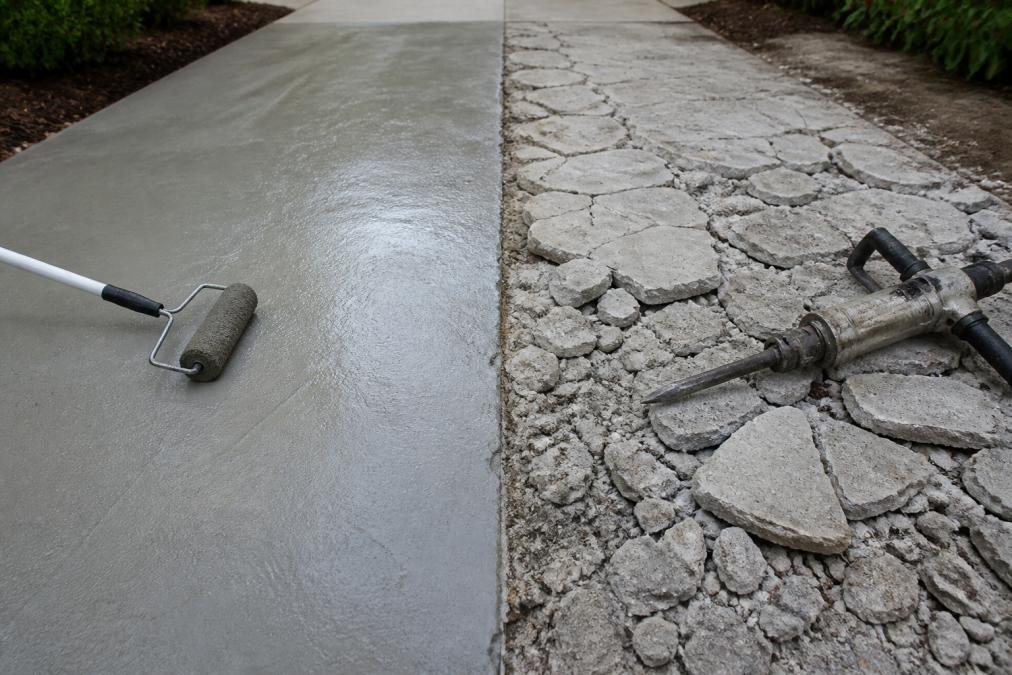
Table of Contents
- Concrete Resurfacing vs Replacement: Key Differences
- Concrete Resurfacing Cost Per Square Foot
- Replacement Cost and Factors That Influence Price
- Signs Your Concrete Needs to Be Replaced
- How Long Does Concrete Resurfacing Last
- Pros and Cons: Resurfacing vs Full Replacement
- Making Your Decision: When to Resurface and When to Replace
- Conclusion
Last Updated: August 9, 2026
Concrete Resurfacing vs Replacement: Key Differences
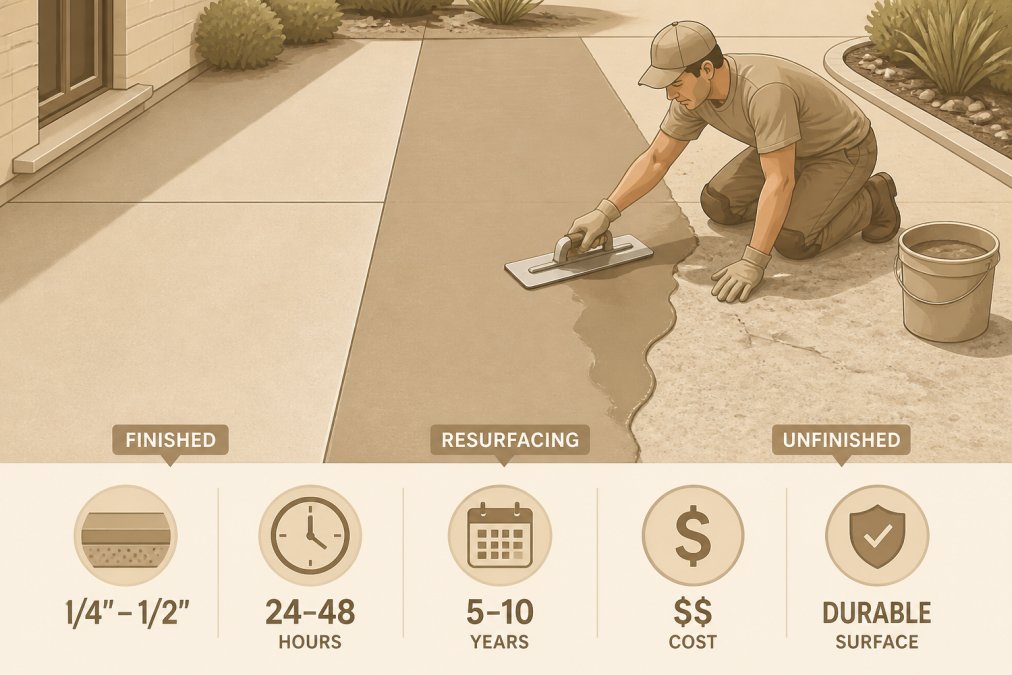
Resurfacing addresses surface-level wear, spalling, minor cracking, and discoloration by applying a fresh layer over sound concrete. Replacement tears out the entire slab and pours new concrete from the sub-base up, necessary when structural integrity is compromised.
This distinction determines both immediate costs and long-term durability. Resurfacing costs a fraction of replacement but only works if the concrete underneath is structurally sound. If the foundation has shifted, deep cracks run through the slab, or the sub-base has failed, resurfacing merely postpones the inevitable problem.
At Concrete-Enhancements, we've evaluated thousands of concrete surfaces across the Raleigh-Durham Triangle and NC Triad. The most common mistake homeowners make is assuming surface damage means the whole slab is failing, it doesn't. But you can't resurface concrete that's structurally compromised.
Key indicators are location and depth of damage. Surface spalling, worn finishes, and shallow cracks (under 1/4 inch) are resurfacing candidates. Deep structural cracks, foundation settlement, water intrusion, or slab deterioration extending through full thickness demand replacement.
Concrete Resurfacing Cost Per Square Foot
Concrete resurfacing cost per square foot depends on the resurfacing compound and surface preparation required. DIY products like Quikrete Re-Cap range from $0.50 to $0.75 per square foot in material costs alone. Professional resurfacing involves surface preparation, shot blasting, acid etching, or grinding, to ensure proper bonding, adding significant labor costs.
The real cost driver is labor and site conditions. A simple decorative overlay on a clean patio differs vastly from resurfacing a heavily trafficked warehouse floor with moisture issues or freeze-thaw exposure. Concrete-Enhancements provides free estimates because final cost depends on factors unique to your surface: overlay thickness needed, existing damage severity, site accessibility, and climate considerations for the NC Triad region.
For DIY projects on small areas under 500 square feet, resurfacing compounds offer genuine savings. For larger areas or commercial settings, professional installation ensures proper adhesion and durability standards for your specific use case.
Replacement Cost and Factors That Influence Price
Full concrete replacement removes the existing slab, addresses sub-base stability, and pours new concrete from the foundation up. This is substantially more expensive than resurfacing but is the only option when structural integrity is compromised.
Factors influencing replacement cost include slab thickness (typically 4 inches for residential driveways, up to 6 inches for commercial use), concrete strength (usually 3,000-4,000 psi for residential), site preparation, and regional labor rates. Proper sub-base preparation with compacted gravel or stone base and correct drainage is critical to prevent future foundation settlement.
Climate plays a major role. In the NC Triad and Coastal SC, freeze-thaw resistance matters. Concrete exposed to winter moisture and temperature cycles needs air entrainment and proper curing to resist spalling and cracking. This affects material selection and total cost.
Permitting requirements vary by jurisdiction. Some municipalities require permits for concrete replacement on residential property, particularly if the work affects drainage or property lines. HOA requirements may mandate specific finishes or colors. Labor costs are the largest variable, reflecting experience, equipment, and local market rates. Concrete-Enhancements handles both residential and commercial projects across the region, and accurate pricing requires site evaluation.
Signs Your Concrete Needs to Be Replaced
Deep structural cracks wider than 1/4 inch, running through the full depth of the slab or showing signs of active movement, suggest foundation issues. These indicate foundation settlement, soil movement, or freeze-thaw damage that's compromised structural integrity.
Extensive spalling accompanied by rebar exposure is another red flag. If spalling is widespread or exposes reinforcing steel, the damage has progressed beyond surface wear. Rust-stained concrete signals that water has penetrated and begun corroding the rebar, accelerating deterioration.
Water intrusion and drainage failure are critical. If water pools on the concrete or seeps into adjacent structures, the slab may be cracked or the sub-base may have failed. Resurfacing won't address these underlying problems. Heaving or settling, where sections have shifted relative to one another, indicates the foundation has moved and replacement is necessary.
Widespread cracking in a pattern (map cracking or crazing) suggests improper curing, poor compressive strength, or systemic stress. This typically means the concrete has reached the end of its serviceable life.
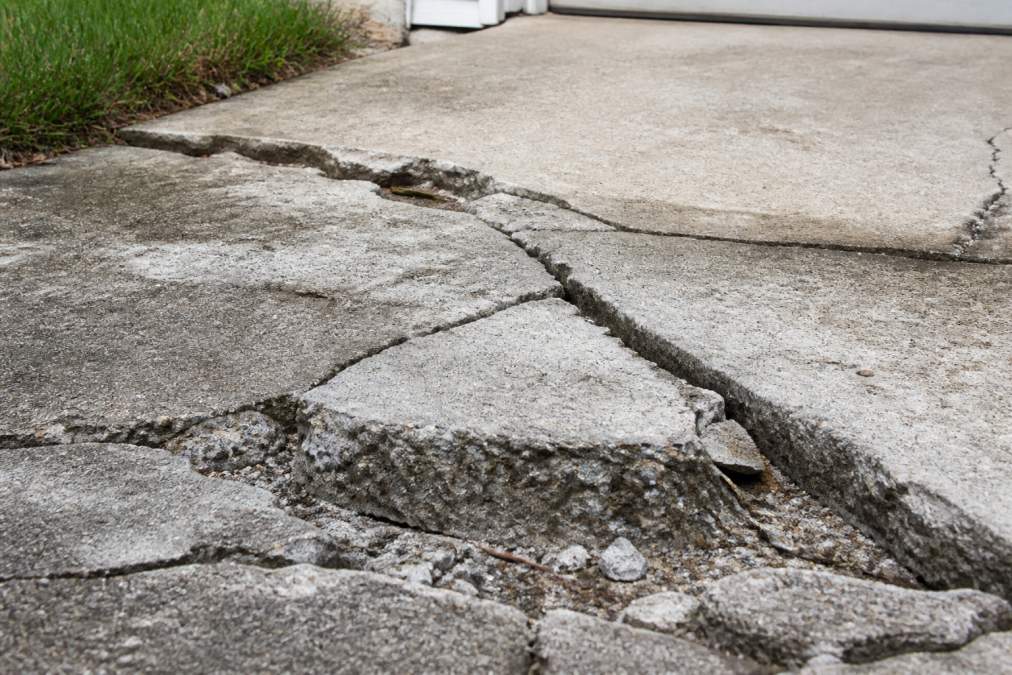
The simplest test: if damage is confined to the surface and the concrete underneath is solid and sound, resurfacing works. If damage suggests deeper problems, if the slab is moving, if water is penetrating, if structural cracks are widening, replacement is the only lasting solution.
How Long Does Concrete Resurfacing Last
A properly applied resurfacing compound lasts 10-15 years in residential settings with normal foot traffic. Commercial applications with heavy traffic or chemical exposure may see 5-10 years unless specifically designed for those conditions.
Polymer-modified resurfacers like Quikrete Re-Cap improve bonding and flexibility, reducing separation risk. However, performance depends on proper surface preparation. If the old concrete surface isn't adequately profiled and cleaned, bonding fails and the resurfacer peels within months.
Rust-Oleum Concrete Saver Pro is formulated for freeze-thaw resistance, extending lifespan in climates like the NC Triad. The microfiber reinforcement adds durability, but even premium products require maintenance. Sealers protect the surface from UV degradation and water penetration, extending life by 3-5 years if reapplied every 2-3 years.
Call (919) 824-5403 or email craigrfear@gmail.com for a free estimate →
Professional decorative overlays and epoxy coatings can last 15-20 years when properly maintained. The difference lies in substrate preparation, bonding agents, and finishing systems. A professionally applied overlay on properly prepared concrete, sealed and maintained according to specifications, delivers superior durability.
Maintenance matters. Resurfacing lasts longest when sealed regularly, kept clean, and protected from harsh chemicals or extreme temperatures. In high-traffic commercial settings, periodic resealing every 1-2 years keeps the surface protected.
The trade-off is clear: resurfacing lasts 10-20 years depending on conditions and maintenance, while properly installed replacement should last 30-40+ years. This lifespan difference is key in the cost-benefit analysis.
Pros and Cons: Resurfacing vs Full Replacement
Concrete Resurfacing Pros:
- Lower upfront cost, typically a fraction of replacement
- Faster project timeline, most completes in days, not weeks
- Less disruption, no equipment-heavy tear-out process
- Suitable for cosmetic upgrades and sound concrete with surface-level wear
Concrete Resurfacing Cons:
- Only works if substrate is structurally sound
- Shorter lifespan, 10-20 years versus 30-40 for replacement
- Requires meticulous surface preparation; poor prep leads to failure
- Doesn't address drainage or sub-base issues
Full Replacement Pros:
- Solves structural problems permanently
- Longer lifespan, 30-40+ years with proper installation
- Customizable concrete strength, thickness, and finish
- Addresses drainage with proper slope and grading
- Clean slate eliminates concerns about old concrete's history
Full Replacement Cons:
- Significantly higher cost, often 3-5x resurfacing
- Extended timeline, 3-4 weeks including tear-out and curing
- Major disruption with equipment, noise, and debris removal
- Overkill for surface damage if concrete is structurally sound
- Longer before return to service due to curing time
The decision hinges on whether the concrete is salvageable. If structurally sound, resurfacing delivers excellent value. If the foundation is failing, replacement is the only logical choice.
Making Your Decision: When to Resurface and When to Replace
Start with a professional assessment. Visual inspection alone doesn't reveal sub-base stability or internal cracking. A contractor can perform simple tests, checking for rebar corrosion, assessing crack depth, evaluating drainage, to determine whether the slab is sound.
Resurface if:
- Damage is confined to the surface (spalling, shallow cracks, discoloration)
- The concrete slab is not moving or settling
- Water drains properly and doesn't pool
- The structural integrity of the slab is intact
- You want to refresh appearance or improve slip resistance
Replace if:
- Deep structural cracks run through the slab
- The concrete is heaving, settling, or showing uneven surfaces
- Water intrusion or drainage failure is present
- Rebar is exposed or corroded
- The slab has failed freeze-thaw cycles extensively
- You need a long-term solution with minimal maintenance
Consider long-term value. Resurfacing costs less today but may require replacement in 10-15 years. Replacement costs more upfront but provides 30+ years of service. If you plan to stay long-term, replacement often delivers better value per year of service.
In the NC Triad, where freeze-thaw cycles are common, concrete that's been through multiple winters may have internal damage not visible on the surface. A surface that looks fine might fail within a few years if the underlying concrete has been compromised by ice expansion and contraction.
Concrete-Enhancements provides free estimates and honest assessments. We've worked on thousands of projects across the Raleigh-Durham Triangle and NC Triad, and we'll tell you whether your concrete is a resurfacing candidate or needs replacement.
Concrete damage doesn't resolve itself, and delaying the decision only worsens the problem. Whether your driveway, patio, warehouse floor, or commercial space needs resurfacing or replacement, the right choice depends on honest assessment of what's actually wrong. Concrete-Enhancements has spent over 20 years helping property owners in the Raleigh-Durham Triangle, NC Triad, and Coastal SC make this decision correctly. Our CTi Certified expertise means we evaluate structural integrity, not just surface appearance. Contact us at (919) 824-5403 or craigrfear@gmail.com for a free estimate.
| Decision Factor | Resurface | Replace |
|---|---|---|
| Structural soundness required | Yes, must be intact | No, addresses failure |
| Upfront cost | Lower | Higher |
| Project timeline | Days | 3-4 weeks |
| Lifespan | 10-20 years | 30-40+ years |
| Best for surface damage | Yes | No, overkill |
| Best for structural failure | No | Yes |
| Maintenance needed | Periodic resealing | Minimal |
| Long-term value | Good if sound | Better if long-term |
Frequently Asked Questions
Is concrete resurfacing worth it compared to full replacement?
Resurfacing makes sense when structural integrity remains sound but the surface is worn, spalled, or discolored. It typically costs 40-60% less than full replacement and can extend concrete life by 7-10 years. However, if the slab is settling, has deep cracks, or shows signs of sub-base failure, replacement is the only lasting solution. Resurfacing is worth it for cosmetic damage; replacement is necessary for structural problems.
How long does concrete resurfacing last compared to a new pour?
Professional concrete resurfacing typically lasts 7-10 years with proper maintenance, while a full replacement can last 25-30 years or more. The difference depends on the resurfacing material, climate conditions, and traffic load. Freeze-thaw cycles in North Carolina winters can shorten resurfacing lifespan if the bonding agent or topping material lacks proper freeze-thaw resistance. A new pour starts with full structural capacity, while resurfacing depends entirely on the integrity of the existing slab underneath.
What is concrete resurfacing cost per square foot in North Carolina?
Concrete resurfacing cost per square foot varies based on surface preparation, material selection, and project complexity. DIY resurfacers range from $0.50 to $1.50 per square foot for materials alone, while professional resurfacing typically costs more due to labor and specialized equipment. Factors like shot blasting, acid etching, bonding agents, and decorative finishes all affect final pricing. Contact Concrete-Enhancements for a free estimate to get accurate pricing for your specific project in the Raleigh-Durham Triangle or NC Triad.
At what point is concrete damage too severe for resurfacing?
Resurfacing cannot fix structural problems like foundation settlement, significant sub-base instability, or load-bearing capacity loss. If concrete shows signs of sinking, has cracks wider than 1/4 inch that run deep, or exhibits spalling over more than 30% of the surface, replacement is likely necessary. Resurfacing also won't solve moisture vapor transmission issues or address problems beneath the slab. A professional inspection can determine whether the concrete's structural integrity is salvageable.
This article was written using GrandRanker
Frequently Asked Questions
Resurfacing makes sense when structural integrity remains sound but the surface is worn, spalled, or discolored. It typically costs 40-60% less than full replacement and can extend concrete life by 7-10 years. However, if the slab is settling, has deep cracks, or shows signs of sub-base failure, replacement is the only lasting solution. Resurfacing is worth it for cosmetic damage; replacement is necessary for structural problems.
Professional concrete resurfacing typically lasts 7-10 years with proper maintenance, while a full replacement can last 25-30 years or more. The difference depends on the resurfacing material, climate conditions, and traffic load. Freeze-thaw cycles in North Carolina winters can shorten resurfacing lifespan if the bonding agent or topping material lacks proper freeze-thaw resistance. A new pour starts with full structural capacity, while resurfacing depends entirely on the integrity of the existing slab underneath.
Concrete resurfacing cost per square foot varies based on surface preparation, material selection, and project complexity. DIY resurfacers range from $0.50 to $1.50 per square foot for materials alone, while professional resurfacing typically costs more due to labor and specialized equipment. Factors like shot blasting, acid etching, bonding agents, and decorative finishes all affect final pricing. Contact Concrete-Enhancements for a free estimate to get accurate pricing for your specific project in the Raleigh-Durham Triangle or NC Triad.
Resurfacing cannot fix structural problems like foundation settlement, significant sub-base instability, or load-bearing capacity loss. If concrete shows signs of sinking, has cracks wider than 1/4 inch that run deep, or exhibits spalling over more than 30% of the surface, replacement is likely necessary. Resurfacing also won't solve moisture vapor transmission issues or address problems beneath the slab. A professional inspection can determine whether the concrete's structural integrity is salvageable.