ultimate-guide
Epoxy Flooring for Retail Spaces: A Complete Guide
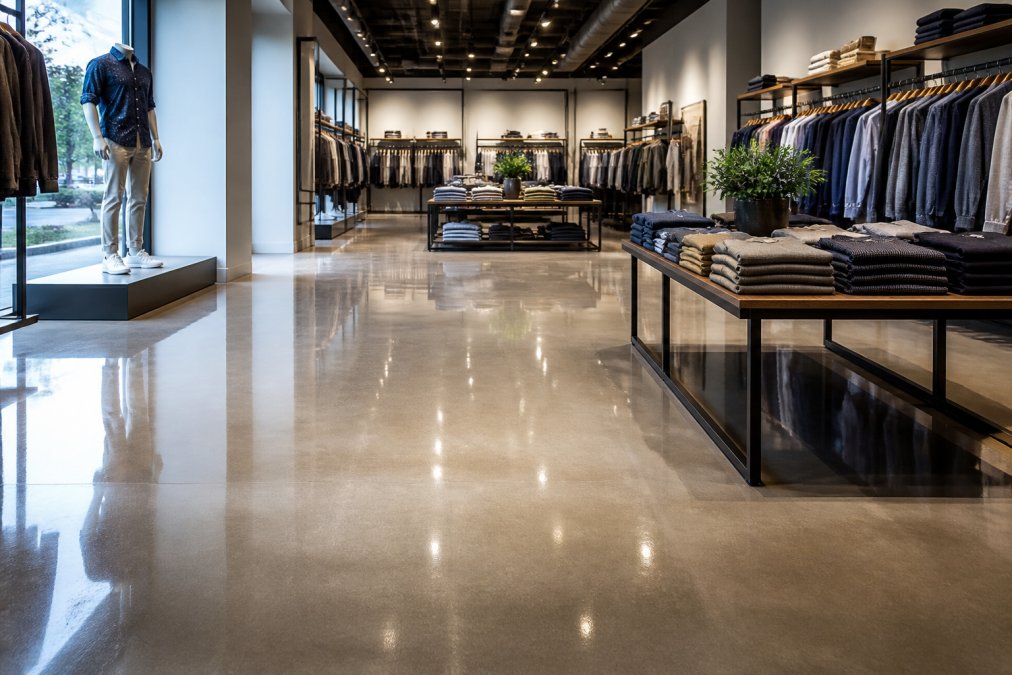
Table of Contents
- Why Retail Spaces Need Epoxy Flooring
- Durability and Performance in High-Traffic Environments
- Slip-Resistant Epoxy Coatings for Stores
- Commercial Epoxy Flooring Cost Per Square Foot
- Epoxy Floor Maintenance for High-Traffic Areas
- Design Flexibility and Aesthetic Appeal
- Sustainability and Compliance Standards
- Conclusion
Last Updated: August 18, 2026
Why Retail Spaces Need Epoxy Flooring
Retail environments face relentless demands on their floors. Customers walk across them constantly, shopping carts roll over them, spills happen daily, and the surface must look pristine while withstanding punishment. Most traditional flooring options deteriorate quickly under these conditions, requiring frequent repairs and replacement. This is where epoxy flooring for retail spaces becomes essential.
Epoxy flooring for retail spaces solves the core problem: durability meets aesthetics. Unlike concrete, vinyl, or tile that crack, stain, and wear visibly, epoxy creates a non-porous, seamless surface that resists damage while maintaining visual appeal. Retailers choose epoxy because it eliminates the gap between what they need functionally and what they want visually.
The real advantage isn't just that epoxy lasts longer. It's that it performs while looking expensive. A showroom with epoxy flooring signals quality to customers. The reflective gloss, the absence of seams, the clean edges, these details communicate investment and professionalism. That perception matters when customers are deciding whether your space feels premium or discount.
Concrete-Enhancements has worked with retail clients across the Raleigh-Durham Triangle and NC Triad who needed flooring that could handle heavy foot traffic without constant maintenance. The difference between a floor that requires monthly deep cleaning and one that needs weekly sweeping is substantial when you're running a business.
Durability and Performance in High-Traffic Environments
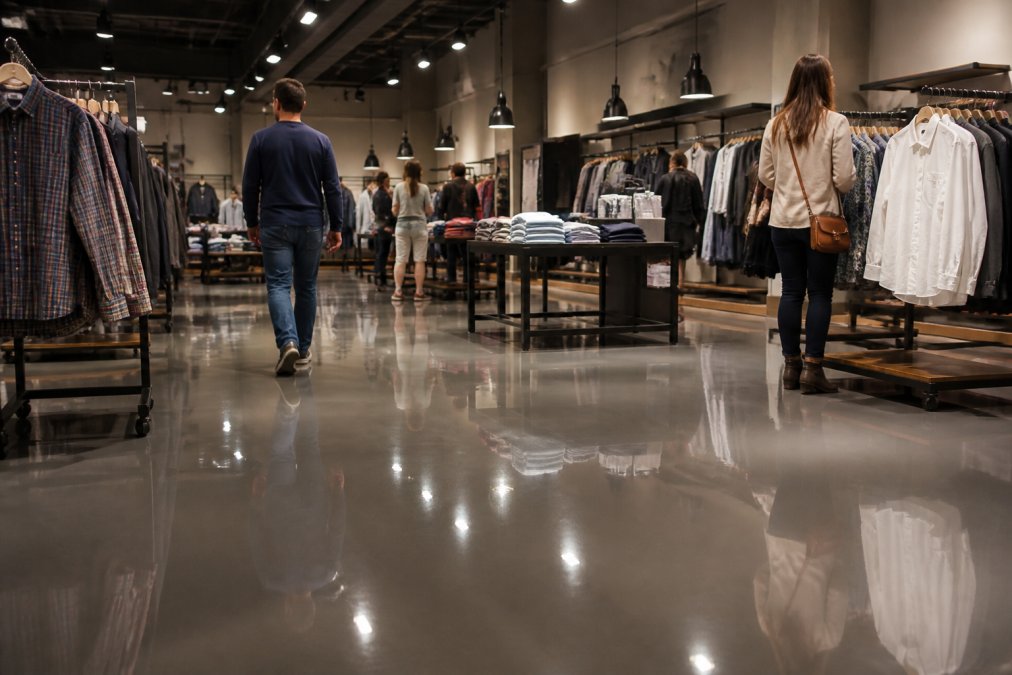
Epoxy flooring for retail spaces delivers durability that other materials simply cannot match. The surface creates an industrial-strength protective layer over concrete that resists abrasion, impact, and chemical spills. High-traffic environments like grocery stores, clothing retailers, and showrooms demand flooring that survives thousands of footsteps daily without visible wear.
The performance comes from the chemistry of the coating itself. Epoxy bonds at a molecular level to concrete, creating a unified surface rather than a layer sitting on top. This bond means the floor doesn't peel, chip, or separate the way applied coatings sometimes do. When properly installed, commercial-grade epoxy withstands heavy-duty performance demands that would destroy standard flooring within months.
Traffic patterns in retail spaces concentrate wear in specific zones, checkout areas, entrance paths, high-traffic aisles. Standard concrete shows visible wear in these spots within a year. Epoxy maintains its appearance across all zones because the surface resists abrasion uniformly. The protective topcoat on quality epoxy systems is engineered specifically for this: impact resistance and load-bearing capacity that handles shopping carts, rolling displays, and constant foot traffic.
The longevity advantage compounds over time. A retail floor installed with proper substrate preparation and curing time can perform reliably for 10-15 years with standard maintenance. That's not just durability, it's cost-effectiveness. Most retailers recoup their investment through avoided replacement and repair costs within the first five years.
One critical factor: substrate preparation determines everything. Concrete must be properly prepared, moisture mitigation handled correctly, and curing time respected before the space opens. This is where professional installation matters. A DIY approach or rushed job typically fails within 12-24 months, which is why many retailers who attempt epoxy themselves end up calling professionals to fix it.
Slip-Resistant Epoxy Coatings for Stores
Safety in retail spaces is non-negotiable. A customer who slips and falls creates liability, damages reputation, and disrupts operations. Slip-resistant epoxy coatings for stores address this critical concern while maintaining the aesthetic benefits of seamless flooring.
Standard epoxy has a smooth, glossy finish. That finish looks premium but can be slippery, especially when wet. The solution is a slip-resistant coating system that adds texture or aggregate to the surface without sacrificing the polished appearance. These coatings meet safety standards while preserving the visual profile retailers want.
The slip resistance comes from adding grit or aggregate particles to the epoxy during application. The particles create microscopic texture that provides traction without creating a rough, industrial appearance. Retail showrooms can have a professional, high-end look with genuine slip resistance, they're not mutually exclusive.
Different retail environments need different levels of grip. A clothing boutique with minimal water exposure needs less aggressive texture than a grocery store produce section where moisture is constant. The coating system can be calibrated to match the actual hazard level in each area. This targeted approach prevents over-engineering in low-risk zones while ensuring safety where it matters most.
Slip-resistant epoxy coatings for stores also simplify compliance. Safety standards exist for commercial flooring, and epoxy systems designed with slip resistance built in meet these requirements. Documentation of the coating system, installation date, and maintenance schedule provides evidence of due diligence if liability questions ever arise.
Commercial Epoxy Flooring Cost Per Square Foot
Cost is the question every retailer asks first. Commercial epoxy flooring cost per square foot varies based on multiple factors: floor condition, size, complexity of design, substrate preparation requirements, and whether moisture mitigation is needed. Understanding these variables helps you evaluate quotes accurately.
The foundation of pricing is substrate condition. A concrete floor that's clean, structurally sound, and properly prepared costs less than one requiring repair, grinding, or moisture mitigation. A 5,000-square-foot retail space with good concrete might need only surface preparation. A warehouse with cracks, settling, or moisture issues requires extensive remediation before epoxy application.
Design complexity also affects cost. A solid-color epoxy floor costs less than one with custom color blending, decorative flakes, or metallic effects. A seamless installation in one color is straightforward. A floor with branded colors, logos, or multi-color sections requires more material, labor, and precision.
Curing time and project timing matter too. Epoxy requires specific conditions during curing, temperature, humidity, and time before foot traffic. A retail space that must reopen quickly might need expedited scheduling, which affects labor costs. A project scheduled during off-hours or closing periods involves different logistics than one done overnight.
Moisture mitigation is often the hidden cost driver. If the concrete has moisture issues, the epoxy system must include moisture barriers or moisture-resistant primers. This adds material and labor but is essential for floor longevity. Skipping this step to save money upfront typically results in failure within 12-18 months.
Rather than guessing at cost per square foot, the practical approach is getting a professional assessment. Concrete-Enhancements provides free estimates that account for your specific floor condition, design preferences, and timeline. This removes guesswork and ensures pricing reflects actual requirements rather than generic assumptions.
Epoxy Floor Maintenance for High-Traffic Areas
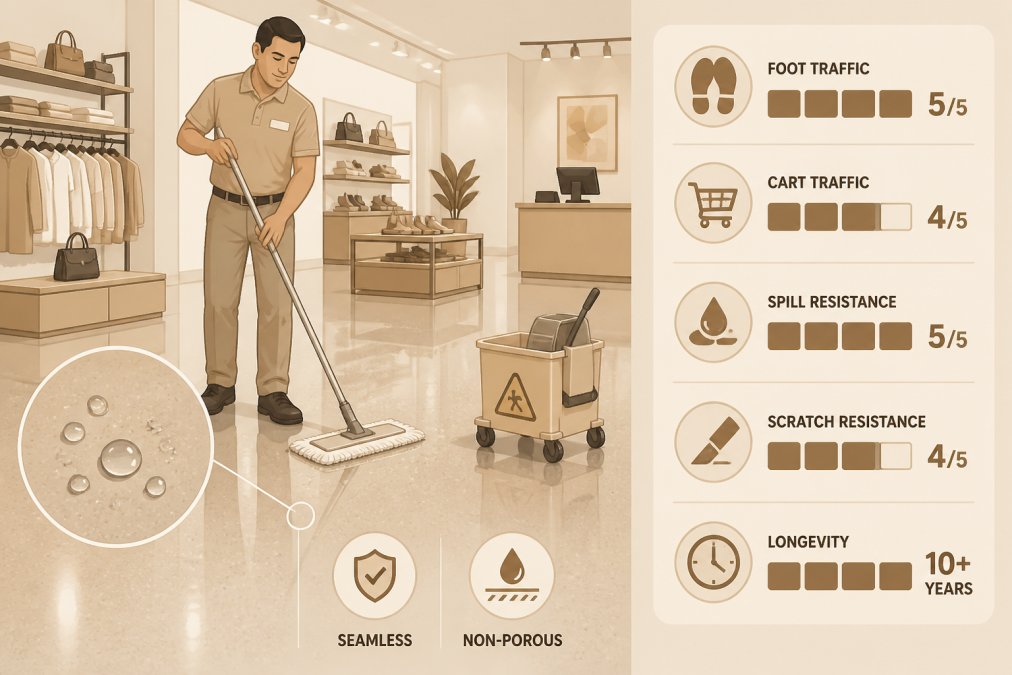
Maintenance requirements are where epoxy flooring for retail spaces delivers exceptional value. Unlike porous concrete that absorbs spills and requires sealing, or tile that traps dirt in grout lines, epoxy is inherently low-maintenance. The non-porous surface resists staining and cleaning is straightforward.
Daily maintenance in high-traffic retail areas is simple: sweeping to remove debris and damp mopping with mild detergent solution. The seamless surface means no crevices where dirt accumulates. Spills wipe up immediately without leaving stains. This simplicity reduces labor costs compared to other flooring types that require specialized cleaning protocols.
Call (919) 824-5403 or email craigrfear@gmail.com for a free estimate →
Regular maintenance schedule for epoxy floors in retail environments typically includes:
- Daily sweeping and damp mopping
- Weekly deep cleaning with appropriate commercial cleaners
- Monthly inspection for damage or wear
- Annual professional cleaning and inspection
Chemical spill protection is built in. Retail environments encounter various substances, cleaning products, food items, oils, solvents. Epoxy resists these without damage. A spill that would stain concrete or damage tile simply wipes away from epoxy. This resistance eliminates the anxiety of accidental damage during normal operations.
The protective topcoat on quality epoxy systems is engineered for maintenance. It can handle commercial cleaning equipment, pressure washing (at appropriate pressure), and chemical cleaners without degradation. This durability under cleaning is what extends floor longevity, the floor improves with proper care rather than deteriorating.
One maintenance protocol matters most: addressing damage immediately. A small chip or crack in epoxy should be repaired promptly to prevent moisture infiltration. Professional repair of minor damage is far less expensive than allowing damage to expand. This is where the relationship with your epoxy installer matters, they can handle touch-ups and repairs that keep the floor performing at its best.
Design Flexibility and Aesthetic Appeal
Epoxy flooring for retail spaces offers design flexibility that traditional flooring cannot match. The seamless surface becomes a design element rather than just a functional necessity. Retailers use epoxy to reinforce brand identity, guide customer flow, and create visual interest.
Color options range from solid neutrals to custom blends. A luxury showroom might choose deep charcoal or polished black epoxy for sophistication. A bright retail environment might use white or light gray epoxy to enhance the perception of space and cleanliness. The gloss finish reflects light, making spaces feel larger and brighter than they actually are.
Decorative epoxy systems add branded elements. Logos, directional graphics, or color zones can be incorporated into the epoxy design. A grocery store might use color coding to distinguish produce, dairy, and meat sections. A showroom might feature the brand name or logo subtly integrated into the floor design. These elements guide customers while reinforcing brand presence.
Metallic epoxy finishes create premium aesthetics that appeal to high-end retail. The swirling, three-dimensional effect of metallic epoxy makes floors visually striking. Customers notice and remember a space with distinctive flooring, it becomes part of the retail experience.
The aesthetic appeal extends beyond color and design. The seamless, non-porous surface conveys cleanliness and quality. Grout lines, seams, and visible wear communicate age and neglect. A pristine epoxy floor communicates investment and attention to detail. This perception influences customer behavior and loyalty.
Lighting interacts with epoxy finishes in ways that matter for retail. A high-gloss epoxy reflects overhead lighting, creating brightness without additional fixtures. This can reduce energy costs while improving the visual environment. A matte or satin epoxy finish provides a more subdued aesthetic suitable for different retail concepts.
Sustainability and Compliance Standards
Epoxy flooring for retail spaces can meet sustainability requirements and compliance standards that increasingly matter to retailers. Environmental concerns and regulatory requirements are reshaping how businesses evaluate materials and installation practices.
VOC emissions are the primary environmental consideration. Traditional epoxy systems released volatile organic compounds during curing, affecting indoor air quality. Modern low-VOC and zero-VOC epoxy formulations minimize these emissions. Retailers concerned with employee and customer health can specify epoxy systems that meet strict VOC standards without sacrificing performance.
The longevity of epoxy flooring contributes to sustainability. A floor that lasts 10-15 years without replacement reduces waste and resource consumption compared to flooring that requires replacement every 3-5 years. The reduced maintenance needs also mean fewer cleaning chemicals and lower water consumption over the floor's lifetime.
Installation practices affect sustainability too. Proper substrate preparation and installation reduce the need for repairs and replacement. A floor installed correctly the first time doesn't require remediation work that generates waste and consumes additional resources. This is where professional installation from experienced contractors matters, they understand how to execute properly the first time.
Safety compliance standards apply to commercial flooring. OSHA guidelines, ADA accessibility requirements, and slip-resistance standards all factor into epoxy floor specification. A properly designed and installed epoxy system meets these requirements, protecting retailers from liability and ensuring the space is safe for employees and customers.
Local building codes govern flooring in commercial spaces. Epoxy systems must be specified and installed according to these codes. Professional installers understand regional requirements and ensure the floor meets all applicable standards. This compliance protects the retailer and ensures the investment is legally sound.
Retail spaces demand flooring that performs under relentless conditions while looking professional. Epoxy flooring for retail spaces delivers durability, safety, and aesthetic appeal in one seamless solution. The investment in proper installation pays dividends through reduced maintenance, extended floor longevity, and the visual impact that influences customer perception.
If you're managing a retail space facing floor challenges, worn concrete, staining, slip hazards, or simply outdated appearance, professional epoxy flooring is worth serious consideration. Concrete-Enhancements has over 20 years of experience transforming retail environments across the Raleigh-Durham Triangle and NC Triad. As a CTi Certified Dealer, we understand commercial-grade epoxy installation, substrate preparation, and the specific demands of high-traffic retail environments. Contact us at (919) 824-5403 or craigrfear@gmail.com for a free estimate. We'll assess your floor condition, discuss design options, and provide transparent pricing based on your actual requirements.
Frequently Asked Questions
Is epoxy flooring good for commercial use?
Yes. Epoxy flooring is specifically engineered for commercial environments. It resists abrasion, chemical spills, and impact damage while maintaining a non-porous surface that prevents dirt and bacteria from embedding. Retail spaces benefit from its durability in high-traffic areas, ease of cleaning, and ability to withstand heavy foot traffic without wearing through. Most commercial-grade epoxy systems last 5-10 years with proper maintenance, making it a cost-effective choice for showrooms, grocery stores, and other retail environments.
What is the downside of epoxy flooring?
The main drawbacks are surface slipperiness on smooth finishes and moisture sensitivity during installation. Epoxy requires proper substrate preparation and curing time, typically 24-72 hours before foot traffic is allowed. If applied over damp concrete or in humid conditions, it can fail prematurely. Additionally, while epoxy is durable, it can chip or crack under extreme impact. Repairs may require recoating sections rather than patching single spots. Professional installation is essential to avoid these issues.
How long does commercial epoxy flooring last?
Commercial epoxy flooring typically lasts 5-10 years in high-traffic retail spaces, depending on foot traffic volume, maintenance frequency, and environmental conditions. With a protective topcoat and consistent cleaning schedules, many systems remain intact for the upper end of that range. Proper maintenance, regular sweeping, pH-neutral mopping, and prompt spill cleanup, extends longevity significantly. Some industrial-strength systems with multiple topcoats can exceed 10 years. Professional installation and periodic inspection help catch wear early and prevent premature failure.
Can epoxy flooring help with slip resistance in retail stores?
Yes. Slip-resistant epoxy coatings for stores use textured topcoats or anti-slip additives to increase traction on wet or dusty floors. These coatings maintain the durability and easy-cleaning benefits of standard epoxy while improving safety compliance. This is especially important in grocery stores, restaurants, or showrooms where spills occur regularly. The texture does not trap dirt when properly sealed and maintains a professional appearance. Most commercial epoxy systems can be specified with slip-resistant finishes to meet OSHA guidelines and reduce liability.
This article was written using GrandRanker
Frequently Asked Questions
Yes. Epoxy flooring is specifically engineered for commercial environments. It resists abrasion, chemical spills, and impact damage while maintaining a non-porous surface that prevents dirt and bacteria from embedding. Retail spaces benefit from its durability in high-traffic areas, ease of cleaning, and ability to withstand heavy foot traffic without wearing through. Most commercial-grade epoxy systems last 5-10 years with proper maintenance, making it a cost-effective choice for showrooms, grocery stores, and other retail environments.
The main drawbacks are surface slipperiness on smooth finishes and moisture sensitivity during installation. Epoxy requires proper substrate preparation and curing time—typically 24-72 hours before foot traffic is allowed. If applied over damp concrete or in humid conditions, it can fail prematurely. Additionally, while epoxy is durable, it can chip or crack under extreme impact. Repairs may require recoating sections rather than patching single spots. Professional installation is essential to avoid these issues.
Commercial epoxy flooring typically lasts 5-10 years in high-traffic retail spaces, depending on foot traffic volume, maintenance frequency, and environmental conditions. With a protective topcoat and consistent cleaning schedules, many systems remain intact for the upper end of that range. Proper maintenance—regular sweeping, pH-neutral mopping, and prompt spill cleanup—extends longevity significantly. Some industrial-strength systems with multiple topcoats can exceed 10 years. Professional installation and periodic inspection help catch wear early and prevent premature failure.
Yes. Slip-resistant epoxy coatings for stores use textured topcoats or anti-slip additives to increase traction on wet or dusty floors. These coatings maintain the durability and easy-cleaning benefits of standard epoxy while improving safety compliance. This is especially important in grocery stores, restaurants, or showrooms where spills occur regularly. The texture does not trap dirt when properly sealed and maintains a professional appearance. Most commercial epoxy systems can be specified with slip-resistant finishes to meet OSHA guidelines and reduce liability.