ultimate-guide
Finding Concrete Contractors in Durham: A 2026 Guide
Table of Contents
- What to Look for in Concrete Contractors in Durham
- How to Verify a Contractor's License in North Carolina
- Understanding the Cost of Concrete Driveway Work in Durham, NC
- Residential Concrete Services: What Contractors Offer
- Hiring Residential Concrete Contractors: Questions to Ask
- Commercial Concrete Solutions for Durham Businesses
- Concrete Repair vs. Replacement: Making the Right Choice
- Permitting and Local Requirements for Concrete Work in Durham
Last Updated: August 7, 2026
What to Look for in Concrete Contractors in Durham
Finding concrete contractors in Durham requires more than a quick Google search. The difference between a contractor who delivers lasting results and one who cuts corners shows up years later when your driveway cracks or your coating peels. At Concrete-Enhancements, we've worked across the Raleigh-Durham Triangle for over 20 years, and we've seen what separates reliable contractors from those who disappear after the job ends.
When looking for concrete contractors in Durham, focus on three core areas: licensing and insurance, specific experience with your project type, and verifiable references from past work. A licensed contractor in North Carolina is both a legal requirement and your protection if something goes wrong.
Experience matters significantly. A contractor who's done residential driveways for 15 years may struggle with commercial epoxy flooring. Ask potential contractors to describe their most recent three projects matching your specific needs. If they hesitate or speak vaguely, keep looking.
Insurance is non-negotiable. General liability insurance protects you if a worker gets hurt on your property. Workers' compensation insurance protects their employees. Request proof of both before signing anything.
How to Verify a Contractor's License in North Carolina
North Carolina requires concrete contractors to hold proper licensing depending on the scope of work. The Licensing Board for General Contractors maintains a searchable database where you can verify any contractor's license status, disciplinary history, and authorization.
Visit the North Carolina Licensing Board for General Contractors website and use their contractor search tool. Enter the contractor's name or license number. The database shows whether their license is active, what work they're authorized to perform, and any complaints or disciplinary actions. This five-minute step could save you thousands in problems.
Pay attention to the license classification. A contractor licensed for "building construction" may not be authorized for specialized work like epoxy flooring or decorative concrete overlays. If the work requires specific certification, such as CTi Certification for epoxy and coating applications, verify that the contractor holds that credential directly from the certifying body.
Check the disciplinary history carefully. Multiple unresolved complaints or license suspensions are red flags. If anything is unclear, contact the licensing board directly to ask what the complaint involved and how it was resolved.
Understanding the Cost of Concrete Driveway Work in Durham, NC
The cost of concrete driveway work in Durham, NC varies widely based on scope, materials, and complexity. Understanding the factors that drive costs helps you have an informed conversation with contractors.
Concrete driveway pricing depends on several variables: the size of your driveway in square feet, site preparation requirements, and the type of finish you choose. A standard concrete pour costs less than stamped concrete, which costs less than decorative overlays with custom colors and patterns. Material quality and local labor rates also influence final pricing.
Request detailed estimates from multiple contractors. A thorough estimate should break down costs for site preparation, materials, labor, finishing, and additional services. Ask contractors to explain significant price differences between quotes.
Better Business Bureau guidance on contractor estimates recommends getting at least three estimates before deciding. Compare what's included in each quote, not just the bottom-line number.
Residential Concrete Services: What Contractors Offer
Residential concrete contractors in Durham offer a range of services beyond basic driveways. Understanding what's available helps you identify whether your contractor can handle your specific project.
Concrete driveway installation and replacement remains the most common residential service. Quality contractors manage proper site preparation, correct slope for drainage, appropriate thickness based on traffic patterns, and proper curing time.
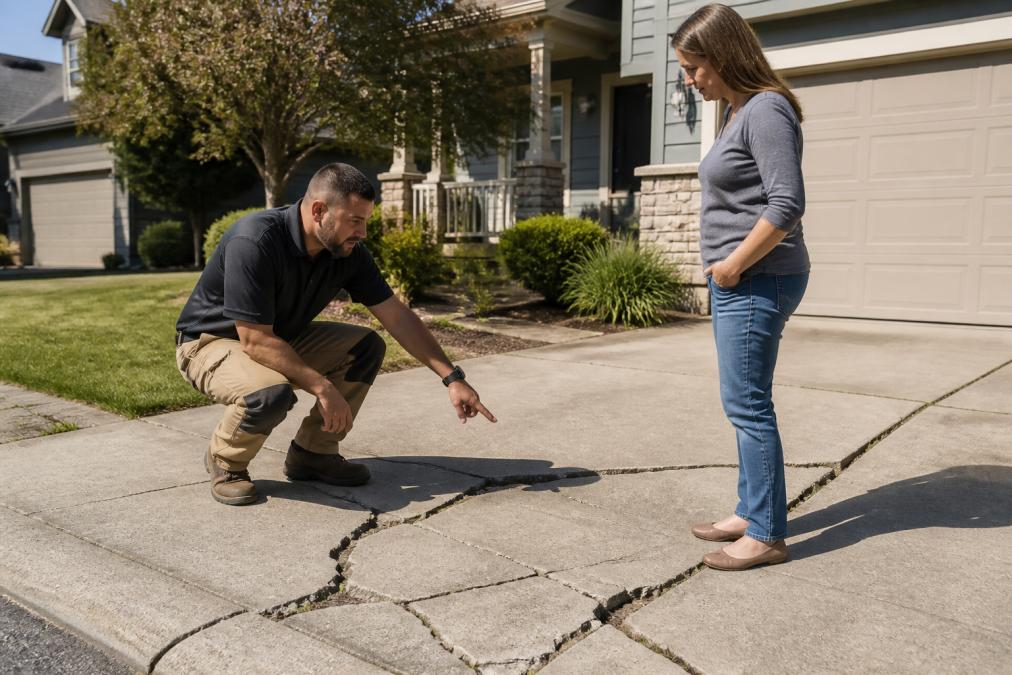
Concrete repair and restoration addresses cracked, spalling, or settling concrete. Some contractors can lift and level settled concrete using mudjacking or polyurethane injection. Others specialize in resurfacing, applying a new concrete layer over damaged existing concrete.
Decorative concrete overlays transform plain concrete into attractive surfaces. These overlays can mimic stone, tile, or other finishes while being more affordable than replacement.
Pool deck resurfacing addresses slip resistance and heat absorption. Specialized contractors apply coatings or overlays designed for pool environments, improving both safety and comfort.
Patio and walkway installation serves both aesthetic and functional purposes. Ask any residential contractor whether they handle all these services or specialize in specific areas. Matching the contractor's specialty to your project type matters more than finding someone who claims to do everything.
Hiring Residential Concrete Contractors: Questions to Ask
The conversation with a potential contractor reveals whether they understand your project and are the right fit. Ask these specific questions before deciding.
Start with project scope and timeline. "How long will this project take?" and "When can you start?" establish realistic expectations. Ask about the specific process they'll follow, including site preparation, material selection, installation steps, and curing requirements.
Ask about experience with your specific project type. "How many residential driveways have you completed in the past two years?" gets concrete examples. Request photos of completed work in Durham, not just portfolio images.
Inquire about materials and product selection. "What concrete mix design will you use?" and "Are there different finish options available?" show whether the contractor thinks through material choices.
Ask about warranty and guarantees. "What warranty do you provide on this work?" and "How do you handle issues that arise after completion?" clarify post-project support.
Discuss payment terms clearly. "What's your deposit requirement?" and "What's your payment schedule?" prevent surprises. Reputable contractors typically ask for a deposit to secure scheduling and materials, with remaining payment due upon completion.
Call (919) 824-5403 or email craigrfear@gmail.com for a free estimate →
Ask about their approach to site management. "How will you protect my property during work?" and "What's your cleanup process?" matter significantly.
Commercial Concrete Solutions for Durham Businesses
Commercial concrete demands durability and performance that residential projects rarely require. Businesses need flooring that handles heavy traffic, resists staining and damage, and maintains appearance with reasonable maintenance.
Commercial parking areas need proper slope for drainage, adequate thickness for vehicle loads, and surface treatments that resist oil staining and weathering. Many commercial properties benefit from seal coating to extend concrete life.
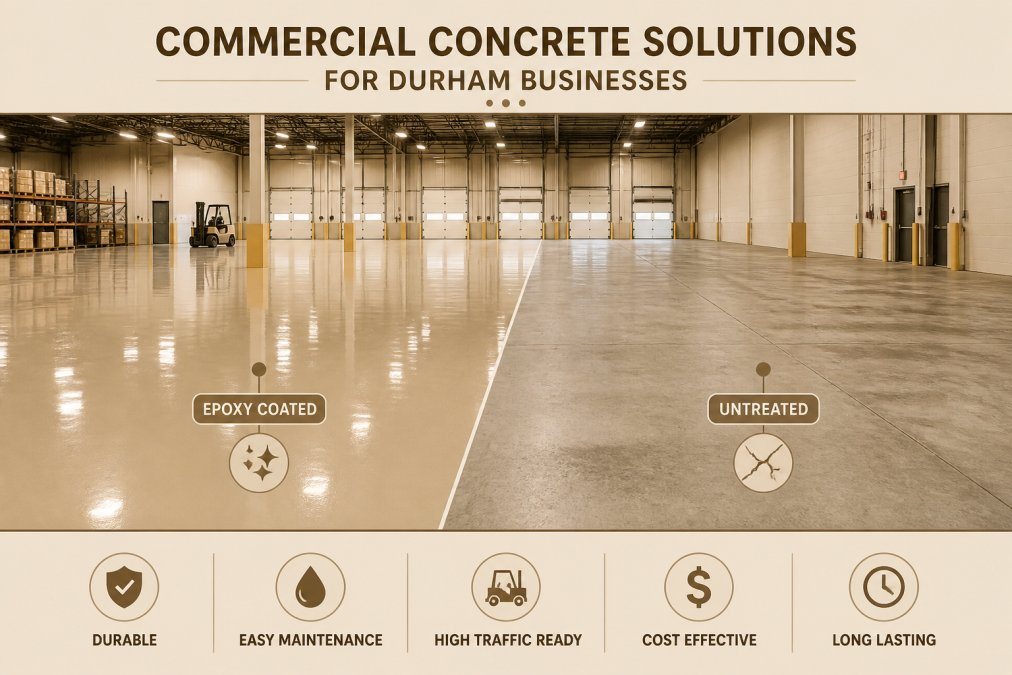
Epoxy flooring transforms warehouse, showroom, and retail spaces. Epoxy coatings create seamless, durable surfaces that resist chemicals, heavy equipment, and constant foot traffic. Commercial facilities with epoxy flooring report easier cleaning, better safety through slip resistance, and dramatically extended concrete lifespan.
Polished concrete offers a different approach for high-end commercial spaces. The concrete itself is ground and polished to a glossy finish, creating a sophisticated appearance suitable for retail showrooms and office lobbies.
Concrete lifting and leveling addresses settling or unevenness in commercial slabs. Contractors use polyurethane injection or mudjacking to lift and level settled concrete without removal and replacement.
Commercial contractors must understand load-bearing requirements, chemical resistance needs, safety standards, and maintenance protocols. A contractor experienced only in residential driveways likely lacks the knowledge for commercial epoxy installation.
Concrete Repair vs. Replacement: Making the Right Choice
When facing damaged concrete, the decision between repair and replacement affects both immediate cost and long-term durability.
Concrete repair makes sense when damage is localized and the underlying slab is structurally sound. Crack repair, spall repair, and resurfacing address surface damage without removing the entire slab. These repairs typically cost significantly less than replacement.
However, repair has limits. If your concrete has extensive cracking patterns, has settled unevenly, or is failing in multiple locations, repair becomes temporary. Replacement becomes the better choice when damage is extensive, when the slab has failed structurally, or when settling is severe.
Consider the age of your concrete. Concrete typically lasts 30-40 years with proper maintenance. If your concrete is in its third or fourth decade, replacement may be more economical than investing in repairs.
Request a detailed assessment from your contractor. Ask them to explain why they recommend repair or replacement for your specific situation. The explanation should reference the extent of damage, the slab's structural condition, and expected durability of their recommended approach.
Permitting and Local Requirements for Concrete Work in Durham
Concrete work in Durham typically requires permits, especially for projects that affect drainage, property lines, or structural elements. Understanding local requirements prevents delays and ensures your project meets code.
The City of Durham Building Inspections Department handles permits for work within city limits. Unincorporated Durham County projects fall under county jurisdiction. Before starting any concrete work, determine which authority has jurisdiction over your property.
Most concrete work requires a permit. This includes new driveway installation, concrete replacement, and structural repairs. Permits ensure your project meets building codes for structural integrity, drainage, and safety.
Site preparation and drainage requirements vary by location. Properties in flood zones face stricter requirements. Contractors familiar with Durham's local requirements understand these nuances.
City of Durham Building Inspections permit requirements provides specific information about what projects require permits and how to apply.
Some contractors handle permit applications as part of their service. Others expect the property owner to obtain permits. Clarify who's responsible before signing a contract.
Navigating concrete work in Durham doesn't have to feel overwhelming. The right contractor makes all the difference, someone who understands local requirements, communicates clearly about costs and timelines, and stands behind their work. Concrete-Enhancements brings over 20 years of experience serving the Raleigh-Durham Triangle with concrete resurfacing, decorative overlays, and professional repair services. Whether you're addressing a cracked driveway, transforming a warehouse floor with epoxy coating, or planning a decorative patio, our CTi Certified team handles every detail. Call (919) 824-5403 or email craigrfear@gmail.com for a free estimate and discover how quality concrete work transforms your property.
| Project Type | Best For | Typical Scope |
|---|---|---|
| Concrete Repair | Localized damage on sound concrete | Crack filling, spall repair, resurfacing |
| Concrete Replacement | Extensive damage or structural failure | Complete slab removal and new pour |
| Decorative Overlay | Aesthetic upgrade without removal | Color, pattern, and texture application |
| Epoxy Flooring | Commercial durability and protection | Seamless coating for warehouses and retail |
| Polished Concrete | High-end commercial appearance | Grinding and polishing for showrooms |
Frequently Asked Questions
How much does a concrete driveway cost in Durham, NC?
The cost of concrete driveway installation or replacement in Durham depends on size, site preparation, concrete finishing options, and local labor rates. A basic driveway typically costs more than simple concrete repair, while decorative overlays and stamped concrete command premium pricing. Get a free estimate from a licensed contractor to understand pricing for your specific project, as quotes vary based on aggregate type, reinforcement, and curing requirements.
How do I verify a concrete contractor's license in North Carolina?
North Carolina requires general contractors to hold a valid license. Check the NC Licensing Board for General Contractors (NCBGC) online database to verify a contractor's license number, status, and any disciplinary history. Ask the contractor for their license number upfront, then cross-reference it on the state board's website. Licensed contractors should carry proof of insurance and bonding. This step protects you from unlicensed work and gives you recourse if problems arise.
What questions should I ask before hiring a residential concrete contractor?
Ask about their experience with your specific project type (driveway, patio, pool deck, or overlay), how long they've been in business, and whether they hold proper licensing and insurance. Request references from recent projects and ask to see examples of work completed 3-5 years ago to verify durability. Clarify what's included in the estimate (site preparation, concrete pouring, finishing, curing time), the project timeline, and their warranty or guarantee. Also ask about their approach to permitting and whether they handle all required inspections.
Is a permit required for concrete work in Durham, NC?
Most concrete projects in Durham require permits, particularly for driveways, patios, and structural repairs. The specific requirements depend on the project scope and location within Durham County. A licensed contractor should handle permit applications as part of their service. Contact the Durham County Building Inspections Department or your local city building office to confirm requirements for your project. Skipping permits can result in fines and complications when selling your property.
This article was written using GrandRanker
Frequently Asked Questions
The cost of concrete driveway installation or replacement in Durham depends on size, site preparation, concrete finishing options, and local labor rates. A basic driveway typically costs more than simple concrete repair, while decorative overlays and stamped concrete command premium pricing. Get a free estimate from a licensed contractor to understand pricing for your specific project, as quotes vary based on aggregate type, reinforcement, and curing requirements.
North Carolina requires general contractors to hold a valid license. Check the NC Licensing Board for General Contractors (NCBGC) online database to verify a contractor's license number, status, and any disciplinary history. Ask the contractor for their license number upfront, then cross-reference it on the state board's website. Licensed contractors should carry proof of insurance and bonding. This step protects you from unlicensed work and gives you recourse if problems arise.
Ask about their experience with your specific project type (driveway, patio, pool deck, or overlay), how long they've been in business, and whether they hold proper licensing and insurance. Request references from recent projects and ask to see examples of work completed 3-5 years ago to verify durability. Clarify what's included in the estimate (site preparation, concrete pouring, finishing, curing time), the project timeline, and their warranty or guarantee. Also ask about their approach to permitting and whether they handle all required inspections.
Most concrete projects in Durham require permits, particularly for driveways, patios, and structural repairs. The specific requirements depend on the project scope and location within Durham County. A licensed contractor should handle permit applications as part of their service. Contact the Durham County Building Inspections Department or your local city building office to confirm requirements for your project. Skipping permits can result in fines and complications when selling your property.