how-to
How to Fix Hot Tire Pickup on Epoxy Floors
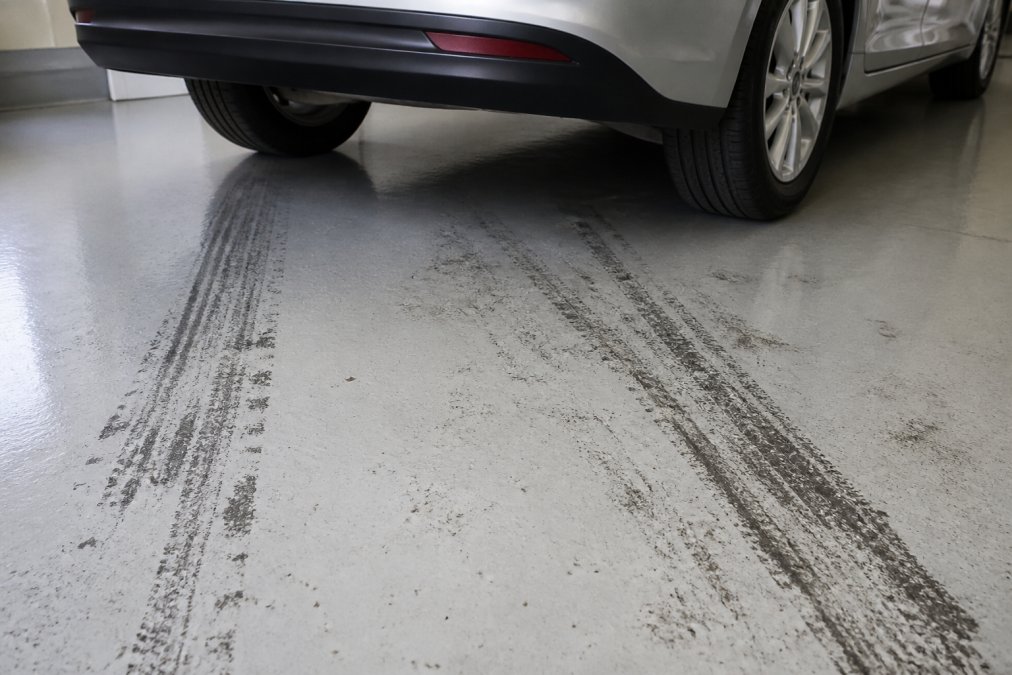
Table of Contents
- What Is Hot Tire Pickup and Why It Damages Epoxy
- Root Causes: Surface Preparation and Adhesion Failure
- Understanding Epoxy Floor Curing Time and Its Impact
- Step-by-Step Repair Process for Hot Tire Pickup Damage
- How to Repair Epoxy Floor Delamination and Peeling
- Preventing Tire Marks on Garage Floor: Protective Strategies
- DIY vs. Professional Repair: Cost and Durability Analysis
- Frequently Asked Questions
Last Updated: September 20, 2026
What Is Hot Tire Pickup and Why It Damages Epoxy
Understanding how to fix hot tire pickup on epoxy starts with knowing that hot tire pickup occurs when hot tires transfer plasticizers and other compounds onto epoxy floors, leaving dark marks or sticky residue. This weakens the coating's integrity over time.
The core issue is adhesion failure: tire residues break the bond between coating and concrete, allowing moisture and contaminants to penetrate deeper.
Hot tire pickup typically occurs in high-traffic garage floors and commercial spaces with heat-generating equipment. Most failures stem from inadequate surface preparation or protection, not flawed epoxy.
Root Causes: Surface Preparation and Adhesion Failure
Most epoxy failures trace back to inadequate surface preparation. The concrete substrate must be properly ground to open pores and cleaned of laitance, dust, and contaminants.
When substrate preparation is inadequate, epoxy sits on top rather than bonding into concrete. Tire plasticizers exploit this weak point, causing peeling or blistering.
Common preparation mistakes include:
- Skipping acid etching or mechanical grinding
- Failing to remove all dust and debris after grinding
- Not allowing concrete to dry completely before application
- Ignoring moisture vapor transmission issues
Adhesion failure also occurs when the wrong epoxy type is chosen.
Understanding Epoxy Floor Curing Time and Its Impact
Epoxy curing time directly affects hot tire pickup resistance. The floor may feel dry within 24 hours, but full polymerization, which creates hardness and chemical resistance, takes 7-14 days.
How Epoxy Cures and Why It Matters for Tire Pickup
Epoxy is a two-part system (resin and hardener) that undergoes an exothermic reaction creating polymer chains. Full polymerization typically requires 7-14 days for standard formulations.
Temperature and Humidity: Regional Factors That Accelerate or Delay Cure
Curing speed depends heavily on environmental conditions, which many homeowners underestimate.
Polyaspartic vs. Standard Epoxy: Cure Speed and Tire Pickup Resistance
Polyaspartic coatings cure in 4-8 hours versus 7-14 days for epoxy, reducing the damage window. Trade-offs: polyaspartic is harder to apply and costs 20-40% more, but offers superior tire plasticizer resistance. Standard epoxy is easier and cheaper but softer during cure.
The Critical Window: Why Parking Too Soon Causes Permanent Damage
The most common mistake is parking vehicles before full cure. Manufacturers recommend 7 days before traffic (assuming 70°F, 50% humidity); add 3-7 days if colder or more humid. Test: press a fingernail into an inconspicuous area, if it leaves an indent, the epoxy is not fully cured.
Step-by-Step Repair Process for Hot Tire Pickup Damage
Learning how to fix hot tire pickup on epoxy requires a systematic approach to repairing the damage. The key is assessing how deep the damage goes, preparing the area correctly, and applying the right repair coating.
Assessing the Damage
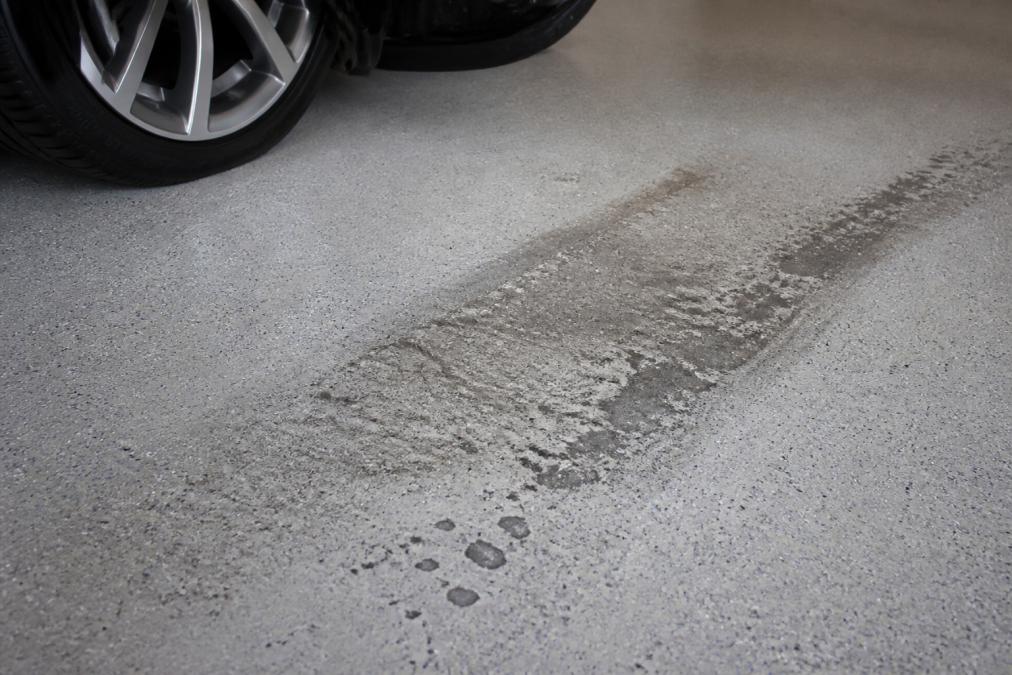
Examine the affected area: light marks that don't feel sticky can often be cleaned with degreaser and a soft-bristle brush. If the mark persists or the epoxy feels soft, the damage has penetrated and requires repair.
Preparing the Substrate
Remove failed epoxy using a concrete grinder, grinding in circular motions to create smooth, tapered edges. This opens concrete pores, allowing the repair coating to bond mechanically.
Call (919) 824-5403 or email craigrfear@gmail.com for a free estimate →
Applying the Repair Coating
Choose repair coating based on severity: standard epoxy for small residential repairs, polyaspartic for commercial spaces. Apply with a roller or brush, feathering edges, in thin even coats. Allow proper cure before traffic. For large repairs, apply a protective topcoat over the entire floor for uniform appearance and extra protection.
How to Repair Epoxy Floor Delamination and Peeling
Delamination (coating separates from substrate) and peeling (edges lift away) accelerate hot tire pickup damage. Repair requires removing the affected section completely: grind out loose epoxy, clean and dry thoroughly, reapply coating, and allow full cure. For areas over 50 sq ft, hire a professional. Key insight: delamination is a symptom of surface preparation or moisture issues; fixing the symptom without addressing the root cause means the problem will return.
Preventing Tire Marks on Garage Floor: Protective Strategies
Prevention strategies include: protective mats in high-traffic areas, protective topcoats designed to resist tire plasticizers, allowing tires to cool before parking, maintaining proper ventilation, and regular monthly cleaning. Combined strategies create multiple barriers against hot tire pickup.
DIY vs. Professional Repair: Cost and Durability Analysis
The decision between DIY and professional repair depends on upfront cost, likelihood of success, and long-term durability.
Cost Breakdown: Materials, Tools, and Hidden Expenses
DIY repair costs $130-$230 for small repairs (under 10 sq ft); professional repair costs $300-$600. However, DIY assumes success on the first attempt. Failed repairs require professional correction, which costs more than hiring a professional initially.
Substrate Preparation: Where Most DIY Repairs Fail
The single largest reason DIY epoxy repairs fail is inadequate substrate preparation. Concrete grinders are expensive to rent, and many homeowners underestimate how thoroughly the substrate must be prepared.
Proper preparation requires:
- Grinding to open concrete pores: The concrete surface must be ground to expose the aggregate and create mechanical tooth for epoxy adhesion. This typically requires 120-180 grit grinding, which takes 2-4 hours for a 10 sq ft area and generates significant dust.
- Dust removal: After grinding, all dust must be removed via vacuum and damp cloth. Residual dust prevents epoxy from bonding, causing the repair to fail within days.
- Moisture testing: Concrete must be tested for moisture vapor transmission. A moisture meter (cost: $30-$100) should show readings below 3 lbs per 1,000 sq ft per 24 hours. Many DIYers skip this step, leading to adhesion failure.
- Drying time: After cleaning, concrete must dry completely. In humid conditions, this can take 24-48 hours. Impatient DIYers often apply epoxy too soon, trapping moisture underneath.
Chemical Compatibility: Choosing the Right Repair Coating
A critical technical decision that many DIYers overlook is chemical compatibility between the existing epoxy and the repair coating. Not all epoxy formulations bond well to each other.
Durability: Why Professional Repairs Last Longer
A properly executed professional repair typically lasts 10-15 years before requiring maintenance or recoating. A successful DIY repair often lasts 3-7 years because:
- Substrate preparation is less thorough: Professional-grade grinding equipment removes more material and opens pores more effectively than rental equipment.
- Environmental control during cure: Professionals manage temperature and humidity during curing. DIYers typically cannot, leading to incomplete polymerization and weaker adhesion.
- Color and texture matching: Professional repairs blend seamlessly with the existing floor. DIY repairs often show visible patches because the repair coating doesn't match the original exactly.
- Warranty and accountability: Professional repairs come with a warranty (typically 1-5 years on workmanship). If the repair fails, the contractor fixes it at no cost. DIY repairs have no recourse.
When DIY Makes Sense
DIY repair is reasonable in these scenarios:
- Small, isolated damage (under 5 sq ft) in a residential garage where you can control vehicle access during curing.
- You have access to proper tools: A quality concrete grinder, moisture meter, and HVAC control (fans or dehumidifiers).
- The existing epoxy is in good condition overall. If the floor shows widespread delamination or peeling, the root problem (poor substrate prep or moisture) likely affects the entire floor, and a patch repair will fail.
- You have time and patience. Proper substrate prep takes 4-8 hours for a small area. Curing requires 7-14 days of vehicle restriction.
When Professional Repair Is Worth the Cost
Hire a professional if:
- The repair area exceeds 10 sq ft. At this size, the cost difference narrows, and professional quality becomes more valuable.
- The damage is widespread or recurring. This signals a root problem (moisture, poor original prep, or incompatible coating) that requires professional diagnosis.
- You cannot control curing conditions. If your garage is cold, humid, or has poor ventilation, professional environmental control is essential.
- You want durability and warranty protection. A professional repair lasts longer and comes with recourse if it fails.
- The floor is in a commercial or high-traffic space. Downtime and liability make professional repair the safer choice.
The Real Cost Calculation
When comparing costs, factor in the probability of success. If a DIY repair has a 60% success rate and a professional repair has a 95% success rate, the true cost of DIY is not just the material cost, it's the material cost plus the 40% probability of paying for a professional correction.
Frequently Asked Questions
How do I stop hot tire pickup on my epoxy garage floor?
Hot tire pickup occurs when tires are hot enough to soften the epoxy coating, causing it to stick to the tire. Prevention starts with proper surface preparation before the coating is applied, removing all laitance, dust, and contaminants ensures strong adhesion. Use protective mats or tire runners in parking areas, allow full curing time before parking vehicles, and maintain the coating with periodic cleaning. If pickup has already started, the affected area usually needs to be ground down and recoated with a high-quality epoxy or polyaspartic system designed to resist thermoplastic softening.
What is the correct epoxy floor curing time before I can park on it?
Full epoxy floor curing time typically ranges from 7 to 14 days, depending on the product formulation, temperature, and humidity. Most epoxy coatings reach initial foot traffic hardness within 24 to 48 hours, but parking vehicles on the surface before full polymerization is complete is a leading cause of hot tire pickup and adhesion failure. Always follow the manufacturer's curing schedule exactly. Rushing this step, even by a few days, significantly increases the risk of tire marks, delamination, and premature peeling.
Can I repair hot tire pickup damage myself, or do I need a professional?
Small, isolated hot tire pickup marks can sometimes be addressed with spot repairs using epoxy filler or touch-up coatings, though results are often inconsistent. Professional repair involves mechanical grinding to remove the damaged layer, thorough substrate preparation, and application of a high-performance topcoat, work that requires specialized equipment and expertise. DIY repairs frequently fail because homeowners underestimate the importance of concrete substrate preparation and proper adhesion. If the damage is widespread or the original coating is peeling, professional repair is almost always more cost-effective long-term than repeated DIY attempts.
How do protective mats and tire runners prevent hot tire pickup?
Protective mats and tire runners create a physical barrier between hot tires and the epoxy coating, preventing direct contact and eliminating the risk of the tire plasticizers softening the resin. These products are especially effective in high-traffic zones or areas where vehicles sit for extended periods in direct sunlight. Rubber or polyurethane-based runners distribute tire heat across a wider surface area, reducing localized temperature spikes. For maximum protection, install runners in all parking spots and consider mats in areas where vehicles are stationary for hours at a time.
Tags: how to fix hot tire pickup on epoxy, epoxy floor curing time, preventing tire marks on garage floor, how to repair epoxy floor delamination
Frequently Asked Questions
Hot tire pickup occurs when tires are hot enough to soften the epoxy coating, causing it to stick to the tire. Prevention starts with proper surface preparation before the coating is applied—removing all laitance, dust, and contaminants ensures strong adhesion. Use protective mats or tire runners in parking areas, allow full curing time before parking vehicles, and maintain the coating with periodic cleaning. If pickup has already started, the affected area usually needs to be ground down and recoated with a high-quality epoxy or polyaspartic system designed to resist thermoplastic softening.
Full epoxy floor curing time typically ranges from 7 to 14 days, depending on the product formulation, temperature, and humidity. Most epoxy coatings reach initial foot traffic hardness within 24 to 48 hours, but parking vehicles on the surface before full polymerization is complete is a leading cause of hot tire pickup and adhesion failure. Always follow the manufacturer's curing schedule exactly. Rushing this step—even by a few days—significantly increases the risk of tire marks, delamination, and premature peeling.
Small, isolated hot tire pickup marks can sometimes be addressed with spot repairs using epoxy filler or touch-up coatings, though results are often inconsistent. Professional repair involves mechanical grinding to remove the damaged layer, thorough substrate preparation, and application of a high-performance topcoat—work that requires specialized equipment and expertise. DIY repairs frequently fail because homeowners underestimate the importance of concrete substrate preparation and proper adhesion. If the damage is widespread or the original coating is peeling, professional repair is almost always more cost-effective long-term than repeated DIY attempts.
Protective mats and tire runners create a physical barrier between hot tires and the epoxy coating, preventing direct contact and eliminating the risk of the tire plasticizers softening the resin. These products are especially effective in high-traffic zones or areas where vehicles sit for extended periods in direct sunlight. Rubber or polyurethane-based runners distribute tire heat across a wider surface area, reducing localized temperature spikes. For maximum protection, install runners in all parking spots and consider mats in areas where vehicles are stationary for hours at a time.