how-to
How to Maintain Epoxy Garage Floors: A Complete Guide
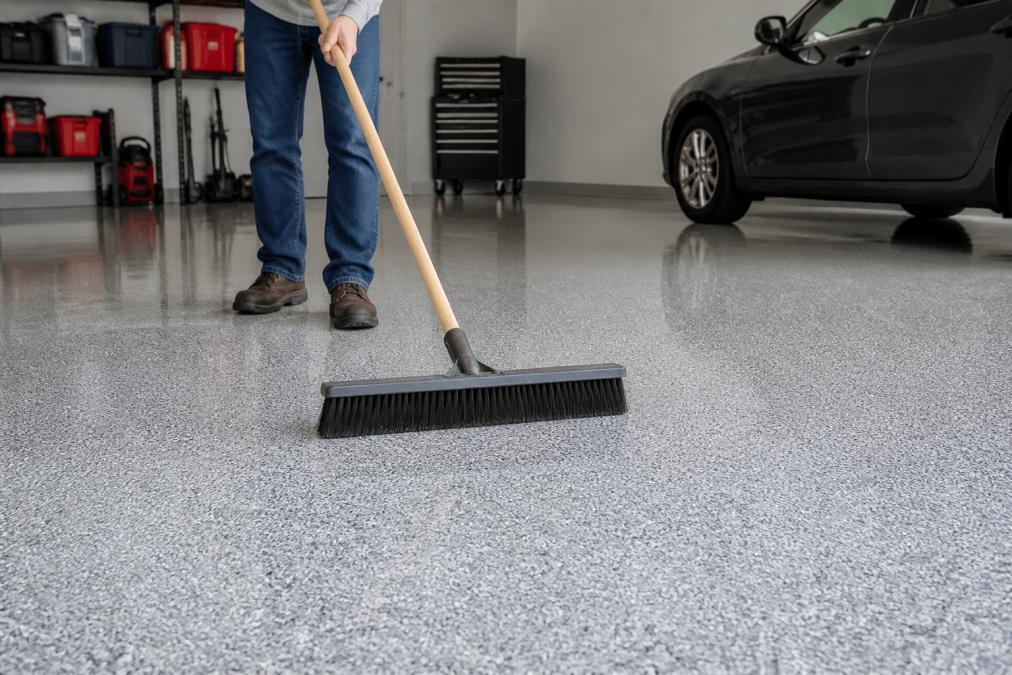
Table of Contents
- Why Epoxy Floor Maintenance Matters
- Daily and Weekly Cleaning Routines for Epoxy Garage Floors
- Best Cleaning Solution for Epoxy Floors
- How to Remove Oil Stains from Epoxy Garage Floor
- Epoxy Floor Maintenance Schedule and Deep Cleaning
- Preventing Damage and Extending Floor Life
- Conclusion
- Frequently Asked Questions
Last Updated: September 17, 2026
Why Epoxy Floor Maintenance Matters
Epoxy garage floors are built to last, but only if you maintain them properly. Neglect upkeep and your investment will peel, stain, and deteriorate quickly.
Without proper care, epoxy floors installed by homeowners or businesses show wear within a year or two, chipping, staining, and fading gloss.
The good news: to maintain epoxy garage floors requires consistency, not expertise. A few simple habits keep it looking new for years.
Daily cleaning prevents scratches, weekly mopping catches spills before they stain, seasonal deep cleaning extends floor life, and using the right products determines whether your floor lasts 5 or 15 years. This guide covers daily routines, cleaning solutions, stain removal, and preventative maintenance.
Daily and Weekly Cleaning Routines for Epoxy Garage Floors
Regular cleaning is the foundation of epoxy maintenance. Daily sweeping and weekly mopping prevent dirt and debris from damaging the coating.
Daily cleaning steps:
Sweep daily with a soft-bristle broom to avoid scratching the surface. Pay special attention to parking areas and high-traffic zones.
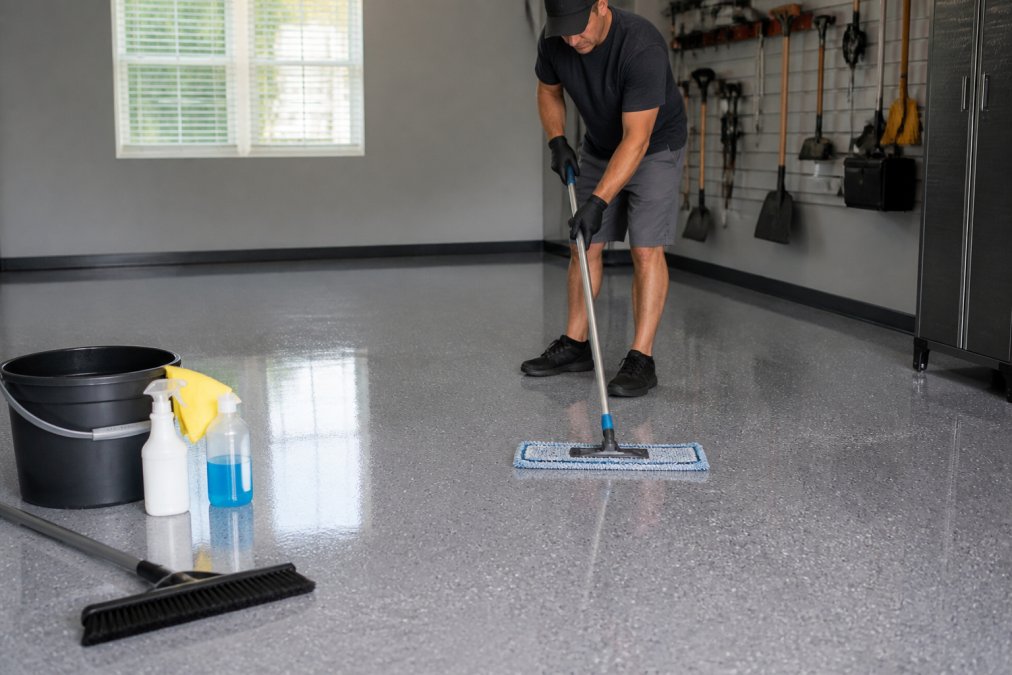
Weekly cleaning steps:
Weekly: Sweep first, then mop with warm water and pH-neutral cleaner using a microfiber mop. Let the solution sit 2-3 minutes on stubborn dirt, rinse thoroughly, and dry completely.
Microfiber mops trap dirt without scratching the surface or leaving streaks.
Never leave standing water on the floor, it can seep into cracks and damage the coating underneath. Always dry after mopping.
Best Cleaning Solution for Epoxy Floors
Use pH-neutral cleaners only. Epoxy is sensitive to extreme pH levels, acidic cleaners (vinegar, citrus) and alkaline cleaners (ammonia, bleach) break down the coating over time.
Look for products labeled pH-neutral or designed for epoxy floors (pH 6.5-8.5).
Solutions to avoid:
Certain products will damage your epoxy floor permanently. Avoid these at all costs:
- Ammonia-based solutions, These alkaline cleaners strip the gloss and can cause discoloration
- Abrasive cleaners, Powders or scrubs with grit will scratch the surface
- Vinegar or acidic cleaners, These etch the epoxy coating and dull the finish
- Bleach, Highly alkaline and causes yellowing and coating breakdown
- Oil-based degreasers, These leave a slick residue and can compromise slip resistance
Warm water with mild dish soap works for routine cleaning. For grease, use an epoxy-safe degreaser.
Always spot-test new cleaners in a hidden area first. Apply to a 2×2-foot section, let sit 5-15 minutes, scrub gently, rinse, and dry. Wait 24 hours and inspect for dulling, discoloration, or texture changes. If the test area matches the surrounding floor, the product is safe.
What to do if you accidentally use the wrong cleaner:
If you've already applied an acidic, alkaline, or abrasive cleaner to your floor, act quickly to minimize damage.
If you use the wrong cleaner: Rinse immediately with clean water. For acidic cleaners, use pH-neutral cleaner to neutralize residue; inspect for etching. For alkaline cleaners (ammonia, bleach), rinse thoroughly and monitor for yellowing or cloudy film. For abrasive scrubs, sweep particles and inspect for scratches. For non-epoxy degreasers, rinse multiple times and dry completely. Contact a professional if damage is visible, touch-ups or localized recoating are far cheaper than full replacement.
How to Remove Oil Stains from Epoxy Garage Floor
Oil stains are the most common garage floor problem. Treat spills immediately before oil penetrates the coating.
Call (919) 824-5403 or email craigrfear@gmail.com for a free estimate →
Fresh oil stains (same day):
For fresh spills: Blot excess oil with paper towels, sprinkle cat litter or baking soda, let sit 30 minutes, sweep up, clean with epoxy-safe degreaser, rinse, and dry.
Set-in oil stains (older than one day):
For set-in stains: Apply epoxy-safe degreaser, let sit 15-30 minutes, scrub gently, and rinse. Repeat if needed. For stubborn stains, apply a baking soda paste overnight, sweep up, and rinse.
Epoxy Floor Maintenance Schedule and Deep Cleaning
Monthly maintenance: Sweep thoroughly including edges, mop with pH-neutral cleaner, check for new stains or damage, and address spots before they set.
Quarterly deep cleaning: Sweep, apply diluted degreaser, scrub with soft brush or auto scrubber, let sit 10-15 minutes, rinse thoroughly, and dry. Rent an auto scrubber for large garages.
Annual inspection: Check for chips, cracks, peeling, discoloration, loss of gloss, or soft spots. Small chips can be repaired with an epoxy patch kit; larger damage requires professional attention. Consistent vigilance regarding surface integrity remains essential for long-term durability, a principle that applies equally when maintaining polished concrete floors in similar high-traffic environments.
Preventing Damage and Extending Floor Life
Prevention extends floor lifespan significantly. Seasonal care varies by climate.
Use protective mats under heavy tools, avoid dropping metal objects, use wheeled dollies instead of dragging, and place plywood under machinery wheels.
Fix roof leaks immediately, ensure proper drainage, use a dehumidifier in humid climates, wipe up standing water, and ensure adequate ventilation.
Extreme temperature changes cause epoxy to expand and contract, leading to cracking. Keep garage doors closed in extreme weather and avoid salt-based ice melt products.
Winter climates: Sweep daily (Nov-Mar) to remove salt crystals. Rinse the floor weekly with clean water and remove standing water immediately. Never use salt-based ice melt; use pet-safe alternatives or sand instead. Place a mat at the garage entrance to catch salt. Run a dehumidifier to prevent moisture buildup. Inspect monthly for white deposits, cloudy spots, or dull patches indicating salt damage.
Hot, humid climates: Run a dehumidifier to keep humidity below 60% (May-Sept). Increase ventilation by opening doors during cooler hours or installing an exhaust fan. Monitor for mold and mildew in shaded areas. Avoid rapid temperature swings between garage and air-conditioned spaces. Allow hot vehicles to cool before parking. Use UV-blocking window film or keep the door closed during peak sun to prevent yellowing.
A quality topcoat extends floor life and may be needed every 2-3 years depending on use and climate. High-traffic and humid areas need more frequent resealing. In winter climates, reseal in late spring or early summer before salt season.
Conclusion
To maintain epoxy garage floors comes down to consistency. Daily sweeping, weekly mopping with pH-neutral cleaner, and monthly inspections keep your floor in excellent condition for years. Avoid harsh chemicals, treat spills immediately, and address damage before it spreads.
If your epoxy floor is showing signs of wear, peeling, or damage that home maintenance can't fix, Concrete-Enhancements specializes in epoxy floor repair, restoration, and professional recoating. With over 20 years of experience as a CTi Certified Dealer, we can assess your floor, repair damage, and apply a fresh coating that restores both function and appearance. Contact us at (919) 824-5403 or craigrfear@gmail.com for a free estimate on epoxy floor maintenance or repair services.
Frequently Asked Questions
What cleaning products should be avoided on epoxy floors?
Avoid ammonia-based solutions, harsh abrasive cleaners, and acidic products that can strip the surface coating and dull the gloss. Pressure washers can also damage the epoxy by forcing water beneath the surface. Stick to pH-neutral cleaners diluted with warm water, and test any new product on a small, inconspicuous area first to verify chemical resistance before applying it to your entire floor.
How often should you deep clean an epoxy garage floor?
Deep cleaning should occur every 3-6 months depending on traffic and usage. High-traffic commercial spaces may need monthly deep scrubs, while residential garages typically require quarterly maintenance. Between deep cleans, perform weekly spot cleaning and daily debris removal to maintain surface integrity and prevent buildup that can trap moisture or cause scuff marks.
Can I use Dawn dish soap on an epoxy floor?
Dawn dish soap is not ideal for epoxy floors. While diluted dish soap won't immediately damage cured epoxy, it can leave residue and dull the finish over time. A pH-neutral epoxy floor cleaner is better because it's formulated to clean without stripping the protective coating or affecting gloss retention. If you use dish soap, rinse thoroughly with clean water to remove all residue.
Is it okay to pressure wash an epoxy garage floor?
Pressure washing is not recommended for epoxy garage floors. High-pressure water can force moisture under the surface coating, leading to peeling, bubbling, and premature failure. Instead, use a soft-bristle broom, microfiber mop, or auto scrubber with diluted detergent and warm water. For stubborn stains, a stiff-bristle brush or degreaser works better than pressure washing.
Tags: maintain epoxy garage floors, how to maintain epoxy garage floors, best cleaning solution for epoxy floors, how to remove oil stains from epoxy garage floor, epoxy floor maintenance schedule
Frequently Asked Questions
Avoid ammonia-based solutions, harsh abrasive cleaners, and acidic products that can strip the surface coating and dull the gloss. Pressure washers can also damage the epoxy by forcing water beneath the surface. Stick to pH-neutral cleaners diluted with warm water, and test any new product on a small, inconspicuous area first to verify chemical resistance before applying it to your entire floor.
Deep cleaning should occur every 3-6 months depending on traffic and usage. High-traffic commercial spaces may need monthly deep scrubs, while residential garages typically require quarterly maintenance. Between deep cleans, perform weekly spot cleaning and daily debris removal to maintain surface integrity and prevent buildup that can trap moisture or cause scuff marks.
Dawn dish soap is not ideal for epoxy floors. While diluted dish soap won't immediately damage cured epoxy, it can leave residue and dull the finish over time. A pH-neutral epoxy floor cleaner is better because it's formulated to clean without stripping the protective coating or affecting gloss retention. If you use dish soap, rinse thoroughly with clean water to remove all residue.
Pressure washing is not recommended for epoxy garage floors. High-pressure water can force moisture under the surface coating, leading to peeling, bubbling, and premature failure. Instead, use a soft-bristle broom, microfiber mop, or auto scrubber with diluted detergent and warm water. For stubborn stains, a stiff-bristle brush or degreaser works better than pressure washing.