how-to guide
How to Stop Pool Deck Overheating: 7 Proven Cooling Methods
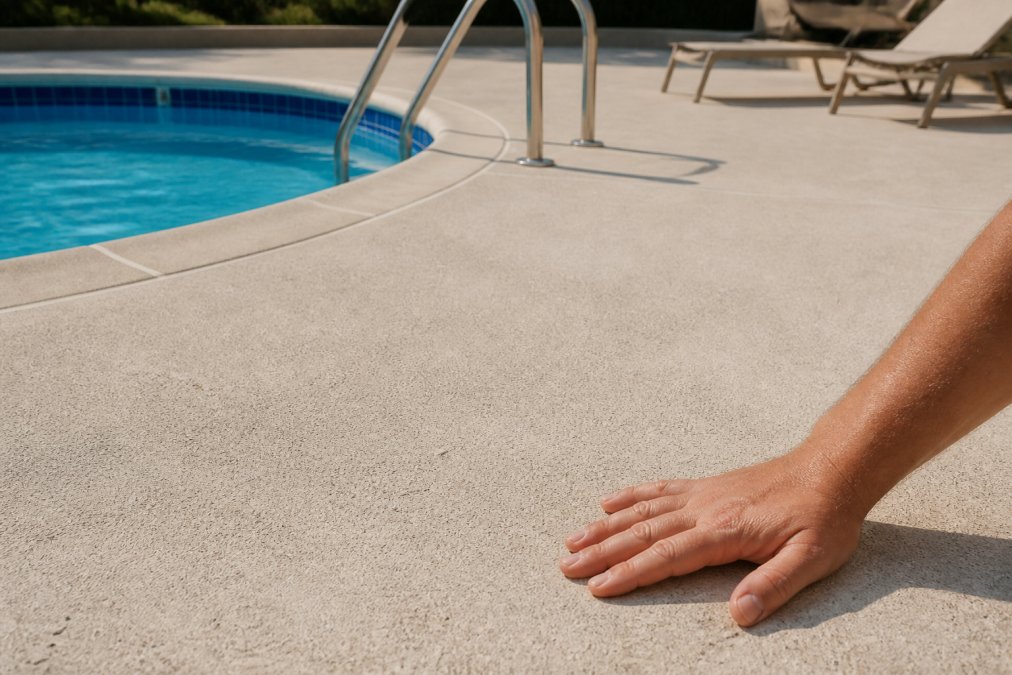
Table of Contents
- Why Pool Decks Overheat and What It Costs You
- Step 1: Install Shade Solutions to Block Solar Radiation
- Step 2: Choose the Best Materials for Cool Pool Decks
- Step 3: Apply Cool Deck Coatings and Heat-Reflective Finishes
- Step 4: How to Cool Down Concrete Patio Surfaces
- DIY vs. Professional Installation: Cost and Durability Trade-Offs
- Climate-Specific Recommendations for the Carolinas
- Safety and Slip-Resistance: Balancing Cooling with Barefoot Comfort
Last Updated: July 30, 2026
Why Pool Decks Overheat and What It Costs You
Pool decks absorb solar radiation throughout the day, and without proper cooling strategies, surface temperatures can easily exceed 140°F on a hot summer afternoon. Concrete-Enhancements has worked with homeowners across the Raleigh-Durham Triangle and NC Triad who discovered this problem the hard way: barefoot comfort becomes impossible, and safety concerns arise for children and elderly guests.
Extreme heat causes concrete to expand and contract, accelerating surface deterioration and breaking down sealers faster. According to research from the American Society of Landscape Architects, pool deck overheating is one of the top three complaints among residential pool owners in warm climates.
Below, we'll show you exactly how to stop pool deck overheating using seven proven cooling methods. These strategies have helped homeowners reduce surface temperatures by 30-50 degrees, creating usable outdoor spaces even during peak summer heat.
Step 1: Install Shade Solutions to Block Solar Radiation
Shade is the most direct way to stop pool deck overheating. When you block solar radiation before it hits the concrete, you eliminate the heat source entirely.
Shade Sails and Umbrellas
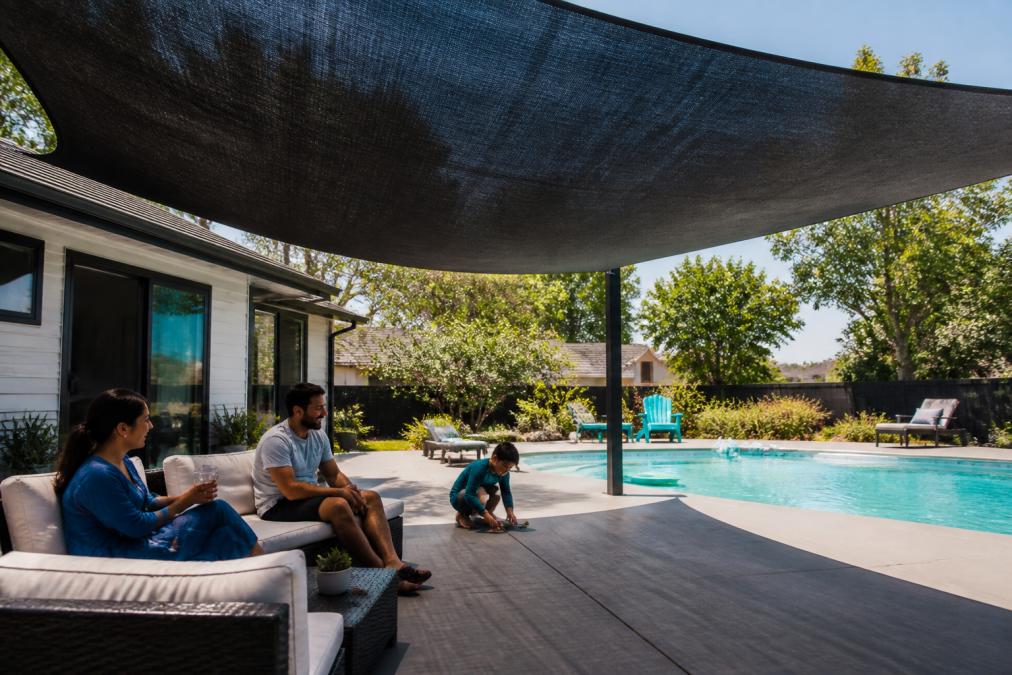
Shade sails are engineered fabric structures that stretch between posts or anchor points, creating an angled barrier against the sun. They allow airflow underneath, preventing heat from being trapped against the deck surface. A properly installed shade sail can reduce surface temperatures by 20-35 degrees.
For a typical 20-by-30-foot pool deck, a shade sail covers 60-75% of the surface. Shade sails work best when oriented to block the afternoon sun (typically southwest exposure in the Carolinas).
Large cantilever umbrellas (10-12 feet in diameter) offer a simpler, more flexible alternative and are portable for seasonal adjustment. The trade-off: they require regular repositioning and don't provide the permanent coverage of a shade sail.
Awnings and Pergolas
Fixed awnings attached to your home or pool house create permanent shade without the visual bulk of a sail. Retractable awnings offer flexibility, extending during the day and retracting at night or during storms.
Pergolas create partial shade through slatted roofing. They're less effective at blocking heat than solid awnings or sails, but they reduce glare and ambient temperature while maintaining aesthetic appeal. Pergolas work best when combined with climbing vines that fill in the gaps during summer months.
For permanent homes where you plan to stay 10+ years, fixed structures provide better long-term value than temporary solutions.
Step 2: Choose the Best Materials for Cool Pool Decks
Material selection determines how much heat your deck absorbs and retains. Light-colored materials reflect solar radiation; dark materials absorb it. The difference between a dark asphalt deck and a light travertine deck can be 40-50 degrees on the same day.
Travertine and Natural Stone
Travertine is a porous limestone that naturally stays cooler than concrete. Its light color reflects solar radiation, and the porous structure allows water to evaporate through the surface, creating a cooling effect. Travertine typically runs 15-25 degrees cooler than standard concrete.
Travertine remains cool enough to walk on barefoot even in intense heat because it doesn't retain thermal energy the way dense concrete does. This is why luxury resorts favor it.
Slate and granite offer similar benefits with higher durability. Slate is naturally textured, providing slip-resistance without additional coatings. Granite is denser and slightly warmer than travertine but still significantly cooler than concrete. Both require professional installation and higher upfront cost.
For the Raleigh-Durham Triangle's humid climate, travertine requires periodic sealing to prevent staining and water penetration, as moisture can become trapped during rainy seasons.
Composite Decking and Artificial Turf
Composite decking (wood-plastic blends) offers moderate heat resistance. It doesn't get as hot as concrete but runs warmer than natural stone, while requiring less maintenance than real wood.
Artificial turf is surprisingly effective at stopping pool deck overheating. The grass fibers reflect light and allow air circulation, keeping the surface 20-30 degrees cooler than concrete. Turf also provides excellent slip-resistance and is gentler on feet. In humid climates, synthetic turf requires regular cleaning to prevent algae and mold growth and needs occasional infill replacement (typically every 3-5 years).
Step 3: Apply Cool Deck Coatings and Heat-Reflective Finishes
If replacing your entire deck isn't feasible, cool deck coatings offer a cost-effective alternative, reducing heat by 15-25 degrees compared to bare concrete.
Light-Colored Pigments and UV Reflection
Cool deck coatings use light-colored pigments (typically white, light gray, or light tan) combined with UV-reflective additives. The pigments scatter visible light, while the additives reflect infrared radiation that would otherwise convert to heat.
Professional-grade acrylic coatings applied at proper thickness (typically 2-3 mils) create a durable, heat-reflective surface with slip-resistance through textured finishes. Pure white reflects the most heat but shows dirt quickly. Light gray or tan provides better stain hiding while still reflecting 60-70% of the heat that white would.
Textured vs. Smooth Finishes for Heat Dissipation
Texture impacts both cooling and safety. A textured finish provides slip-resistance while increasing surface area for heat dissipation. Grit-embedded coatings create excellent barefoot comfort and safety, with texture allowing water to drain quickly.
Textured coatings last 5-7 years with proper maintenance. Smooth finishes may need reapplication every 3-4 years as reflective properties degrade. For pool decks, the extra durability of textured finishes justifies the higher upfront cost.
Step 4: How to Cool Down Concrete Patio Surfaces
For existing concrete decks, several cooling strategies work without full replacement.
Acrylic Overlays and Sealers
An acrylic overlay is a thin layer of specialized concrete applied over existing concrete. It bonds to the old surface and can be colored, textured, and sealed to create a new, cooler deck. Overlays are typically 1-2 inches thick and cost significantly less than full removal and replacement.
Overlays can incorporate light pigments and reflective additives from day one, creating a fresh surface designed for heat reflection. They also allow for decorative finishes that improve aesthetics while cooling the deck.
Sealers alone provide modest cooling benefits (5-10 degrees) by creating a barrier that reflects some radiation. Clear sealers preserve the deck's color while protecting it from UV damage and moisture. Professional-grade sealers last 2-3 years before needing reapplication. For the Raleigh-Durham Triangle's weather, a quality sealer is essential to prevent premature deterioration.
Regular Hosing and Water-Based Cooling
Spraying your deck with water creates immediate cooling, dropping surface temperature by 20-30 degrees for several hours. This is especially effective during the hottest part of the day (typically 2-4 PM).
This cooling is temporary. Once water evaporates, heat builds back up. Misting systems (automated sprinklers that mist the deck surface) extend the cooling effect throughout the day using minimal water. Installation cost is moderate (typically $500-1,500 for a residential deck).
DIY vs. Professional Installation: Cost and Durability Trade-Offs
DIY approaches (shade sails, umbrellas, simple coatings) require minimal investment upfront but demand ongoing maintenance. A DIY shade sail might cost $200-400 and take a weekend to install, but it requires annual inspection and occasional repairs. DIY cool coatings often fail within 2-3 years because proper surface preparation is skipped.
Professional installation costs more initially but delivers durability. A professionally installed cool coating lasts 5-7 years. Professional acrylic overlays come with warranties and are engineered for your specific deck conditions.
For the Raleigh-Durham Triangle and NC Triad, professional installation makes sense for permanent solutions. DIY works for temporary or supplementary strategies.
Climate-Specific Recommendations for the Carolinas
Summer temperatures regularly exceed 90°F, with heat index values reaching 105°F or higher. Humidity is consistently high (65-75%), which reduces evaporative cooling effectiveness. You need material selection and coatings as primary cooling methods, with shade as a supplementary layer.
Winter freeze-thaw cycles are common (typically 5-10 freeze events per winter). Any cooling solution must include proper drainage and sealing. Porous materials like travertine must be sealed to prevent water penetration. Coatings must be flexible enough to expand and contract without cracking.
Spring and fall bring frequent rain. Standing water on pool decks creates slip hazards and algae growth. Textured finishes and proper drainage are essential.
For the Carolinas specifically: prioritize light-colored materials, professional-grade sealers, and shade structures. Travertine and light composite decking perform well. Cool acrylic coatings are highly effective. Artificial turf works but requires commitment to maintenance.
Safety and Slip-Resistance: Balancing Cooling with Barefoot Comfort
The paradox of cool pool decks: the most effective cooling materials (smooth, light-colored surfaces) can be dangerously slippery when wet. You need both a cool surface (ideally below 100°F) and adequate slip-resistance.
Textured finishes solve this problem. A light-colored, textured cool coating provides both heat reflection and grip. Aggregate-embedded coatings provide superior barefoot comfort, with the surface feeling naturally gritty.
Travertine naturally provides both cooling and slip-resistance due to its porous, uneven surface. However, slippery algae can grow in the pores during humid seasons, requiring regular cleaning. Slate offers similar benefits with lower maintenance.
Artificial turf provides excellent slip-resistance and barefoot comfort but requires regular cleaning to prevent mold growth in humid climates.
The solution is compromise: use light-colored, lightly textured finishes that reflect 60-70% of heat while providing adequate grip. This balances safety and comfort better than pursuing maximum cooling at the expense of safety.
| Strategy | Temperature Reduction | Installation Cost | Maintenance | Best For |
|---|---|---|---|---|
| Shade Sails | 20-35°F | $800-2,000 | Annual inspection | Quick, flexible cooling |
| Travertine | 15-25°F | $3,000-6,000 | Periodic sealing | Luxury aesthetic, barefoot comfort |
| Cool Coatings | 15-25°F | $800-1,500 | Reapplication every 5-7 years | Budget-friendly, durable |
| Artificial Turf | 20-30°F | $2,500-5,000 | Regular cleaning | Slip-resistance, low maintenance |
| Acrylic Overlay | 20-35°F | $2,000-4,000 | Resealing every 2-3 years | Existing concrete renovation |
| Regular Hosing | 20-30°F (temporary) | $0-100 | Daily application | Supplementary cooling |
If your pool deck is currently unusable during summer months, you don't have to accept it as permanent. The cooling strategies covered here have transformed residential pool decks across the Raleigh-Durham Triangle and NC Triad. At Concrete-Enhancements, we specialize in professional cool deck coatings and acrylic overlays that combine heat reflection with durability and aesthetic appeal. Our CTi Certified team understands the specific climate challenges of North Carolina and can recommend the right cooling solution for your deck's condition and your family's needs. Contact us at (919) 824-5403 or email craigrfear@gmail.com for a free estimate and see exactly how much cooler your deck can be.
Frequently Asked Questions
What is the coolest pool deck material I can install?
Travertine and light-colored natural stone are among the coolest options due to their high thermal reflectivity and porous structure, which allows heat to dissipate quickly. Composite decking and artificial turf also stay cooler than standard concrete. The key is selecting materials with low thermal conductivity and light pigmentation. For existing concrete, applying a cool deck coating with light-reflective paint or an acrylic overlay can reduce surface temperature significantly without full replacement.
How much does a cool deck coating cost to install?
Pricing for cool deck coatings depends on deck size, material type, current surface condition, and whether you choose DIY or professional installation. Professional application typically costs more but ensures proper adhesion and long-term durability. For an accurate quote tailored to your specific pool deck, contact Concrete-Enhancements at (919) 824-5403 or email craigrfear@gmail.com for a free estimate that reflects current market rates and your local conditions.
Do cool deck coatings really work to stop pool deck overheating?
Yes, cool deck coatings do work when applied correctly. Heat-reflective coatings with light-colored pigments can reduce surface temperature by 15-30 degrees Fahrenheit compared to untreated concrete. However, effectiveness depends on proper application, regular maintenance, and the coating's UV reflection rating. Quality sealers and acrylic overlays maintain their reflectivity longer than budget options. Professional installation ensures better adhesion and durability, which is critical for long-term performance in high-sun environments like the Carolinas.
What's the difference between shade solutions and material upgrades for cooling a pool deck?
Shade solutions (sails, umbrellas, awnings) block incoming solar radiation and provide immediate relief but require installation and maintenance. Material upgrades (travertine, composite, cool coatings) reduce the deck's heat absorption and thermal mass permanently, working 24/7 to keep surfaces cooler. The best approach combines both: shade reduces peak temperatures while cool materials ensure barefoot comfort throughout the day. For residential pools in the Raleigh-Durham Triangle, layering these strategies maximizes comfort and property value.
This article was written using GrandRanker
Frequently Asked Questions
Travertine and light-colored natural stone are among the coolest options due to their high thermal reflectivity and porous structure, which allows heat to dissipate quickly. Composite decking and artificial turf also stay cooler than standard concrete. The key is selecting materials with low thermal conductivity and light pigmentation. For existing concrete, applying a cool deck coating with light-reflective paint or an acrylic overlay can reduce surface temperature significantly without full replacement.
Pricing for cool deck coatings depends on deck size, material type, current surface condition, and whether you choose DIY or professional installation. Professional application typically costs more but ensures proper adhesion and long-term durability. For an accurate quote tailored to your specific pool deck, contact Concrete-Enhancements at (919) 824-5403 or email craigrfear@gmail.com for a free estimate that reflects current market rates and your local conditions.
Yes, cool deck coatings do work when applied correctly. Heat-reflective coatings with light-colored pigments can reduce surface temperature by 15-30 degrees Fahrenheit compared to untreated concrete. However, effectiveness depends on proper application, regular maintenance, and the coating's UV reflection rating. Quality sealers and acrylic overlays maintain their reflectivity longer than budget options. Professional installation ensures better adhesion and durability, which is critical for long-term performance in high-sun environments like the Carolinas.
Shade solutions (sails, umbrellas, awnings) block incoming solar radiation and provide immediate relief but require installation and maintenance. Material upgrades (travertine, composite, cool coatings) reduce the deck's heat absorption and thermal mass permanently, working 24/7 to keep surfaces cooler. The best approach combines both: shade reduces peak temperatures while cool materials ensure barefoot comfort throughout the day. For residential pools in the Raleigh-Durham Triangle, layering these strategies maximizes comfort and property value.