comparison
Is Concrete Patching Worth It for Driveways?
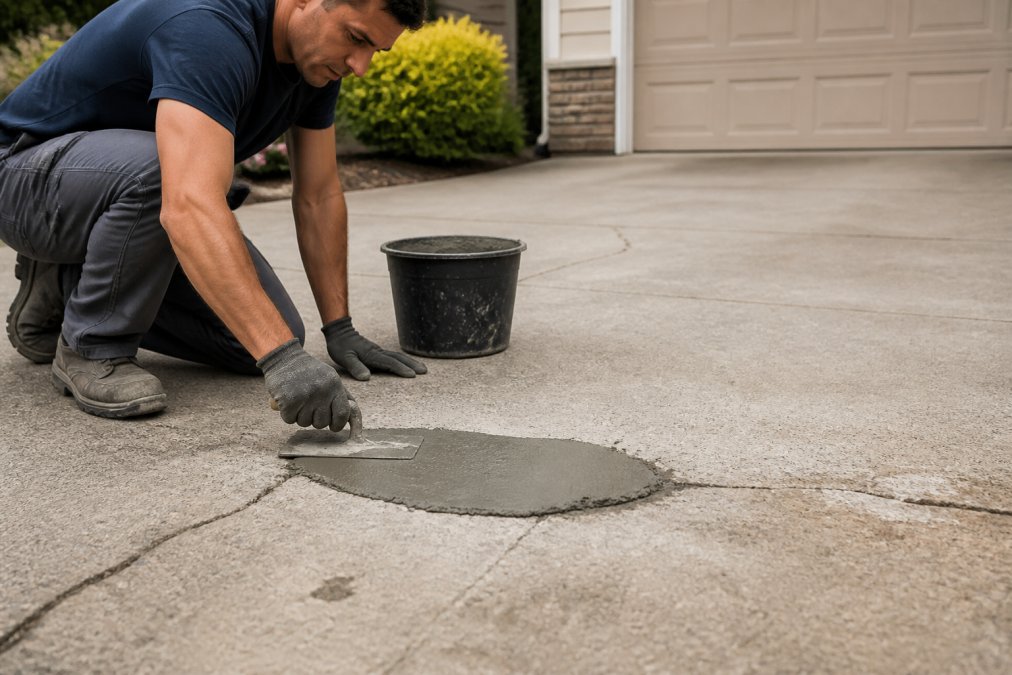
Table of Contents
- When to Replace vs Repair Concrete Driveway
- Common Causes of Driveway Damage
- Best Concrete Patch Filler for Driveways
- Concrete Driveway Resurfacing Cost and ROI
- DIY Patching vs Professional Repair
- Longevity and Durability of Concrete Patches
- Types of Concrete Damage and Repair Solutions
- The Bottom Line: Is Concrete Patching Worth It?
Last Updated: August 28, 2026
Is concrete patching worth it for driveways? The answer depends on damage type, extent, budget, and expected repair lifespan. A small crack sealed today might save thousands in replacement costs. But a severely damaged driveway patched repeatedly becomes a money pit. This guide breaks down both scenarios.
When to Replace vs Repair Concrete Driveway
The choice hinges on three factors: damage extent, slab age, and long-term property plans. Patching works best for isolated damage on relatively young driveways. Full replacement becomes necessary when structural integrity is compromised or repairs would cost more than 50% of replacement.
Signs Your Driveway Is Beyond Repair
Widespread spalling across more than 30% of the surface means concrete is deteriorating at the aggregate level, systemic failure, not a surface problem (peer-reviewed research). Slab settlement creating significant height differences between sections signals base failure. Extensive spider-web cracking (multiple interconnected cracks covering large areas) indicates structural stress and freeze-thaw damage.
When Patching Makes Financial Sense
Patching is worth doing when damage is localized and the driveway is structurally sound. A single crack, a few small potholes, or isolated spalling on an otherwise solid driveway justifies repair costs. A driveway that's 5-10 years old with minor damage is a good candidate for patching. Consider your climate's freeze-thaw cycle, patches in harsh climates last 3-5 years, while milder climates see 7-10 years or longer (the CDC).
Common Causes of Driveway Damage
Understanding what damaged your driveway helps determine whether patching solves the problem or just masks it.
Salt exposure is highly destructive, penetrating concrete and causing spalling and pitting. Freeze-thaw cycles create pressure inside concrete as water seeps into cracks, freezes, expands, and forces concrete apart. Heavy loads beyond design capacity cause cracking and settlement. Poor sub-base preparation during installation causes early failure as the base shifts over time. Tree roots growing underneath lift and crack concrete, making patching only temporary.
Best Concrete Patch Filler for Driveways
Choosing the right material depends on crack depth, location, and required repair longevity.
Ready-Mixed Options for Quick Repairs
DAP Ready-Mixed Concrete Patch is a latex-based compound requiring no mixing. It fills holes and cracks up to 1 inch deep, dries to concrete-gray, and suits both interior and exterior use. Foot traffic is possible in 3-5 hours, drivable in 24 hours. Ready-mixed patches work best for hairline cracks and minor surface damage, not deep structural repairs.
QUIKRETE Concrete Resurfacer renews entire worn surfaces rather than patching individual cracks. This polymer-modified Portland cement applies from feather edge to half-inch thick, ideal for widespread surface wear or shallow spalling. Walk on it in 6-8 hours, drive in 24 hours. SAKRETE Flo-Coat Concrete Resurfacer offers similar benefits with flowable consistency and 4,500-5,000 psi strength for easier application over large areas.
Industrial-Strength Epoxy Solutions
Rust-Oleum Concrete Patch & Repair is a two-part epoxy system designed for permanent repairs. This industrial-strength formula bonds concrete without shrinking or cracking and creates a surface stronger than concrete itself. It resists chemicals, moisture, and heavy traffic, cures fast (paintable in 8 hours), and suits both indoor and outdoor use. Epoxy lasts 10-15 years or more, significantly longer than ready-mixed products, though it costs more and requires precise mixing (peer-reviewed research).
Resurfacing Products for Worn Surfaces
When your driveway shows widespread wear but no deep structural damage, resurfacing extends its life without full replacement. Polymer-modified resurfacer products offer better adhesion and durability than older formulas. Resurfacing costs significantly less than replacement and can add 5-10 years of life to an aging driveway, though it only addresses the top surface.
Concrete Driveway Resurfacing Cost and ROI
Cost Breakdown by Repair Type
Small crack repairs using ready-mixed products cost least, materials under $20 for most homeowners, with professional application typically $200-$500. Epoxy patching for larger areas costs $30-$50 in materials with professional application ranging $500-$1,500. Resurfacing an entire driveway costs $200-$600 in materials. Full concrete replacement is most expensive, but if your driveway requires multiple repairs within a few years, replacement becomes cost-effective.
Return on Investment and Home Value
Patching doesn't significantly increase home value but prevents value loss. A well-maintained driveway preserves curb appeal. Resurfacing has better ROI than patching, recovering 50-70% of its cost in increased home value. Replacement recovers 80-100%, though this varies by market and home price. The real ROI question is whether you're extending the life of a driveway worth saving. If your driveway is 15+ years old showing multiple problem areas, patching repeatedly is poor ROI.
DIY Patching vs Professional Repair
The decision depends on damage severity, your skill level, and the importance of durability.
Step-by-Step DIY Patching Process
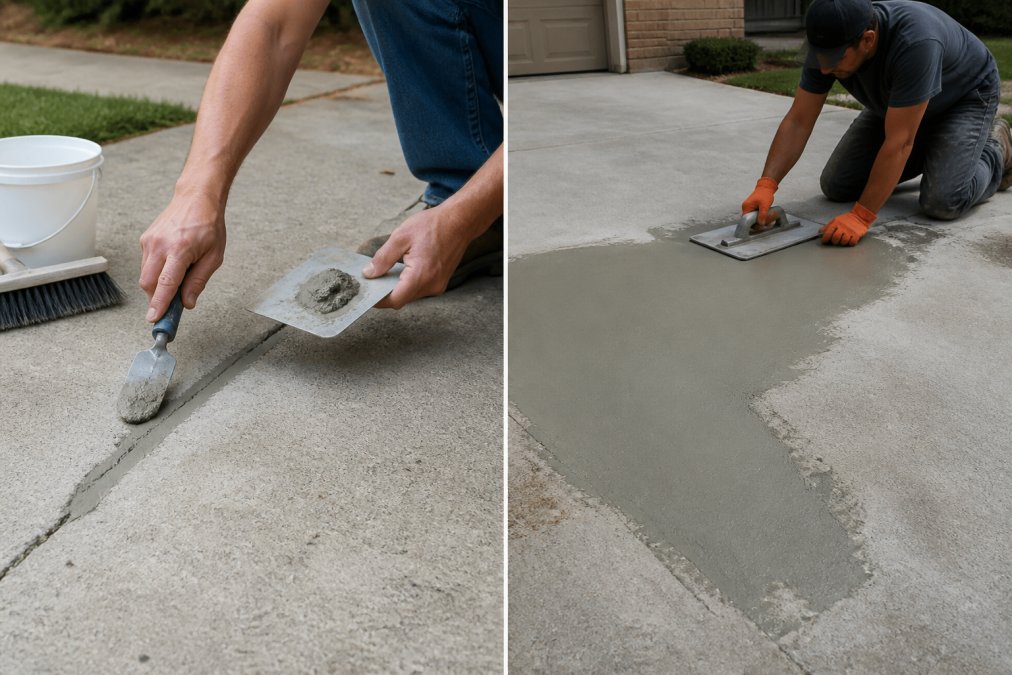
DIY patching works for small, isolated cracks and minor holes. Start by cleaning the damaged area thoroughly with a wire brush to remove loose concrete, dust, and debris. Pressure wash if possible to remove all contaminants. For cracks, use concrete crack filler designed for the crack width. For larger holes, use ready-mixed patch compound. Smooth the patch level with surrounding surface and allow full cure before driving on it, most products require 24 hours for drivable strength.
Call (919) 824-5403 or email craigrfear@gmail.com for a free estimate →
Why Professional Repairs Last Longer
Professional contractors have equipment and expertise DIYers lack. They use pressure washers to remove all contaminants and understand surface preparation, sometimes grinding or shot-blasting to create the right profile for patch adhesion. Professionals mix two-part epoxies to exact ratios and apply materials at the right temperature and humidity. Professional repairs use higher-quality materials, industrial-grade epoxies last 10-15 years versus 5-7 years for DIY patches. For small cosmetic cracks, DIY patching is acceptable. For cracks affecting structural integrity or high-traffic areas, professional repair is worth the cost.
Longevity and Durability of Concrete Patches
How long a patch lasts depends on material, installation quality, and environmental factors.
How Climate Affects Patch Performance
Freeze-thaw cycles are brutal on concrete patches. Water infiltrates around patch edges, freezes, expands, and breaks the bond. A patch lasting 10 years in a mild climate might last only 3-5 years in a harsh freeze-thaw environment. Salt exposure compounds the problem. Hot, dry climates present different challenges, rapid drying can cause patches to shrink and crack, though without freeze-thaw stress, patches often last longer. Moisture is the enemy of patch longevity, as water seeping under patches breaks the bond and causes surrounding concrete to deteriorate.
Maintenance Tips to Extend Patch Life
Regular maintenance extends patch life significantly. Seal cracks to prevent water infiltration and reseal every 2-3 years. Keep your driveway clean and dry, removing standing water promptly. Ensure gutters and downspouts direct water away from the driveway. Avoid harsh chemicals and road salt when possible. Inspect patches regularly for signs of water infiltration. Avoid heavy loads on patched areas.
Types of Concrete Damage and Repair Solutions
Different damage types require different approaches.
Spalling and Pitting
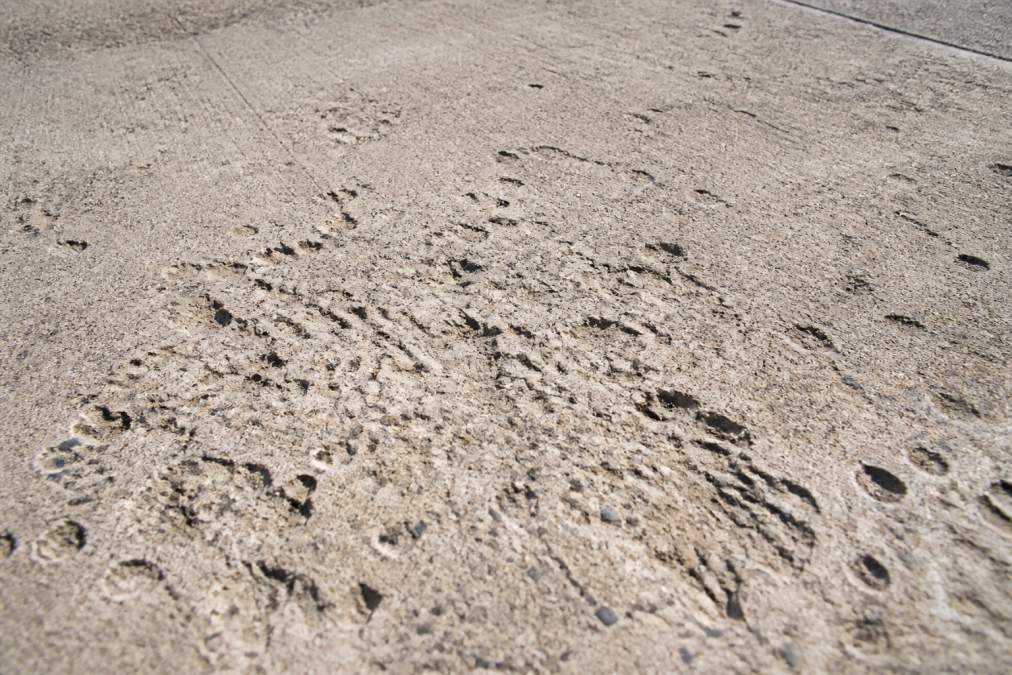
Spalling is the breaking away of concrete surface layers, creating rough, cratered areas. Both are caused by salt penetration, freeze-thaw cycles, or poor concrete quality. Small areas can be patched with epoxy or concrete filler. Extensive spalling across large areas requires resurfacing or replacement. The challenge is that patching only addresses the immediate area, surrounding concrete is still deteriorating, and new spalling will appear nearby within a year or two.
Hairline Cracks and Structural Cracks
Hairline cracks are thin surface cracks, usually less than 1/16 inch wide, and don't necessarily indicate structural problems. Structural cracks are wider, deeper, and often indicate movement or load stress. Cracks wider than 1/4 inch or cracks continuing through the full slab depth are structural concerns. Hairline cracks can be sealed with concrete crack sealers. Structural cracks require patching with epoxy or concrete filler. If structural cracks are caused by slab settlement or base failure, patching is temporary.
Slab Settlement and Uneven Surfaces
Slab settlement occurs when the sub-base compacts unevenly or erodes. This is a structural problem patching cannot fix. Minor settlement (less than 1/4 inch difference) can be addressed with resurfacing to create a smooth transition. Major settlement (more than 1/2 inch difference) requires mudjacking or replacement. Uneven surfaces are safety hazards and trap water, accelerating deterioration.
The Bottom Line: Is Concrete Patching Worth It?
Concrete patching is worth it when damage is isolated, the driveway is structurally sound, and you're extending the life of a relatively young slab. Patching is not worth it when damage is extensive, the driveway is old, or the base is failing. The real decision is whether you're maintaining an otherwise solid driveway or trying to save one that's reached end-of-life.
For homeowners in the region looking to make this decision with confidence, Concrete-Enhancements offers free assessments. Our team can evaluate your specific driveway damage, recommend the right solution, whether patching, resurfacing, or replacement, and provide realistic expectations for longevity. With over 20 years of experience and CTi Certified expertise, we've helped homeowners avoid costly mistakes. Call (919) 824-5403 or email craigrfear@gmail.com for a free estimate. We'll show you exactly what your driveway needs and what you can realistically expect from each repair option.
Frequently Asked Questions
What is the best concrete patch filler for driveways?
The best choice depends on damage depth and durability needs. For small cracks under 1 inch, DAP Ready-Mixed Concrete Patch offers convenience with no mixing required and costs around $8.98. For deeper repairs needing maximum durability, Rust-Oleum Concrete Patch & Repair's two-part epoxy creates a surface stronger than concrete and resists chemicals and heavy traffic. For resurfacing worn areas, QUIKRETE Concrete Resurfacer or SAKRETE Flo-Coat provide polymer-modified formulas that bond well and can be applied thin. Professional-grade repairs using bonding agents and proper surface preparation yield the longest-lasting results.
How long does concrete patching last on a driveway?
Patch longevity depends on material, application quality, and climate. Ready-mixed patches typically last 3-5 years before hairline cracks reappear. Industrial epoxy patches can last 10-15 years in favorable conditions. Professional resurfacing with proper surface preparation, bonding agents, and curing time may last 15-20 years. Freeze-thaw cycles, moisture penetration, and UV exposure accelerate failure. Maintenance matters: pressure washing annually, sealing cracks promptly, and managing water drainage around the driveway extend patch life significantly. Professional installations with quality materials and proper compaction consistently outperform DIY repairs.
When is a concrete driveway beyond repair?
Replace rather than patch when structural integrity is compromised. Signs include: large cracks wider than 1/4 inch running across the slab, widespread spalling covering more than 30% of the surface, slab settlement causing severe unevenness (over 1/2 inch), multiple deep potholes, or visible damage to the sub-base. If repair costs exceed 50% of replacement cost, replacement becomes the better investment. Patches fail quickly on driveways with poor drainage, active slab movement, or extensive freeze-thaw damage. Professional inspection can determine whether patches will hold or if full replacement is necessary.
Does patching a concrete driveway increase home value?
Strategic patching improves curb appeal and can positively influence buyer perception, but won't increase home value dollar-for-dollar. A well-maintained driveway free of cracks and spalling signals proper home care and may justify a slightly higher asking price. However, extensive patching that looks temporary or cosmetic repairs on a heavily damaged driveway may signal underlying problems. Full resurfacing or replacement yields better return on investment than visible patches. For maximum value impact, combine patching with aesthetic improvements like pressure washing, sealing, or decorative overlays that transform appearance alongside functionality.
How much does concrete driveway resurfacing cost?
Resurfacing costs vary based on driveway size, damage extent, and repair method chosen. DIY patch materials range from $8.98 to $84.99 per unit depending on product type. Professional resurfacing involves labor, surface preparation, bonding agents, and materials, making it significantly higher than DIY options. Factors affecting cost include: square footage, depth of repairs needed, whether full resurfacing or spot patching, regional labor rates, and product quality. For accurate pricing specific to your project, contact a professional contractor for a free estimate, as quotes depend on your driveway's condition and your location.
This article was written using GrandRanker
Frequently Asked Questions
The best choice depends on damage depth and durability needs. For small cracks under 1 inch, DAP Ready-Mixed Concrete Patch offers convenience with no mixing required and costs around $8.98. For deeper repairs needing maximum durability, Rust-Oleum Concrete Patch & Repair's two-part epoxy creates a surface stronger than concrete and resists chemicals and heavy traffic. For resurfacing worn areas, QUIKRETE Concrete Resurfacer or SAKRETE Flo-Coat provide polymer-modified formulas that bond well and can be applied thin. Professional-grade repairs using bonding agents and proper surface preparation yield the longest-lasting results.
Patch longevity depends on material, application quality, and climate. Ready-mixed patches typically last 3-5 years before hairline cracks reappear. Industrial epoxy patches can last 10-15 years in favorable conditions. Professional resurfacing with proper surface preparation, bonding agents, and curing time may last 15-20 years. Freeze-thaw cycles, moisture penetration, and UV exposure accelerate failure. Maintenance matters: pressure washing annually, sealing cracks promptly, and managing water drainage around the driveway extend patch life significantly. Professional installations with quality materials and proper compaction consistently outperform DIY repairs.
Replace rather than patch when structural integrity is compromised. Signs include: large cracks wider than 1/4 inch running across the slab, widespread spalling covering more than 30% of the surface, slab settlement causing severe unevenness (over 1/2 inch), multiple deep potholes, or visible damage to the sub-base. If repair costs exceed 50% of replacement cost, replacement becomes the better investment. Patches fail quickly on driveways with poor drainage, active slab movement, or extensive freeze-thaw damage. Professional inspection can determine whether patches will hold or if full replacement is necessary.
Strategic patching improves curb appeal and can positively influence buyer perception, but won't increase home value dollar-for-dollar. A well-maintained driveway free of cracks and spalling signals proper home care and may justify a slightly higher asking price. However, extensive patching that looks temporary or cosmetic repairs on a heavily damaged driveway may signal underlying problems. Full resurfacing or replacement yields better return on investment than visible patches. For maximum value impact, combine patching with aesthetic improvements like pressure washing, sealing, or decorative overlays that transform appearance alongside functionality.
Resurfacing costs vary based on driveway size, damage extent, and repair method chosen. DIY patch materials range from $8.98 to $84.99 per unit depending on product type. Professional resurfacing involves labor, surface preparation, bonding agents, and materials, making it significantly higher than DIY options. Factors affecting cost include: square footage, depth of repairs needed, whether full resurfacing or spot patching, regional labor rates, and product quality. For accurate pricing specific to your project, contact a professional contractor for a free estimate, as quotes depend on your driveway's condition and your location.