comparison
Is Epoxy Flooring Worth It for Residential Garages
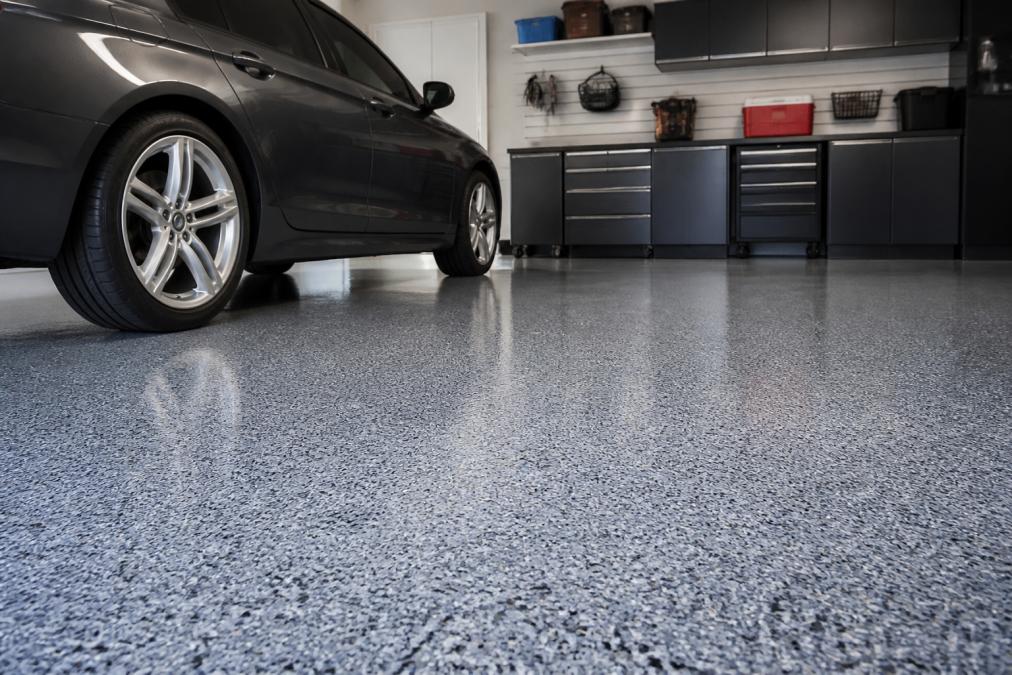
Table of Contents
- Epoxy Flooring for Residential Garages: The Verdict
- Key Strengths of Epoxy Garage Floors
- Real Drawbacks and When Epoxy Falls Short
- Epoxy Garage Floor Cost Per Square Foot: What to Budget
- DIY vs Professional Epoxy Garage Floor: Which Approach Wins
- Epoxy Floor Maintenance Tips to Extend Your Investment
- Who Should and Shouldn't Choose Epoxy for Their Garage
- Conclusion
Last Updated: August 24, 2026
Epoxy Flooring for Residential Garages: The Verdict
Is epoxy flooring worth it for residential garages? If you want a garage floor that resists oil stains, looks polished, and requires minimal maintenance, epoxy delivers. But if you're hoping for a permanent fix to moisture problems or a surface that never needs attention, you'll be disappointed.
Epoxy has genuine strengths, durability, aesthetic appeal, chemical resistance, but also real limitations that catch homeowners off guard. At Concrete-Enhancements, we've worked with residential clients across the Raleigh-Durham Triangle and NC Triad, and we've seen which installations hold up and which ones fail within a few years. Here's what separates a worthwhile investment from money wasted.
Key Strengths of Epoxy Garage Floors
A properly applied epoxy system creates a moisture barrier, hardens the concrete substrate, and provides a glossy or satin finish that's dramatically easier to clean than raw concrete.
Epoxy coatings are 5-10 times harder than standard concrete sealer, resisting scratches, impact, and everyday wear. A quality epoxy system can last 10-15 years with proper maintenance, and some commercial-grade installations may last 20 years or longer. The surface also resists hot tire pickup, a common problem where tires leave black marks nearly impossible to remove from unsealed concrete.
Epoxy floors stand up to gasoline, motor oil, coolant, and battery acid without staining or degrading. The coating creates a non-porous barrier that prevents liquids from soaking into the substrate, essential if you're working on vehicles or storing hazardous materials.
Aesthetically, epoxy delivers the "showroom garage" look with solid colors, metallic finishes, flake systems, or custom designs. The glossy finish reflects light and makes the space feel larger and cleaner.
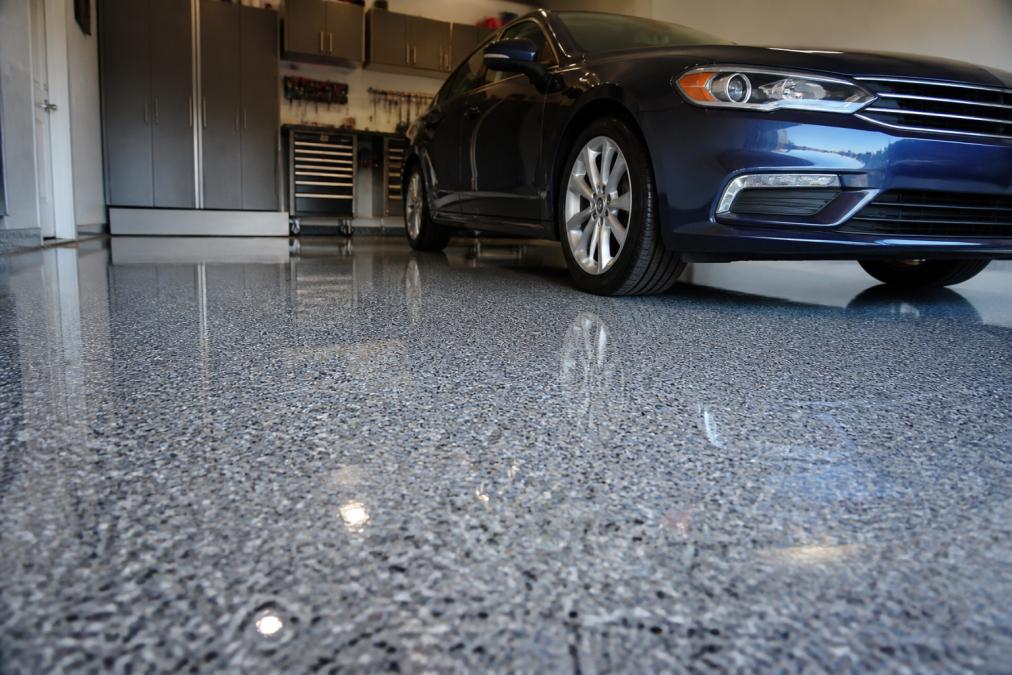
Maintenance is simpler than bare concrete. Sealed epoxy floors can be swept and mopped without dust clouds. Spills wipe up cleanly instead of leaving permanent stains.
Real Drawbacks and When Epoxy Falls Short
Moisture vapor transmission through the concrete substrate is the leading cause of epoxy failure. Concrete breathes, and water moves through it constantly, especially in below-grade garages or high-humidity areas. If the substrate isn't properly sealed or moisture barriers aren't installed correctly, epoxy coatings will blister, peel, and delaminate.
DIY kits often fail because surface preparation determines everything. If you skip diamond grinding to open concrete pores or don't address moisture issues, your epoxy will fail regardless of product quality. Professional installers spend days on surface preparation, testing moisture levels and applying proper barriers. Most homeowners skip these critical steps.
Epoxy is also brittle compared to polyaspartic or polyurea alternatives. Drop a heavy tool on an epoxy floor, and you'll likely see a chip or crack. Repair is possible but visible and imperfect. The coating also yellows over time with UV exposure, which matters if your garage has skylights or frequent door openings.
Most epoxy systems require 3-7 days before you can park vehicles on them, and full cure takes longer. During this window, the floor is vulnerable to dust, moisture, and foot traffic. Polyaspartic and polyurea coatings cure faster, sometimes in 8-24 hours, which is why they cost more.
Epoxy doesn't perform well in cold climates during installation or in garages with extreme temperature swings. If you're applying epoxy in winter or an unheated garage, the coating may not cure properly. Humidity must also be controlled; applying epoxy in a damp garage invites failure.
If your epoxy coating fails after 3-4 years, removing it and starting over is expensive and labor-intensive. Grinding off failed epoxy, repairing the substrate, and recoating costs nearly as much as the original installation.
Epoxy Garage Floor Cost Per Square Foot: What to Budget
Cost varies dramatically based on product quality, surface preparation, and installation method. The real cost equation isn't just upfront price, it's total cost of ownership over 10 years. A cheap DIY kit that fails after 3 years actually costs more than professional installation lasting 12-15 years.
For residential applications, budget for comprehensive surface preparation. Diamond grinding, moisture testing, crack repair, and substrate conditioning aren't optional if you want the coating to last. These steps add significant labor cost but separate jobs lasting 15 years from those failing in 5.
Material quality matters. Premium epoxy systems with better chemical resistance, UV stability, and flexibility cost more than basic formulations. Polyaspartic and polyurea systems generally cost more but cure faster and resist yellowing better.
| Approach | Initial Cost Range | Typical Lifespan | Warranty | Best For |
|---|---|---|---|---|
| DIY Epoxy Kit | Lower per sq ft | 3-7 years | None | Budget-conscious, low-traffic garages |
| Professional Epoxy | Higher per sq ft | 10-15 years | 3-5 years | Durability priority, high-traffic use |
| Professional Polyaspartic | Highest per sq ft | 12-18 years | 5-7 years | Fast cure needed, UV exposure |
DIY vs Professional Epoxy Garage Floor: Which Approach Wins
The DIY path is tempting because upfront cost is lower. This works if you're detail-oriented, patient with surface preparation, and prepared for possible failure.
Most DIY epoxy installations fail within 5-7 years due to inadequate surface preparation. Concrete must be ground, cleaned, and tested for moisture. Most homeowners underestimate or skip this step entirely.
Professional installation includes diagnostic testing before any coating is applied. Installers measure moisture vapor transmission rates, identify weak concrete spots, repair cracks, and apply proper moisture barriers. They have specialized equipment and experience recognizing when a garage isn't suitable for epoxy.
The warranty difference is significant. DIY kits come with no warranty. Professional installations typically include a 3-7 year warranty. If the coating fails due to installer error or product defect, the contractor redoes the work.
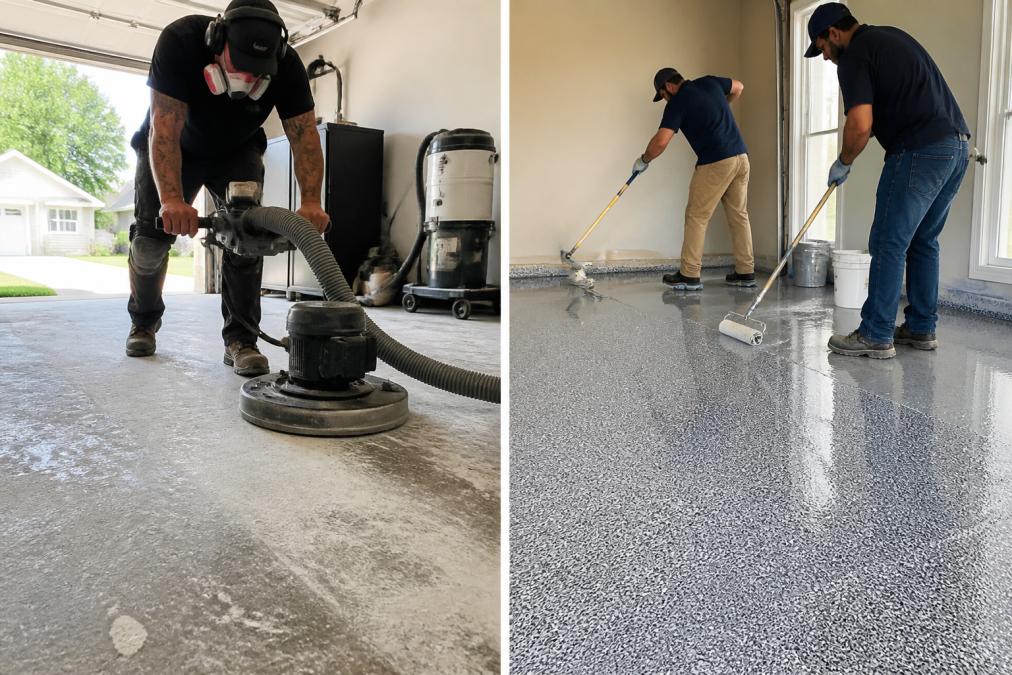
A professional crew can coat a 400-600 square foot garage in 1-2 days. DIY projects take a weekend or longer, and mistakes during application are harder to fix.
For most homeowners, professional installation delivers better long-term value. If your garage is low-traffic and you have technical skills, DIY can work, but the risk of failure often outweighs the savings.
Epoxy Floor Maintenance Tips to Extend Your Investment
An epoxy floor lasting 15 years requires consistent maintenance. The good news is that maintenance is simple and inexpensive compared to the initial investment.
Sweep regularly to remove dust and debris. Epoxy is smooth, so dust and grit can scratch the surface if walked or driven on. Weekly sweeping prevents this. Use a soft-bristle broom; stiff bristles can scratch the coating. concrete resurfacing solutions.
Spills should be cleaned immediately. While epoxy resists staining, some substances can discolor or or damage the coating if left sitting. Motor oil, battery acid, and harsh chemicals should be wiped up quickly.
Avoid harsh abrasive cleaners. Epoxy doesn't need aggressive scrubbing. A pH-neutral cleaner and soft mop are sufficient. Acidic or alkaline cleaners can degrade the coating over time.
Protect the coating from UV damage if your garage has skylights or significant natural light. Window film or shade can reduce UV exposure. Yellowing is cosmetic; the coating's durability isn't affected.
Call (919) 824-5403 or email craigrfear@gmail.com for a free estimate →
Avoid deicing salts and harsh chemicals in winter. If you park a vehicle with salt residue, rinse the floor periodically. Salt accelerates degradation of the epoxy-concrete bond.
Repair chips and small damage promptly. If the coating is scratched or chipped, exposing concrete, moisture can penetrate and cause delamination. Small repairs are inexpensive and prevent larger problems.
Who Should and Shouldn't Choose Epoxy for Their Garage
Epoxy is the right choice if you want a durable, attractive garage floor and you're willing to invest in professional installation. It's ideal for homeowners who spend time in their garages, want to increase property appeal, or work on vehicles and need chemical resistance.
Epoxy is appropriate for garages in moderate-to-dry climates with good ventilation and stable temperatures. Surface preparation is straightforward, and the coating lasts 12-15 years with standard maintenance.
Epoxy is not the right choice if your garage has chronic moisture problems. If water seeps through the foundation, you have a below-grade garage with high humidity, or the concrete is consistently damp, epoxy will fail. Address the moisture problem first.
Epoxy is also not ideal if you need a fast turnaround. If you need to park vehicles immediately, polyaspartic or polyurea coatings cure faster.
For low-traffic, utilitarian garages where appearance doesn't matter, epoxy may be overkill. A basic concrete sealer costs less and requires less preparation.
If your garage experiences heavy impact, polyurea or polyaspartic coatings are more impact-resistant than traditional epoxy. They cost more but handle abuse better.
Conclusion
Is epoxy flooring worth it for residential garages? For most homeowners willing to invest in professional installation and proper surface preparation, yes. Epoxy delivers durability, aesthetic appeal, and practical benefits that justify the cost over a 10-15 year lifespan. The coating resists staining, chemical damage, and wear better than unsealed concrete.
The key is realistic expectations. Epoxy isn't maintenance-free, won't solve moisture problems, and requires proper installation to last.
If you're considering epoxy flooring for your residential garage, start with a professional assessment. Concrete-Enhancements can evaluate your concrete substrate, measure moisture levels, identify surface issues, and recommend the right coating system. Our CTi Certified team has 20+ years of experience with epoxy installations across the Raleigh-Durham Triangle and NC Triad. We handle comprehensive surface preparation, apply professional-grade epoxy systems, and provide maintenance guidance to maximize your investment.
The American Concrete Institute guidelines on epoxy coating installation
EPA guidance on managing VOCs in coating applications
ASTM standards for epoxy floor coating performance and durability
Contact Concrete-Enhancements at (919) 824-5403 or email craigrfear@gmail.com for a free assessment and estimate. We'll evaluate your garage floor, discuss your goals, and recommend the coating system that delivers the best return on your investment.
=== FAQ ANSWERS (audit these too, same rules) ===
[1] Q: What is the main downside of an epoxy garage floor? A: The biggest risk is delamination and peeling if surface preparation is inadequate or moisture vapor transmission isn't managed. Concrete must be properly diamond ground and acid etched to ensure the epoxy resin bonds correctly. Moisture barriers must also be installed in areas with high moisture vapor transmission, or the coating will eventually fail. Poor installation is the leading cause of premature failure, which is why professional application often outperforms DIY kits.
[2] Q: How long does professional epoxy flooring last in a residential garage? A: Professional-grade epoxy coatings typically last 10-15 years or longer in residential garages when properly installed and maintained. Durability depends on traffic levels, chemical exposure, and maintenance. High-traffic areas or garages with heavy oil spills may see reduced longevity. A professional installer using 100% solids epoxy or polyaspartic topcoats will provide better long-term performance than water-based DIY kits, which may require recoating after 5-7 years.
[3] Q: When should you not epoxy a garage floor? A: Avoid epoxy if your concrete has significant moisture issues, active water seepage, or high moisture vapor transmission that hasn't been addressed. Don't apply epoxy over concrete with structural cracks wider than 1/8 inch, existing coatings that won't adhere, or surfaces that are constantly wet. Regional climate suitability also matters: in areas with extreme temperature swings or high humidity, alternative solutions like polished concrete may perform better. Hot tire pickup from frequent vehicle use can also compromise certain epoxy formulations.
[4] Q: What's the difference between DIY epoxy kits and professional installation? A: Professional installers use industrial-grade materials with higher solids content, perform thorough surface preparation including diamond grinding and acid etching, and apply proper moisture barriers. DIY kits are typically water-based or lower-solids formulas that are easier to apply but less durable. Professionals manage concrete porosity and curing time precisely, while DIY applications often fail due to inadequate prep work or improper topcoat application. Professional epoxy resists hot tire pickup and chemical spills better and lasts significantly longer, though at higher upfront cost.
[5] Q: Is epoxy flooring worth the investment for a residential garage? A: Epoxy is worth it if you want durability, aesthetics, and easier maintenance for 10+ years. It resists oil stains, chemicals, and everyday wear better than bare concrete, and adds visual appeal that can increase property value. However, it requires proper surface preparation and professional installation to avoid costly failures. If your garage has moisture issues, structural concrete problems, or you're budget-constrained, polished concrete or alternative coatings may be better choices. For homeowners committed to maintenance and proper care, epoxy delivers strong long-term value.
Frequently Asked Questions
What is the main downside of an epoxy garage floor?
The biggest risk is delamination and peeling if surface preparation is inadequate or moisture vapor transmission isn't managed. Concrete must be properly diamond ground and acid etched to ensure the epoxy resin bonds correctly. Moisture barriers must also be installed in areas with high moisture vapor transmission, or the coating will eventually fail. Poor installation is the leading cause of premature failure, which is why professional application often outperforms DIY kits.
How long does professional epoxy flooring last in a residential garage?
Professional-grade epoxy coatings typically last 10-15 years or longer in residential garages when properly installed and maintained. Durability depends on traffic levels, chemical exposure, and maintenance. High-traffic areas or garages with heavy oil spills may see reduced longevity. A professional installer using 100% solids epoxy or polyaspartic topcoats will provide better long-term performance than water-based DIY kits, which may require recoating after 5-7 years.
When should you not epoxy a garage floor?
Avoid epoxy if your concrete has significant moisture issues, active water seepage, or high moisture vapor transmission that hasn't been addressed. Don't apply epoxy over concrete with structural cracks wider than 1/8 inch, existing coatings that won't adhere, or surfaces that are constantly wet. Regional climate suitability also matters: in areas with extreme temperature swings or high humidity, alternative solutions like polished concrete may perform better. Hot tire pickup from frequent vehicle use can also compromise certain epoxy formulations.
What's the difference between DIY epoxy kits and professional installation?
Professional installers use industrial-grade materials with higher solids content, perform thorough surface preparation including diamond grinding and acid etching, and apply proper moisture barriers. DIY kits are typically water-based or lower-solids formulas that are easier to apply but less durable. Professionals manage concrete porosity and curing time precisely, while DIY applications often fail due to inadequate prep work or improper topcoat application. Professional epoxy resists hot tire pickup and chemical spills better and lasts significantly longer, though at higher upfront cost.
Is epoxy flooring worth the investment for a residential garage?
Epoxy is worth it if you want durability, aesthetics, and easier maintenance for 10+ years. It resists oil stains, chemicals, and everyday wear better than bare concrete, and adds visual appeal that can increase property value. However, it requires proper surface preparation and professional installation to avoid costly failures. If your garage has moisture issues, structural concrete problems, or you're budget-constrained, polished concrete or alternative coatings may be better choices. For homeowners committed to maintenance and proper care, epoxy delivers strong long-term value.
This article was written using GrandRanker
Frequently Asked Questions
The biggest risk is delamination and peeling if surface preparation is inadequate or moisture vapor transmission isn't managed. Concrete must be properly diamond ground and acid etched to ensure the epoxy resin bonds correctly. Moisture barriers must also be installed in areas with high moisture vapor transmission, or the coating will eventually fail. Poor installation is the leading cause of premature failure, which is why professional application often outperforms DIY kits.
Professional-grade epoxy coatings typically last 10-15 years or longer in residential garages when properly installed and maintained. Durability depends on traffic levels, chemical exposure, and maintenance. High-traffic areas or garages with heavy oil spills may see reduced longevity. A professional installer using 100% solids epoxy or polyaspartic topcoats will provide better long-term performance than water-based DIY kits, which may require recoating after 5-7 years.
Avoid epoxy if your concrete has significant moisture issues, active water seepage, or high moisture vapor transmission that hasn't been addressed. Don't apply epoxy over concrete with structural cracks wider than 1/8 inch, existing coatings that won't adhere, or surfaces that are constantly wet. Regional climate suitability also matters: in areas with extreme temperature swings or high humidity, alternative solutions like polished concrete may perform better. Hot tire pickup from frequent vehicle use can also compromise certain epoxy formulations.
Professional installers use industrial-grade materials with higher solids content, perform thorough surface preparation including diamond grinding and acid etching, and apply proper moisture barriers. DIY kits are typically water-based or lower-solids formulas that are easier to apply but less durable. Professionals manage concrete porosity and curing time precisely, while DIY applications often fail due to inadequate prep work or improper topcoat application. Professional epoxy resists hot tire pickup and chemical spills better and lasts significantly longer, though at higher upfront cost.
Epoxy is worth it if you want durability, aesthetics, and easier maintenance for 10+ years. It resists oil stains, chemicals, and everyday wear better than bare concrete, and adds visual appeal that can increase property value. However, it requires proper surface preparation and professional installation to avoid costly failures. If your garage has moisture issues, structural concrete problems, or you're budget-constrained, polished concrete or alternative coatings may be better choices. For homeowners committed to maintenance and proper care, epoxy delivers strong long-term value.