how-to
Maintaining Polished Concrete Floors: 2026 Guide
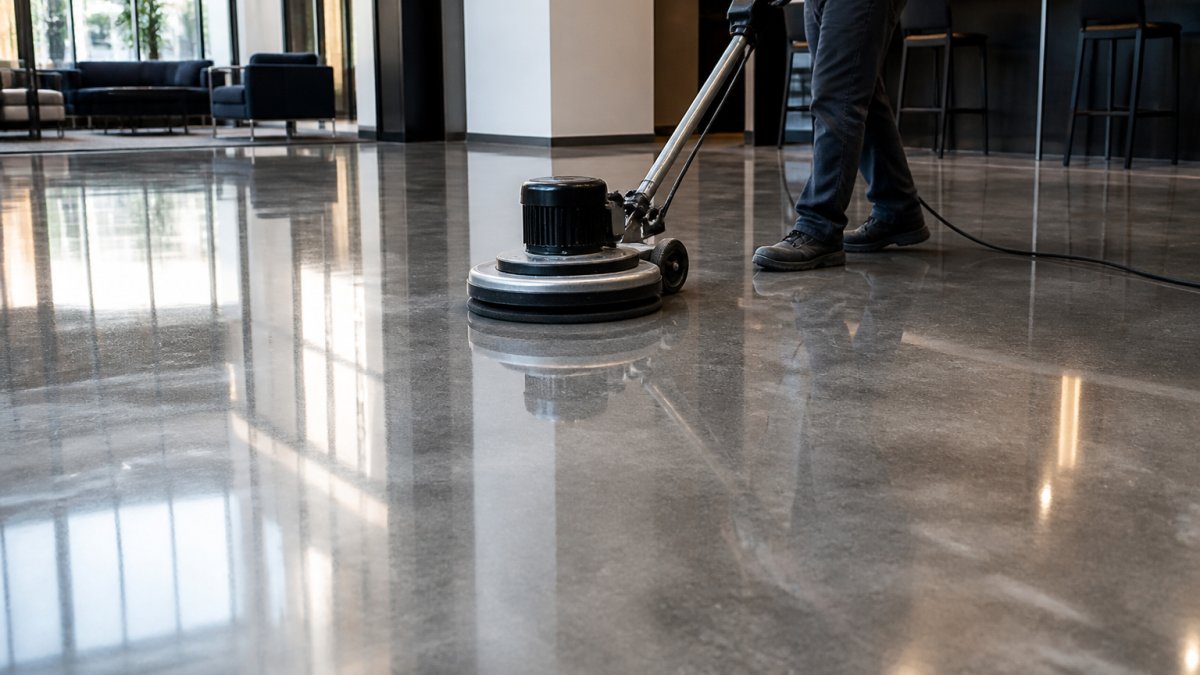
Table of Contents
- What You'll Need Before You Start
- Best Cleaning Products for Polished Concrete
- Your Polished Concrete Floor Maintenance Schedule
- Removing Stains From Polished Concrete
- Step-by-Step: How to Clean and Maintain Polished Concrete Floors
- Common Mistakes When Maintaining Polished Concrete Floors
- DIY vs. Professional Maintenance: When to Call a Pro
- Long-Term Costs and Floor Longevity
- Frequently Asked Questions
Last Updated: October 1, 2026
What You'll Need Before You Start
Maintaining polished concrete floors starts with the right kit, not the strongest chemicals.
Gather these items before you begin:
- A microfiber dust mop with a wide head
- Two microfiber flat mops (one for cleaner, one for rinse)
- A pH-neutral cleaner made for polished concrete
- Two buckets, or one dual-chamber bucket
- A wet/dry vacuum for deep cleans
- Felt pads for furniture legs
- Walk-off mats for entryways
Best Cleaning Products for Polished Concrete
The best cleaner for polished concrete is a pH-neutral formula with no wax, no citrus, and no ammonia. It lifts dirt without eating into the sealer or dulling the sheen.
Products to Avoid
Some common household cleaners cause real damage. Watch for these:
- Vinegar and other acidic cleaners etch the surface over time
- Bleach and ammonia strip the sealer and dull the shine
- Citrus-based cleaners contain acids that attack the finish
- Abrasive pads and gritty powders scratch the surface
- Wax-based products leave a film that traps dirt
Your Polished Concrete Floor Maintenance Schedule
A polished concrete floor maintenance schedule splits into daily, weekly, monthly, and annual tasks. Consistency beats intensity: a floor dust-mopped daily outlasts one scrubbed hard once a month.
Daily and Weekly Tasks
Daily care is mostly about debris removal. Grit acts like sandpaper underfoot.
- Dust mop high-traffic areas each day
- Spot-clean spills right away
- Shake out and reposition walk-off mats
- Damp mop with a pH-neutral cleaner once a week
- Check for scuff marks and lift them with a microfiber cloth
Monthly and Annual Tasks
Monthly and annual work keeps the surface protected. These tasks take longer but happen less often.
- Deep clean with a wet/dry vacuum or autoscrubber each month
- Inspect the sealer for dull or worn spots
- Re-apply a sealer or densifier as needed
- Buff or burnish the surface to restore sheen
- Schedule a professional re-polish when the finish fades
| Task | Frequency | Time Needed |
|---|---|---|
| Dust mopping | Daily | 5-10 min |
| Damp mopping | Weekly | 15-20 min |
| Deep clean | Monthly | 30-60 min |
| Sealer check | Quarterly | 15 min |
| Re-polish | Every 1-3 years | Pro service |
Removing Stains From Polished Concrete
Most stains come out with the right method, not the strongest chemical. Match the treatment to the stain's chemistry: a polished concrete surface is denser and less porous than unfinished concrete, so stains sit closer to the surface but spread faster when liquid is left standing.
Stain-by-Stain Treatment Guide
| Stain Type | First Move | Treatment | Dwell Time | Watch Out For |
|---|---|---|---|---|
| Oil, grease, automotive fluid | Blot, don't wipe | pH-neutral degreaser on a soft white pad | 5-10 min | Spreading the oil into a larger ring |
| Coffee, tea, red wine | Blot with a dry cloth | Neutral cleaner, then damp mop | Immediate | Letting tannins set overnight |
| Rust | Do not use acid | Commercial poultice powder mixed with water | 12-24 hrs under plastic | Acid washes etch the polish permanently |
| Paint (latex) | Let it cure | Plastic scraper, then warm water | N/A | Metal blades gouge the surface |
| Paint (oil-based) | Ventilate | Mineral spirits on a rag, then neutral cleaner | 1-2 min | Solvent can dull the sheen if left too long |
| Ink and marker | Blot | Isopropyl alcohol on a microfiber cloth | 30-60 sec | Alcohol strips sealer with repeated use |
| Hard water spots | Dry the area | Diluted white vinegar is NOT safe, use a dedicated mineral remover | 2-3 min | Vinegar etches; this is the most common DIY mistake |
| Pet accidents | Blot, then neutralize | Enzyme cleaner, then neutral rinse | 10-15 min | Uric acid etches if left more than an hour |
| Chewing gum | Freeze it | Ice in a plastic bag, then plastic scraper | 5 min | Warm gum smears and pulls sealer |
| Scuff marks (rubber) | Dry rub | Melamine sponge or tennis ball | 10-30 sec | Abrasive pads scratch the polish |
How a Poultice Actually Works
A poultice is a powder, diatomaceous earth, kaolin clay, or a commercial concrete poultice, mixed with liquid into a paste, spread about 1/4 inch thick over the stain, covered with plastic wrap, and taped at the edges. Over 12 to 24 hours, moisture wicks up through the concrete and carries the stain into the powder as it dries.
When a Stain Won't Come Out
If a poultice has been applied twice and the stain is still visible, the discoloration has likely penetrated past the polish layer into the densified surface. No cleaner will fix it, the area needs re-honing with diamond pads and re-polishing. This is a professional job and the most common reason homeowners call a contractor after a DIY stain attempt.
A Note on Sealers and Stain Resistance
Floors finished with a lithium densifier plus a penetrating sealer resist stains better than densifier-only floors. If stains set faster than expected, the sealer may be due for reapplication, see the quarterly sealer check above.
Step-by-Step: How to Clean and Maintain Polished Concrete Floors
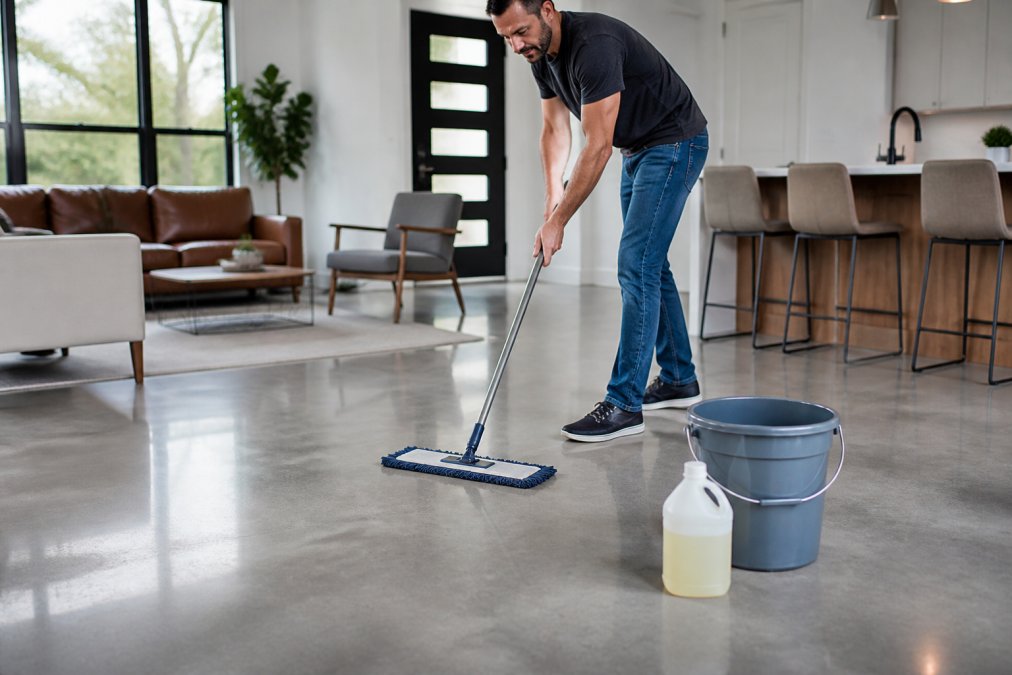
Cleaning polished concrete takes about 20 minutes for a standard room. Follow these steps for a streak-free result.
Common Mistakes When Maintaining Polished Concrete Floors
The biggest mistake is using too much cleaner. More soap doesn't mean a cleaner floor. It leaves a film that traps dirt and dulls the shine.
Call (919) 824-5403 or email craigrfear@gmail.com for a free estimate →
Other common errors:
- Skipping dust mopping and going straight to wet mopping
- Using a soaking wet mop that pushes water into the pores
- Letting spills sit instead of wiping them up
- Using abrasive pads on the surface
- Forgetting felt pads under furniture
DIY vs. Professional Maintenance: When to Call a Pro
Daily and weekly care is a solid DIY job; deep restoration is not.
Call a pro when you see:
- Cloudy or etched patches that won't clean off
- Worn spots where the sealer has broken down
- Deep stains that poultices can't lift
- A dull finish that buffing won't restore
- Cracks or surface damage
Long-Term Costs and Floor Longevity
A polished concrete floor can last decades with proper care. The finish, not the slab, is what wears out, and the cost difference between maintaining and restoring it is dramatic. Think of it as two layers: the concrete substrate lasts a lifetime, while the polish and sealer are a wear surface that needs upkeep, like a car's paint needs wax.
What Routine Maintenance Actually Costs
Routine maintenance is mostly consumables and time. A typical residential kit, microfiber dust mop, two flat mops, dual-chamber bucket, and a gallon of pH-neutral cleaner, lasts a year or more. Cleaner concentrate refills are the recurring cost, and one gallon dilutes into dozens of mop buckets.
What Restoration Costs
Restoration is where the numbers get serious. A full re-polish requires diamond grinding through a grit sequence, typically 50, 100, 200, 400, 800, and 1500 or 3000 grit, depending on the desired sheen, followed by re-densifying and re-sealing. It's a multi-day process with specialized equipment.
The Cost of Skipping Maintenance
Skipping maintenance doesn't save money, it just moves the spend from small recurring amounts to one large lump sum. The failure mode:
- Dust mopping stops, so grit stays on the floor and acts as an abrasive under foot traffic.
- The sealer wears through in high-traffic lanes first, entryways, checkout counters, hallways.
- Once the sealer is gone, the polish itself starts to dull and stain.
- A dull, stained floor cannot be buffed back. It has to be re-honed and re-polished.
Targeting High-Traffic Zones
Not every square foot wears at the same rate. In most buildings, 20 percent of the floor takes 80 percent of the traffic. Entryways, main aisles, and areas in front of counters or workstations wear first.
Longevity Expectations
With consistent care, a polished concrete floor's finish can hold up 10 years or more before a full restoration. Without it, the same floor may show visible wear in 2 to 3 years. The substrate is essentially permanent either way, the variable is how often you pay to restore the surface on top of it.
Frequently Asked Questions
Do polished concrete floors need to be sealed?
Most polished concrete floors are mechanically ground and densified rather than coated, so they don't need a traditional sealer to perform. However, a penetrating sealer or stain guard can be applied to improve stain resistance, especially in kitchens, garages, or commercial spaces. If your floor was finished with a topical guard or floor finish, that layer will need occasional reapplication. Ask your installer which system was used so you know whether sealing is part of your maintenance routine.
What is the best mop to use on polished concrete floors?
A microfiber mop or microfiber flat mop is the safest choice for polished concrete. Microfiber lifts dust and grime without scratching the surface or leaving streaks. For daily dust mopping, a treated microfiber pad works well. For damp mopping, wring the mop so it's barely wet. Avoid string mops with abrasive pads, and skip anything labeled for scrubbing heavy grout, since those can dull the sheen. Change mop heads often in high-traffic areas to avoid spreading grit that causes surface etching.
Can you use vinegar to clean polished concrete floors?
Vinegar is acidic, and acidic cleaners can etch the surface of polished concrete over time, especially if the floor has a topical finish or sealer. A diluted vinegar solution may be fine for occasional spot cleaning, but it should not be your regular cleaner. Stick with a pH-neutral cleaner designed for polished concrete. The same rule applies to citrus-based cleaners, ammonia, and bleach. These may clean the surface short-term but can break down the finish and reduce sheen retention.
How often should you professionally clean or re-polish polished concrete?
Most residential polished concrete floors benefit from professional re-polishing every 3 to 5 years, depending on foot traffic and how well daily maintenance is handled. Commercial spaces, especially high-traffic areas like showrooms or warehouses, may need re-polishing every 1 to 2 years. Signs it's time include dull patches, visible scuff marks that won't buff out, and loss of slip resistance. A professional can assess grit level and porosity and recommend whether buffing, burnishing, or a full re-polish is needed.
Tags: polished concrete, maintaining polished concrete floors, best cleaning products for polished concrete, polished concrete floor maintenance schedule, removing stains from polished concrete
Frequently Asked Questions
Most polished concrete floors are mechanically ground and densified rather than coated, so they don't need a traditional sealer to perform. However, a penetrating sealer or stain guard can be applied to improve stain resistance, especially in kitchens, garages, or commercial spaces. If your floor was finished with a topical guard or floor finish, that layer will need occasional reapplication. Ask your installer which system was used so you know whether sealing is part of your maintenance routine.
A microfiber mop or microfiber flat mop is the safest choice for polished concrete. Microfiber lifts dust and grime without scratching the surface or leaving streaks. For daily dust mopping, a treated microfiber pad works well. For damp mopping, wring the mop so it's barely wet. Avoid string mops with abrasive pads, and skip anything labeled for scrubbing heavy grout, since those can dull the sheen. Change mop heads often in high-traffic areas to avoid spreading grit that causes surface etching.
Vinegar is acidic, and acidic cleaners can etch the surface of polished concrete over time, especially if the floor has a topical finish or sealer. A diluted vinegar solution may be fine for occasional spot cleaning, but it should not be your regular cleaner. Stick with a pH-neutral cleaner designed for polished concrete. The same rule applies to citrus-based cleaners, ammonia, and bleach. These may clean the surface short-term but can break down the finish and reduce sheen retention.
Most residential polished concrete floors benefit from professional re-polishing every 3 to 5 years, depending on foot traffic and how well daily maintenance is handled. Commercial spaces, especially high-traffic areas like showrooms or warehouses, may need re-polishing every 1 to 2 years. Signs it's time include dull patches, visible scuff marks that won't buff out, and loss of slip resistance. A professional can assess grit level and porosity and recommend whether buffing, burnishing, or a full re-polish is needed.