listicle
Top 10 Decorative Concrete Solutions for Retail Stores
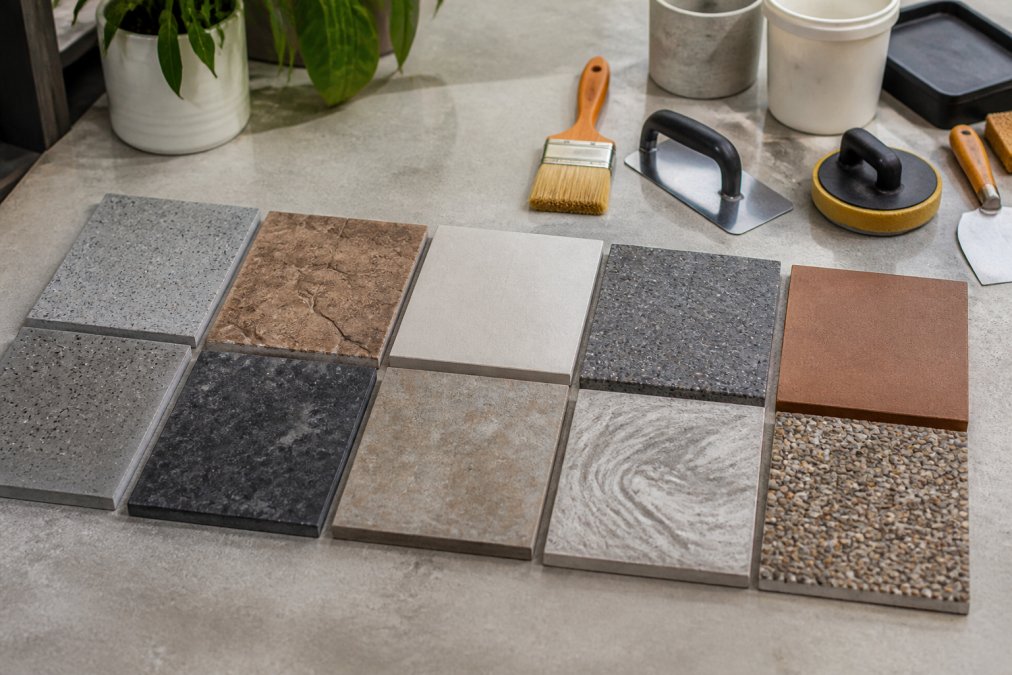
Table of Contents
- Quick Comparison: Top Decorative Concrete Solutions
- 1. Epoxy Floor Coatings: Durability Meets Design
- 2. Polished Concrete: Industrial-Chic Durability
- 3. Stamped Concrete Overlays: Natural Material Aesthetics
- 4. Stained Concrete Floors: Color and Customization
- 5. Metallic Epoxy Flooring: Luxury Visual Impact
- Decorative Concrete Overlay Cost Per Square Foot: What to Budget
- 6. Microtoppings: Modern Minimalist Finishes
Last Updated: August 20, 2026
Quick Comparison: Top Decorative Concrete Solutions
The right decorative concrete solution transforms a utilitarian surface into a strategic asset that communicates brand identity, withstands foot traffic, and requires minimal upkeep. This guide from Concrete-Enhancements covers the top 10 decorative concrete solutions for retail stores, helping you choose the approach that matches your budget, aesthetic vision, and operational demands.
Today's decorative concrete options, stamped overlays, metallic effects, and polished systems, offer unprecedented design flexibility. The "best" solution depends entirely on your traffic patterns, brand positioning, and maintenance tolerance.
| Solution | Best For | Durability | Maintenance | Aesthetic Range |
|---|---|---|---|---|
| Epoxy Floor Coatings | High-traffic retail, showrooms | 10-20 years | Low | Wide variety |
| Polished Concrete | Modern, industrial-chic spaces | 20+ years | Very low | Limited (matte to high-gloss) |
| Stamped Concrete Overlays | Themed environments, branded spaces | 10-15 years | Moderate | Extensive patterns |
| Stained Concrete | Color customization, artistic designs | 10+ years | Moderate | Full color spectrum |
| Metallic Epoxy Flooring | Luxury showrooms, high-end retail | 10-15 years | Low | Unique, one-of-a-kind effects |
| Microtoppings | Modern minimalist aesthetics | 8-12 years | Low | Smooth, seamless finishes |
| Concrete Dyes | Branded logos, intricate designs | 5-10 years | Moderate | Vibrant custom colors |
| Urethane Cement | Back-of-house, extreme durability | 15-20 years | Low | Limited (industrial) |
| CTi Decorative Overlays | Comprehensive resurfacing solutions | Varies by system | Varies | Extensive variety |
| Exposed Aggregate | Modern, textured aesthetics | 15+ years | Moderate | Natural stone appearance |
1. Epoxy Floor Coatings: Durability Meets Design
Epoxy floor coatings are multi-layer systems that create a seamless, chemical-resistant surface ideal for retail environments. The system bonds directly to concrete, creating a protective barrier that resists stains, abrasions, and moisture.
Professional epoxy installations succeed through meticulous surface preparation. The concrete must be properly ground, cleaned, and chemically etched to ensure adhesion. Improper prep causes peeling or bubbling within months.
The aesthetic range is broad: solid colors matching brand guidelines, decorative flakes for texture, metallic pigments for luxury effects, or embedded logos. High-gloss finishes amplify light and make spaces feel larger; matte or satin finishes reduce glare in showrooms with critical product lighting.
Durability typically reaches 10-20 years depending on traffic intensity and maintenance. Daily cleanup requires only damp mopping with mild detergent. Spills don't penetrate the surface, making epoxy ideal for food retail or beverage service areas. Standard epoxy degrades under UV exposure; exterior applications require UV-stable polyurethane topcoats.

Pros:
- Exceptional durability and chemical resistance
- Wide design options including colors, flakes, metallic effects, and logos
- Seamless surface eliminates grout lines and dirt traps
- Easy to clean and maintain
Cons:
- Higher professional installation cost
- Critical surface preparation; improper prep leads to premature failure
- UV exposure degrades standard epoxy; exterior use requires additional topcoats
2. Polished Concrete: Industrial-Chic Durability
Polished concrete transforms a utilitarian slab into a sophisticated design element by mechanically grinding and polishing the surface to expose aggregate and achieve a high-gloss finish.
The real advantage is longevity. Polished concrete performs for 20+ years with minimal degradation, making it one of the longest-lasting decorative solutions. The surface becomes harder and more durable over time as the sealer cures fully, resulting in lower total cost of ownership despite higher initial installation costs.
Maintenance is simple: damp mopping with pH-neutral cleaner requires no waxing, stripping, or harsh chemicals. The high-gloss surface naturally resists dust and dirt, enhancing brand perception and reducing energy costs through improved light reflection.
Polished concrete works best with existing sound concrete slabs. Significant cracks, settling, or structural issues will be highlighted rather than hidden. Professional assessment before committing to polishing is essential.
The aesthetic is refined but limited. You can control aggregate exposure levels, choose between matte and high-gloss finishes, and incorporate integral coloring or dyes. Upscale retail environments, boutiques, galleries, and tech showrooms choose polished concrete because the industrial-chic aesthetic signals quality and intentionality.
Pros:
- Exceptional durability, often lasting 20+ years
- Environmentally friendly, using the existing slab
- Minimal maintenance compared to other finishes
- Natural light reflection creates brighter, more spacious appearance
- Resistant to abrasion and impact in high-traffic settings
Cons:
- Labor-intensive and costly initial installation
- Requires structurally sound existing concrete
- Limited aesthetic range compared to stains or epoxy
- Slippery when wet without anti-slip treatment
3. Stamped Concrete Overlays: Natural Material Aesthetics
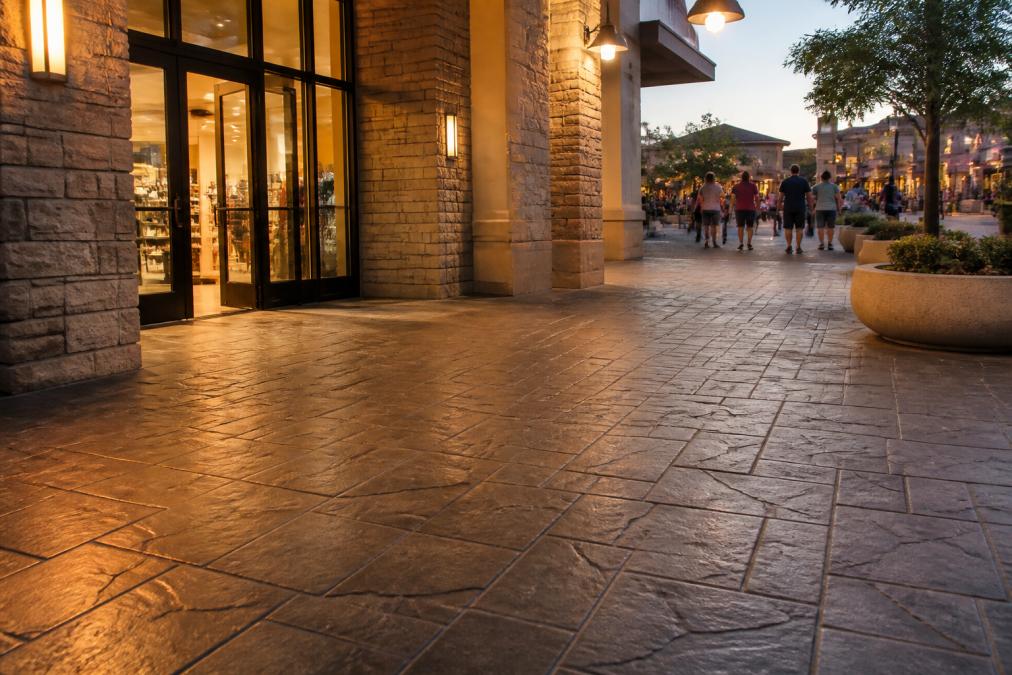
Stamped concrete overlays solve the challenge of achieving natural stone, brick, or wood aesthetics with concrete durability and cost-effectiveness. A polymer-modified cementitious topping is applied over existing concrete, then stamped while workable to mimic natural materials convincingly.
Design versatility is substantial. Manufacturers offer dozens of patterns, slate, flagstone, brick, wood planks, herringbone, ashlar, with integral pigments or surface stains. Retail environments seeking specific aesthetic identity achieve that story without actual stone or wood installation complexity.
Stamped concrete overlays require experienced professionals. The timing is critical; the overlay must be workable yet set enough to hold patterns clearly. Concrete-Enhancements' 20+ years of experience ensures compelling installations.
Durability ranges from 10-15 years under typical retail conditions. Maintenance involves periodic resealing (every 2-3 years) to protect the surface and maintain color vibrancy.
Pros:
- Cost-effective alternative to natural stone or wood
- Extensive design versatility with numerous patterns and colors
- Adds visual texture and interest to retail environments
- Avoids demolition of existing concrete
Cons:
- Requires skilled installers for realistic results
- Pattern high points can wear in extremely high-traffic areas
- Requires periodic resealing to maintain appearance
- Seal maintenance is essential for longevity
4. Stained Concrete Floors: Color and Customization
Stained concrete offers direct color customization. Acid-based stains and water-based dyes penetrate the concrete surface, creating permanent color that won't chip, flake, or peel. Acid stains produce translucent, variegated effects with earthy tones; water-based stains deliver uniform, predictable colors across a broader palette, including vibrant hues.
For retail environments seeking branded color integration or artistic floor designs, stained concrete is often the solution. Stencils create logos, patterns, or wayfinding elements directly into the floor. A boutique hotel might use acid stain for a marbled lobby aesthetic; a restaurant might incorporate water-based stain with scoring patterns to define dining zones.
Stain requires a clean, properly prepared surface. Dust, sealers, or coatings prevent penetration, making surface preparation critical. Stain dries quickly (within hours), but final color develops over several days as the chemical reaction completes.
Durability depends on sealing. Properly sealed stained concrete typically lasts 10+ years in retail environments. Maintenance is straightforward: damp mopping with pH-neutral cleaner. Avoid acidic cleaners, which can affect stain color over time.
Stain color is influenced by existing concrete composition. Sample testing on your specific concrete is essential before committing to full installation.
Pros:
- Cost-effective solution for adding color and customization
- Creates unique, high-end aesthetic without premium materials
- Permanent color that won't chip or peel
- Allows artistic designs, logos, and custom patterns via stencils
- Durable and low-maintenance when properly sealed
Cons:
- Acid stains have limited color palette (earth tones primarily)
- Achieving uniform color with acid stains can be challenging
- Requires thorough surface preparation
- Color results depend on existing concrete composition
- Requires protective sealing for longevity
5. Metallic Epoxy Flooring: Luxury Visual Impact
Metallic epoxy flooring represents the high end of decorative concrete aesthetics. Metallic pigments suspended in clear epoxy create swirling, three-dimensional effects resembling marble, liquid metal, or abstract art. Each installation is unique, appealing to upscale retail, high-end showrooms, and hospitality environments where visual impact drives customer perception.
The aesthetic is striking. The 3D effect creates depth and movement, with colors shifting as light angles change. This makes metallic epoxy valuable in luxury retail where the floor becomes part of the brand experience.
Durability matches standard epoxy (10-15 years), but installation is more demanding. Creating the metallic effect requires artistic skill and precise timing. This requires experienced, skilled professionals, making metallic epoxy one of the more expensive decorative solutions.
Maintenance is identical to standard epoxy: damp mopping with mild detergent. The seamless surface eliminates dirt traps. Metallic epoxy shows footprints and dust more readily than opaque finishes, so retail environments with high foot traffic may require more frequent cleaning.
Pros:
- Unmatched aesthetic appeal and visual uniqueness
- One-of-a-kind floor that becomes a brand differentiator
- Excellent durability and chemical resistance
- Easy to clean and maintain
Cons:
- Highest cost among decorative concrete solutions
- Requires highly skilled, experienced installers
- Professional installation is non-negotiable for quality
- Shows footprints and dust more readily than opaque finishes
Decorative Concrete Overlay Cost Per Square Foot: What to Budget
Understanding decorative concrete overlay cost per square foot is essential for retail planning. Costs vary significantly based on complexity, surface condition, and the specific system chosen.
Surface preparation is the largest variable. Clean, flat, good-condition concrete requires minimal preparation costs. Slabs with cracks, sealers, old coatings, or contamination become labor-intensive. Grinding, chemical etching, or repairs all add cost. Professional assessment before quoting is essential for accurate preparation estimates.
Overlay systems carry different material costs. Stamped concrete overlays require specialized materials and skilled labor. Stains are less expensive but require careful preparation. Epoxy systems vary based on coat numbers, pigment complexity, and additives (anti-slip, metallic, decorative flakes). Polished concrete requires equipment and skilled labor but fewer material costs than overlay systems.
Request detailed quotes breaking down preparation, materials, and labor separately. This transparency allows informed trade-offs. A retail owner might choose a simpler finish to reduce costs, knowing that higher-quality installation delivers better longevity and performance.
Call (919) 824-5403 or email craigrfear@gmail.com for a free estimate →
6. Microtoppings: Modern Minimalist Finishes
Microtoppings are thin, polymer-modified cementitious overlays (often just 1/16" thick) that create smooth, seamless, modern concrete aesthetics. Unlike stamped overlays, microtoppings add minimal bulk while providing a blank canvas for further decorative treatments. They're ideal for retail spaces with structurally sound but aesthetically dated concrete.
The appeal is minimalism. Microtoppings deliver refined, contemporary aesthetics, smooth, uniform, and intentionally understated. They work particularly well in modern retail environments, galleries, or showrooms where the floor should recede visually rather than dominate.
Microtoppings can be integrally colored during application, stained after curing, or polished for high-gloss finishes. This versatility allows customization while maintaining the thin-profile advantage. For retail spaces with height constraints or existing infrastructure limiting overlay thickness, microtoppings solve the problem elegantly.
Durability is solid (8-12 years under typical retail conditions). Maintenance is straightforward: damp mopping with pH-neutral cleaner. Periodic resealing (every 2-3 years) maintains protection and appearance.
Pros:
- Creates refined, modern concrete aesthetic
- Minimal thickness ideal for spaces with height constraints
- Seamless surface without grout lines
- Versatile, can be colored, stained, or polished
- Cost-effective compared to thicker overlay systems
Cons:
- Requires careful surface preparation for proper bonding
- May show imperfections from the original slab
- Shorter lifespan than thicker systems or polished concrete
- Less forgiving of impact or abrasion in extreme high-traffic areas
7. Concrete Dyes: Branded Logos and Intricate Designs
Concrete dyes use micronized pigments suspended in water or acetone carriers to impart vibrant, translucent color onto concrete surfaces. Unlike stains that penetrate chemically, dyes are absorbed mechanically, allowing broader color palettes and precise design creation. For retail environments seeking branded logos, wayfinding elements, or intricate artistic patterns, dyes offer direct customization.
The color range is extensive: vibrant hues that acid stains can't achieve, plus custom color matching to brand specifications. You can stencil logos, create patterns, or paint designs directly into polished or tightly troweled concrete. A retail chain might use dyes for subtle brand color wayfinding; an artist-focused boutique might commission custom floor art.
Dyes are primarily interior applications. UV exposure degrades most dyes, limiting exterior use unless specifically formulated for UV stability. Interior applications typically last 5-10 years with proper sealing.
Application requires careful surface preparation. Concrete must be clean, dust-free, and properly prepared for dye absorption. Dyes dry quickly (within hours), but color development continues for several days. Maintenance involves damp mopping with pH-neutral cleaner; acidic or abrasive cleaners can affect dye color.
Dyes are valuable in retail because they enable precision. If brand identity depends on specific colors or logos integrated into the floor, dyes deliver that capability more directly than other solutions.
Pros:
- Wide range of customizable, vibrant colors
- Enables precise logos and intricate design integration
- Cost-effective solution for branded visual elements
- Quick application and drying times
- Allows artistic expression and custom designs
Cons:
- Generally not UV stable; limited to interior applications
- Shorter lifespan (5-10 years) compared to stains or overlays
- Requires protective sealing for protection and longevity
- Requires clean, properly prepared surfaces
- Susceptible to fading if sealer degrades
8. Urethane Cement: Industrial-Grade Durability
Urethane cement provides exceptional resistance to thermal shock, chemicals, and abrasion in demanding industrial and commercial environments. Unlike epoxy, which can degrade under extreme temperature fluctuations, urethane cement maintains integrity across wider thermal ranges.
Application is specialized. Urethane cement requires professional installation due to technical complexity and reactive material properties. The system applies in multiple layers, with each requiring specific curing time before the next application.
For retail environments, urethane cement makes sense primarily in back-of-house areas, kitchens, storage facilities, loading docks, where chemical exposure, thermal shock, or impact durability is critical. Durability is exceptional, often performing for 15-20 years under harsh conditions, making long-term cost of ownership competitive despite higher upfront investment.
The aesthetic range is limited. Urethane cement finishes are typically industrial, solid colors, matte finishes, utilitarian. If your retail brand identity requires an industrial aesthetic, this becomes an advantage.
Pros:
- Superior durability and longevity in extreme conditions
- Excellent chemical and thermal shock resistance
- Seamless, hygienic surface ideal for sanitation
- Long-term cost of ownership is competitive
- Withstands heavy impact and forklift traffic
Cons:
- Highest material and installation cost
- Limited aesthetic options compared to decorative systems
- Requires professional installation due to technical complexity
- Overkill for moderate-traffic retail environments
- Extended curing time delays project completion
9. CTi Decorative Overlays: Comprehensive Resurfacing Solutions
CTi offers comprehensive polymer-modified concrete overlay systems designed to transform existing concrete without costly tear-out and replacement. As a CTi Certified Dealer, Concrete-Enhancements provides access to proven decorative concrete systems including textured finishes, patterned overlays, and custom color options.
The advantage is standardization combined with professional support. CTi provides training, technical support, and quality assurance through their certified dealer network. You access a system developed and refined across hundreds of installations nationwide rather than relying on a single installer's expertise.
CTi overlays apply polymer-modified cementitious toppings over existing concrete, then finish with textures, patterns, stains, or sealers. Durability typically ranges from 10-15 years under normal retail conditions.
Pros:
- Access to proven, standardized decorative concrete systems
- Professional training and technical support through certified dealer network
- Wide range of aesthetic options and finishes
- Warranty and quality assurance backing
- Suitable for both residential and commercial applications
Cons:
- Pricing is project-specific and requires dealer consultation
- Availability depends on certified dealer presence in your area
- May be overkill for simple, straightforward installations
- Standardized systems may limit extreme customization
10. Exposed Aggregate: Modern Textured Aesthetics
Exposed aggregate flooring reveals stones and pebbles within concrete, creating a textured, modern aesthetic that's both visually interesting and functional. The process removes the top cement paste layer to expose aggregate beneath, then seals the surface.
The aesthetic is distinctive. Exposed aggregate creates visual texture and depth while maintaining the industrial-concrete aesthetic synonymous with modern design. The texture also provides inherent slip resistance, making exposed aggregate suitable for retail environments where safety is a concern.
Durability is solid (15+ years under typical retail conditions). Maintenance is straightforward: damp mopping with pH-neutral cleaner. Periodic resealing (every 3-5 years) maintains protection and appearance.
The aesthetic range is somewhat limited by regional aggregate availability. Different areas have different stone types, colors, and sizes, influencing the final appearance. For retail spaces seeking contemporary, textured aesthetics with minimal downtime, exposed aggregate is efficient.
Pros:
- Creates distinctive, modern aesthetic with inherent texture
- Provides natural slip resistance for safety
- Long lifespan (15+ years) with proper sealing
- Can revitalize existing concrete without demolition
- Low maintenance when properly sealed
- Cost-effective compared to overlay systems
Cons:
- Limited color palette based on regional aggregate availability
- Cannot achieve precise color matching or branding integration
- Requires periodic resealing for protection and appearance
- Texture can trap dirt if not properly sealed
- Requires experienced installation for consistent results
Choosing the right decorative concrete solution for retail stores requires balancing aesthetics, durability, maintenance, and budget. Epoxy floor coatings deliver versatility and durability for most retail environments. Polished concrete offers sophistication and minimal maintenance for upscale spaces. Stamped overlays provide design flexibility for themed retail experiences. Stained concrete enables color customization and artistic integration. Metallic epoxy creates luxury visual impact for high-end environments.
The decision depends on your specific retail context. High-traffic grocery stores need durability and easy cleaning; epoxy excels. Boutique retail seeking brand differentiation might choose stamped overlays or metallic epoxy. Modern galleries benefit from polished concrete or exposed aggregate. Back-of-house food service areas require urethane cement's chemical resistance.
Concrete-Enhancements brings 20+ years of experience and CTi Certified Dealer status to these decisions. Contact us for a professional assessment of your space, existing concrete condition, and aesthetic goals. We'll recommend the solution that delivers the durability, appearance, and performance your retail environment demands. Call (919) 824-5403 or email craigrfear@gmail.com for a free estimate to begin your concrete transformation.
Frequently Asked Questions
What are the most durable decorative concrete options for high-traffic retail stores?
Epoxy floor coatings, polished concrete, and urethane cement rank highest for durability in retail environments. Epoxy coatings last 10-20 years with proper maintenance and resist stains and chemicals. Polished concrete offers decades of longevity with minimal upkeep, making it ideal for large open retail spaces. Urethane cement provides the highest chemical and thermal shock resistance, though it's typically reserved for back-of-house areas. Stamped concrete overlays and stained finishes, when properly sealed, also perform well but require more frequent maintenance in high-traffic zones.
How much does decorative concrete overlay cost per square foot?
Decorative concrete overlay costs range from $8-$15 per square foot for stamped overlays and $5-$10 for polished concrete, while epoxy coatings run $3-$12 per square foot depending on complexity and finish. Stained concrete ranges from $2-$25 per square foot based on design intricacy, and metallic epoxy costs $8-$18 per square foot. Pricing depends on existing surface condition, prep requirements, pattern complexity, and regional labor rates. Contact Concrete-Enhancements for a free estimate tailored to your specific retail space and design goals.
How do you maintain stained concrete floors in a retail environment?
Stained concrete requires regular sealing to maintain color vibrancy and protect against stains and moisture. Sweep or vacuum daily to remove dirt and debris, then mop with pH-neutral cleaners to avoid damaging the sealer. Avoid acidic cleaners and high-moisture mopping that can compromise the seal. Reapply sealer every 1-3 years depending on foot traffic intensity. For retail spaces with heavy traffic, consider a high-gloss sealer rated for commercial use. Spills should be cleaned promptly to prevent staining, especially with acid-stained concrete where the color is translucent and vulnerable to discoloration.
What are the benefits of epoxy floor coatings for retail spaces?
Epoxy floor coatings deliver exceptional durability, lasting 10-20 years in retail settings, and resist stains, chemicals, and abrasions that damage traditional flooring. They're easy to clean with simple mopping, reducing maintenance labor and costs. Epoxy offers unlimited design versatility, from solid colors to decorative flakes and metallic finishes, allowing you to match brand colors or create distinctive floor designs that enhance customer experience. Anti-slip additives can be incorporated for safety compliance. The seamless surface eliminates grout lines where dirt accumulates, and the high-gloss finish brightens retail spaces by reflecting ambient light, creating a more inviting shopping environment.
Can decorative concrete be customized to match a retail brand's color scheme?
Yes, most decorative concrete solutions offer significant customization. Epoxy coatings, stained concrete, and metallic epoxy can be color-matched to brand specifications. Water-based stains provide more consistent color control than acid stains, which create variegated earth-tone effects. Concrete dyes offer the widest range of vibrant colors and can even incorporate logos or intricate designs through stenciling. Stamped overlays come in multiple color options, and microtoppings can be integrally colored during application. Work with a CTi Certified Dealer like Concrete-Enhancements to develop a custom color palette that strengthens brand identity while maintaining durability and visual appeal in your retail space.
This article was written using GrandRanker
Frequently Asked Questions
Epoxy floor coatings, polished concrete, and urethane cement rank highest for durability in retail environments. Epoxy coatings last 10-20 years with proper maintenance and resist stains and chemicals. Polished concrete offers decades of longevity with minimal upkeep, making it ideal for large open retail spaces. Urethane cement provides the highest chemical and thermal shock resistance, though it's typically reserved for back-of-house areas. Stamped concrete overlays and stained finishes, when properly sealed, also perform well but require more frequent maintenance in high-traffic zones.
Decorative concrete overlay costs range from $8-$15 per square foot for stamped overlays and $5-$10 for polished concrete, while epoxy coatings run $3-$12 per square foot depending on complexity and finish. Stained concrete ranges from $2-$25 per square foot based on design intricacy, and metallic epoxy costs $8-$18 per square foot. Pricing depends on existing surface condition, prep requirements, pattern complexity, and regional labor rates. Contact Concrete-Enhancements for a free estimate tailored to your specific retail space and design goals.
Stained concrete requires regular sealing to maintain color vibrancy and protect against stains and moisture. Sweep or vacuum daily to remove dirt and debris, then mop with pH-neutral cleaners to avoid damaging the sealer. Avoid acidic cleaners and high-moisture mopping that can compromise the seal. Reapply sealer every 1-3 years depending on foot traffic intensity. For retail spaces with heavy traffic, consider a high-gloss sealer rated for commercial use. Spills should be cleaned promptly to prevent staining, especially with acid-stained concrete where the color is translucent and vulnerable to discoloration.
Epoxy floor coatings deliver exceptional durability, lasting 10-20 years in retail settings, and resist stains, chemicals, and abrasions that damage traditional flooring. They're easy to clean with simple mopping, reducing maintenance labor and costs. Epoxy offers unlimited design versatility, from solid colors to decorative flakes and metallic finishes, allowing you to match brand colors or create distinctive floor designs that enhance customer experience. Anti-slip additives can be incorporated for safety compliance. The seamless surface eliminates grout lines where dirt accumulates, and the high-gloss finish brightens retail spaces by reflecting ambient light, creating a more inviting shopping environment.
Yes, most decorative concrete solutions offer significant customization. Epoxy coatings, stained concrete, and metallic epoxy can be color-matched to brand specifications. Water-based stains provide more consistent color control than acid stains, which create variegated earth-tone effects. Concrete dyes offer the widest range of vibrant colors and can even incorporate logos or intricate designs through stenciling. Stamped overlays come in multiple color options, and microtoppings can be integrally colored during application. Work with a CTi Certified Dealer like Concrete-Enhancements to develop a custom color palette that strengthens brand identity while maintaining durability and visual appeal in your retail space.