ultimate-guide
What Causes Concrete Spalling on Driveways
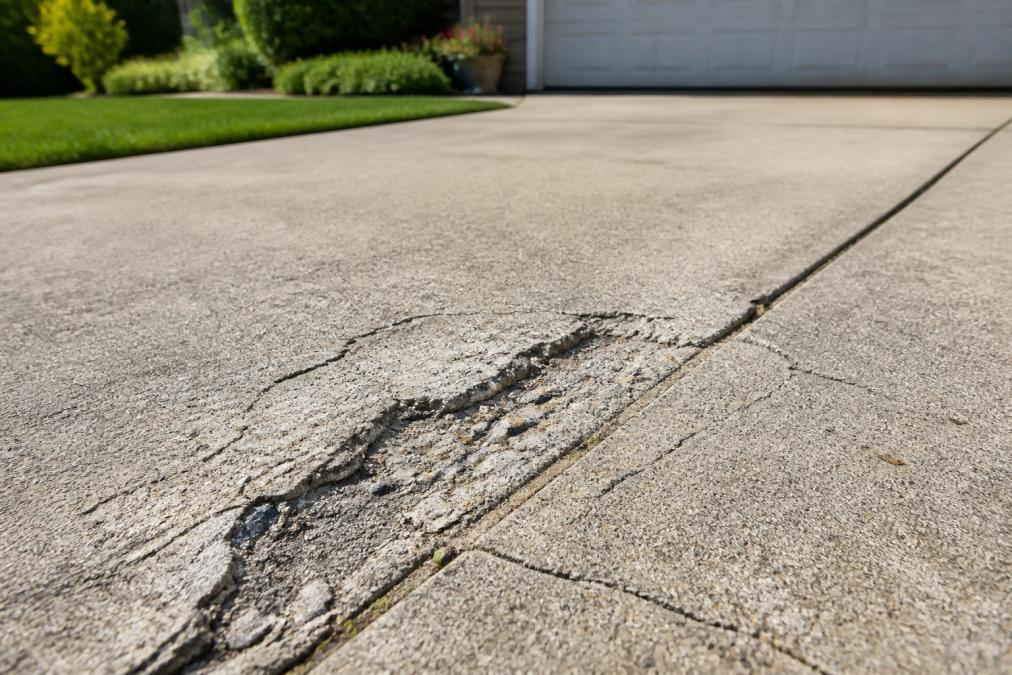
Table of Contents
- What Is Concrete Spalling?
- Common Causes of Concrete Spalling
- How to Prevent Concrete Spalling
- Concrete Driveway Repair Cost and Your Options
- Concrete Resurfacing vs. Replacement
- Identifying and Assessing Spalling Severity
- Conclusion
- Frequently Asked Questions
Last Updated: August 31, 2026
What Is Concrete Spalling?
Concrete spalling is the flaking, chipping, or breaking away of the surface layer of a concrete slab. When a driveway begins to spall, small fragments of concrete separate from the top layer, exposing the subsurface beneath. This deterioration weakens structural integrity and creates safety hazards, spalled concrete becomes rough and uneven, creating tripping risks and allowing water to penetrate deeper into the slab. Understanding what causes concrete spalling helps you prevent it before it starts or catch it early when repair options are most affordable.
Common Causes of Concrete Spalling
Concrete spalling rarely happens overnight. It's the result of specific environmental stressors and construction decisions that compound over time. Most driveways fail due to a combination of factors rather than a single cause.
Freeze-Thaw Cycles and De-Icing Salts
Freeze-thaw damage is the leading cause of concrete spalling in climates with winter weather. When water enters the concrete through small cracks or pores, it expands as it freezes, exerting pressure on the concrete from within and eventually forcing the surface layer to break away.
De-icing salts accelerate this process dramatically. Salt lowers the freezing point of water, allowing repeated cycles of freezing and thawing even during mild winters. Each cycle weakens the concrete further. The salt also penetrates deeper into the slab, causing corrosion of reinforcement steel beneath the surface. Once that steel corrodes, it expands and pushes the concrete upward, creating the characteristic spalling pattern you see on older driveways.
Concrete is porous and will absorb water unless sealed. In freeze-thaw environments, this water absorption without proper surface protection leads to rapid failure.
Poor Concrete Mix Design and Water-Cement Ratio
The concrete mix used during construction determines how resistant the finished slab will be to environmental stress. A high water-cement ratio creates weaker, more porous concrete that absorbs water readily. This is one of the most common construction mistakes leading to premature spalling.
Proper concrete mix design includes air-entrainment, which creates tiny air pockets throughout the concrete. These pockets allow water and ice to expand without building up destructive pressure. Concrete without adequate air-entrainment is far more susceptible to freeze-thaw damage. Premature drying during the curing process, when concrete loses moisture too quickly before hydration is complete, also weakens the final product.
Improper Installation and Finishing Techniques
How concrete is finished during installation affects how it performs decades later. Over-troweling pushes aggregate deeper and brings cement and water to the surface, creating a weak layer prone to spalling. Bleeding, when excess water rises to the surface before the concrete sets, creates a weak zone at the top that spalls easily under freeze-thaw stress.
Subgrade preparation is critical. If the ground beneath the concrete isn't properly compacted, settling occurs unevenly, creating stress points and cracks that allow water to penetrate. Poor drainage around the driveway also increases moisture absorption. The concrete slab needs proper thickness (minimum 4 inches for residential driveways) and reinforcement steel or wire mesh placed at mid-depth to distribute stress and reduce cracking.
Moisture Intrusion and Reinforcement Corrosion
Water is concrete's enemy. Moisture intrusion occurs through cracks, porous concrete, or inadequate sealing. Once water reaches reinforcement steel, corrosion begins. Corroding steel expands, sometimes up to 8 times its original volume, creating internal pressure that forces the concrete surface to spall (peer-reviewed research).
This process is called delamination. The concrete bond between the surface layer and reinforcement fails, and the top layer separates. You'll see hollow-sounding areas when you tap the concrete or large sections breaking away in chunks. Hydrostatic pressure from groundwater also weakens the bond between layers. Proper drainage design around the driveway, including grading away from the slab, prevents this damage.
How to Prevent Concrete Spalling
Prevention is always cheaper than repair.
For new driveways:
- Specify a concrete mix with proper air-entrainment and a water-cement ratio below 0.50
- Ensure subgrade is properly compacted and graded for drainage
- Use proper thickness (minimum 4 inches for residential driveways)
- Protect concrete from sun and wind for at least 7 days during curing (aci.org)
- Install reinforcement steel or wire mesh at mid-depth
For existing driveways:
- Apply a quality concrete sealer every 2-3 years to prevent water absorption
- Keep the surface clean and remove standing water promptly
- Avoid de-icing salts; use sand or calcium chloride alternatives if you must treat ice
- Repair cracks as soon as they appear to prevent water penetration
- Ensure proper drainage around the driveway perimeter
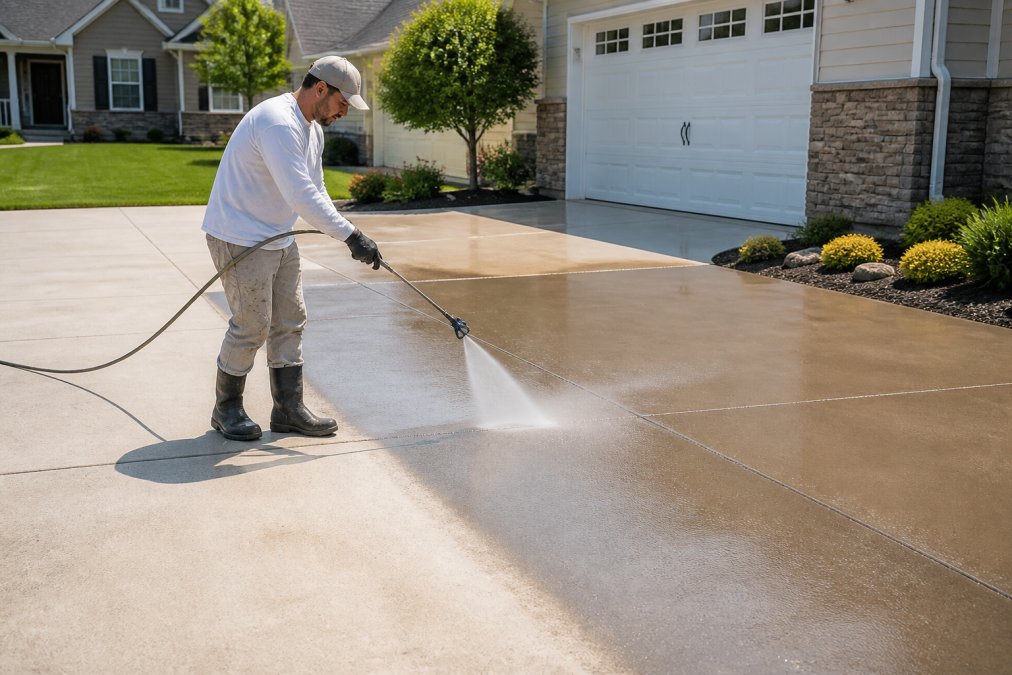
A concrete sealer creates a protective barrier that prevents water from entering the concrete. Most homeowners underestimate how important regular sealing is, it's the single most effective prevention method for existing driveways in freeze-thaw climates.
Concrete Driveway Repair Cost and Your Options
When spalling appears, you have decisions to make about repair approach and timing. The cost varies dramatically based on severity and the repair method chosen.
Minor surface spalling affecting less than 10% of the driveway can often be repaired with concrete patching compound. The damaged area is cleaned, prepared, and filled with repair material. This costs significantly less than larger repairs but requires ongoing maintenance.
Moderate spalling affecting 10-30% of the surface typically requires concrete resurfacing. A thin overlay of new concrete is applied over the damaged area after the surface is prepared. This blends better than patches and provides more durability.
Severe spalling affecting more than 30% of the driveway or showing structural damage usually requires full replacement. Attempting to patch or resurface is temporary; the underlying problem is too extensive.
DIY vs. Professional Repair
Many homeowners attempt DIY repairs using concrete patching compound from home improvement stores. However, DIY repairs often fail within a few years because the root cause isn't addressed. If moisture intrusion caused the spalling, a patch won't stop it. Water will continue penetrating around the patch edges.
Call (919) 824-5403 or email craigrfear@gmail.com for a free estimate →
Professional concrete spalling repair addresses the underlying cause. Contractors can identify whether freeze-thaw damage, poor drainage, or structural issues caused the spalling and tailor the repair accordingly. They have access to commercial-grade materials and proper equipment for surface preparation.
For minor surface spalling, DIY patching might suffice as a temporary fix. For anything beyond that, professional repair is more cost-effective over the long term.
Concrete Resurfacing vs. Replacement
When spalling is extensive, you're choosing between resurfacing the existing slab or replacing it entirely.
Resurfacing applies a new concrete layer (typically 1-3 inches thick) over the existing slab after proper preparation. It's less disruptive than full replacement and faster, usually taking 1-2 weeks. Resurfacing works best when the underlying concrete is structurally sound but has surface damage.
Full replacement removes the old slab completely and pours new concrete. This is the right choice when the existing concrete is structurally compromised. You're also able to improve drainage, adjust thickness, and use a better concrete mix design. The cost is higher, but the result is a durable driveway with a decades-long lifespan.
A concrete sealer applied to the new surface, whether resurfaced or replaced, extends its life significantly.
Identifying and Assessing Spalling Severity
Knowing what to look for helps you catch spalling early when repair options are most affordable.
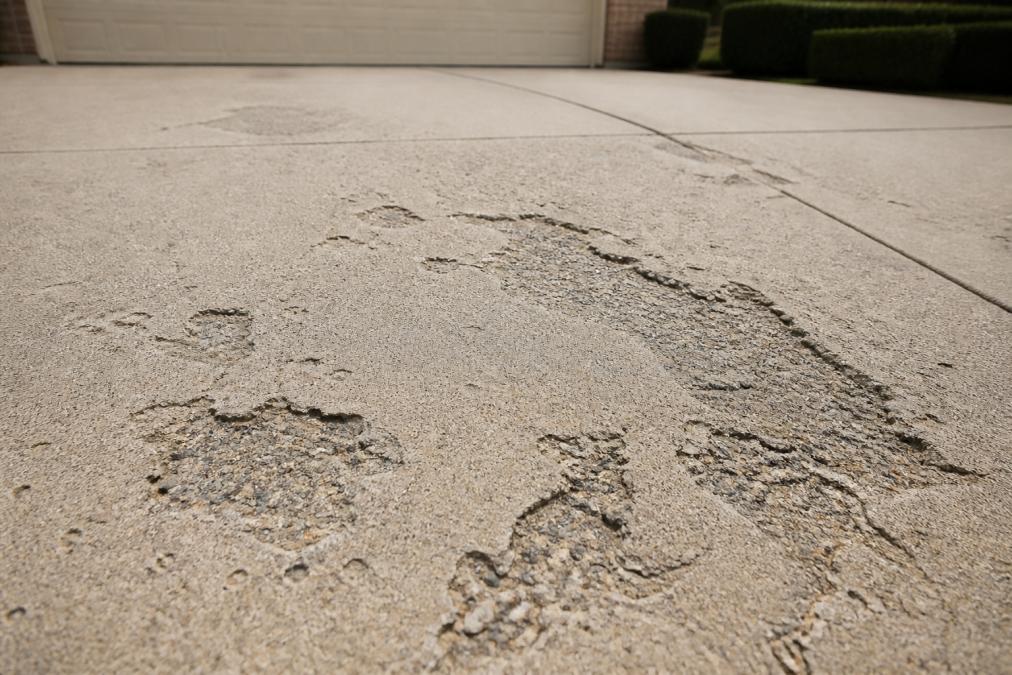
Surface scaling appears as light, thin flakes breaking away from the top layer. Scaling is often the first sign of freeze-thaw damage and indicates that moisture is entering the concrete.
Pitting shows as small holes or depressions scattered across the surface. Pitting often appears in patterns and is common in areas where de-icing salts accumulate.
Spalling (the more severe form) involves chunks of concrete breaking away, sometimes in layers. You may see hollow-sounding areas when you tap the concrete with a hammer.
Delamination is when the surface layer separates from the concrete beneath. Tap the area, it sounds hollow because there's a void between layers. This indicates advanced moisture intrusion and reinforcement corrosion.
To assess severity, estimate the percentage of the driveway affected. Less than 10% is minor. 10-30% is moderate. More than 30% or any structural cracking is severe. If you see rust stains or exposed steel reinforcement, the damage is advanced and requires professional assessment.
Conclusion
Concrete spalling results from a combination of environmental stress, construction decisions, and moisture intrusion. Freeze-thaw cycles and de-icing salts are the most destructive forces in cold climates, but poor concrete mix design, improper finishing, and inadequate sealing accelerate the damage.
The good news is that spalling is preventable. Proper sealing, drainage, and avoiding de-icing salts protect driveways for decades. When spalling does appear, early intervention keeps repair costs manageable.
If you're noticing spalling on your driveway or want to prevent it before it starts, Concrete-Enhancements can help. As a CTi Certified Dealer with over 20 years of experience, we assess the damage, identify the root cause, and recommend the most practical repair solution. We also specialize in concrete sealing and protective coatings that prevent future damage. Contact us at (919) 824-5403 or email craigrfear@gmail.com for a free estimate and expert evaluation of your driveway's condition.
Frequently Asked Questions
What is the most common cause of concrete spalling?
Freeze-thaw cycles are the leading cause of concrete spalling in cold climates. When water enters the concrete and freezes, it expands with tremendous force, causing the surface to flake and chip away. De-icing salts accelerate this damage by lowering the freezing point of water within the concrete, creating repeated cycles of expansion and contraction that gradually deteriorate the surface layer.
How can I prevent concrete spalling on my driveway?
Prevention starts with proper installation: ensure correct water-cement ratio, adequate curing time, and air-entrainment in the concrete mix. Apply a high-quality concrete sealer every 2-3 years to reduce moisture intrusion. Minimize de-icing salt use by switching to alternatives like sand or calcium chloride. Maintain proper drainage around your driveway to prevent water pooling. For new driveways, specify concrete with appropriate compressive strength and durability ratings for your climate.
Is it worth repairing spalling concrete, or should I replace it?
The decision depends on severity and extent. Shallow surface spalling affecting less than 20% of the slab can be repaired cost-effectively with patching compounds and resurfacing. Extensive spalling, deep pitting affecting structural integrity, or delamination of large sections often makes replacement more practical long-term. Professional assessment determines whether concrete resurfacing or replacement offers better durability and value for your specific situation.
Does poor installation cause concrete spalling?
Yes. Improper finishing techniques, inadequate curing compound application, premature drying, and incorrect subgrade preparation all contribute to spalling. Poor troweling can create a weak surface layer prone to scaling. Insufficient air-entrainment reduces the concrete's ability to withstand freeze-thaw cycles. Using the wrong concrete mix design for your climate or failing to follow proper curing procedures compromises the concrete's structural integrity and durability.
This article was written using GrandRanker
Frequently Asked Questions
Freeze-thaw cycles are the leading cause of concrete spalling in cold climates. When water enters the concrete and freezes, it expands with tremendous force, causing the surface to flake and chip away. De-icing salts accelerate this damage by lowering the freezing point of water within the concrete, creating repeated cycles of expansion and contraction that gradually deteriorate the surface layer.
Prevention starts with proper installation: ensure correct water-cement ratio, adequate curing time, and air-entrainment in the concrete mix. Apply a high-quality concrete sealer every 2-3 years to reduce moisture intrusion. Minimize de-icing salt use by switching to alternatives like sand or calcium chloride. Maintain proper drainage around your driveway to prevent water pooling. For new driveways, specify concrete with appropriate compressive strength and durability ratings for your climate.
The decision depends on severity and extent. Shallow surface spalling affecting less than 20% of the slab can be repaired cost-effectively with patching compounds and resurfacing. Extensive spalling, deep pitting affecting structural integrity, or delamination of large sections often makes replacement more practical long-term. Professional assessment determines whether concrete resurfacing or replacement offers better durability and value for your specific situation.
Yes. Improper finishing techniques, inadequate curing compound application, premature drying, and incorrect subgrade preparation all contribute to spalling. Poor troweling can create a weak surface layer prone to scaling. Insufficient air-entrainment reduces the concrete's ability to withstand freeze-thaw cycles. Using the wrong concrete mix design for your climate or failing to follow proper curing procedures compromises the concrete's structural integrity and durability.