ultimate-guide
Why Concrete Pool Decks Get Hot: Science & Solutions
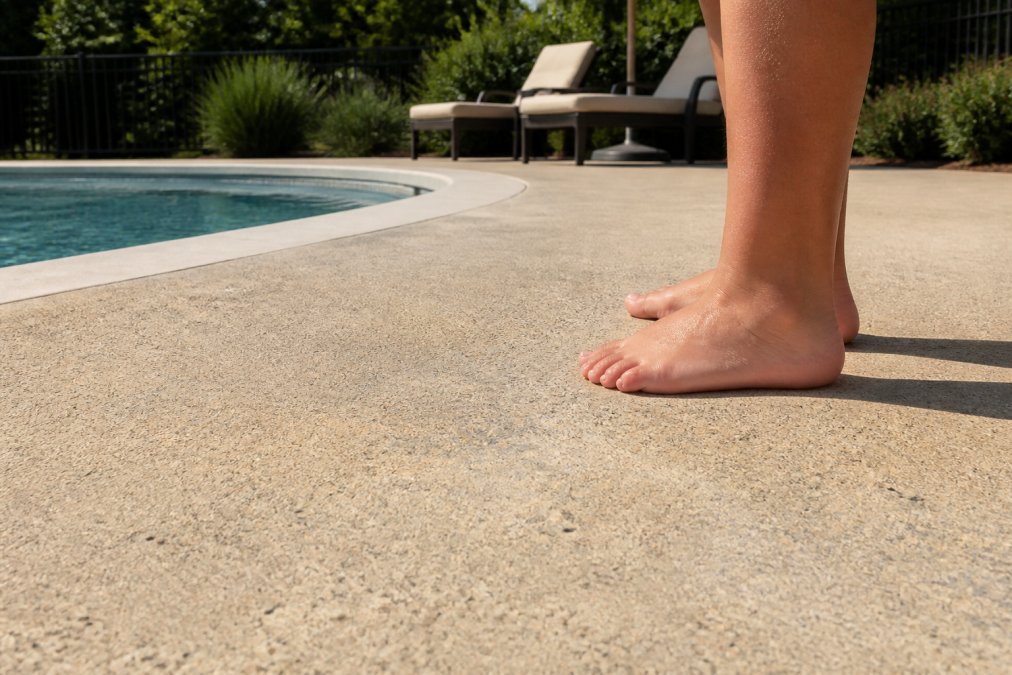
Table of Contents
- Why Concrete Pool Decks Absorb and Retain Heat
- The Role of Color and Surface Finish in Heat Absorption
- Safety Risks of Hot Pool Decks
- Cool Deck Coating Options for Hot Concrete
- How to Cool Down Hot Concrete Pool Decks
- Resurfacing Your Pool Deck for Better Performance
- Conclusion
Last Updated: August 15, 2026
Why Concrete Pool Decks Absorb and Retain Heat
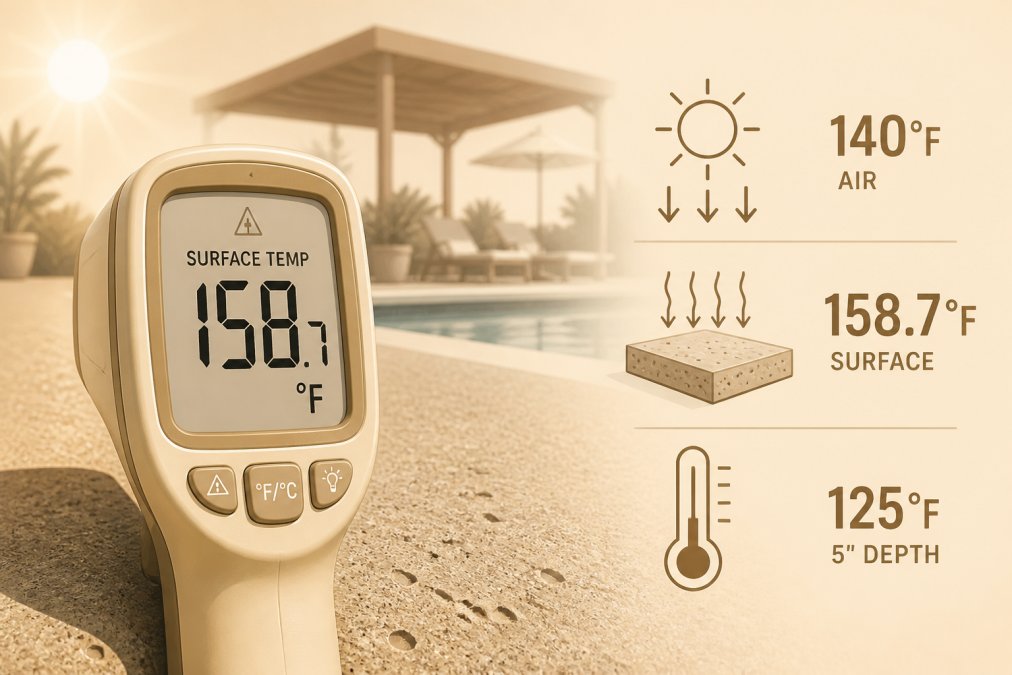
Concrete absorbs and retains solar radiation far more effectively than most homeowners realize. The material's density and composition make it an excellent thermal mass, capturing heat energy from the sun and releasing it slowly throughout the day and into the evening. Surface temperatures on dark concrete can easily exceed 140°F when ambient temperatures are in the high 80s or 90s, creating genuine safety concerns for families with young children or pets.
The science is straightforward: concrete is a porous material composed of cement, aggregate, and water. When sunlight strikes the surface, the material absorbs infrared radiation and converts it into thermal energy. Unlike lighter materials that reflect much of this energy, concrete's dark gray color and dense structure trap the heat. The thermal conductivity of concrete allows heat to penetrate several inches below the surface, creating a reservoir of warmth that radiates back up long after sunset.
Thermal Mass and Solar Radiation
Thermal mass is the ability of a material to absorb, store, and release thermal energy. Concrete excels at this because of its high heat capacity and density. When solar radiation hits the deck, the material absorbs energy throughout its depth, storing it in the concrete matrix itself.
The concrete curing process determines how effectively thermal mass develops. During curing, the cement hydrates and bonds with aggregate particles, creating a dense crystalline structure with excellent thermal conductivity. The denser the concrete and the longer it has cured, the more thermal energy it can store and release.
How Concrete Density Affects Heat Retention
Concrete density directly determines how much thermal energy the material can store. Standard concrete typically has a density of 140-150 pounds per cubic foot. Higher-density concrete can exceed 200 pounds per cubic foot and stores even more thermal energy.
The aggregate composition influences density. Concrete made with standard limestone or granite aggregate has moderate heat retention. Concrete made with denser aggregates like barite or magnetite becomes heavier and retains more heat. The relationship between density and surface temperature is direct: denser concrete gets hotter and stays hot longer. A pool deck made from standard-weight concrete will reach roughly 120-130°F in direct sunlight, while the same deck made from heavyweight concrete might reach 140-150°F.
Concrete porosity also plays a role. More porous concrete allows water and air to move through the material more freely, which can slightly enhance evaporative cooling. However, the effect is modest compared to the influence of density and color.
The Role of Color and Surface Finish in Heat Absorption
The color of concrete is the single most controllable factor affecting how much heat it absorbs. Dark concrete absorbs 80-90% of incident solar radiation. Light-colored concrete reflects 50-70% of that same radiation back into the atmosphere. This difference is why a light-colored pool deck feels dramatically cooler underfoot than a dark one in the same sunlight.
Albedo Effect and Reflective Properties
The albedo effect describes how reflective a surface is. A white or light gray concrete deck has an albedo of around 0.60-0.70, meaning it reflects 60-70% of incoming solar radiation. A standard dark gray concrete deck has an albedo of around 0.10-0.20, reflecting only 10-20% of that energy.
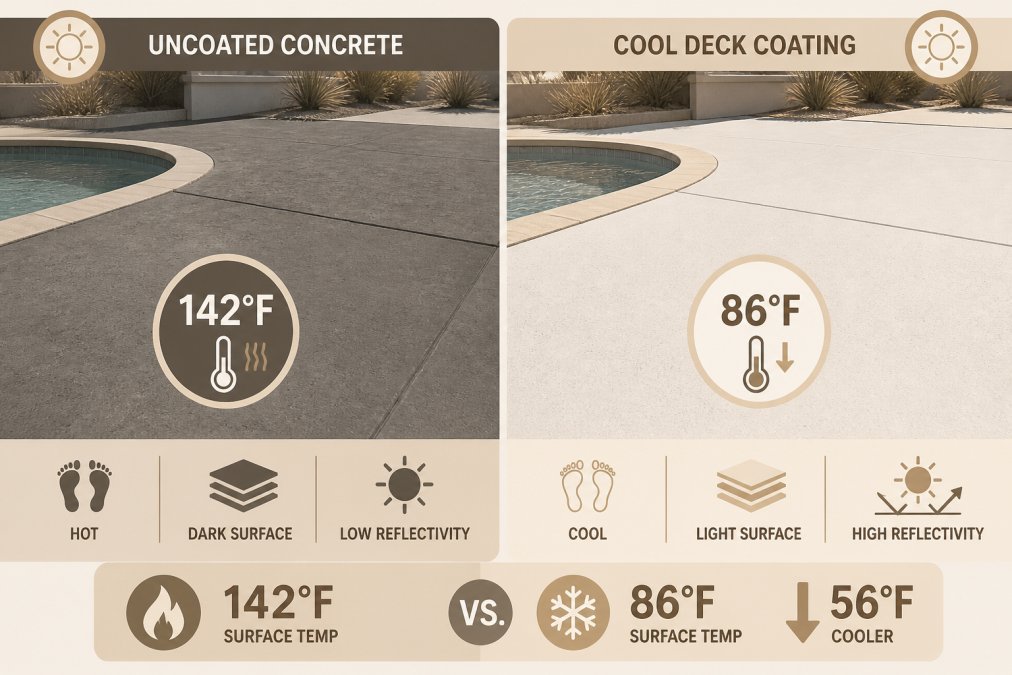
If a dark deck reaches 140°F in full sun, a light-colored deck in the same conditions might only reach 95-105°F. That 40-degree difference transforms the deck from painful to walk on barefoot into a comfortable surface.
Pigmentation determines albedo more than any other factor. Light mineral pigments like titanium dioxide dramatically increase reflectivity. When applied to concrete, they create a reflective surface that stays significantly cooler. However, concrete surfaces exposed to UV radiation and weathering gradually darken over time as dust, algae, and oxidation accumulate. A reflective coating or sealer can preserve these properties and prevent the darkening that naturally occurs.
Brushed vs. Smooth Concrete Surfaces
Surface texture influences heat absorption through its effect on light reflection. A smooth, polished concrete surface reflects light more uniformly, while a brushed finish creates micro-texture that scatters reflected light. However, the thermal performance difference between a brushed light-colored concrete and a smooth light-colored concrete is typically only 5-10°F under identical conditions.
A brushed finish offers better slip resistance than a polished surface, especially when wet. A light-colored brushed concrete is still dramatically cooler than dark concrete with any finish.
Safety Risks of Hot Pool Decks
A pool deck that exceeds 120°F poses genuine safety hazards, particularly for young children and pets. Surface temperatures above 140°F can cause minor burns with brief contact. A child's foot contacting a 150°F surface for just 3-5 seconds can suffer first-degree burns.
Excessively hot decks also create discomfort that prevents families from enjoying their pools. If the deck is too hot to walk on barefoot, children must wear shoes or stay in the water, limiting the functionality of the pool area.
The heat island effect amplifies the problem in certain microclimates. A pool deck surrounded by other heat-absorbing surfaces, dark roofing, or pavement, experiences higher ambient temperatures. This microclimate effect can raise deck temperatures by 10-15°F compared to an isolated deck. High humidity also reduces evaporative cooling effectiveness, meaning the deck cannot shed heat as efficiently.
Cool Deck Coating Options for Hot Concrete
If your pool deck is uncomfortably hot, several proven solutions exist. The most effective approach combines light color with a reflective coating or sealer designed specifically to reduce surface temperature.
Reflective Coatings and Sealers
Reflective coatings are specifically formulated to increase albedo and reduce surface temperature. These products typically contain reflective pigments like titanium dioxide or ceramic microspheres that scatter light away from the concrete surface.
A quality reflective coating can reduce surface temperature by 30-40°F compared to an untreated dark concrete deck. A deck that would normally reach 140°F might stay at 100-110°F with a reflective coating applied. This transformation makes the deck comfortable to walk on barefoot even in intense summer heat.
Reflective sealers come in two main categories: water-based and solvent-based. Water-based sealers are easier to apply and have lower VOC emissions. Solvent-based sealers often provide superior durability and UV resistance. The thickness of the coating affects performance. A thicker coat, typically 2-3 mils, provides maximum reflectivity and durability.
Call (919) 824-5403 or email craigrfear@gmail.com for a free estimate →
At Concrete-Enhancements, we have extensive experience with reflective coatings and can help select the right product for your specific deck conditions.
Long-Term Durability and Structural Impact
Reflective coatings and sealers are designed to last 3-7 years depending on the product quality and climate exposure. UV radiation gradually breaks down the binders in the coating, causing it to fade and lose reflectivity. In intense sun climates, reapplication every 3-4 years may be necessary.
A well-formulated reflective coating creates a breathable layer that allows moisture vapor to pass through while protecting the concrete below. This prevents moisture trapping that could lead to spalling or delamination. The concrete substrate remains unaffected by the coating if applied correctly, and when the coating eventually wears away, the concrete can be recoated without issue.
How to Cool Down Hot Concrete Pool Decks
Several strategies can reduce pool deck temperatures immediately and long-term.
Shade Structures and Micro-Climate Solutions
Shade is the most direct way to prevent heat absorption in the first place. A shade structure, pergola, sail shade, or retractable awning eliminates direct solar radiation on the deck. A well-designed shade structure can reduce deck temperatures by 40-50°F simply by blocking the sun.
The challenge is that shade structures require upfront investment and must be designed for wind resistance and structural stability. Temporary shade solutions like large umbrellas or portable shade sails work for specific areas and are budget-friendly.
Microclimate design also matters. Vegetation around the pool deck absorbs solar radiation before it reaches the deck and creates air movement that enhances evaporative cooling. A deck surrounded by trees stays cooler than an exposed deck, even without direct shade.
Evaporative Cooling and Sustainable Alternatives
Evaporative cooling works by using water evaporation to remove heat from the concrete surface. A misting system that sprays water onto the deck can lower surface temperature by 20-30°F temporarily. The limitation is that evaporative cooling works best in dry climates with low humidity.
Sustainable cooling alternatives focus on reducing heat absorption rather than removing heat after it's absorbed. Light-colored concrete with high albedo is inherently more sustainable than chemical coatings because it doesn't require reapplication.
Permeable concrete is another sustainable option. Permeable pavements allow water to drain through the surface into the ground below, creating a cooling effect because water evaporates from within the concrete as it drains. Permeable concrete typically stays 10-15°F cooler than standard concrete. However, it's less durable for high-traffic areas and requires more maintenance.
Resurfacing Your Pool Deck for Better Performance
If your existing pool deck is permanently discolored, cracked, or too hot to use safely, resurfacing offers a comprehensive solution. A new surface can be designed with light color, proper texture, and protective coatings built in from the start.
Resurfacing typically involves removing or grinding down the existing surface and applying a new topping. Decorative concrete overlays are a popular choice because they allow color customization and can incorporate patterns or finishes that enhance aesthetic appeal while improving thermal performance.
A resurfaced deck with light color and reflective sealer will stay 30-40°F cooler than the original dark concrete. This transforms the functionality of your pool area and adds long-term value to your property.
A hot pool deck doesn't have to be a permanent problem. Understanding why concrete gets so hot, thermal mass, solar radiation absorption, and dark color, reveals multiple solutions. Light-colored reflective coatings offer the fastest improvement. Shade structures provide the most dramatic cooling. Resurfacing gives you the opportunity to design a deck that stays cool from the start.
If you're ready to transform your uncomfortable pool deck into a safe, usable space, Concrete-Enhancements can help. Our team has 20+ years of experience resurfacing pool decks with light-colored, thermally efficient coatings and overlays. Call (919) 824-5403 or email craigrfear@gmail.com for a free estimate and let us show you how to reclaim your pool area.
Frequently Asked Questions
Why does concrete get so much hotter than other pool deck materials?
Concrete has high thermal mass, meaning it absorbs and stores solar radiation efficiently. Dark concrete has a low albedo effect, reflecting very little sunlight. The dense structure of concrete and its high thermal conductivity allow it to absorb infrared radiation throughout the day and retain that heat for hours. Light-colored materials or those with reflective coatings bounce more sunlight away, staying significantly cooler.
What temperature is too hot for a concrete pool deck to be safe?
Surface temperatures above 118°F can cause discomfort and potential burns with prolonged contact, especially for children. Many pool deck safety standards recommend keeping surfaces below 120°F. Dark, uncoated concrete in direct sun regularly exceeds 140°F in summer. Light-colored or coated surfaces stay 15-30°F cooler in the same conditions, making them safer for barefoot use.
How effective are cool deck coating options at reducing surface temperature?
Quality reflective coatings can reduce surface temperature by 20-40°F compared to uncoated dark concrete. These coatings work by increasing the albedo effect, reflecting more solar radiation. Durability depends on the coating type and maintenance; high-performance sealers designed for pool decks typically maintain effectiveness for 3-5 years with proper care. Lighter pigmentation and UV-resistant formulations perform better in direct sun exposure.
Can I cool down hot concrete with shade structures instead of resurfacing?
Yes. Shade structures like pergolas, umbrellas, or shade sails can reduce surface temperature by 30-50°F by blocking direct solar radiation. This is often the most cost-effective short-term solution. However, shade alone doesn't address the concrete's inherent heat retention at night or in partially shaded areas. Combining shade with reflective coatings or light-colored resurfacing provides the most comprehensive cooling solution for year-round comfort.
This article was written using GrandRanker
Frequently Asked Questions
Concrete has high thermal mass, meaning it absorbs and stores solar radiation efficiently. Dark concrete has a low albedo effect, reflecting very little sunlight. The dense structure of concrete and its high thermal conductivity allow it to absorb infrared radiation throughout the day and retain that heat for hours. Light-colored materials or those with reflective coatings bounce more sunlight away, staying significantly cooler.
Surface temperatures above 118°F can cause discomfort and potential burns with prolonged contact, especially for children. Many pool deck safety standards recommend keeping surfaces below 120°F. Dark, uncoated concrete in direct sun regularly exceeds 140°F in summer. Light-colored or coated surfaces stay 15-30°F cooler in the same conditions, making them safer for barefoot use.
Quality reflective coatings can reduce surface temperature by 20-40°F compared to uncoated dark concrete. These coatings work by increasing the albedo effect, reflecting more solar radiation. Durability depends on the coating type and maintenance; high-performance sealers designed for pool decks typically maintain effectiveness for 3-5 years with proper care. Lighter pigmentation and UV-resistant formulations perform better in direct sun exposure.
Yes. Shade structures like pergolas, umbrellas, or shade sails can reduce surface temperature by 30-50°F by blocking direct solar radiation. This is often the most cost-effective short-term solution. However, shade alone doesn't address the concrete's inherent heat retention at night or in partially shaded areas. Combining shade with reflective coatings or light-colored resurfacing provides the most comprehensive cooling solution for year-round comfort.