comparison
Best Concrete Patching Compound for Driveways
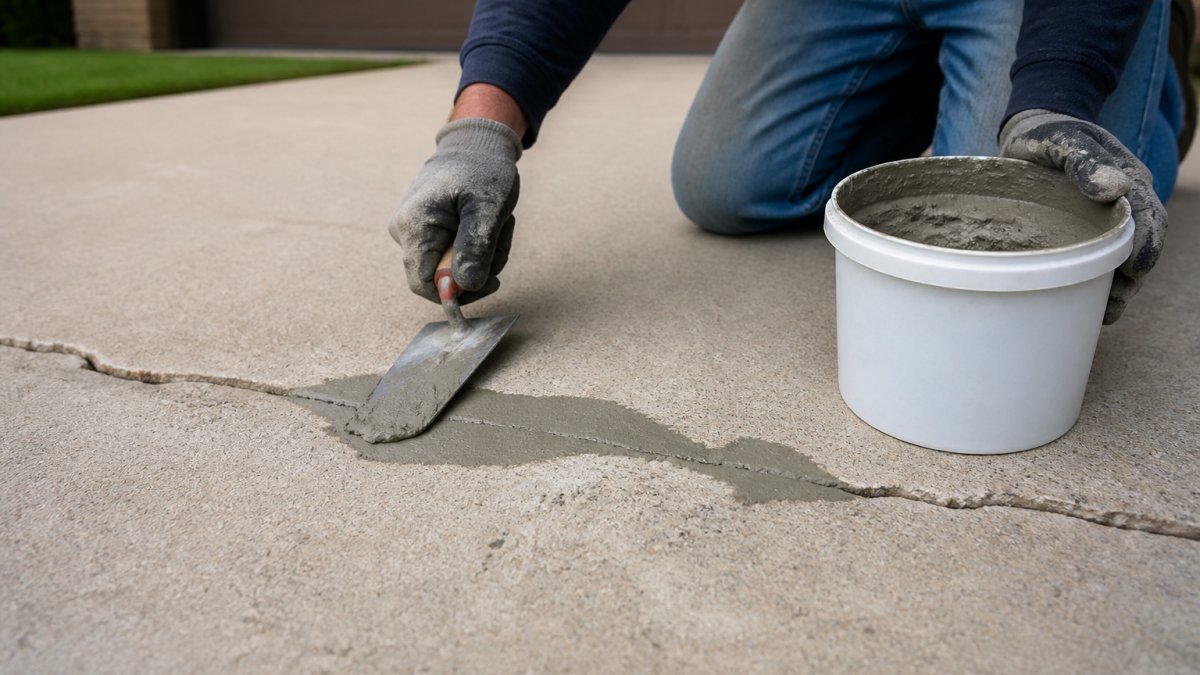
Table of Contents
- Verdict: Top Concrete Patching Compounds for Driveways
- Concrete Patch for Large Cracks: Choosing the Right Formula
- How to Patch a Concrete Driveway: Preparation and Application
- Driveway Repair and Sealer: When to Patch vs. When to Seal
- Concrete Patch vs. Driveway Sealer: Key Differences
- Durability and Weather Resistance for Patched Driveways
- Common Mistakes to Avoid When Patching Concrete
- When to Call a Professional for Concrete Repair
- Frequently Asked Questions
Last Updated: October 17, 2026
When a concrete driveway develops cracks, holes, or spalling, the repair method you choose determines whether the fix lasts months or years. The best concrete patching compound for driveways depends on damage type, climate exposure, and whether you're handling a quick fix or planning long-term durability. At Concrete-Enhancements, we've worked with homeowners across the Raleigh-Durham Triangle, NC Triad, and Coastal SC for over 20 years, and we know that picking the wrong product wastes time and money.
This guide breaks down the concrete patching compounds that actually work, how to apply them correctly, and when professional resurfacing makes more sense than patching alone.
Verdict: Top Concrete Patching Compounds for Driveways
For most homeowners tackling small to medium driveway repairs, a premixed concrete patching compound delivers the fastest results with minimal preparation.
QUIKRETE's acrylic latex formula works well for hairline cracks and shallow holes up to about half an inch deep.
Red Devil Premixed Concrete Patch earned recognition as a top overall choice because it balances ease of use with durability. Like QUIKRETE, it requires no mixing, but it handles slightly deeper repairs and performs better in regions with seasonal temperature swings.
For deeper cracks or holes exceeding half an inch, Damtite Waterproofing SuperPatch Concrete Repair is a runner-up option. The waterproofing focus matters in climates where water infiltration accelerates concrete deterioration.
If you're dealing with active cracks that expand and contract with temperature changes, or if you need a repair that flexes rather than cracks again, a flexible polyurethane or epoxy-based sealant outperforms rigid patching compounds.
| Product | Best For | Application | Cure Time |
|---|---|---|---|
| QUIKRETE Concrete Patching Compound | Small cracks, shallow holes | Trowel, no mixing | 24 hours |
| Red Devil Premixed Patch | General repairs, moderate cracks | Trowel, no mixing | 24-48 hours |
| Damtite SuperPatch | Deeper repairs, waterproofing | Trowel, no mixing | 24-48 hours |
| Flexible epoxy/polyurethane sealant | Moving cracks, joints | Pour or caulk gun | 48-72 hours |
Concrete Patch for Large Cracks: Choosing the Right Formula
A large crack, anything wider than a quarter inch or deeper than half an inch, demands a different approach than hairline damage. Standard premixed patching compounds shrink as they cure, which causes them to pull away from the edges of larger cracks, leaving gaps that water can infiltrate.
For cracks between a quarter inch and half inch wide, a self-leveling concrete patching compound works better than standard trowel-applied products. These flow into the crack, fill it completely, and level themselves without manual smoothing.
Cracks wider than half an inch or deeper than an inch typically need a two-part epoxy or polyurethane compound. These products cure harder and more flexibly than acrylic latex formulas, and they bond more aggressively to concrete that's been properly cleaned and roughened.
When choosing between cementitious (cement-based) and synthetic (epoxy or polyurethane) compounds, consider your climate. Cementitious products are affordable and easy to apply, but they're rigid. In regions that cycle between freezing and thawing, concrete expands and contracts, and rigid patches crack again.
How to Patch a Concrete Driveway: Preparation and Application
The most common mistake homeowners make is applying patching compound to a dirty, loose, or wet concrete surface. Preparation determines whether the patch bonds and lasts, or whether it pops out within weeks.
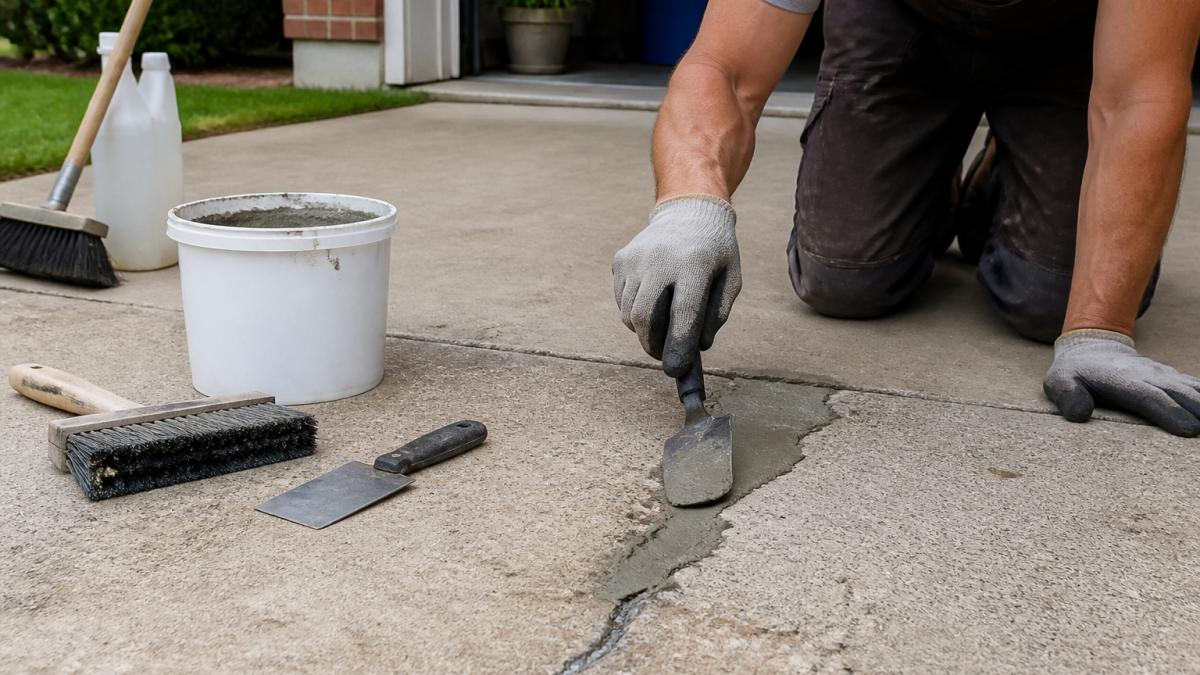
Surface Preparation Steps
Start by cleaning the crack or hole thoroughly. Use a wire brush or pressure washer to remove dirt, loose concrete, and any debris. If the crack is deep, use a concrete chisel to widen it slightly, this creates more surface area for the patch to grip.
Dry the area completely. Moisture prevents bonding. If you've just cleaned with water, wait at least 24 hours for the concrete to dry, or use a shop vacuum to remove standing water and accelerate evaporation.
For larger repairs, dampen the concrete lightly with a spray bottle just before applying the patch. This prevents the dry concrete from pulling moisture out of the patching compound too quickly, which weakens the bond. The surface should be damp, not wet, think of a wrung-out sponge, not a puddle.
Application Technique and Cure Time
For premixed compounds, simply scoop the material directly into the crack or hole and press it firmly with a putty knife or trowel. Overfill slightly, the compound shrinks as it cures. Smooth the surface level with the surrounding concrete using firm, downward pressure.
For self-leveling products, pour the compound into the crack and let gravity do the work. These products are designed to fill completely and settle without manual intervention.
Allow the patch to cure fully before walking on it or exposing it to water. Most acrylic latex compounds need 24 hours. Epoxy and polyurethane products often need 48 to 72 hours. Check the product instructions, curing time varies by temperature and humidity. Cold or damp conditions extend cure time significantly.
Once cured, the patch should feel as hard as the surrounding concrete. If it feels soft or crumbly, it didn't cure properly, usually because the concrete surface was too wet or the ambient temperature was too cold during curing.
Driveway Repair and Sealer: When to Patch vs. When to Seal
Not every concrete problem calls for patching. Sometimes sealing is the better investment.
Patching addresses visible damage, cracks, holes, spalling. It's a reactive fix: something broke, and you're repairing it. Sealing is preventive: you're protecting sound concrete from future damage by blocking water and salt penetration.
If your driveway has a few isolated cracks or small holes but the overall surface is intact, patching makes sense. You spend $20 to $50 per repair and extend the life of that section by 5 to 10 years.
If your driveway shows widespread surface deterioration, dozens of small cracks, or scaling (flaking of the surface layer), patching individual spots is temporary. The underlying concrete is breaking down. In this case, a concrete sealer buys you time, but resurfacing or overlay systems offer longer-term durability.
Concrete Patch vs. Driveway Sealer: Key Differences
A concrete patching compound fills damage. A driveway sealer coats the surface and blocks water from entering.
Call (919) 824-5403 or email craigrfear@gmail.com for a free estimate →
Patching compounds are rigid or semi-flexible. They fill voids and restore structural integrity to damaged areas. They're applied only where damage exists. A patch is permanent, once cured, it's part of the concrete.
Driveway sealers are thin protective coatings applied to the entire surface. They slow water infiltration, reduce salt damage, and protect against UV degradation. Sealers wear away over time and need reapplication every 2 to 3 years, depending on traffic and weather exposure.
For small, isolated cracks, patching is more cost-effective. For a driveway showing age across its entire surface, sealing prevents new damage from forming. Many homeowners do both: patch existing damage, wait for it to cure, then apply a sealer to protect the whole driveway.
Durability and Weather Resistance for Patched Driveways
Climate determines how long a patch lasts. In regions with freeze-thaw cycles, rigid patches fail faster because concrete expands and contracts, and rigid compounds can't move with it.
Acrylic latex patching compounds perform adequately in mild climates but struggle in areas that experience repeated freezing and thawing. Water enters the patch, freezes, expands, and breaks the bond between the patch and the surrounding concrete.
Polyurethane and epoxy-based patches flex slightly, which helps them survive freeze-thaw stress. They also resist deicing salt better than cementitious products. If your driveway is exposed to road salt in winter, a synthetic patch is worth the extra cost.
Concrete patching compound also fails if water reaches it before it cures. If rain or snow falls during the curing period, the patch may not develop full strength.
In coastal areas with salt spray exposure, epoxy-based compounds outperform acrylic latex. Salt accelerates deterioration of cementitious materials, but epoxy resists chemical attack better.
Common Mistakes to Avoid When Patching Concrete
Patching over dirt or loose concrete. This is the number one reason patches fail.
Applying patch to wet concrete. Moisture prevents bonding. Always wait for the concrete to dry completely, or use a shop vacuum to remove standing water.
Overfilling the crack without compacting. Air pockets weaken the patch. Press the compound firmly into the crack with a trowel, using downward pressure to remove bubbles.
Using the wrong product for the damage. A hairline crack doesn't need a two-part epoxy. A one-inch-deep hole won't hold an acrylic latex patch. Match the product to the damage.
Walking on or driving over the patch before it cures. Premature loading breaks the bond and causes failure.
Ignoring freeze-thaw risk. If you live in a climate with winter freezing, use a flexible patch, not a rigid one. Rigid patches crack when concrete expands and contracts.
Patching without addressing the underlying cause. If the driveway is settling or has structural movement, patching is temporary. The crack returns because the concrete is still moving.
When to Call a Professional for Concrete Repair
Patch a small crack yourself if you have basic tools and the damage is isolated. For anything larger or more complex, professional repair is worth the investment.
Call a professional if:
- The crack is wider than half an inch or deeper than an inch
- Multiple cracks are spreading across the driveway (sign of structural movement or settling)
- The driveway is sinking or heaving in places
- You need a concrete patch for large cracks that requires epoxy or polyurethane application
- The concrete is actively spalling or flaking
- You want the repair sealed and protected as part of a comprehensive driveway restoration
At Concrete-Enhancements, we assess driveway damage, recommend the right repair method, and handle everything from spot patching to full resurfacing. We're CTi Certified and have 20+ years of experience with concrete repair across residential and commercial properties. If a patch isn't enough, we can resurface or overlay your driveway with decorative concrete or epoxy coatings that restore both function and curb appeal.
Small repairs you can handle yourself. Larger damage, active cracks, or widespread deterioration deserve professional evaluation. A free estimate costs nothing and shows you exactly what the concrete patching compound approach will achieve versus more comprehensive solutions.
Frequently Asked Questions
What is the best concrete patching compound for large cracks?
For large cracks wider than 1/4 inch, choose a flexible, self-leveling cementitious patching compound that bonds well to existing concrete. Products like QUIKRETE Concrete Patching Compound work for moderate cracks, but cracks deeper than 1/2 inch or wider than 1/2 inch may require professional resurfacing. Freeze-thaw cycles and deicing salt exposure in winter climates demand high-strength, flexible patches that won't shrink or crack as temperatures fluctuate.
Can you use concrete patching compound on a driveway?
Yes, concrete patching compound is designed for driveway repairs. Choose products rated for exterior use and high foot or vehicle traffic. Verify the compound bonds to existing concrete and offers freeze-thaw resistance if you live in a cold climate. Apply during temperatures between 50°F and 85°F for best results, and allow full cure time (typically 24-48 hours) before exposing the patch to traffic or water.
What is the difference between concrete patch and driveway sealer?
Concrete patch fills and repairs damage, cracks, holes, and spalls, by bonding new material to existing concrete. Driveway sealer protects the entire surface from water penetration, UV damage, and deicing salt. Use patch first to repair structural damage, then apply sealer to prevent future deterioration. Sealer alone cannot fix existing damage; patch cannot prevent new damage without sealer protection.
How long does a concrete patching compound last on a driveway?
A quality concrete patch can last 3-10 years depending on the product, application, and climate conditions. Patches in freeze-thaw zones or exposed to heavy salt exposure degrade faster. High-strength, flexible compounds with good adhesion last longer than brittle, low-bond products. Proper surface preparation and cure time significantly extend patch lifespan. Applying a concrete sealer over the patch adds years of protection.
If your driveway has damage beyond a hairline crack, or if patches you've tried keep failing, the concrete may need more than spot repair. Concrete-Enhancements offers professional assessment and repair services, including full resurfacing and epoxy coating systems that outlast simple patching. Call (919) 824-5403 or email craigrfear@gmail.com for a free estimate and discover whether your driveway needs a targeted concrete patch or a complete transformation.
Tags: concrete patching compound, best concrete patching compound for driveways, concrete patch for large cracks, how to patch a concrete driveway, driveway repair and sealer
Frequently Asked Questions
For large cracks wider than 1/4 inch, choose a flexible, self-leveling cementitious patching compound that bonds well to existing concrete. Products like QUIKRETE Concrete Patching Compound work for moderate cracks, but cracks deeper than 1/2 inch or wider than 1/2 inch may require professional resurfacing. Freeze-thaw cycles and deicing salt exposure in winter climates demand high-strength, flexible patches that won't shrink or crack as temperatures fluctuate.
Yes, concrete patching compound is designed for driveway repairs. Choose products rated for exterior use and high foot or vehicle traffic. Verify the compound bonds to existing concrete and offers freeze-thaw resistance if you live in a cold climate. Apply during temperatures between 50°F and 85°F for best results, and allow full cure time (typically 24–48 hours) before exposing the patch to traffic or water.
Concrete patch fills and repairs damage—cracks, holes, and spalls—by bonding new material to existing concrete. Driveway sealer protects the entire surface from water penetration, UV damage, and deicing salt. Use patch first to repair structural damage, then apply sealer to prevent future deterioration. Sealer alone cannot fix existing damage; patch cannot prevent new damage without sealer protection.
A quality concrete patch can last 3–10 years depending on the product, application, and climate conditions. Patches in freeze-thaw zones or exposed to heavy salt exposure degrade faster. High-strength, flexible compounds with good adhesion last longer than brittle, low-bond products. Proper surface preparation and cure time significantly extend patch lifespan. Applying a concrete sealer over the patch adds years of protection.