comparison
Best Concrete Resurfacing Materials for Homeowners
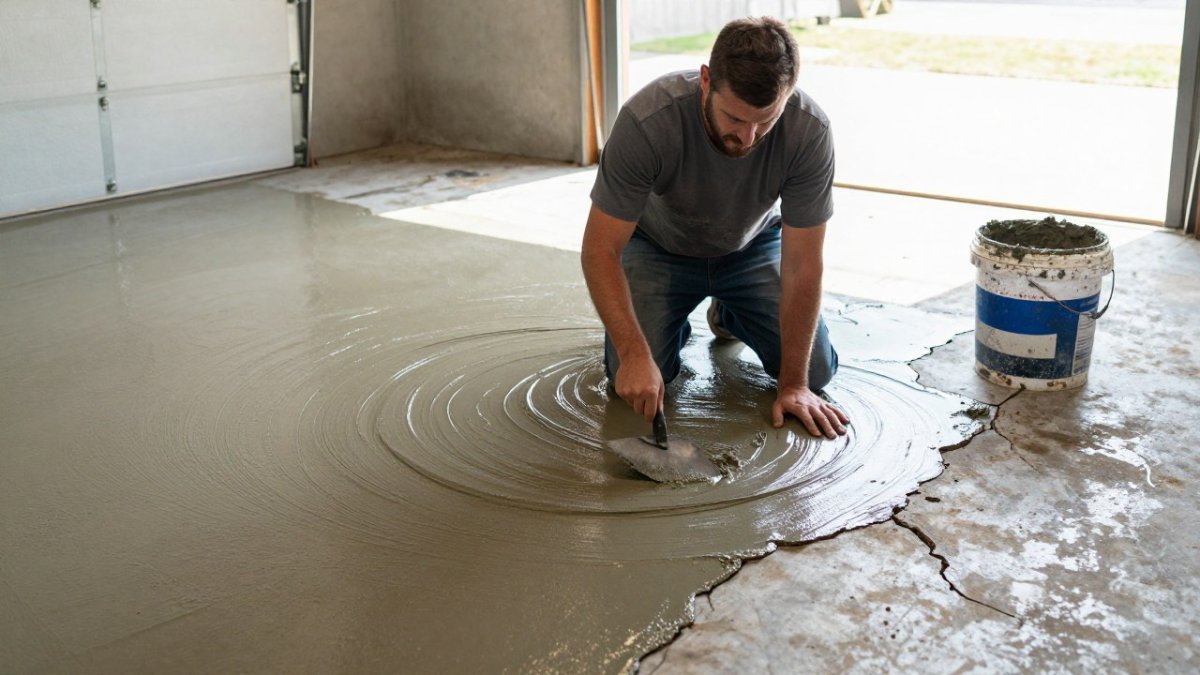
Last Updated: November 7, 2026
Quick Summary
For most homeowners, a polymer-modified cement resurfacer rated for driveways is the practical choice, applied over a clean, sound, profiled slab. Polymer additives improve adhesion and flexibility, while self-leveling products suit interior floors but not exterior traffic. Concrete resurfacing materials only work well when the slab is not structurally failing.
- Choose a polymer-modified cement resurfacer for driveways, since it bonds better and flexes with the slab.
- Self-leveling resurfacers are for interior floors and minor dips, not exterior driveways.
- Clean and degrease the surface first, since oil stains will prevent bonding.
- Resurfacing will not fix sinking, heaving, or cracks wider than a credit card; those need repair or replacement.
- Compare material, tool and prep costs against a replacement quote before deciding.
Table of Contents
- How Concrete Resurfacing Materials Differ
- Selection Matrix by Surface Condition and Project Type
- Best Concrete Resurfacer for Driveway Projects
- Exterior Concrete Resurfacing Options for Patios, Walkways and Pool Decks
- Quikrete Concrete Resurfacer and Other DIY Products
- Concrete Overlays: Decorative Finishes and Their Limits
- When Resurfacing Is the Wrong Fix and What It Costs
- Get a Free Estimate for Your Concrete Project
- Frequently Asked Questions
How Concrete Resurfacing Materials Differ
Concrete resurfacing materials fall into a few broad families, and picking the wrong one is the most common mistake homeowners make. The right choice depends on how much the slab is damaged, whether it sits outdoors, and how much weight or foot traffic it will carry. For the full sequence of cleaning and repair before an epoxy finish, see our step-by-step prep guide for resurfacing before epoxy. U.S. Bureau of Reclamation guidance on preparing concrete surfaces before repair makes the point that surface preparation and the condition of the existing concrete are critical to achieving adequate bond, so the material is only half the decision.
Most products sold for driveways, patios, and pool decks are cement-based or polymer-modified. A few are fully decorative coatings, and a few are thin self-leveling layers meant for interior floors.
Polymer-Modified Cement Resurfacers
Polymer-modified cement resurfacers are the workhorse of outdoor resurfacing. They blend portland cement with polymer additives that improve adhesion and flexibility, which helps the new layer grip an older slab and resist cracking as the surface moves with temperature.
A 2026 review names Quikrete Re-Cap and Sakrete Flo-Coat as examples of this category, and notes freeze-thaw considerations for exterior work Madison Coatings Company's 2026 review of concrete resurfacing for driveways. Our pick for most DIY driveway refreshes is this family, because it is widely available and suited to standard flatwork. The trade-off is that it needs careful mixing and a clean, sound surface to perform.
Self-Leveling Resurfacers and Underlayments
Self-leveling products flow out to a flat surface, which makes them useful for interior floors and slabs with minor dips. They are generally applied in thinner lifts than cement resurfacers and are designed for smooth, level results rather than heavy outdoor wear.
We do not recommend self-leveling products for exterior driveways, where thermal movement and traffic demand a tougher bond.
Selection Matrix by Surface Condition and Project Type
Start with the condition of the slab, not the brand on the bucket. A surface with fine hairline cracks and surface wear is a very different job from one with spalling, heaving, or structural cracks.
| Surface Condition | Project Type | Suitable Material Family | Notes |
|---|---|---|---|
| Hairline cracks, light wear | Driveway or patio | Polymer-modified cement | Clean and profile the surface first |
| Minor dips, uneven interior floor | Interior floor | Self-leveling resurfacer | Not for exterior traffic |
| Localized spalling or chipping | Walkway or step | Fast-set repair mortar | Cut back to sound concrete |
| Severe cracking or heaving | Any | Consider replacement | Resurfacing will not fix structural failure |
If the slab is structurally failing, resurfacing is the wrong fix. To weigh driveway resurfacing against replacement costs and durability, read our side-by-side comparison. A coating can hide a crack, but it will not stop the crack from moving.
Best Concrete Resurfacer for Driveway Projects
Driveways take the heaviest abuse of any residential concrete, so the material has to bond well and handle vehicle loads. For a homeowner doing the work, a polymer-modified cement resurfacer is the practical starting point. Several manufacturers sell products in this category, and they are widely stocked at many home centers and lumber yards.
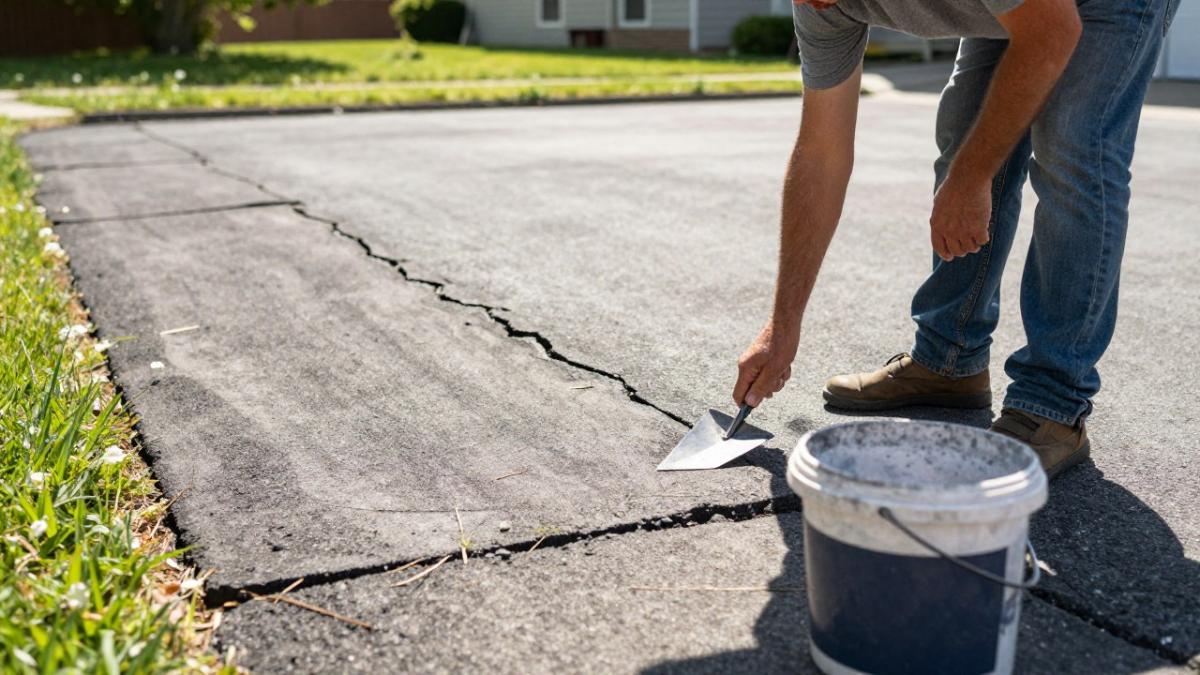
What separates a good driveway product from a bad one is not the brand name on the bucket. Look for four things on the label:
- Explicit driveway rating. The manufacturer should state the product is suitable for vehicle traffic, not just patios and walkways. A resurfacer rated only for foot traffic will not hold up under a car or truck.
- Polymer modification. Polymer additives improve adhesion and flexibility, which matters on a slab that moves with temperature and load. Unmodified cement toppings are more brittle and more likely to crack.
- Coverage and thickness. Coverage is typically stated in square feet per bag at a given thickness, so read the manufacturer's label rather than guessing. Use that stated coverage to work out how many bags a driveway project requires.
- Working time. Fast-set products leave little room for error on a large driveway. A product with a longer open time is friendlier for a first-time DIYer working alone.
Plan on thorough cleaning and degreasing before application, since oil stains will prevent bonding. A pressure wash followed by a degreaser on any oil spots, then a rinse and full dry, is the minimum. Acid etching or mechanical profiling may be needed on a slick, hard-troweled surface.
Watch out: applying a resurfacer over a slab with active cracks, heaving, or poor drainage will fail early no matter which product you choose. Fix the underlying problem first or the new layer will crack along the same lines.
For a homeowner comparing products, the practical shortlist is a polymer-modified cement resurfacer rated for driveways, applied at the manufacturer's stated thickness over a clean, sound, profiled slab. Before requesting an estimate, you can confirm which areas we serve. Quikrete Re-Cap and Sakrete Flo-Coat are both reasonable candidates in that bracket. The supplied research does not verify current coverage rates or pricing for either, so check the label and local retailers before buying, and buy one extra bag rather than running short mid-pour.
Exterior Concrete Resurfacing Options for Patios, Walkways and Pool Decks
Exterior surfaces face sun, rain, freeze-thaw cycles, and foot traffic, and pool decks add water and chemicals on top of that. Product choice here is less about one best material and more about matching the finish to the use.
Quikrete Concrete Resurfacer and Other DIY Products
A resurfacer over a dirty or flaking slab will fail early regardless of brand, so preparation is the key requirement.
Neither should be expected to correct major structural problems.
Concrete Overlays: Decorative Finishes and Their Limits
Decorative overlays go beyond repair. Stamped concrete overlays, skim coats, river-rock or pebble coatings, cool-deck finishes, and colored epoxy are all used to change how a surface looks ConcreteNetwork's overview of resurfacing and decorative overlay options. They can transform a plain slab into a feature.
The limits matter. Decorative overlays need a sound base, and some finishes, particularly epoxy, can be slippery when wet, which is a real concern for pool decks. A decorative finish also cannot fix a cracked slab; it will show the crack or telegraph it through the new layer over time.
When Resurfacing Is the Wrong Fix and What It Costs
Resurfacing suits minor cracks, surface damage, imperfections, and stains Allied Outdoor Solutions guide on whether concrete resurfacing is right for your project. It is the wrong fix when the slab is sinking, heaving, or cracked through its full depth. In those cases, the underlying problem will keep reappearing on the surface.
A simple test helps. Walk the slab and look for three things: cracks wider than a credit card, sections that have settled or risen out of plane, and water that ponds instead of draining away. Any one of those points to a repair or replacement decision rather than a cosmetic overlay. A thin resurfacer is a wear layer, not a structural fix, and it will telegraph movement from below.
On cost, most published figures are national averages for a whole project, not material prices, and they do not compare one material to another. Angi reports a national average of about $2,000 for concrete resurfacing, with most homeowners spending between $1,000 and $5,000 Angi's national concrete resurfacing cost guide. Thumbtack's data puts the typical range at roughly $783 to $2,926 Thumbtack's concrete resurfacing cost estimates.
A more useful way to compare is cost per square foot of material, plus the tools and labor the job requires. The table below lays out the common homeowner options side by side. Treat the figures as planning ranges to verify at your local retailer, not quotes.
| Material | Typical material cost per sq ft | Coverage notes | Tools and labor | Best for |
|---|---|---|---|---|
| Polymer-modified cement resurfacer | Roughly $0.50 to $1.50 | Sold by the bag; coverage depends on thickness (often 1/8 in to 1/4 in) | Mixing drill, trowel or squeegee, pressure washer; DIY-friendly | Driveways, patios, walkways |
| Self-leveling resurfacer | Roughly $1.00 to $3.00 | Thinner lifts; coverage stated per bag | Mixing drill, gauge rake, spike roller; fussier for beginners | Interior floors and minor dips |
| Fast-set repair mortar | Roughly $1.00 to $3.00 | Small batches; patch work only | Margin trowel, bucket; small areas | Localized spalling, steps, edges |
| Decorative overlay (stamped, skim coat, pebble) | Roughly $3.00 to $8.00 or more | Depends on finish and thickness | Stamps, release agent, sealer; often a pro job | Pool decks, patios, feature surfaces |
Add the cost of prep and consumables: a pressure washer rental, degreaser, a mixing paddle, a trowel or squeegee, and sealer. For a DIY homeowner those tools often cost more than the material on a small job, which is why a 200-square-foot walkway can look cheap per bag but expensive per project once tools are counted.
Watch out: if the resurfacing estimate approaches the cost of replacement, get both quoted side by side before deciding. A slab that is structurally sound is usually worth resurfacing; one that is failing is not, and no material choice changes that.
For a realistic total, add up your material, tools and prep costs, then compare that number to a replacement quote from a contractor.
Get a Free Estimate for Your Concrete Project
Choosing the material is easier once someone has looked at your actual slab. At Concrete-Enhancements, we have more than 20 years of experience with decorative overlays, epoxy coatings, and professional repair, and we can assess whether resurfacing is the right fix or whether the slab needs more work. Pricing depends on the size of the job, the surface condition, and the finish you want, so we quote each project individually. Call (919) 824-5403 or email craigrfear@gmail.com for a free estimate.
Frequently Asked Questions
What is the best concrete resurfacing material?
No single material is best for every slab. Polymer-modified cement resurfacers suit minor surface wear on driveways and patios. Decorative overlays and epoxy coatings serve appearance and specific finish goals. Severe cracking, heaving or structural damage usually needs repair before any resurfacer is applied. Match the material to the condition of the existing slab and how the surface will be used, then confirm the choice with a site inspection.
What are the downsides of using a concrete overlay?
Overlays add a layer of material that depends on a proper bond to the existing slab. If the surface is not cleaned and prepared correctly, the overlay can peel or delaminate, and the bond problem often appears within months. Overlays also do not fix structural cracks or movement underneath, so those cracks can reflect through the new surface. Texture and color choices can wear unevenly under heavy traffic or vehicle loads. Ask any installer how they prepare the substrate and what they do about existing cracks before agreeing to a job.
Can I do concrete resurfacing myself?
Homeowners can resurface small, sound areas with DIY products such as Quikrete Re-Cap or Sakrete Flo-Coat, but results depend heavily on surface preparation. The existing concrete must be clean, sound and free of contaminants, since poor preparation is a common reason resurfacers fail to bond. Large driveways, pool decks that need slip resistance, and slabs with cracks or spalling are harder to finish evenly. Professional installation is often worth considering for those projects, and Concrete-Enhancements offers a free estimate to assess the slab before you decide.
What is the best concrete resurfacer for a driveway?
For a driveway with surface wear, minor cracks and stains but no structural damage, a polymer-modified cement resurfacer is the category most commonly recommended for DIY and standard projects. Driveways carry vehicle loads, so the slab should be checked for movement and sound concrete before resurfacing. Cost depends on quantity, surface condition and delivery, so request a quote from Concrete-Enhancements for current pricing rather than relying on national averages.

Tags: concrete resurfacing materials, best concrete resurfacing materials for homeowners, best concrete resurfacer for driveway, exterior concrete resurfacing options, quikrete concrete resurfacer
Frequently Asked Questions
No single material is best for every slab. Polymer-modified cement resurfacers suit minor surface wear on driveways and patios. Decorative overlays and epoxy coatings serve appearance and specific finish goals. Severe cracking, heaving or structural damage usually needs repair before any resurfacer is applied. Match the material to the condition of the existing slab and how the surface will be used, then confirm the choice with a site inspection.
Overlays add a layer of material that depends on a proper bond to the existing slab. If the surface is not cleaned and prepared correctly, the overlay can peel or delaminate, and the bond problem often appears within months. Overlays also do not fix structural cracks or movement underneath, so those cracks can reflect through the new surface. Texture and color choices can wear unevenly under heavy traffic or vehicle loads. Ask any installer how they prepare the substrate and what they do about existing cracks before agreeing to a job.
Homeowners can resurface small, sound areas with DIY products such as Quikrete Re-Cap or Sakrete Flo-Coat, but results depend heavily on surface preparation. The existing concrete must be clean, sound and free of contaminants, since poor preparation is a common reason resurfacers fail to bond. Large driveways, pool decks that need slip resistance, and slabs with cracks or spalling are harder to finish evenly. Professional installation is often worth considering for those projects, and Concrete-Enhancements offers a free estimate to assess the slab before you decide.
For a driveway with surface wear, minor cracks and stains but no structural damage, a polymer-modified cement resurfacer is the category most commonly recommended for DIY and standard projects. Driveways carry vehicle loads, so the slab should be checked for movement and sound concrete before resurfacing. Cost depends on quantity, surface condition and delivery, so request a quote from Concrete-Enhancements for current pricing rather than relying on national averages.