how-to
How Long Does Decorative Concrete Overlay Take to Install
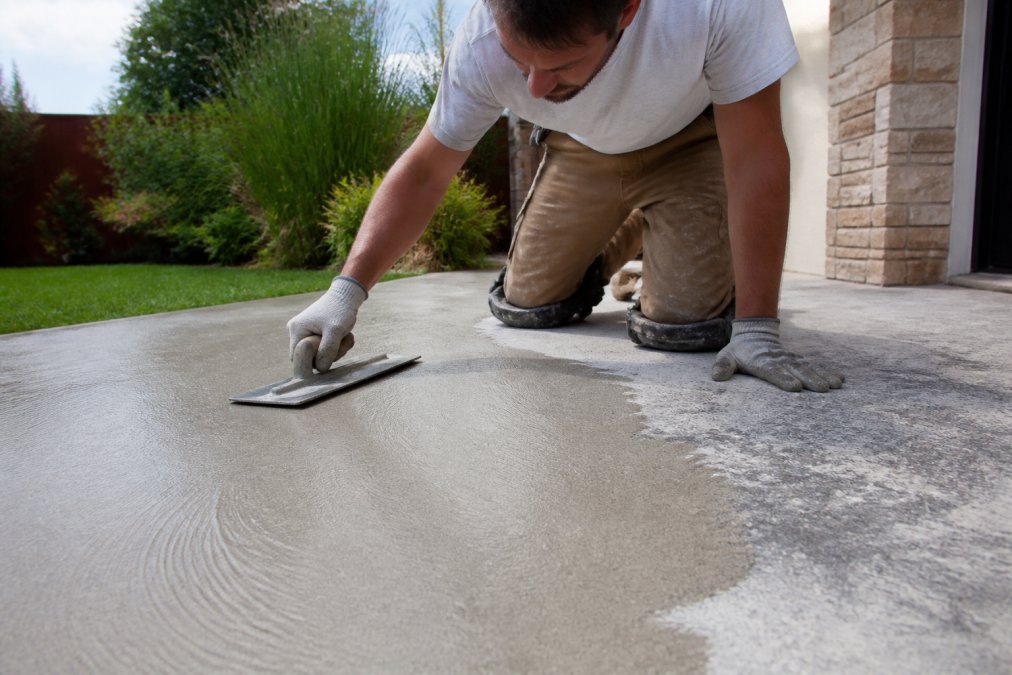
Table of Contents
- Drying Time vs. Curing Time: What's the Difference
- Concrete Overlay Drying Time Before Stamping and Texturing
- Step-by-Step Installation Process and Timeline
- Factors That Affect Installation Duration
- Load-Bearing Timeline: Foot Traffic vs. Vehicle Weight
- Decorative Concrete Overlay Cost Per Square Foot and Timeline Trade-Offs
- How Long Does Concrete Overlay Last After Installation
- Common Installation Mistakes That Extend Timeline or Cause Failure
Last Updated: August 26, 2026
Drying Time vs. Curing Time: What's the Difference
Drying time and curing time are not the same thing, and understanding the distinction is critical to knowing how long it actually takes to install a decorative concrete overlay. Drying time refers to how long the surface feels dry to the touch and is ready for the next application step, typically stamping, texturing, or sealer application. Curing time is the period during which the overlay continues to harden chemically and develop its full compressive strength and load-bearing capacity. A decorative concrete overlay might be dry enough to stamp in 4-6 hours but still curing for 7-14 days before it can safely handle foot traffic or vehicle weight (peer-reviewed research).
Foot traffic during the curing phase doesn't just risk surface damage; it can compromise the bond between the base coat and substrate, leading to delamination weeks or months later. The curing agent formulation in your specific product determines these windows. Knowing your product's specifications isn't optional, it's the foundation of a timeline that actually holds up.
Concrete Overlay Drying Time Before Stamping and Texturing
Most decorative concrete overlays are ready for stamping or texturing between 4 and 8 hours after the base coat is applied, depending on temperature, humidity, and product formulation. The ideal stamping window is when the overlay has enough set to hold a pattern without deforming under tool pressure, but still has enough workability that the stamps don't stick or pull away material. This typically happens when the surface is firm to moderate finger pressure, you can press your thumb into it but it doesn't indent easily.
Temperature accelerates or delays this window dramatically. On a warm day (75-85°F) with low humidity, your stamping window might close in 4-5 hours. On a cool, humid day (55-65°F), that same overlay might stay workable for 8-10 hours or longer. Relative humidity is equally important. High humidity slows evaporation and delays drying, extending your stamping window. Low humidity speeds drying but can cause surface checking (fine cracks) if the overlay dries too fast before it's fully set. The sweet spot is 50-70% relative humidity (the CDC).
Step-by-Step Installation Process and Timeline
A decorative concrete overlay installation follows a specific sequence, and each step has time requirements that can't be rushed.
Step 1: Surface Preparation and Cleaning
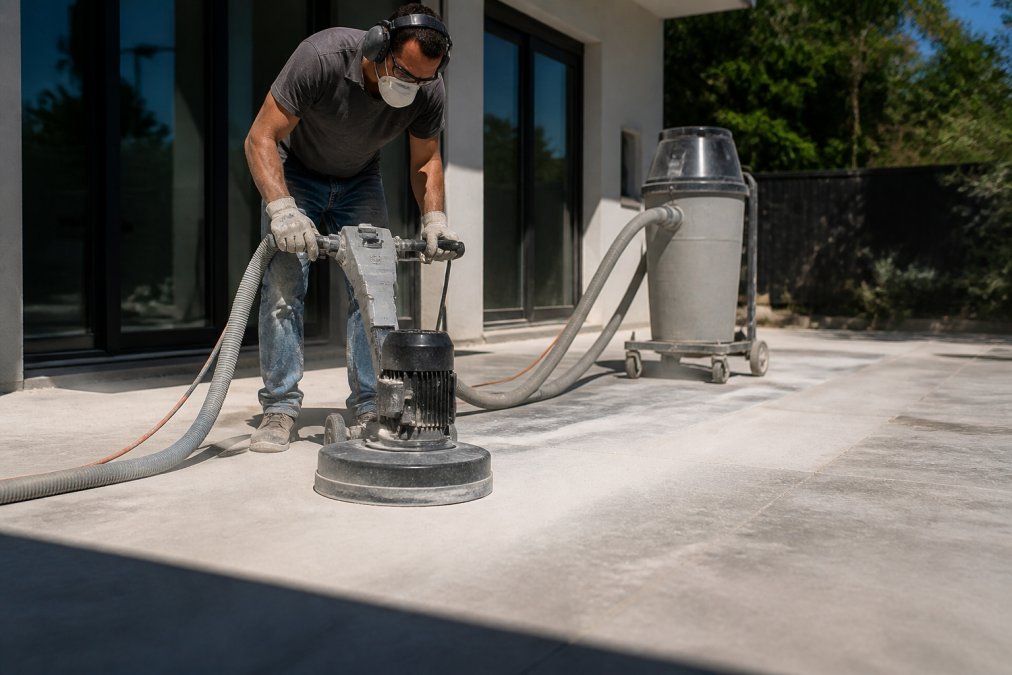
Before any overlay touches the substrate, the concrete surface must be properly prepared. This step alone takes 4-8 hours depending on the substrate condition and size of the area. The surface must be clean, free of dust, oil, loose concrete, and any contaminants that would prevent the base coat from bonding properly.
Mechanical grinding or acid etching increases surface porosity, which improves substrate bonding. If the concrete is sealed or has a glossy finish, that seal must be removed, either mechanically through grinding or chemically through etching. After grinding or etching, the surface must be cleaned thoroughly with a shop vacuum followed by damp wiping. Allow the surface to dry completely before applying the base coat, typically 2-4 hours depending on humidity.
Step 2: Base Coat Application
The base coat is the foundation of your overlay's longevity. This cementitious or polymer-modified layer bonds to the substrate and provides the structure that stamped patterns and textures will sit on. Application typically takes 2-4 hours for a standard residential area (200-500 square feet).
The base coat is applied with a trowel in a thin, consistent layer, typically ranging from 1/4 inch to 1/2 inch thick, depending on the product and substrate condition. As the base coat begins to set, you're watching for the right moment to begin stamping. This window typically opens 4-6 hours after application on a warm day, or 6-10 hours on a cool day.
Step 3: Pattern Stamping and Texturing
Stamping is where the overlay becomes decorative. Using stamps or texture tools, you impress patterns into the surface while it's still in the workable dwell time. The stamping window is tight, usually 2-4 hours wide, and missing it means either reworking the surface (which weakens the overlay) or waiting for the next product application to add texture.
Stamping requires consistent pressure and technique. After stamping, the surface must cure before sealer application, typically requiring another 24-48 hours of drying time before the overlay is firm enough that foot traffic won't disturb the pattern or cause the stamped edges to crumble.
Step 4: Sealer Application and Final Curing
Once the overlay has dried sufficiently (typically 24-48 hours after stamping), sealer application locks in the color, protects against stains, and provides UV protection. The sealer is applied in thin, even coats, usually 2 coats for residential applications, 3 for high-traffic commercial areas. Each sealer coat requires drying time between applications, typically 2-4 hours.
After sealer application, the overlay is dry to light foot traffic within 4-6 hours, but full curing continues for 7-14 days depending on the sealer type and environmental conditions. The total timeline from surface prep to full curing is typically 10-21 days for a residential overlay.
Factors That Affect Installation Duration
Not every decorative concrete overlay installation takes the same amount of time. Several variables compress or extend the timeline.
Ambient Temperature and Relative Humidity
Temperature is the single biggest variable in how long a decorative concrete overlay takes to dry and cure. On a warm day (75-85°F with 40-60% humidity), your overlay might be ready for stamping in 4-5 hours and ready for sealer in 24 hours. On a cool day (55-65°F with 70-80% humidity), those same steps might take 8-10 hours and 48+ hours respectively. In cold weather (below 50°F), many overlays shouldn't be installed at all. estimate flooring project timelines.
Humidity affects drying speed inversely. High humidity slows evaporation, which delays drying but can actually improve curing by preventing the surface from drying faster than the interior sets. Low humidity speeds drying but can cause surface checking and cracking if the overlay dries too quickly. The ideal range is 50-70% relative humidity.
Surface Porosity and Substrate Condition
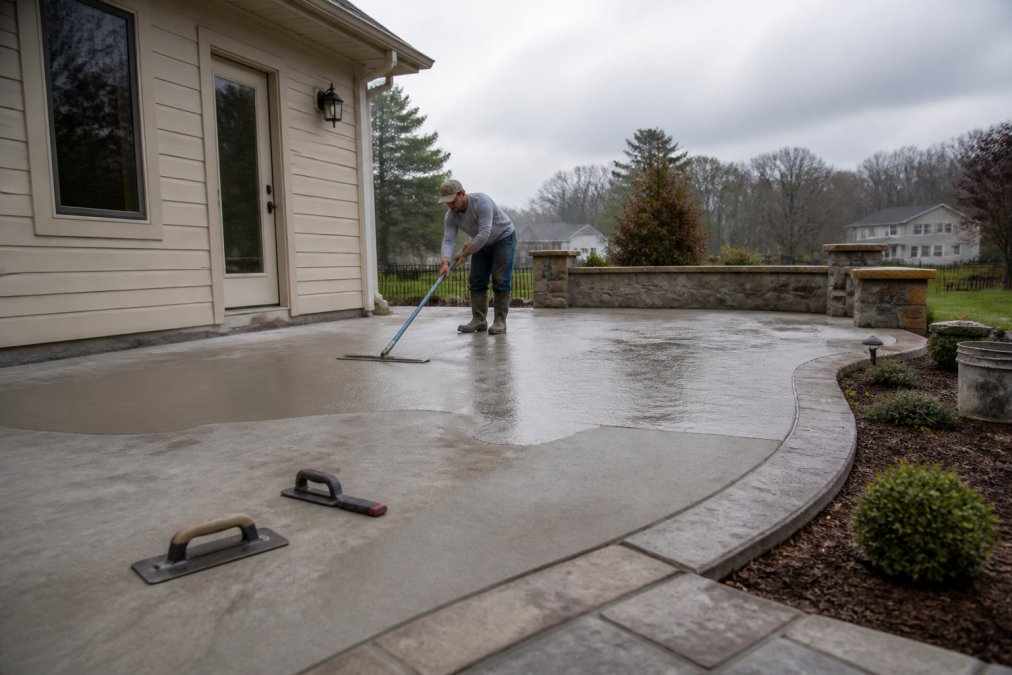
The existing concrete substrate's porosity determines how quickly the base coat bonds and sets. Highly porous concrete (old, weathered, or unsealed) absorbs moisture from the overlay quickly, which can speed drying but also weaken the bond if it happens too fast. Non-porous concrete (sealed, polished, or very dense) slows absorption, which extends drying time but can improve the bond if the surface is properly etched.
A flat, level substrate allows the overlay to be applied in a consistent thickness, which means even drying and curing. A substrate with cracks, divots, or uneven surfaces requires thicker overlay application in some areas, which extends drying time and creates weak points. Addressing substrate issues before overlay application prevents failure and ensures the timeline you plan actually holds.
Product Type and Curing Agent Formulation
Different overlay products cure at different rates. Fast-set products might reach light foot traffic readiness in 24-48 hours. Standard formulations take 7-14 days. Ultra-durable products with epoxy or polyurethane components might require 14-21 days of curing before full load-bearing capacity. Always consult the technical data sheet for drying and curing windows under your specific conditions.
Call (919) 824-5403 or email craigrfear@gmail.com for a free estimate →
Load-Bearing Timeline: Foot Traffic vs. Vehicle Weight
Your overlay might feel hard enough to walk on after 24 hours, but it's not ready for vehicle traffic or heavy commercial use until it's fully cured. Light foot traffic (occasional walking, light cleaning) is typically safe after 48-72 hours of curing, depending on the product and conditions. Heavy foot traffic (constant use, furniture moving, commercial activity) requires 7-14 days of curing.
Vehicle traffic is the strictest requirement. Most overlays shouldn't support vehicle weight until they've cured for 7-14 days and reached their specified compressive strength. The compressive strength development follows a curve: rapid gain in the first 7 days, continued gain over 14-28 days, and full strength at 28 days for most cementitious products.
Decorative Concrete Overlay Cost Per Square Foot and Timeline Trade-Offs
Installation timeline and cost are connected. Faster installations (using fast-set products, optimizing for quick turnaround) often cost more because they require precise scheduling, premium products, and experienced labor. Standard installations take longer but cost less because they allow more flexibility.
The decorative concrete overlay cost per square foot varies based on product type, substrate condition, pattern complexity, and sealer choice. For a detailed estimate tailored to your situation, contact Concrete-Enhancements at (919) 824-5403 or craigrfear@gmail.com for a free consultation. Planning your timeline realistically at the start prevents expensive rushing later.
How Long Does Concrete Overlay Last After Installation
A well-installed decorative concrete overlay lasts 10-15 years with proper maintenance, and some last 20+ years (peer-reviewed research). The lifespan depends on the product, substrate condition, climate, and maintenance. The first year is critical. If the overlay survives the first 12 months without delamination, cracking, or sealer failure, it's likely to perform well long-term.
Maintenance extends lifespan significantly. Resealing every 1-2 years protects the overlay from UV fading and staining. Cleaning prevents dirt and chemical buildup. Avoiding harsh de-icers and extreme temperature swings reduces stress on the overlay. An overlay that's maintained properly can last 15-20 years; one that's neglected might fail in 5-7 years.
Common Installation Mistakes That Extend Timeline or Cause Failure
Most timeline delays and overlay failures trace back to a few preventable mistakes.
Rushing the surface preparation step is the most common error. Contractors or DIYers skip proper grinding or etching, assuming a quick cleaning is enough. The overlay bonds poorly, and within months, delamination begins. Proper substrate preparation is non-negotiable.
Stamping outside the workable window creates patterns that are either too shallow or inconsistent. The result looks poor and compromises the sealer bond.
Allowing foot traffic during curing is the second most common failure cause. The overlay looks hard after 24-48 hours, so people assume it's ready. Early traffic creates micro-fractures that spread over weeks and months.
Applying sealer too early traps moisture in the overlay, preventing proper curing. Waiting the full drying time (24-48 hours after stamping) before sealing prevents this.
Ignoring environmental conditions during installation sets up failure. Installing an overlay in rain, extreme heat, or cold weather creates curing problems that show up weeks later. Extreme conditions require adjusted timelines or postponement.
Not accounting for substrate movement is a silent killer. If the substrate has active cracks or is moving due to settling or water infiltration, the overlay will follow those cracks regardless of how well it's installed. Address substrate issues before overlay installation.
Decorative concrete overlay installation requires patience and precision. The timeline from surface prep to full curing typically spans 2-3 weeks, with the most critical waiting periods occurring between base coat application and stamping, and between stamping and sealer application. Temperature, humidity, substrate condition, and product formulation all affect how long each step takes. Rushing any phase, especially during the curing period, compromises durability and can lead to delamination, cracking, and premature failure.
At Concrete-Enhancements, we've completed hundreds of overlay installations across the Raleigh-Durham Triangle, NC Triad, and Coastal SC. Our CTi Certified approach ensures proper timeline planning, realistic customer expectations, and installations that hold up. Call (919) 824-5403 or email craigrfear@gmail.com for a free estimate.
Frequently Asked Questions
Q: How long must a concrete overlay cure before it can be walked on?
A: Light foot traffic is typically safe after 24-48 hours, but full curing for load-bearing capacity takes 7-14 days depending on temperature, humidity, and product type. Always check the manufacturer's specifications for your specific overlay system. Polymer-modified overlays and cementitious products have different cure schedules. Walking on the surface too early can cause surface damage or delamination.
Q: Does weather affect the installation time of a decorative concrete overlay?
A: Yes, significantly. Cold temperatures and high humidity slow curing dramatically. Ideal conditions are 50-85°F with 40-60% relative humidity. Below 50°F, curing can take twice as long. Rain or moisture during the stamping window ruins texture and pattern quality. Wind accelerates surface drying but can cause uneven curing. Plan installation during stable weather for predictable timelines.
Q: What is the difference between concrete overlay drying time before stamping and full curing time?
A: Drying time for stamping typically occurs within 2-6 hours when the surface is firm enough to accept pattern without deforming. Full curing for compressive strength and load-bearing capacity takes 7-14 days. The stamping window is brief and temperature-dependent; missing it means waiting for the next application cycle. Sealer application usually happens after 24-48 hours of initial set.
Q: How long does concrete overlay last after installation?
A: Quality decorative concrete overlays last 15-25 years with proper maintenance. Lifespan depends on substrate bonding, environmental exposure, foot traffic intensity, and sealer maintenance. Polymer-modified systems typically outlast cementitious overlays. UV exposure, freeze-thaw cycles, and heavy vehicle loads reduce durability. Regular sealer reapplication every 2-3 years extends life significantly and prevents moisture vapor transmission damage.
This article was written using GrandRanker
Frequently Asked Questions
A: Light foot traffic is typically safe after 24-48 hours, but full curing for load-bearing capacity takes 7-14 days depending on temperature, humidity, and product type. Always check the manufacturer's specifications for your specific overlay system. Polymer-modified overlays and cementitious products have different cure schedules. Walking on the surface too early can cause surface damage or delamination.
A: Yes, significantly. Cold temperatures and high humidity slow curing dramatically. Ideal conditions are 50-85°F with 40-60% relative humidity. Below 50°F, curing can take twice as long. Rain or moisture during the stamping window ruins texture and pattern quality. Wind accelerates surface drying but can cause uneven curing. Plan installation during stable weather for predictable timelines.
A: Drying time for stamping typically occurs within 2-6 hours when the surface is firm enough to accept pattern without deforming. Full curing for compressive strength and load-bearing capacity takes 7-14 days. The stamping window is brief and temperature-dependent; missing it means waiting for the next application cycle. Sealer application usually happens after 24-48 hours of initial set.
A: Quality decorative concrete overlays last 15-25 years with proper maintenance. Lifespan depends on substrate bonding, environmental exposure, foot traffic intensity, and sealer maintenance. Polymer-modified systems typically outlast cementitious overlays. UV exposure, freeze-thaw cycles, and heavy vehicle loads reduce durability. Regular sealer reapplication every 2-3 years extends life significantly and prevents moisture vapor transmission damage.