comparison
Driveway Repair vs Replacement Cost Comparison Guide
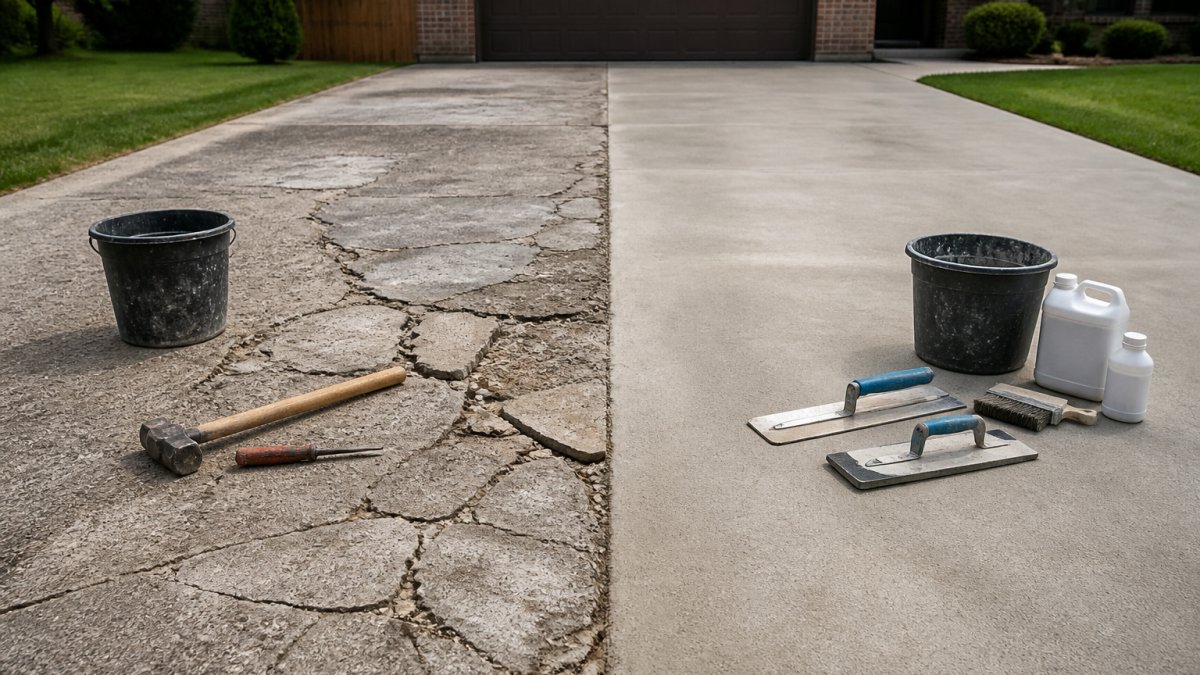
Table of Contents
- Driveway Repair vs Replacement: Cost Comparison at a Glance
- What Driveway Repair Cost Looks Like in 2026
- Driveway Replacement Cost: What Full Tear-Out and Install Runs
- Driveway Resurfacing Cost: The Middle Option
- Concrete Driveway Repair vs Replacement: Which One Fits Your Damage
- Lifecycle Cost: What You Pay Over 20 Years
- What Drives Your Estimate Up or Down
- Frequently Asked Questions
Last Updated: October 13, 2026
Driveway Repair vs Replacement: Cost Comparison at a Glance
The cost comparison of driveway repair vs replacement comes down to damage extent and base condition: repair usually wins when damage is limited and the subgrade is sound, while replacement wins when failure is widespread or structural. According to Angi's concrete driveway repair vs replace guide, the average concrete driveway repair runs about $1,873, versus roughly $6,400 for a full replacement.
Here's the short version before we break it down:
- Repair fits isolated cracks, small potholes, and surface spalling on a stable base.
- Resurfacing fits widespread surface wear when the slab itself is still structurally sound.
- Replacement fits sunken slabs, base failure, and damage covering most of the driveway.
| Situation | Best Option | Why |
|---|---|---|
| A few cracks, sound base | Repair | Lowest cost, fast turnaround |
| Widespread surface wear, solid slab | Resurfacing | New look without demolition |
| Sunken slabs, base failure | Replacement | Repair won't hold on a bad base |
| Damage over most of the surface | Replacement | Patching becomes a losing cycle |
Keep reading, because the numbers only make sense once you match them to your damage.
What Driveway Repair Cost Looks Like in 2026
Driveway repair cost depends on the repair method, the material, and how much surface area is affected. Patching a crack is a different job from leveling a sunken slab, and the price reflects that. HomeGuide's driveway cost guide lists asphalt driveway repair at $2-$5 per square foot, and concrete driveway repair at $3-$8 per square foot.
That spread is wide for a reason. A hairline crack sealed before winter costs far less than a crumbling section that needs the base rebuilt underneath it. Minor asphalt crack repair runs about $1-$3 per linear foot, per NerdWallet's asphalt vs concrete driveway comparison.
Per-Square-Foot Repair Pricing by Material
| Material | Repair Cost per Sq Ft | Typical Repair Scope |
|---|---|---|
| Asphalt | $2-$5 | Crack filling, patching, sealcoating |
| Concrete | $3-$8 | Patching, leveling, spall repair |
Concrete costs more per square foot to repair because the material is stiffer and repairs demand more prep. The trade-off is durability: a properly repaired concrete slab tends to outlast a comparable asphalt patch. For homeowners budgeting, multiply the affected square footage by these ranges, then add a cushion for base work, because the base is where estimates quietly grow.
Driveway Replacement Cost: What Full Tear-Out and Install Runs
Driveway replacement cost covers demolition, hauling, a rebuilt base, and a new surface, which is why it lands several times higher than a repair. For asphalt, new installation runs $7-$13 per square foot (NerdWallet). Concrete replacement typically prices above asphalt because of material and cure time.
A full tear-out is not just a new surface. It's a new driveway, and the line items reflect that.
Demolition, Removal, and Disposal Line Items
- Demolition: Breaking up and loading the old slab or asphalt
- Removal and disposal: Hauling debris to a licensed facility, with dump fees
- Base rebuilding: Grading and compacting the subgrade so the new surface has support
- Drainage work: Correcting slope and runoff so water moves away from the foundation
- New surface: Asphalt or concrete, plus sealing or curing
Those middle line items are the ones homeowners forget. A replacement quote that skips base rebuilding is a quote for a driveway that will fail early. When estimating a replacement, the base work is never optional, because the new surface is only as good as what's under it.
Driveway Resurfacing Cost: The Middle Option
Driveway resurfacing cost sits between repair and replacement, and it's the option most homeowners don't know exists until they ask. Resurfacing means applying a new overlay on top of the existing slab, so there's no demolition and no disposal.
As a general range, asphalt resurfacing (often called an overlay or a new wearing course) typically runs about $3-$7 per square foot, while a concrete overlay or resurfacing system generally runs $3-$9 per square foot depending on thickness, prep, and finish.
What Resurfacing Includes, and What It Doesn't
| Line Item | Typically Included | Often Excluded |
|---|---|---|
| Surface prep (cleaning, crack filling, grinding) | Yes | , |
| Bonding agent / primer | Yes | , |
| Overlay material (asphalt or concrete) | Yes | , |
| Localized base repair | Sometimes | Often billed separately |
| Full base rebuilding | No | Separate scope |
| Drainage correction | No | Separate scope |
The catch is the base. Resurfacing only works when the slab underneath is structurally sound. If the concrete is crumbling, heaving, or sunken, an overlay will crack along the same failure lines within a year or two. Resurfacing jobs are often turned down when the base won't support it, because it's better to lose the job than install something that will fail.
How Long Resurfacing Lasts
A properly applied asphalt overlay on a sound base commonly holds up for 8-15 years with sealcoating every few years. A concrete overlay or resurfacing system, done right, can last considerably longer, often in the 15-20 year range, because the underlying slab is still carrying the load.
For driveways with surface-level wear, cosmetic cracking, or staining, resurfacing is often the best value on the table.
Concrete Driveway Repair vs Replacement: Which One Fits Your Damage
Concrete driveway repair vs replacement is a damage-and-base question, not a price question. The right answer depends on how much of the driveway is affected and whether the subgrade is still doing its job.
Call (919) 824-5403 or email craigrfear@gmail.com for a free estimate →
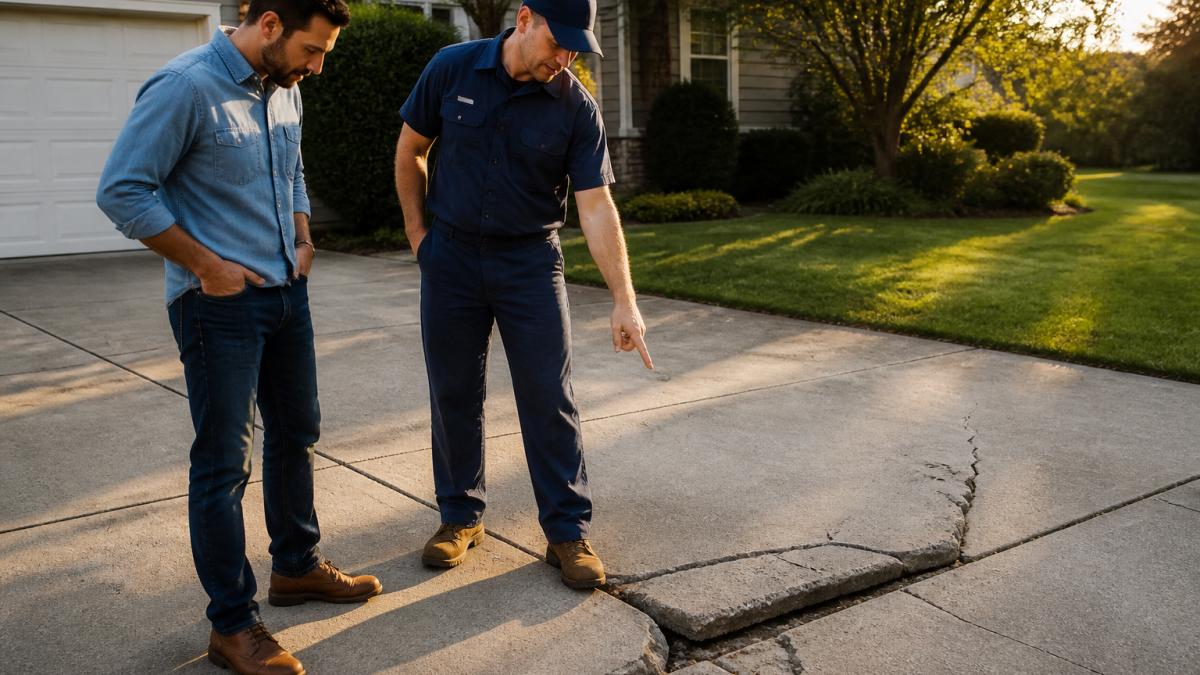
Walk your driveway and note three things: how much of the surface is damaged, whether any slabs have moved, and where water goes when it rains. Those three answers point to your option.
A Damage-Percentage Decision Framework
- Under 20% damaged, base sound: Repair. Patch and seal the affected areas.
- 20-50% damaged, base sound: Resurfacing. An overlay restores the whole surface.
- Over 50% damaged, or any base failure: Replacement. Patching becomes a cycle.
- Any sunken or heaved slab: Replacement of that section, plus base repair.
The percentage is a starting point, not a rule. A single sunken slab next to the foundation can matter more than a dozen hairline cracks out in the open. Base condition overrides the percentage every time.
Lifecycle Cost: What You Pay Over 20 Years
Lifecycle cost is where the cheap option sometimes stops being cheap. Asphalt driveways typically last 15-20 years (NerdWallet), and concrete generally outlasts asphalt with proper maintenance.
Run the math over 20 years, not one season. A $2,000 repair repeated four times costs $8,000, which can exceed a single replacement. That said, a well-timed repair on a sound driveway can buy you a decade before replacement is needed, and that's money well spent.
What Drives Your Estimate Up or Down
Project estimate swings come from a handful of factors, and knowing them helps you read a quote instead of guessing. Driveway size is the obvious one: cost per square foot multiplied by area. Material choice matters, with concrete pricing above asphalt. Site conditions, including slope, access, and soil, affect labor and base work.
But the factors that move a number the most are the ones homeowners can't see in a lump-sum quote. Here's how each one typically shifts the estimate, and what a transparent quote should show you.
The Cost Drivers, Ranked by Impact
| Driver | How It Moves the Number | What to Ask |
|---|---|---|
| Driveway size (sq ft) | Direct multiplier, the single biggest swing | Is the price per sq ft or a flat figure? |
| Base and subgrade condition | Can add 20-40%+ if the base must be rebuilt | Is base rebuilding itemized or bundled? |
| Removal and disposal | Dump fees plus hauling; varies by volume and local facility rates | Is disposal a separate line? |
| Drainage correction | Regrading, French drains, or channel work add cost | Is runoff addressed in the scope? |
| Access and site constraints | Tight access, slopes, or obstacles slow labor | Any access surcharge? |
| Material and thickness | Concrete above asphalt; thicker sections cost more | What thickness and mix is specified? |
| Regional labor and material rates | Same job can differ by thousands market to market | Is labor priced at local prevailing rates? |
Why Two Neighbors Get Quotes That Differ by Thousands
Regional price variation is real and it's not padding. Labor rates, local material supply, disposal facility fees, and even climate affect what a job costs. A market with high demand and limited crews will price higher than one with more competition. Cold climates may require thicker base sections or different mixes to survive freeze-thaw cycles, which adds material and labor. Coastal or high-water-table areas may need extra drainage work.
What a Transparent Estimate Should Include
A quote you can actually compare against another quote should itemize, at minimum:
- Square footage and unit price, so you can check the math
- Demolition and disposal, listed separately from the surface
- Base prep or rebuilding, with depth and compaction specified
- Drainage scope, or an explicit statement that none is needed
- Material, thickness, and finish, not just "concrete" or "asphalt"
- Cure time and access limitations, how long the driveway is out of use
- Permits, if required, who pulls them and who pays
- Warranty terms, what's covered and for how long
If a quote bundles demolition, disposal, and base work into one lump figure, you can't tell whether the base is actually being rebuilt or just covered up. That's the single most common way a low bid turns into an expensive mistake.
Frequently Asked Questions
How much does it cost to replace a cracked driveway?
Replacement pricing depends on the extent of cracking, driveway size, and whether the base needs rebuilding. National averages reported by home-improvement cost guides put full concrete driveway replacement around $6,400, compared with roughly $1,873 for a repair. Cracks that stay isolated usually cost far less to fix than a full tear-out. Get a site-specific estimate before deciding, because demolition, disposal, and subgrade work can shift the number significantly.
How much does driveway resurfacing cost compared with replacement?
Resurfacing sits between patching and full replacement. It involves cleaning the surface, repairing cracks, and applying an overlay rather than tearing out the slab. Because there is no demolition or disposal, driveway resurfacing cost typically lands well below replacement, but it only works when the base is sound and damage is mostly cosmetic. If the slab is heaving or the subgrade has failed, an overlay will crack along the same lines within a few seasons.
Is it better to replace or repair an asphalt driveway?
Asphalt responds well to targeted repair when damage is limited to surface cracks. Minor crack repair runs about $1 to $3 per linear foot, and new asphalt installation runs $7 to $13 per square foot. A driveway with widespread alligator cracking, rutting, or a failing base is usually a replacement candidate. Asphalt driveways typically last 15 to 20 years, so age matters as much as the visible damage when you weigh driveway repair cost against replacement.
How can you tell whether a driveway needs repair or replacement?
Look at three things: how much of the surface is affected, whether the base is still stable, and how the driveway drains. A few isolated cracks, potholes, or a single settled slab point toward repair. Crumbling concrete across large sections, multiple sunken areas, or water pooling against the foundation point toward replacement. As a rule of thumb, damage covering more than a quarter of the surface usually makes replacement the more cost-effective choice over the long run.
Would a concrete driveway be cheaper than asphalt?
Concrete usually costs more upfront. Repair pricing runs $3 to $8 per square foot for concrete versus $2 to $5 for asphalt, and installation follows the same pattern. Concrete tends to hold up longer and needs less frequent sealing, so the gap narrows when you spread cost across the driveway's lifespan. Asphalt is the lower initial spend; concrete is often the lower lifetime spend if you plan to stay in the home.
Tags: driveway repair, cost comparison of driveway repair vs replacement, driveway repair cost, driveway replacement cost, driveway resurfacing cost, concrete driveway repair vs replacement
Frequently Asked Questions
Replacement pricing depends on the extent of cracking, driveway size, and whether the base needs rebuilding. National averages reported by home-improvement cost guides put full concrete driveway replacement around $6,400, compared with roughly $1,873 for a repair. Cracks that stay isolated usually cost far less to fix than a full tear-out. Get a site-specific estimate before deciding, because demolition, disposal, and subgrade work can shift the number significantly.
Resurfacing sits between patching and full replacement. It involves cleaning the surface, repairing cracks, and applying an overlay rather than tearing out the slab. Because there is no demolition or disposal, driveway resurfacing cost typically lands well below replacement, but it only works when the base is sound and damage is mostly cosmetic. If the slab is heaving or the subgrade has failed, an overlay will crack along the same lines within a few seasons.
Asphalt responds well to targeted repair when damage is limited to surface cracks. Minor crack repair runs about $1 to $3 per linear foot, and new asphalt installation runs $7 to $13 per square foot. A driveway with widespread alligator cracking, rutting, or a failing base is usually a replacement candidate. Asphalt driveways typically last 15 to 20 years, so age matters as much as the visible damage when you weigh driveway repair cost against replacement.
Look at three things: how much of the surface is affected, whether the base is still stable, and how the driveway drains. A few isolated cracks, potholes, or a single settled slab point toward repair. Crumbling concrete across large sections, multiple sunken areas, or water pooling against the foundation point toward replacement. As a rule of thumb, damage covering more than a quarter of the surface usually makes replacement the more cost-effective choice over the long run.
Concrete usually costs more upfront. Repair pricing runs $3 to $8 per square foot for concrete versus $2 to $5 for asphalt, and installation follows the same pattern. Concrete tends to hold up longer and needs less frequent sealing, so the gap narrows when you spread cost across the driveway's lifespan. Asphalt is the lower initial spend; concrete is often the lower lifetime spend if you plan to stay in the home.