blog
Are Eco-Friendly Epoxy Flooring Solutions Worth It?
Last Updated: October 28, 2026
Quick Summary
Eco-friendly epoxy flooring solutions are resin-based coatings made with lower VOCs, water-based carriers, or recycled content, so they release fewer fumes during and after installation. They suit garages in homes with kids or pets, though they trade some chemical resistance for a friendlier install.
- Epoxy is expected to account for 32.8% of the global garage flooring market in 2026.
- A 2025 study found concrete dry-shake was more ecologically friendly than epoxy resin in every comparison.
- Eco-friendly epoxy typically has a service life of 10 to 15 years.
- Ask for an SDS, product data sheet, product-specific certification, and written installation instructions.
- Ventilate mechanically during application and cure, even with water-based systems.
Table of Contents
- What Makes Eco-Friendly Epoxy Flooring Solutions Different
- Low-VOC Epoxy Floor Coating: What the Label Actually Means
- Water-Based Epoxy Flooring and Indoor Air Quality
- The Epoxy Flooring Environmental Impact Nobody Mentions
- Epoxy Floor Maintenance That Keeps Chemicals Out of Your Drains
- How to Verify Green Claims Before You Sign a Contract
- Get a Free Estimate on Eco-Friendly Epoxy Flooring
- Frequently Asked Questions
What Makes Eco-Friendly Epoxy Flooring Solutions Different
Eco-friendly epoxy flooring solutions are resin-based floor coatings made with lower levels of volatile organic compounds (VOCs), water-based carriers, or recycled content, so they release fewer fumes during and after installation. The core chemistry stays the same. What changes is what goes into the mix and what comes out of it.
The category matters because it is growing. According to Coherent Market Insights' garage flooring market forecast, epoxy is expected to account for 32.8% of the global garage flooring market in 2026. At Concrete-Enhancements, we have more than 20 years of experience serving residential and commercial clients.
Low-VOC Epoxy Floor Coating: What the Label Actually Means
The market is moving this direction. A Stonhard 2026 commercial flooring trends report expects greater emphasis on low-VOC systems, recycled content, and ingredient transparency, though it cites no adoption figures.
Water-Based Epoxy Flooring and Indoor Air Quality
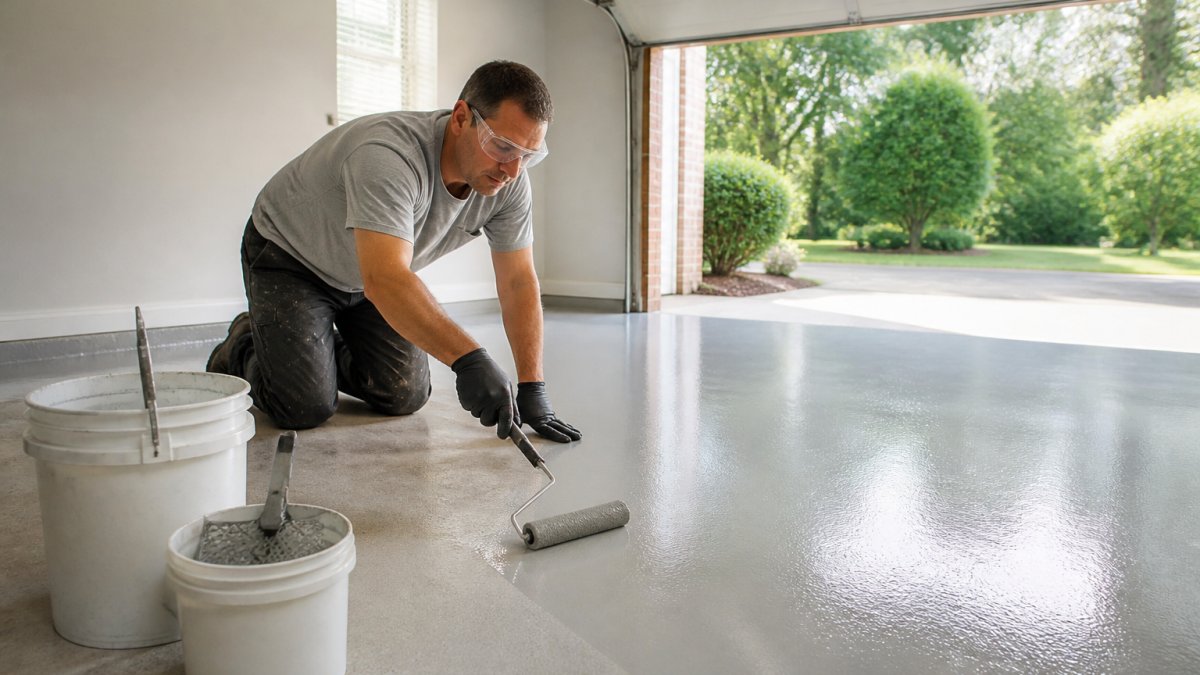
Water-based formulas trade some chemical resistance for a friendlier install. In practice, that means:
- Faster return to the space with less lingering smell
- Lower fire risk during application
- Slightly less bite on hot-tire and heavy chemical exposure than solvent systems
For a garage in a home with kids or pets, that trade is usually worth it. For a warehouse handling solvents daily, it may not be.
The Epoxy Flooring Environmental Impact Nobody Mentions
Epoxy flooring's environmental impact is not automatically lower than other floors. A 2025 comparison summarized in research by P. Kaikkonen and coauthors on CO2 emissions in flooring found a concrete-based dry-shake option was more ecologically friendly than epoxy resin in every comparison reported. That is a real counterpoint to the marketing.
So where does epoxy win? Durability and waste reduction. Coating an existing floor avoids tearing out and hauling away old material, and a floor that lasts 15 years beats one replaced every five. Sherwin-Williams notes that recycled-content epoxy coatings can support LEED sustainability goals, though it gives no adoption figures.
End-of-life: what happens when the floor comes up
This is the part almost no competitor covers. When an epoxy floor is removed, for replacement, renovation, or a change of use, the cured coating is typically ground or scarified off the slab and disposed of as construction and demolition debris. Some contractors can grind the material and reuse it as aggregate base, but that is a site-by-site decision, not a standard recycling stream. Two practical implications:
- Design for longevity first. The greenest removal is the one you never have to do.
- Ask about removal method up front. Mechanical grinding creates dust; wet methods and containment reduce airborne exposure during removal.
How the systems compare on lifecycle terms
| Factor | Eco-Friendly Epoxy | Standard Epoxy | Concrete Dry-Shake | Polished Concrete |
|---|---|---|---|---|
| VOCs during install | Low to near zero | High | Minimal | Minimal |
| Odor | Mild | Strong | None | None |
| Waste from install | Low, coats existing slab | Low | Low | Low to moderate (grinding slurry) |
| Reported lifecycle emissions | Moderate | Higher | Lowest in cited study | Low to moderate |
| End-of-life | Landfill (thermoset) | Landfill (thermoset) | Integral to slab | Integral to slab |
| Chemical resistance | Good | Excellent | Varies | Moderate |
| Typical service life | 10-15 years | 10-15 years | 15-20+ years | 20+ years with maintenance |
Epoxy Floor Maintenance That Keeps Chemicals Out of Your Drains
For a deeper routine, our guide on how to maintain epoxy garage floors walks through stain removal and daily care, and our maintenance tips for epoxy floors covers preventative steps that extend the coating's life. A floor that lasts longer is the most sustainable floor you can own.
Call (919) 824-5403 or email craigrfear@gmail.com for a free estimate →
How to Verify Green Claims Before You Sign a Contract
Verification beats trust. Ask for documentation, not adjectives. The problem is that "low-VOC," "eco-friendly," and "green" are marketing terms, not regulated product categories. What you can verify are specific numbers and specific certifications.
The four documents to request
- Safety Data Sheet (SDS). Required under OSHA's Hazard Communication Standard (29 CFR 1900.1200). It lists hazardous ingredients and handling requirements but does not certify low VOCs.
- Product data sheet / technical data sheet. This is where the grams-per-liter VOC figure lives. Compare the number, not the badge.
- Certification certificate with a product-specific listing. A logo on a brochure is not proof; a certificate with your product name and a registration number is.
- Installation and cure instructions in writing. Ventilation, re-entry time, and disposal of rinse water should be documented, not verbal.
What the common certifications actually mean
- GREENGUARD and GREENGUARD Gold (UL Environment). Test products for volatile organic compound emissions in a chamber and set limits for indoor air quality. Gold applies stricter limits and is often specified for schools and healthcare.
- CDPH Standard Method (Section 01350). A California indoor air quality emissions standard widely referenced in specifications; products are tested for VOC emissions, not just VOC content.
- SCAQMD Rule 1113. A South Coast Air Quality Management District rule that sets VOC content limits for architectural coatings sold in that district. A product meeting it has a documented VOC content ceiling.
- LEED credits. LEED rewards low-emitting materials and recycled content, but LEED certifies buildings, not individual coatings. A product can contribute to a credit without being "LEED certified."
- NSF/ANSI 332 or other sustainability certifications. Where applicable, these assess multiple lifecycle criteria rather than emissions alone.
Installation safety and re-entry timing
Low-VOC does not mean hazard-free. Epoxy hardeners are skin sensitizers, and amine blush and dust during surface prep are real exposures. A common pattern in the field:
- Ventilate mechanically during application and cure, even with water-based systems.
- Wear gloves and eye protection; follow the SDS for respiratory protection during mixing and application.
- Respect re-entry timing. Ask the contractor to state the cure window in writing before furniture or occupants return, typically longer than the "dry to touch" time.
- Contain rinse water and leftover material. Do not rinse epoxy residue into a floor drain or storm sewer.
How to check a claim independently
Before hiring anyone, our guide on finding concrete contractors in Durham covers what to ask, how to check licenses, and what to expect. A CTi Certified Dealer like Concrete-Enhancements can walk you through product specs before you commit.
Get a Free Estimate on Eco-Friendly Epoxy Flooring
Concrete-Enhancements brings 20-plus years of experience and CTi Certified Dealer status to every job, from decorative overlays to full epoxy floor coatings. We serve homeowners and commercial clients across the Raleigh-Durham Triangle, NC Triad, and Coastal SC.
Ready to get started? Call (919) 824-5403 or email craigrfear@gmail.com for a free estimate. You can also contact us to request your free estimate online.
Frequently Asked Questions
Is epoxy flooring environmentally friendly?
It depends on the formula. Traditional solvent-based epoxy carries higher VOC emissions and stronger installation odors. Eco-friendly epoxy options use low-VOC or zero-VOC chemistry, water-based carriers, and in some cases recycled content. A 2025 lifecycle comparison by P. Kaikkonen and coauthors found a concrete-based dry-shake finish scored better than epoxy resin on CO2 emissions, so eco-friendly epoxy is a lower-impact choice rather than a zero-impact one. Ask for the product's VOC data sheet before you commit.
Are there low-VOC epoxy flooring options for occupied buildings?
Yes. A low-VOC epoxy floor coating is widely available, and ArmorPoxy markets a low- or no-VOC product line for floor coating and concrete repair. Lower VOC content reduces odor and curing emissions, which matters for churches, showrooms, and retail spaces that cannot close for a week. Even low-VOC products need proper ventilation during cure, and installation should be scheduled when the space is empty. Confirm the specific VOC rating in writing rather than relying on a general green claim.
Is water-based epoxy better for indoor air quality?
Water-based epoxy flooring typically carries a lower solvent load than solvent-based systems, so odors and VOC emissions during application are reduced. That makes it a practical fit for interior floors in homes and occupied commercial spaces. It is not automatically better on every measure: durability and recoat windows vary by product, and some water-based systems need longer cure times. Compare the technical data sheet for hardness, coverage, and VOC content before choosing between water-based and low-VOC solvent systems.
How do you maintain epoxy floors with fewer harsh chemicals?
Sweep or dust-mop regularly to remove grit before it abrades the surface, then damp-mop with a pH-neutral cleaner instead of degreasers or bleach. Epoxy floor maintenance this simple keeps the coating intact and reduces what goes down the drain. For grease in a garage or warehouse, spot-treat with a mild detergent and rinse. Avoid citrus-based or solvent cleaners, which dull the finish over time. A properly cured seamless floor system is easy to clean, which is a large part of its long-term environmental advantage.
The greenest floor is the one that lasts. If you want a coating matched to your space and installed to hold up, get started with Concrete-Enhancements and a free, no-pressure estimate.

Tags: eco-friendly epoxy, eco-friendly epoxy flooring solutions, low-voc epoxy floor coating, water-based epoxy flooring, epoxy flooring environmental impact, epoxy floor maintenance
Frequently Asked Questions
It depends on the formula. Traditional solvent-based epoxy carries higher VOC emissions and stronger installation odors. Eco-friendly epoxy options use low-VOC or zero-VOC chemistry, water-based carriers, and in some cases recycled content. A 2025 lifecycle comparison by P. Kaikkonen and coauthors found a concrete-based dry-shake finish scored better than epoxy resin on CO2 emissions, so eco-friendly epoxy is a lower-impact choice rather than a zero-impact one. Ask for the product's VOC data sheet before you commit.
Yes. A low-VOC epoxy floor coating is widely available, and ArmorPoxy markets a low- or no-VOC product line for floor coating and concrete repair. Lower VOC content reduces odor and curing emissions, which matters for churches, showrooms, and retail spaces that cannot close for a week. Even low-VOC products need proper ventilation during cure, and installation should be scheduled when the space is empty. Confirm the specific VOC rating in writing rather than relying on a general green claim.
Water-based epoxy flooring typically carries a lower solvent load than solvent-based systems, so odors and VOC emissions during application are reduced. That makes it a practical fit for interior floors in homes and occupied commercial spaces. It is not automatically better on every measure: durability and recoat windows vary by product, and some water-based systems need longer cure times. Compare the technical data sheet for hardness, coverage, and VOC content before choosing between water-based and low-VOC solvent systems.
Sweep or dust-mop regularly to remove grit before it abrades the surface, then damp-mop with a pH-neutral cleaner instead of degreasers or bleach. Epoxy floor maintenance this simple keeps the coating intact and reduces what goes down the drain. For grease in a garage or warehouse, spot-treat with a mild detergent and rinse. Avoid citrus-based or solvent cleaners, which dull the finish over time. A properly cured seamless floor system is easy to clean, which is a large part of its long-term environmental advantage.