ultimate-guide
Get Free Concrete Resurfacing Estimate: Cost Guide
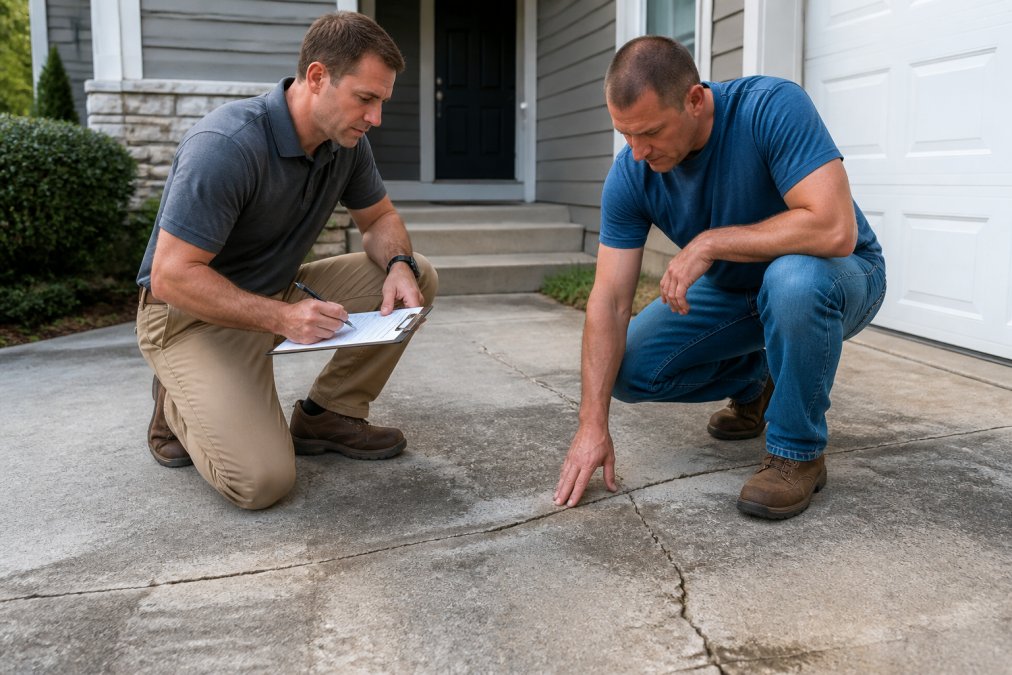
Table of Contents
- What a Concrete Resurfacing Estimate Should Include
- Average Cost of Concrete Resurfacing Per Square Foot
- Concrete Resurfacing vs Replacement Cost: Which Makes Sense
- How to Prepare Concrete for Resurfacing
- Questions to Ask Concrete Contractors Before Hiring
- Common Signs Your Concrete Needs Resurfacing
- Getting Your Free Estimate
Last Updated: August 8, 2026
What a Concrete Resurfacing Estimate Should Include
A concrete resurfacing estimate is a detailed breakdown of labor, materials, and project scope that contractors provide before work begins. It should outline surface preparation requirements, resurfacing materials, timeline, square footage calculations, surface condition assessment, labor hours, equipment rental fees, material specifications, and what constitutes additional charges. For example, if your concrete has significant spalling or hairline cracks, the estimate should detail whether those repairs are part of the base cost or charged separately.
Many homeowners compare estimates that aren't structured the same way. One contractor might include sealer application in their price while another lists it as an add-on. Look for estimates that break down material expenses and labor costs separately, specify the bonding agent type, curing time requirements, and any warranty on finished work.
The estimate should address surface preparation thoroughly. Pressure washing costs vary depending on whether the concrete has mold, heavy staining, or embedded debris. If sub-base work is needed, that's a separate line item that significantly impacts total cost. Concrete-Enhancements provides detailed estimates that break down each phase, so you know exactly where your investment goes.
Average Cost of Concrete Resurfacing Per Square Foot
Concrete resurfacing costs vary based on material type, surface condition, and regional labor rates. Surface preparation is often the biggest variable in pricing. If your concrete requires minimal cleaning and light crack repair, costs run lower. Heavy spalling, deep cracks, or uneven surfaces require more prep work and materials, increasing the per-square-foot price. The condition of your sub-base also matters; if the foundation is unstable, resurfacing alone won't solve the problem, and replacement might be more cost-effective.
Material choices significantly affect pricing. A basic polymer-modified cement overlay costs less than a decorative stamped concrete finish or a high-performance epoxy coating. Epoxy systems offer superior durability and slip resistance, making them popular for pool decks and commercial warehouses. Each material has different application requirements, curing times, and long-term maintenance needs.
Labor costs in the Raleigh-Durham Triangle and NC Triad region depend on contractor experience and project complexity. Licensed contractors with established track records typically charge more than unlicensed operators, but the quality difference justifies the investment.
Concrete-Enhancements can provide a detailed breakdown during your free estimate consultation. Rather than a generic per-square-foot figure, you'll receive a customized quote based on your specific concrete condition, desired finish, and timeline.
Concrete Resurfacing vs Replacement Cost: Which Makes Sense
The decision between resurfacing and replacing concrete depends on structural integrity, project budget, and long-term durability goals. Resurfacing addresses surface damage like spalling, hairline cracks, and discoloration while preserving the existing slab. Replacement removes the entire concrete and pours new material, which is far more expensive but necessary when structural damage is severe.
Resurfacing makes sense when the underlying concrete is structurally sound. If your driveway has a solid foundation but the top layer shows wear, a concrete overlay or epoxy coating restores appearance and function without the expense of removal and disposal. Replacement becomes necessary when concrete has settled unevenly, developed deep structural cracks, or shows signs of sub-base failure. If water pools on your surface or the concrete has heaved significantly, resurfacing won't fix the underlying problem.
The cost difference is substantial. Resurfacing typically costs less because you're preserving the existing slab. Replacement involves concrete removal, debris hauling, sub-base preparation, and new concrete installation. For a residential driveway, replacement can cost two to three times more than resurfacing. However, if the concrete is beyond repair, resurfacing is temporary and will fail within a few years.
A visual inspection checklist helps determine which approach fits your situation:
- Hairline cracks (surface-level, resurfacing candidate)
- Deep structural cracks (may need replacement)
- Spalling or flaking (resurfacing appropriate)
- Uneven settlement (replacement likely needed)
- Water pooling or drainage issues (replacement recommended)
- Sound concrete with surface damage (perfect for resurfacing)
A reputable contractor like Concrete-Enhancements will assess your concrete honestly and recommend the most cost-effective solution. Sometimes that's resurfacing; sometimes it's replacement.
How to Prepare Concrete for Resurfacing
Surface preparation determines whether your resurfacing project succeeds or fails. Even the best overlay material won't adhere properly to dirty, damaged, or improperly prepared concrete. Most contractors spend 30-40% of project time on prep work because it's that critical.
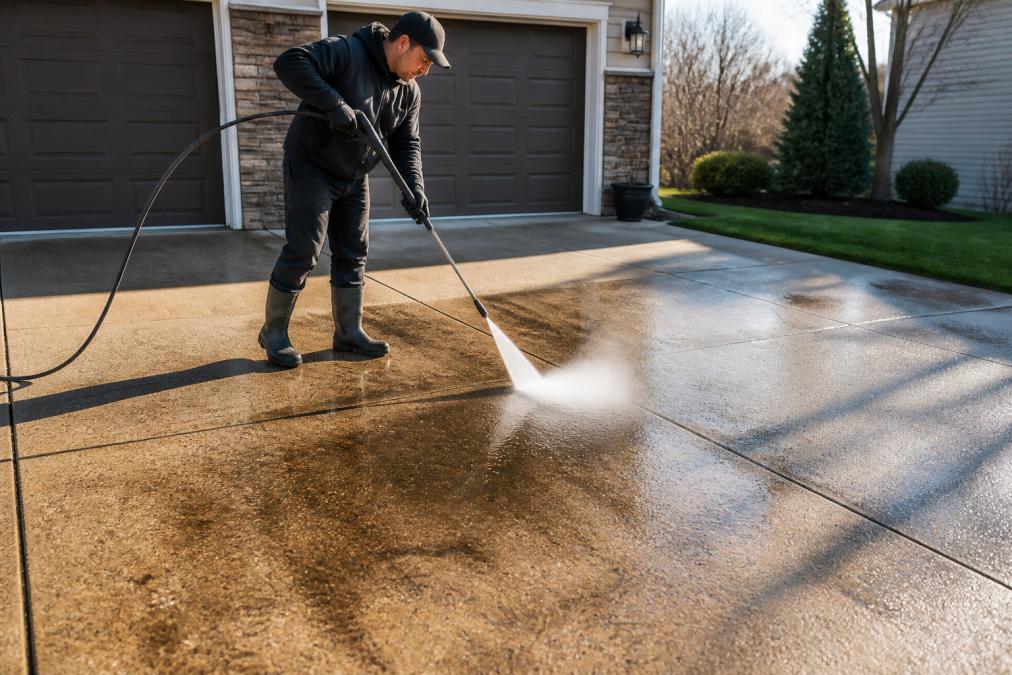
The first step is pressure washing to remove dirt, algae, mold, and loose material. High-pressure water jets clean deep into the concrete's pores, which is essential for bonding agent adhesion. Pressure washing also reveals damage like hairline cracks or spalling that might be hidden under surface grime.
After pressure washing, the concrete must dry completely. Moisture trapped in the pores prevents the bonding agent from creating a strong seal. Drying time depends on weather conditions and concrete porosity, typically 24-48 hours in dry conditions.
Crack repair comes next. Small hairline cracks are filled with epoxy or polyurethane injections that seal the crack and prevent water infiltration. Larger structural cracks require more aggressive treatment. Some contractors chip out damaged concrete to create a clean surface for patching material.
Surface grinding or shot blasting removes any remaining loose material and improves texture for bonding. A rough surface provides better mechanical adhesion for the overlay material. This is where quality contractors differ from budget operators; proper surface profile makes the difference between a five-year coating and a fifteen-year one.
Finally, the surface must be primed with a bonding agent before the overlay is applied. The bonding agent chemically bridges the old concrete and new material, creating structural integrity. Different overlay systems require specific primer types, which is why material specifications matter.
Questions to Ask Concrete Contractors Before Hiring
Asking the right questions separates experienced contractors from inexperienced ones. These questions reveal whether a contractor understands the work, stands behind their results, and operates professionally.
Start with experience and credentials. Ask how long they've been doing concrete resurfacing work and whether they're licensed in North Carolina. Request references from projects completed three to five years ago. Ask specifically about CTi Certification or similar industry credentials, which indicate formal training and commitment to quality standards.
Understand their material choices. Ask which specific products they use for overlay, epoxy, or coating work. They should provide brand names and specification sheets. A contractor who can explain the durability, slip resistance, and maintenance requirements of their chosen system knows their craft.
Clarify the surface preparation process. Ask how they handle pressure washing, drying verification, crack repair, and surface profiling. Ask whether they use moisture meters to confirm the concrete is dry before application. Ask what happens if they discover unexpected damage during prep; will costs increase, and by how much?
Discuss warranty and guarantees. Ask what they warrant on their work and for how long. A reputable contractor stands behind their resurfacing with a written warranty covering adhesion, durability, and finish quality. Understand the terms before signing.
Call (919) 824-5403 or email craigrfear@gmail.com for a free estimate →
Ask about timeline and disruption. How long will the project take? Will you be able to access the area during curing? What happens if weather delays the work?
Finally, ask for a detailed written estimate specifying materials, labor, timeline, payment terms, and what's included versus what costs extra. The estimate should address potential contingencies; what happens if additional repairs are needed during prep work?
Common Signs Your Concrete Needs Resurfacing
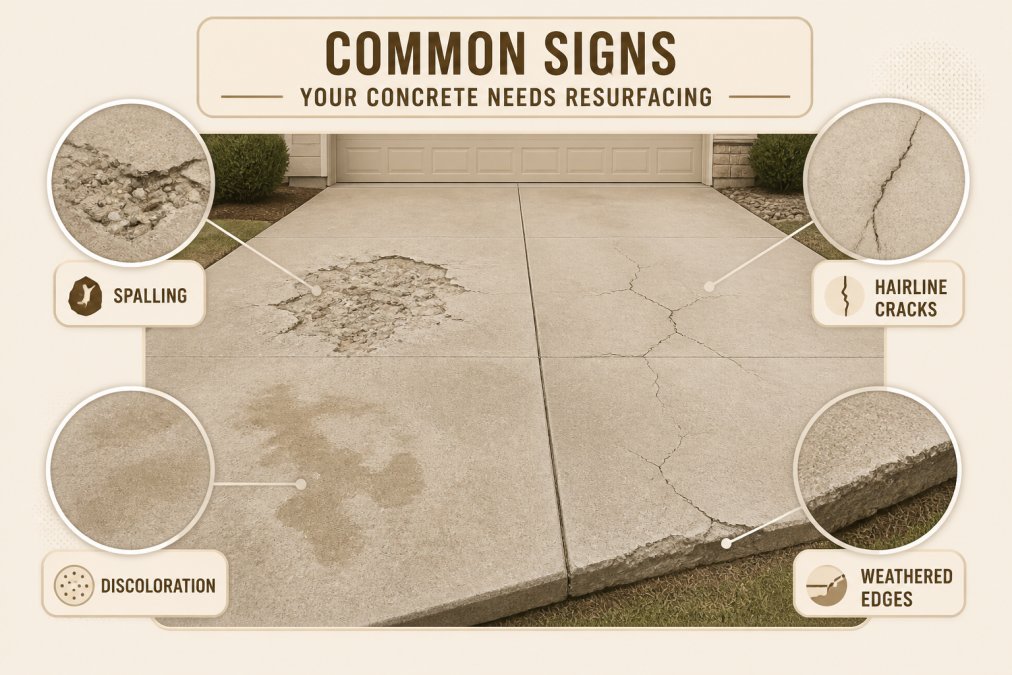
Concrete doesn't fail overnight. It shows warning signs that, when caught early, allow resurfacing to save the surface.
Hairline cracks are among the first signs. These thin surface cracks appear as the concrete ages and experiences temperature cycles. While hairline cracks alone don't require immediate action, they allow water to penetrate the surface. Water freezes and expands in winter, widening cracks and creating spalling. Addressing hairline cracks early with resurfacing prevents this cascade of damage.
Spalling is visible concrete flaking or chipping, usually caused by freeze-thaw cycles or deicing salt exposure. Small spalls are cosmetic issues; large spalls indicate structural damage spreading beneath the surface. If you notice spalling on your driveway or patio, resurfacing can seal the remaining concrete and prevent further deterioration.
Discoloration and staining reduce aesthetic appeal and indicate water damage or chemical exposure. A decorative overlay or epoxy coating addresses both appearance and protection, especially relevant for pool decks where discoloration and algae growth are common.
Uneven surfaces and settlement create tripping hazards and poor drainage. If water pools on your concrete or sections have shifted relative to each other, the sub-base may be failing. If settlement is minor and the concrete is otherwise sound, resurfacing can level the surface. Significant settlement may require replacement.
Loss of slip resistance on pool decks or commercial floors increases safety risk. As concrete ages, the surface becomes smoother and more slippery, especially when wet. Epoxy coatings and textured overlays restore grip and safety.
Dust and dirt tracking from warehouse or garage floors indicates surface degradation. An epoxy coating or decorative overlay seals the surface, eliminating dust and making cleaning easier.
Visible water damage, mold, or efflorescence (white mineral deposits) signals moisture problems. Resurfacing with a quality sealer prevents future water infiltration.
Getting Your Free Estimate
Obtaining a free estimate is the first step toward understanding your concrete resurfacing options and budget. A quality estimate takes time and involves a thorough site assessment, not a quick phone quote.
When you request an estimate, provide as much information as possible about your project. Describe the concrete condition, the area square footage, and what you hope to achieve. Include photos if possible. This helps contractors prepare for the site visit and provide more accurate initial guidance.
During the site visit, a contractor should examine the concrete condition, ask questions about usage and history, and discuss your goals. They'll assess whether resurfacing is appropriate or if replacement is necessary. They'll identify cracks, spalling, and moisture issues.
A detailed estimate should arrive within a few days of the site visit. Review it carefully. Confirm that it matches what the contractor discussed during the visit. Check that materials are specified by brand and product name. Verify that labor and material costs are broken out separately. Confirm that surface preparation is included and detailed.
Compare estimates from multiple contractors, but don't base your decision solely on price. A significantly lower estimate may indicate corner-cutting on surface preparation or material quality. The middle ground often represents fair value, but the contractor's experience and track record matter more than price alone.
Concrete-Enhancements offers free estimates for residential and commercial concrete projects throughout the Raleigh-Durham Triangle, NC Triad, and Coastal South Carolina. During your consultation, you'll receive a detailed assessment of your concrete condition and a comprehensive estimate covering all aspects of the project. Our team brings over 20 years of experience evaluating concrete and recommending the most effective resurfacing solutions.
To get started, contact Concrete-Enhancements at (919) 824-5403 or email craigrfear@gmail.com. Describe your project, and we'll schedule a time to visit your property and provide a detailed, obligation-free estimate. Whether you need a residential driveway renovation, a commercial epoxy flooring system, or a pool deck restoration, we'll help you understand your options and move forward with confidence.
| Estimate Component | What to Look For | Why It Matters |
|---|---|---|
| Surface preparation | Pressure washing, drying time, crack repair detailed | Determines whether overlay adheres properly |
| Material specification | Brand name, product type, thickness | Prevents substitutions and ensures quality |
| Labor breakdown | Hours estimated, crew size, timeline | Helps you understand cost structure |
| Equipment and supplies | Bonding agent, sealer, primers listed | Ensures complete project scope |
| Warranty and guarantee | Coverage period, conditions, exclusions | Protects your investment long-term |
| Payment terms | Schedule, deposits, final payment timing | Clarifies financial expectations |
Concrete resurfacing transforms worn, damaged surfaces into durable, attractive spaces without the expense of full replacement. The key to success is understanding your concrete's condition, comparing detailed estimates from experienced contractors, and choosing materials and methods suited to your specific needs. Concrete-Enhancements specializes in decorative overlays, epoxy coatings, and professional concrete repair that enhance both appearance and durability. With over 20 years of experience and CTi Certification, we deliver high-quality resurfacing solutions for residential driveways, patios, pool decks, and commercial spaces throughout the Raleigh-Durham Triangle, NC Triad, and Coastal South Carolina. Call (919) 824-5403 or email craigrfear@gmail.com today for your free concrete resurfacing estimate and discover how we can revitalize your concrete surfaces.
Frequently Asked Questions
How much do contractors charge to resurface concrete per square foot?
Concrete resurfacing costs vary based on surface condition, material selection, and regional labor rates. Factors like spalling repair, bonding agent application, and decorative finishes all affect pricing. For an accurate quote tailored to your project size and specific needs, contact Concrete-Enhancements at (919) 824-5403 for a free estimate that reflects current market rates in your area.
Is it better to resurface or replace old concrete?
Resurfacing works well for concrete with minor structural issues like hairline cracks, surface discoloration, or wear. If your concrete has severe structural damage, deep cracks, or poor sub-base conditions, replacement may be necessary. A professional inspection during your free estimate will determine whether resurfacing or replacement is the right choice for your specific situation.
How long does a concrete resurfacing overlay last?
Quality concrete overlays typically last 10-15 years or longer with proper maintenance. Durability depends on material selection (polymer-modified cement vs. epoxy), climate exposure, traffic level, and sealer application. Regular maintenance and appropriate weather resistance measures extend the life of your resurfaced concrete significantly.
What should I do to prepare my concrete before resurfacing?
Surface preparation is critical for a successful resurfacing project. This includes pressure washing to remove dirt and debris, repairing deep cracks or spalling, ensuring proper drainage, and allowing adequate curing time between steps. Your contractor will assess the sub-base and apply bonding agents to ensure the new surface adheres properly. Concrete-Enhancements handles all preparation work as part of the professional resurfacing process.
This article was written using GrandRanker
Frequently Asked Questions
Concrete resurfacing costs vary based on surface condition, material selection, and regional labor rates. Factors like spalling repair, bonding agent application, and decorative finishes all affect pricing. For an accurate quote tailored to your project size and specific needs, contact Concrete-Enhancements at (919) 824-5403 for a free estimate that reflects current market rates in your area.
Resurfacing works well for concrete with minor structural issues like hairline cracks, surface discoloration, or wear. If your concrete has severe structural damage, deep cracks, or poor sub-base conditions, replacement may be necessary. A professional inspection during your free estimate will determine whether resurfacing or replacement is the right choice for your specific situation.
Quality concrete overlays typically last 10-15 years or longer with proper maintenance. Durability depends on material selection (polymer-modified cement vs. epoxy), climate exposure, traffic level, and sealer application. Regular maintenance and appropriate weather resistance measures extend the life of your resurfaced concrete significantly.
Surface preparation is critical for a successful resurfacing project. This includes pressure washing to remove dirt and debris, repairing deep cracks or spalling, ensuring proper drainage, and allowing adequate curing time between steps. Your contractor will assess the sub-base and apply bonding agents to ensure the new surface adheres properly. Concrete-Enhancements handles all preparation work as part of the professional resurfacing process.