comparison
Garage Floor Installers: A 2026 Comparison Guide
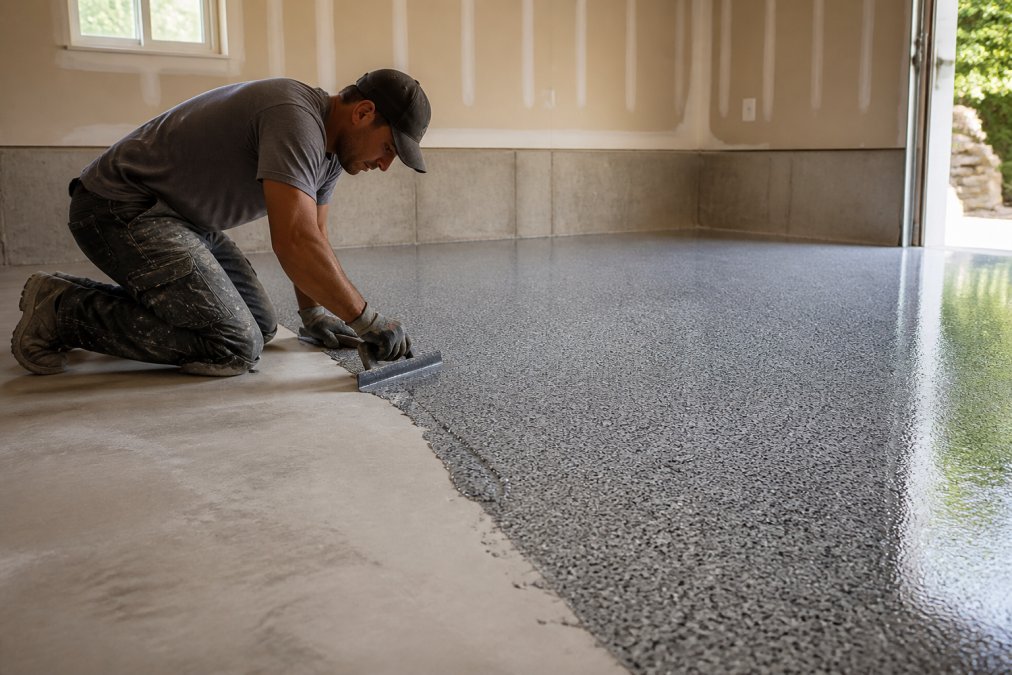
Table of Contents
- What Garage Floor Installers Actually Do
- Epoxy Garage Floor Cost: What Drives the Number
- Garage Floor Coating Pros and Cons by System Type
- How to Choose a Garage Floor Contractor
- Comparing Garage Floor Installers: A Side-by-Side Look
- Maintenance, Longevity, and Garage Storage Solutions
- Frequently Asked Questions
Last Updated: September 10, 2026
What Garage Floor Installers Actually Do
Garage floor installers prepare concrete substrates and apply protective coating systems that resist abrasion, chemicals, and impact. A professional installation involves diamond grinding, crack repair, moisture testing, and multiple coating layers, the difference between a coating that lasts a decade and one that peels within a year.
The work starts long before the first coat goes down. Installers assess the slab for moisture vapor transmission, existing sealers, and structural cracks. Skipping these steps is the most common reason DIY epoxy fails, which is why many homeowners hire garage floor installers to redo the job.
Garage floor installers are contractors who specialize in surface preparation, coating application, and concrete repair for residential and commercial garage spaces, handling everything from diamond grinding to topcoat application.
Epoxy Garage Floor Cost: What Drives the Number
Epoxy garage floor cost is the sum of four buckets: (1) square footage, (2) substrate condition and prep, (3) coating system and build thickness, and (4) mobilization and scheduling. Most quotes bundle all four into one figure, which is why two bids for the same 400-square-foot garage can differ by thousands.
Cost Per Square Foot vs. Flat Project Quotes
Per-square-foot pricing gives you a transparent baseline you can multiply against any garage size. Per-square-foot pricing gives you a transparent baseline you can multiply against any garage size. This assumes a slab in reasonable condition with no major crack repair, no moisture mitigation, and a standard flake finish.
Flat project quotes bundle prep, materials, and labor into one number, easier to budget against, harder to compare. Ask the contractor to break a flat quote into the four buckets above. One who will not is a contractor you cannot audit.

What Actually Moves the Price
Five variables drive the spread between low and high bids:
- Substrate condition. A sound slab with hairline cracks is a different job than one with spalling, delamination, or coating that must be ground off. Crack repair and coating removal are labor hours, the largest line item in most installs.
- Moisture mitigation. If a calcium chloride test or in-situ relative humidity probe shows elevated moisture vapor transmission, the installer must apply a moisture-mitigation primer first, added material and an added day.
- Coating system and build thickness. A single-coat roll-on epoxy is not a 100% solids epoxy base with full flake broadcast and a polyaspartic topcoat. Build thickness and coat count scale material cost directly.
- Square footage and layout. A clean rectangular two-car garage prices more efficiently per square foot than a three-car garage with a bump-out, utility closet, or floor drain.
- Mobilization and scheduling. Distance, crew size, and whether the job is a fill-in between larger commercial projects all affect the final number.
Where DIY Savings Disappear
DIY kits cost less upfront but fail more often, usually from inadequate surface prep, missed moisture issues, and incorrect mixing ratios. When a coating peels, removal often costs more than the original install, because cured epoxy must be ground off, not washed away.
A common pattern: a DIY floor looks fine for one season, then blisters at the first temperature swing. The homeowner pays for the failed kit, the removal, and the professional reinstall, three costs where one would have done.
How to Read a Quote Line by Line
When comparing bids, check that each of these categories is addressed:
| Line Item | What to Look For |
|---|---|
| Surface prep | Diamond grinding or shot blasting specified, not acid etch alone |
| Moisture testing | Calcium chloride or in-situ RH probe, results provided |
| Crack and spall repair | Named repair material and method |
| Base coat | Product name, solids content, and build thickness |
| Topcoat | Product name and UV stability claim |
| Warranty | Written, with named exclusions |
If a bid is missing three or more of these lines, the low price is an incomplete scope, not a bargain.
Garage Floor Coating Pros and Cons by System Type
Garage floor coating pros and cons come down to chemistry. Epoxy is a two-part thermoset resin that cures hard and bonds aggressively to a properly profiled slab. Polyurea reacts faster and tolerates moisture and temperature swings better during cure. Polyaspartic is a polyurea modified with an aspartic ester, giving it UV stability so the color will not yellow in sunlight.
Epoxy, Polyurea, and Polyaspartic Side by Side
| System | Cure Time | UV Stability | Moisture Tolerance During Cure | Best For |
|---|---|---|---|---|
| Epoxy | 24-72 hours | Poor (yellows) | Low, sensitive to slab moisture | Indoor garages, workshops |
| Polyurea | 2-6 hours | Moderate | High, cures fast in humid conditions | Fast-turnaround projects |
| Polyaspartic | 1-4 hours | Excellent | High | Sun-exposed slabs, quick recoat |
Most professional garage floor installers combine systems: an epoxy base coat for build thickness, topped with polyaspartic or polyurea for UV and abrasion resistance. The base coat does the structural work; the topcoat does the cosmetic and wear work.
The Mechanism Behind Each Failure Mode
Knowing why a coating fails is more useful than knowing it can:
- Epoxy yellowing. UV radiation breaks the amine bonds in standard epoxy, shifting the color toward amber (PubMed). That is why a light gray epoxy floor in a sun-exposed garage yellows within a few years while the same floor under a car stays true. A polyaspartic or polyurea topcoat blocks UV before it reaches the epoxy base.
- Hot tire pickup. Tires rolling off a hot road can reach temperatures that soften a thin epoxy topcoat, and the tire pulls the coating off the slab. Higher build thickness and a harder topcoat resist this.
- Blistering and peeling. Moisture vapor rising through the slab pushes against the coating from below. If the coating is not moisture-tolerant or the slab was not tested, vapor pressure wins and the coating lifts, the most common cause of premature failure.
- Delamination. A coating applied over a slab that was not diamond-ground or shot-blasted has nothing to mechanically key into. It sits on top of the concrete instead of bonding, and traffic eventually shears it off.
VOC Limits and What They Mean for Your Install
Coating products must comply with VOC limits set by the EPA's volatile organic compound regulations. VOCs are the solvents that evaporate as the coating cures, and they are the reason a freshly coated garage smells strongly for a day or two. Lower-VOC and zero-VOC formulations exist across all three chemistries, and they are worth asking about if the garage is attached to the house or if anyone in the household has respiratory sensitivities.
Ask for the product's safety data sheet before the install; it lists VOC content, required ventilation, and the cure window. A contractor who cannot produce one has not read it either.
Matching the System to the Slab, Not the Sales Pitch
The right system depends on three slab conditions, not preference:
- Moisture vapor transmission. If testing shows elevated MVT, you need a moisture-mitigation primer regardless of topcoat. No topcoat chemistry substitutes for a proper vapor barrier.
- Sun exposure. A south- or west-facing garage door that lets light hit the floor daily calls for a polyaspartic or polyurea topcoat. An interior garage with no direct sun can use standard epoxy and save the material cost.
- Traffic and chemical load. A residential garage with daily driver parking is a different spec than a workshop with welding sparks, solvent spills, and rolling tool chests. Commercial and workshop spaces need higher build thickness and abrasion resistance.
A contractor who recommends the same system for every garage is selling a product, not solving a problem.
How to Choose a Garage Floor Contractor
Choosing a garage floor contractor comes down to verified prep practices, proper licensing and insurance, and a warranty you can actually use.
Call (919) 824-5403 or email craigrfear@gmail.com for a free estimate →
Substrate Preparation and Moisture Testing Questions to Ask
Ask any contractor these questions before hiring:
- How do you test for moisture vapor transmission?
- Do you diamond grind, shot blast, or acid etch?
- How do you handle cracks and spalling?
- What's your concrete repair process for damaged slabs?
If they can't answer clearly, walk away. Surface adhesion depends entirely on prep quality.
VOC Limits, Warranties, and Licensing Checks
Coating products must comply with VOC limits set by the EPA's volatile organic compound regulations. Ask for the product's safety data sheet. Verify the contractor's license and general liability insurance. Get the warranty in writing, including what voids it.
Ask to see a job the contractor completed at least three years ago. Anyone can show you a fresh floor. A floor that's held up through winters, hot tires, and chemical spills tells you what you actually need to know.
Comparing Garage Floor Installers: A Side-by-Side Look
Comparing garage floor installers means weighing service area, coating options, pricing transparency, and track record.
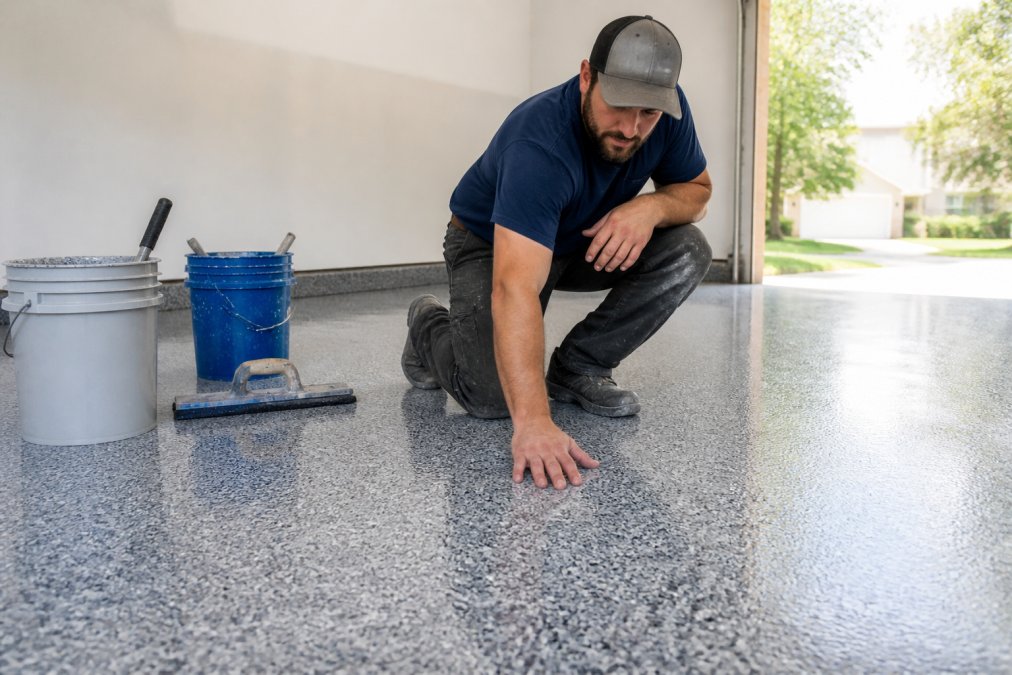
Concrete-Enhancements is our top pick for residential and commercial projects across the Raleigh-Durham Triangle, NC Triad, and Coastal SC. A CTi Certified Dealer with over 20 years of experience, the company specializes in decorative concrete overlays, epoxy floor coatings, and professional concrete repair, handling both residential garage transformations and commercial warehouse flooring. Free estimates are available.
Smart Garage Floors operates in Southern California and has completed over 5,000 garage floor projects, focusing on high-durability epoxy systems with proven surface preparation methods. The limitation: they serve one region.
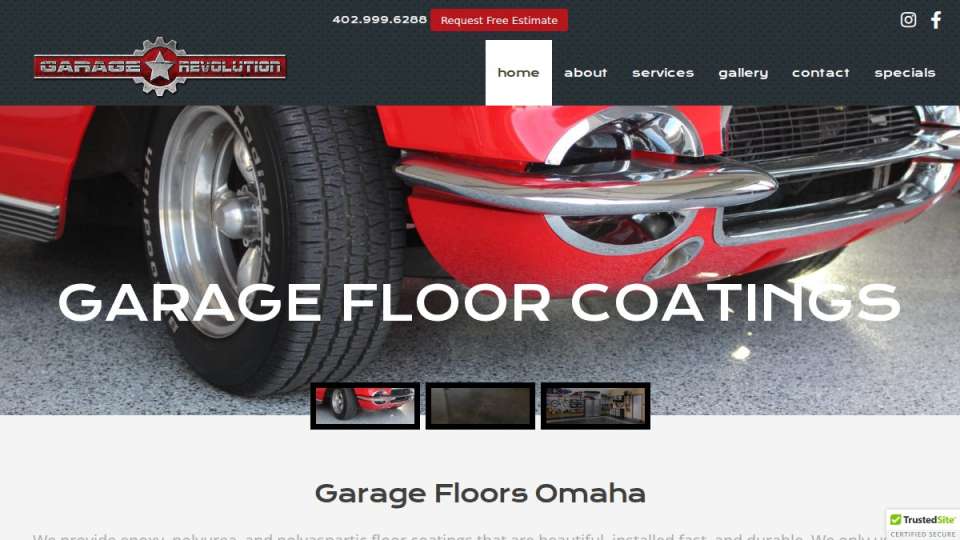
Garage Revolution serves the Omaha, NE area with epoxy, polyurea, and polyaspartic options. Their emphasis on rapid installation suits homeowners needing a fast turnaround, though service is limited to that metro.
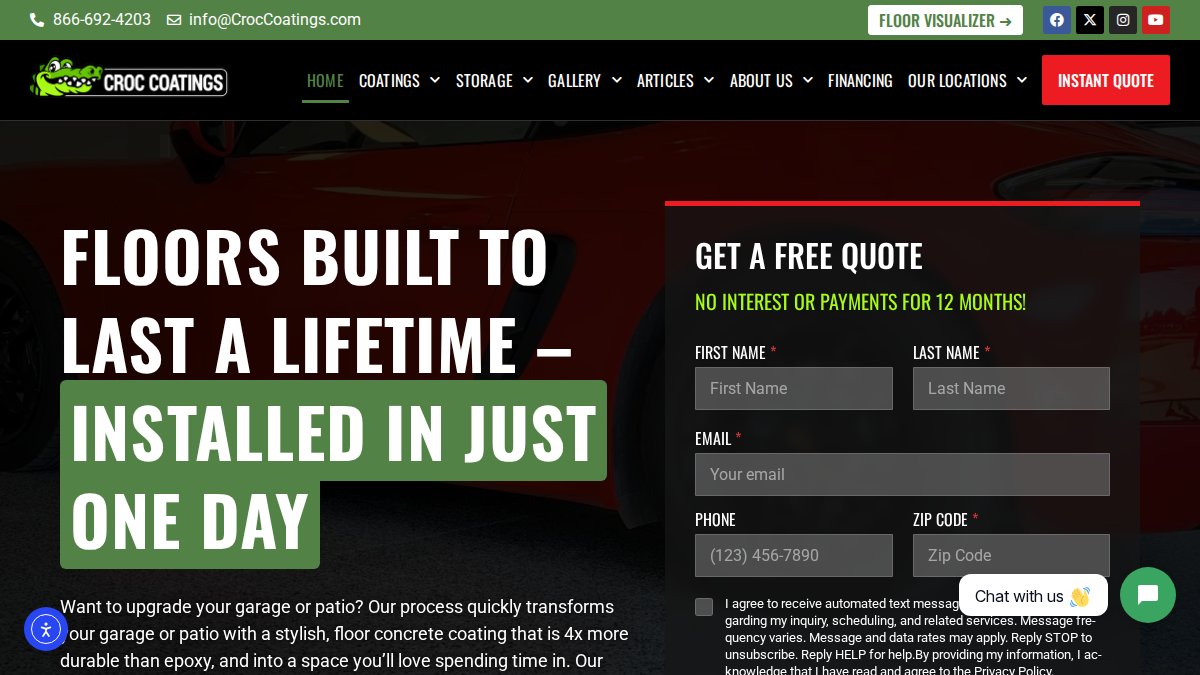
Croc Coatings provides transparent per-square-foot pricing ($5 to $7 per square foot) for standardized epoxy installations, making budgeting straightforward, though site conditions can still shift the final number.
Pro Tech Epoxy Floors quotes $1,800 to $3,200 per project for standard two-car garages (roughly 400 square feet). Competitive pricing for budget-conscious homeowners. Limited public information on their service area.
| Installer | Service Area | Coating Options | Pricing Model | Best For |
|---|---|---|---|---|
| Concrete-Enhancements | Raleigh-Durham Triangle, NC Triad, Coastal SC | Epoxy, decorative overlays, repair | Free estimate | Residential and commercial projects |
| Smart Garage Floors | Southern California | Epoxy systems | Project quote | High-volume residential |
| Garage Revolution | Omaha, NE | Epoxy, polyurea, polyaspartic | Project quote | Fast-turnaround installs |
| Croc Coatings | Regional | Standard epoxy | Per square foot ($5-$7) | Transparent budgeting |
| Pro Tech Epoxy Floors | Limited info | Residential epoxy | Project quote ($1,800-$3,200) | Budget two-car garages |
Maintenance, Longevity, and Garage Storage Solutions
Garage floor maintenance is minimal once a coating cures. Sweep regularly, clean spills with mild detergent, and avoid harsh solvents that break down the topcoat. A properly installed system from experienced garage floor installers typically lasts many years before a recoat.
Floor longevity depends on substrate preparation quality, coating thickness, and traffic load. Commercial spaces with forklift traffic need industrial-grade systems with higher abrasion resistance; residential garages with daily vehicle use hold up well with a standard flake system and polyaspartic topcoat.
Pair your new floor with garage storage solutions like wall-mounted racks and overhead bins. Keeping items off the floor reduces abrasion and makes cleaning easier. Slip-resistant additives in the topcoat add traction, which matters in wet climates.
Your garage floor takes a beating every day: hot tires, road salt, oil drips, and dropped tools. A properly installed coating system handles all of it without peeling or fading. Concrete-Enhancements brings over 20 years of experience, CTi Certified Dealer status, and specialized expertise in decorative overlays and epoxy coatings to every project across the Raleigh-Durham Triangle, NC Triad, and Coastal SC. Get started with Concrete-Enhancements and transform your garage into a space that holds up for the long haul. Call (919) 824-5403 or email craigrfear@gmail.com for a free estimate.
Frequently Asked Questions
How much does it cost to install a garage floor?
Garage floor installers price projects by square footage or as a flat quote. Your final number depends on square footage, concrete condition, substrate preparation needs, and coating system chosen. Request a written estimate that itemizes prep work separately from coating materials.
What is the downside of an epoxy garage floor?
Epoxy's main weaknesses are UV stability and curing time. Standard epoxy yellows under direct sunlight, so it suits garages better than exposed driveways or pool decks. It also needs longer curing windows than polyaspartic or polyurea systems, which can slow a project. Hot tire pickup, where warm tires lift poorly bonded coating, remains a risk when substrate preparation is rushed. Proper diamond grinding and moisture testing prevent most of these failures.
How long do professional garage floor coatings last?
A properly installed epoxy or polyaspartic system typically lasts 10 to 20 years in a residential garage, depending on traffic, chemical exposure, and maintenance. Longevity hinges on surface adhesion, which comes from diamond grinding and moisture vapor barrier testing before any coating goes down. Coatings applied over unprepared or damp concrete peel within one to three years, which is the most common failure pattern reported by homeowners who tried DIY kits.
What type of flooring is best for a garage?
It depends on how you use the space. Polyaspartic and polyurea systems cure fast, resist UV yellowing, and handle temperature swings, making them strong picks for garages that see daily vehicle traffic. Epoxy offers excellent chemical resistance and impact durability at a lower material cost, which suits workshops and storage areas. Flake systems add slip resistance and hide dust. Ask your contractor which topcoat matches your climate and use case.
How do I compare garage floor installers before hiring?
Ask each installer for three things: a written scope that names the substrate preparation method, proof of CTi or comparable certification, and examples of jobs completed at least five years ago that you can inspect. Confirm they test for moisture vapor before coating, carry liability insurance, and offer a service warranty in writing. Pricing matters, but preparation quality separates coatings that last from coatings that peel.
Tags: garage floor installers, epoxy garage floor cost, garage floor coating pros and cons, how to choose a garage floor contractor
Frequently Asked Questions
Garage floor installers price projects by square footage or as a flat quote. Your final number depends on square footage, concrete condition, substrate preparation needs, and coating system chosen. Request a written estimate that itemizes prep work separately from coating materials.
Epoxy's main weaknesses are UV stability and curing time. Standard epoxy yellows under direct sunlight, so it suits garages better than exposed driveways or pool decks. It also needs longer curing windows than polyaspartic or polyurea systems, which can slow a project. Hot tire pickup, where warm tires lift poorly bonded coating, remains a risk when substrate preparation is rushed. Proper diamond grinding and moisture testing prevent most of these failures.
A properly installed epoxy or polyaspartic system typically lasts 10 to 20 years in a residential garage, depending on traffic, chemical exposure, and maintenance. Longevity hinges on surface adhesion, which comes from diamond grinding and moisture vapor barrier testing before any coating goes down. Coatings applied over unprepared or damp concrete peel within one to three years, which is the most common failure pattern reported by homeowners who tried DIY kits.
It depends on how you use the space. Polyaspartic and polyurea systems cure fast, resist UV yellowing, and handle temperature swings, making them strong picks for garages that see daily vehicle traffic. Epoxy offers excellent chemical resistance and impact durability at a lower material cost, which suits workshops and storage areas. Flake systems add slip resistance and hide dust. Ask your contractor which topcoat matches your climate and use case.
Ask each installer for three things: a written scope that names the substrate preparation method, proof of CTi or comparable certification, and examples of jobs completed at least five years ago that you can inspect. Confirm they test for moisture vapor before coating, carry liability insurance, and offer a service warranty in writing. Pricing matters, but preparation quality separates coatings that last from coatings that peel.