listicle
Garage Floor Paint Companies: 2026 Review Guide
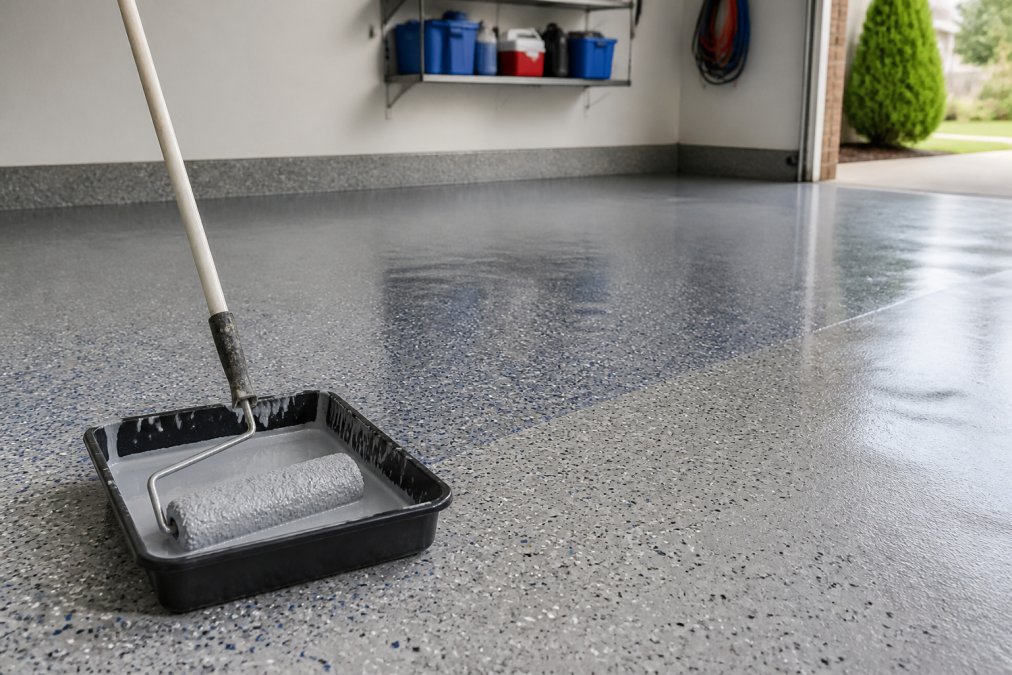
Table of Contents
- How We Evaluated Garage Floor Paint Companies
- Quick Comparison: Top Garage Floor Coating Options
- Concrete-Enhancements: Full-Service Epoxy and Overlay Installation
- Rust-Oleum EpoxyShield: DIY Water-Based Epoxy Kit
- ArmorPoxy: Industrial-Grade Epoxy Systems
- Garage Flooring LLC: Professional-Grade Materials and Support
- Garage Living: Polyaspartic Coating Specialists
- Croc Coatings: Turnkey Professional Installation
- Garage Floor Preparation Steps That Decide Longevity
- Epoxy vs. Paint for Garage Floors: Which Holds Up?
- What Drives Epoxy Floor Coating Cost
- Frequently Asked Questions
Last Updated: September 11, 2026
How We Evaluated Garage Floor Paint Companies
Garage floor paint companies fall into two camps: those that sell you a box and wish you luck, and those that own the outcome. This guide from Concrete-Enhancements separates them. We scored every option on surface preparation standards, coating chemistry, and how the floor actually holds up after five winters of road salt and hot tires.
The gap between a coating that lasts three years and one that lasts fifteen comes down to two things: what's under it and what's in it. A coating applied over a dusty, uncured slab will peel no matter whose name is on the bucket. That's why we weighted preparation protocols and product chemistry above marketing claims.
Below, we break down seven garage floor paint companies and product lines, from DIY kits to full-service installers, so you can match the option to your slab, your climate, and your tolerance for doing it yourself.
Quick Comparison: Top Garage Floor Coating Options
The right garage floor paint company depends on whether you want a product or a crew. DIY kits cost less upfront but demand hours of prep. Full-service installers handle grinding, moisture testing, and repair, which is where most failures originate.
| Option | Type | Best For | Standout Feature |
|---|---|---|---|
| Concrete-Enhancements | Full-service | Decorative overlays, repairs, commercial floors | CTi Certified Dealer, 20+ years |
| Rust-Oleum EpoxyShield | DIY kit | Budget-conscious homeowners | Water-based, easy application |
| ArmorPoxy | DIY kit | Heavy storage, high traffic | Industrial resin, hot tire resistance |
| Garage Flooring LLC | DIY materials | Research-heavy DIYers | Expert technical support |
| Garage Living | Full-service | Polyaspartic installs | Fast cure, UV stable |
| Croc Coatings | Full-service | Turnkey professional work | Transparent pricing structure |
Concrete-Enhancements: Full-Service Epoxy and Overlay Installation
Concrete-Enhancements is the option we'd pick for anyone who wants the floor done once. As a CTi Certified Dealer with more than 20 years in the trade, the company handles the parts that decide whether a coating survives: diamond grinding, moisture vapor transmission checks, crack repair, and substrate correction before a single drop of epoxy goes down.
That preparation focus matters because most peeling complaints trace back to moisture or a contaminated slab, not the coating itself. Concrete-Enhancements works across residential and commercial projects, from garage floors to warehouse and showroom surfaces where abrasion resistance and chemical resistance carry real operational weight.
The trade-off is scheduling. Full-service installation takes longer than rolling on a DIY kit, and pricing depends on square footage, slab condition, and finish selection. Concrete-Enhancements offers a free estimate.
Rust-Oleum EpoxyShield: DIY Water-Based Epoxy Kit
Rust-Oleum EpoxyShield is the entry point most homeowners try first. The two-part water-based epoxy is marketed as five times stronger than standard one-part floor paint, and it ships with decorative color chips for a textured, showroom-style finish (rustoleum.com).
Where it works: light-duty garages, occasional parking, and anyone who wants a clean look without hiring a crew. Application is forgiving for a first-timer, and the kit covers a typical two-car slab.
Where it falls short: water-based epoxy has lower chemical resistance than solvent-based or polyurea systems, and it's less tolerant of a poorly prepared floor. Skip the concrete etching step and you'll watch it lift within a season. This is a coating for a garage that stays dry and lightly used, not a workshop with solvent spills.
ArmorPoxy: Industrial-Grade Epoxy Systems
ArmorPoxy sells industrial-strength resin systems aimed at garages that see real work. The formulations target hot tire pickup, the failure mode where warm tires bond to and pull up a soft coating, and they hold up better against oil, gasoline, and abrasion than consumer-grade kits.
The 14-piece kit options cover larger slabs in one order, which reduces the risk of running short mid-pour. For a garage used for heavy storage, a lift, or regular mechanical work, the higher resin content earns its cost.
The honest drawback is price. ArmorPoxy costs more than a basic big-box kit, and it still requires you to grind or etch the floor yourself. Buy it if you'll do the prep properly. If you won't, the extra durability is wasted.
Garage Flooring LLC: Professional-Grade Materials and Support
Garage Flooring LLC is a supplier, not an installer. It ships professional-grade polyurea and epoxy systems nationwide and backs them with technical support for DIY installation, including guides for surface preparation and moisture testing.
This is the pick for the homeowner who wants pro-level materials but intends to do the labor. The polyurea formulations cure faster and stay flexible across temperature swings, which suits garages in climates with hard freezes and hot summers. garage flooring options.
What most guides miss: buying professional materials doesn't make you a professional applicator. Garage Flooring LLC closes part of that gap with support, but you still own the grinding, the primer coat, and the top coat timing. Budget a full weekend, not an afternoon.
Garage Living: Polyaspartic Coating Specialists
Garage Living installs engineered floor systems built around polyaspartic technology, a coating that cures far faster than standard epoxy and resists UV yellowing. That UV stability matters if your garage door stays open or the slab gets direct sun.
Polyaspartic also stays more flexible than rigid epoxy, so it handles thermal movement without cracking as readily. The company designs for heavy storage loads, which suits garages doubling as gyms or workshops.
Call (919) 824-5403 or email craigrfear@gmail.com for a free estimate →
The catch is cost and access. Full-service polyaspartic runs higher than DIY epoxy, and availability depends on whether a franchise covers your area. For homeowners who want a fast-cure, low-yellowing floor and won't touch a grinder, it's a strong fit.
Croc Coatings: Turnkey Professional Installation
Croc Coatings offers turnkey installation of epoxy and polyaspartic systems with a pricing model that's easier to plan around.
The finishes are customizable, and the focus is on high-traffic durability rather than decorative showpieces. For a homeowner who wants a predictable number and a crew that handles everything, that transparency is the draw.
The limitation is coverage. If it doesn't, the DIY and materials suppliers above remain your realistic path.
Garage Floor Preparation Steps That Decide Longevity
Preparation is where garage floor paint companies earn their reputation or lose it. A coating bonds to the concrete profile, not to the dirt, sealer, or laitance sitting on top of it. Skip these steps and you're coating a surface designed to reject adhesion.
Here's the sequence that separates a five-year floor from a fifteen-year floor:
- Clear and degrease. Remove everything, then scrub oil and grease stains. Coating won't stick to oil.
- Test for moisture. Tape a plastic sheet down for 24 hours. Condensation underneath signals moisture vapor transmission that will push coating off from below.
- Repair cracks and spalls. Fill and level before coating, not after.
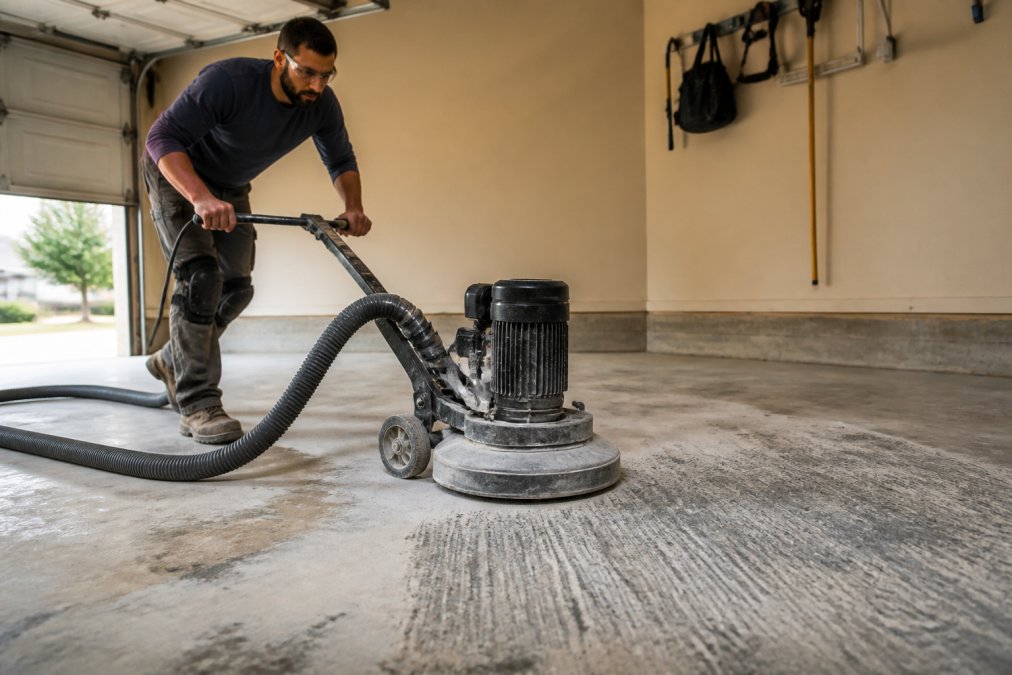
- Profile the surface. Diamond grinding is the professional standard. Concrete etching with acid is the DIY substitute, and it's less consistent.
- Vacuum and prime. Remove all dust, then apply a floor primer matched to your coating.
- Coat in the right conditions. Respect curing time and temperature ranges on the label.
Epoxy vs. Paint for Garage Floors: Which Holds Up?
Epoxy outperforms paint for garage floors in every category that matters: abrasion resistance, chemical resistance, impact resistance, and service life. Standard floor paint is a thin film that scuffs and wears through. Epoxy is a thermoset resin that cures into a hard, bonded surface.
The comparison gets more interesting when you add polyurea and polyaspartic to the mix. Polyaspartic cures faster and resists UV yellowing better than epoxy (PubMed). Polyurea offers strong flexibility and impact resistance. Epoxy remains the value leader for cost per square foot.
| Coating | Cure Speed | UV Stability | Chemical Resistance | Best For |
|---|---|---|---|---|
| Standard paint | Fast | Low | Low | Light foot traffic only |
| Epoxy | Moderate | Low | High | Garages, workshops |
| Polyurea | Fast | Moderate | High | Impact-prone floors |
| Polyaspartic | Very fast | High | High | Sun-exposed, fast turnaround |
For most residential garages, epoxy delivers the best balance. If your slab sees direct sun or you need the floor back in service the same day, polyaspartic is worth the premium.
What Drives Epoxy Floor Coating Cost
Epoxy floor coating cost varies with square footage, slab condition, coating chemistry, and whether you install it yourself or hire a crew. There's no single national number, and any company quoting one without seeing your floor is guessing.
The variables that move the price most:
- Square footage. Larger slabs cost more in materials but less per square foot in labor.
- Slab condition. Cracks, spalls, and moisture problems add repair time before coating.
- Coating system. A single epoxy coat costs less than a full primer, base coat, decorative flake, and top coat system.
- Preparation method. Diamond grinding adds cost over acid etching but produces a more reliable bond.
- Finish options. Decorative flakes, metallic pigments, and custom colors raise material costs.
Concrete-Enhancements provides free estimates rather than published rates, because a quote built without inspecting the slab isn't worth much. Get a written estimate that itemizes preparation, materials, and finish so you can compare like for like.
Frequently Asked Questions
How much does it cost to get a garage floor painted?
Costs vary widely based on square footage, concrete condition, and whether you choose DIY or professional installation. Professional epoxy or polyaspartic coatings typically cost more upfront than paint but last significantly longer. For an accurate quote, contact Concrete-Enhancements at (919) 824-5403 or email craigrfear@gmail.com for a free estimate.
Is epoxy better than garage floor paint?
Epoxy forms a thick, chemical-resistant bond that handles hot tires and abrasion far better than standard paint. Paint is cheaper and easier to apply, but it peels and fades quickly under traffic. For a garage that sees daily use, epoxy or polyaspartic systems deliver a longer service life and lower maintenance.
What are the key garage floor preparation steps?
Proper prep includes clearing the slab, degreasing, repairing cracks, and profiling the surface via diamond grinding or acid etching. Skipping these steps causes most coating failures. Moisture testing is also critical; high moisture vapor transmission can blister any coating.
How long does professional garage floor coating last?
A professionally installed epoxy or polyaspartic system can last with basic maintenance. Longevity depends on surface preparation, coating thickness, and UV stability. Polyaspartic top coats resist yellowing and hot tire pickup better than standard epoxy.
Can I recoat a garage floor that has peeling epoxy?
Yes, but the old coating must be removed or ground down to a sound surface first. Recoating over failing epoxy leads to delamination. Repair and recoating procedures involve diamond grinding, patching, and applying a compatible primer before the new base coat.
Tags: garage floor paint, garage floor paint companies, epoxy floor coating cost, garage floor preparation steps, epoxy vs paint for garage floors
Frequently Asked Questions
Costs vary widely based on square footage, concrete condition, and whether you choose DIY or professional installation. Professional epoxy or polyaspartic coatings typically cost more upfront than paint but last significantly longer. For an accurate quote, contact Concrete-Enhancements at (919) 824-5403 or email craigrfear@gmail.com for a free estimate.
Epoxy forms a thick, chemical-resistant bond that handles hot tires and abrasion far better than standard paint. Paint is cheaper and easier to apply, but it peels and fades quickly under traffic. For a garage that sees daily use, epoxy or polyaspartic systems deliver a longer service life and lower maintenance.
Proper prep includes clearing the slab, degreasing, repairing cracks, and profiling the surface via diamond grinding or acid etching. Skipping these steps causes most coating failures. Moisture testing is also critical; high moisture vapor transmission can blister any coating.
A professionally installed epoxy or polyaspartic system can last with basic maintenance. Longevity depends on surface preparation, coating thickness, and UV stability. Polyaspartic top coats resist yellowing and hot tire pickup better than standard epoxy.
Yes, but the old coating must be removed or ground down to a sound surface first. Recoating over failing epoxy leads to delamination. Repair and recoating procedures involve diamond grinding, patching, and applying a compatible primer before the new base coat.