how-to
How to Estimate Concrete Project Timelines: Durham 2026
Last Updated: November 5, 2026
Quick Summary
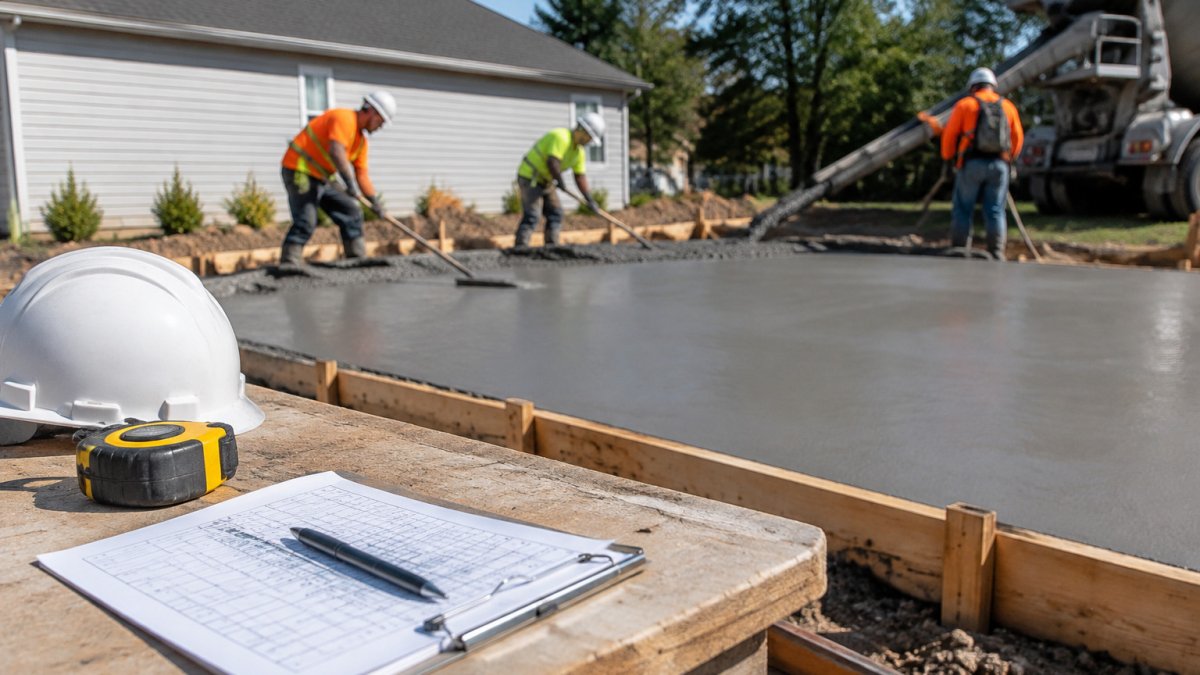
To estimate concrete project timelines, list every phase before setting dates: planning and approvals, site preparation, forms and subbase, the pour, finishing, and curing. Estimate each phase separately, then add curing time and a weather buffer, since the pour is often the shortest part of the job.
- Break the job into phases on paper before setting any dates.
- Treat permit reviews and material lead times as scheduled work, not free time.
- Site preparation typically takes 0.5 to 3 days, depending on area size and soil removal.
- Curing is a separate waiting phase that is not counted as work time.
- Add a weather buffer as its own schedule line and check the forecast three to five days out.
Table of Contents
- Step 1: Break the Project Into Phases With a Concrete Project Schedule Template
- Step 2: Estimate Site Preparation, Forming and Pour Days
- Step 3: Calculate Concrete Slab Installation Time by Project Size and Type
- Step 4: Add Concrete Curing Time Before the Surface Is Usable
- Step 5: Plan Around Durham Weather and Concrete Weather Delays
- Building Your Schedule and Booking Your Concrete Project
- Frequently Asked Questions
Most people estimate concrete project timelines by asking how long the pour takes. That is the wrong question. The pour is often the shortest part of the job, and the real schedule is set by everything before and after it. Knowing how to estimate concrete project timelines in Durham means counting the whole sequence, not one day.
A concrete job moves through planning, site preparation, forming, placing, finishing, and curing. Each phase depends on the one before it. A delay in grading can push back the pour, and weather can add days after the finish is done.
Here is the short version: plan the phases first, estimate each one separately, then add time for curing and weather. This guide walks through that process step by step.
Step 1: Break the Project Into Phases With a Concrete Project Schedule Template
Start by listing every phase on paper before you set any dates. A simple concrete project schedule template keeps you from forgetting steps that are easy to overlook.
Use these phases as your starting list:
- Planning and approvals: design, measurements, and any permit review
- Site preparation: clearing, excavation, and grading
- Forms and subbase: building forms, placing gravel, and setting reinforcement
- Delivery and pour: scheduling the truck and placing the concrete
- Finishing: screeding, floating, and surface texture
- Curing: the waiting period before light use or full loading
For each phase, write down a start date, an end date, and the crew size. A common mistake is treating planning as free time. Permit reviews and material lead times often take longer than the physical work.
Step 2: Estimate Site Preparation, Forming and Pour Days
Once the phases are listed, estimate the days each one needs. Work from the size of the job, not from a guess.
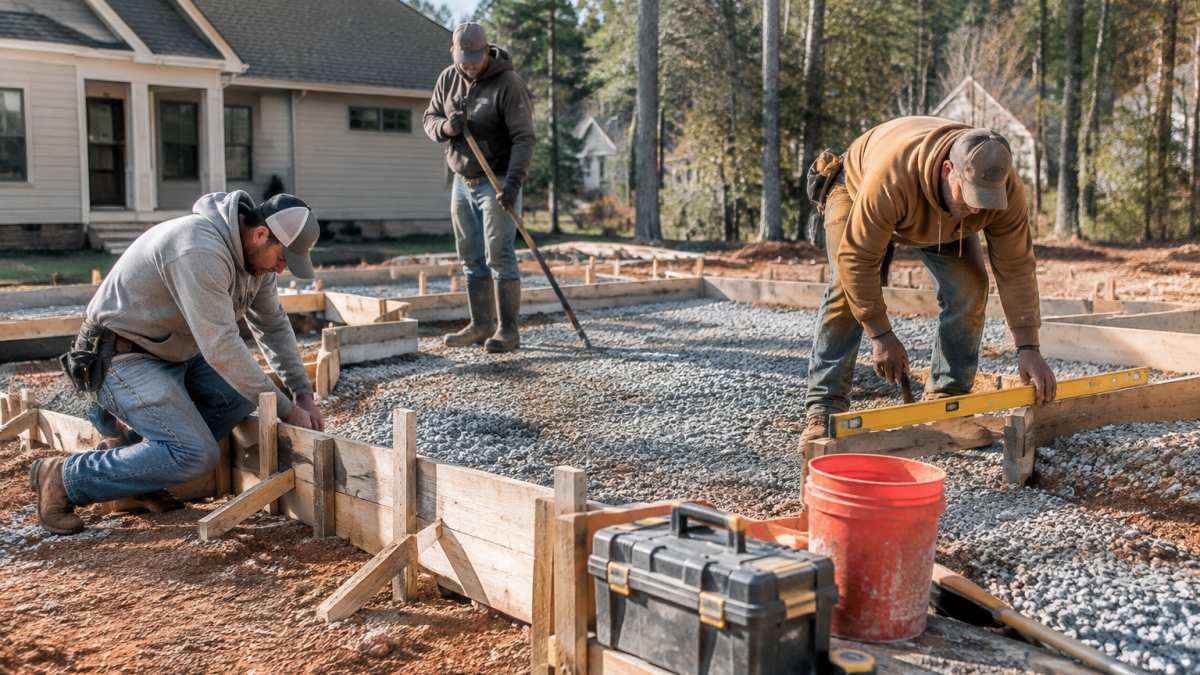
For site preparation, measure the area in square feet and note how deep the excavation must go. Clearing a small patio is typically a short task. Grading a large driveway can take several days, especially if soil has to be hauled off.
Forming time depends on the size and complexity of the slab. Setting forms carefully matters more than setting them fast, because mistakes here cause problems at the pour.
The pour itself is usually completed in a single working period once the truck arrives and the crew is ready. Plan the pour on a day with a clear forecast and a crew ready to work.
Use this rough guide to start:
| Phase | Typical Duration | What Drives the Time |
|---|---|---|
| Site preparation | 0.5 to 3 days | Area size, soil removal |
| Forming and subbase | 1 to 3 days | Shape complexity, reinforcement |
| Pour and finish | 1 day | Crew size, truck scheduling |
Site conditions will change how long each phase takes.
Step 3: Calculate Concrete Slab Installation Time by Project Size and Type
Project size and type change the schedule more than most people expect. A small walkway and a large driveway may both be "one slab," but they run on very different timelines. The useful move is to build a small schedule for each common project type, state your assumptions, and then adjust.
Assumptions used in every example:
- A single-story residential project with clear truck access and no demolition
- Standard 4-inch slab thickness unless noted; footings sized to the drawing
- One crew of three to five workers
- Normal soil conditions with no haul-off and no utility conflicts
- A permit is required for the driveway and footing examples, not the patio
- Curing and weather buffer counted as calendar days, not labor days
Watch out: timelines assume the truck can reach the pour area. A backyard patio with no alley access may need a pump truck or wheelbarrow relay, which can add half a day to a full day and change the crew size you need.
Decorative and overlay work adds time because each step depends on the last. Surface prep, the overlay itself, and any sealer must each be given time to dry before the next step.
Also account for the pour sequence. A large slab is often split into sections, with each section poured and finished before the next begins. Each section adds time to the schedule, and each joint needs its own finishing window. If your project is larger than the examples above, count sections first, then multiply the pour-and-finish day by the number of sections, and add curing time after the last section rather than the first.
Call (919) 824-5403 or email craigrfear@gmail.com for a free estimate →
Step 4: Add Concrete Curing Time Before the Surface Is Usable
Curing is where many schedules fall apart. For a full breakdown of how long each stage takes from prep through curing, see our overlay installation timeline. A fresh slab looks finished within a day, but it is not ready for heavy use.
As a general rule, concrete gains strength over several weeks. Vehicles usually must wait longer than foot traffic. Your concrete supplier or contractor should confirm the exact waiting periods for the mix used on your project. Because concrete curing can affect when later work begins, account for it alongside general renovation timelines when planning the rest of the project.
Watch out: rushing the cure can crack or weaken the slab. Protect the surface from heavy loads until the cure period ends.
Build curing into your timeline as its own phase, and do not count it as work time.
Step 5: Plan Around Durham Weather and Concrete Weather Delays
Weather is the variable most schedules underestimate, and in this area it is not a single number to check. For season-by-season timing of concrete work in North Carolina, see our seasonal protection guide. Temperature, humidity, rain, and seasonal demand each pull on the schedule in a different way. The practical approach is to know the mechanism, then translate it into calendar days you can defend.
Heat and humidity. On hot, humid days concrete sets faster than the mix designer intended. The window for screeding, floating, and texturing shrinks, and a crew that is not ready when the truck arrives can lose the finish. Hot weather can shorten the finishing window, so early starts are often helpful on warm days.
Rain. Rain does two things: it can wash out a fresh surface, and it can saturate the subgrade so the crew cannot place concrete on it. A subgrade that holds water may need a day or more to dry before forming can continue. Check the forecast three to five days out, and treat any day with a meaningful chance of rain as a possible lost pour day rather than a certain one. Build contingency days into the schedule for rain.
Cold. Cold slows strength gain and can damage a slab that freezes before it has gained enough strength. Protection blankets, heated enclosures, or accelerated mixes add cost and coordination to the schedule. Winter pours are possible, but they should be planned as their own phase rather than squeezed into a normal day.
Seasonal demand and contractor availability. Spring and summer are the busiest months for concrete work, and ready-mix plants and finishing crews book up. Booking times can vary considerably with the season. If your project has a hard deadline, call the ready-mix supplier and the crew before you finalize the schedule, not after. The most common pattern is a homeowner who plans the work around a weekend and then learns the plant has no truck available.
A practical weather buffer. Add the buffer as its own line in the schedule, not as a vague hope. Contingency needs depend on the type of job and whether it depends on an inspection. Update the buffer as the forecast sharpens; do not spend it early on a phase that is already running long.
Watch out: a schedule with no room for weather is the most common cause of a missed date, and the fix is not a better forecast. It is a buffer you are willing to use.
Building Your Schedule and Booking Your Concrete Project
Put it all together: list the phases, estimate each one, add curing time, and then add a weather buffer. You now have a realistic timeline you can share with your crew, your supplier, and your client.
Keep the schedule as a living document. Update it when a permit clears, when a delivery slips, or when the forecast changes. Good communication is what keeps a concrete project on track.
When you are ready to move forward, you can review our past concrete project examples to see how similar jobs were scheduled and finished. Our decorative concrete and epoxy service options show which finishes suit your project. For local contact details and quotes, visit our Durham concrete repair page.
Frequently Asked Questions
How long does concrete take to cure before it can be used?
Concrete gains strength over several weeks, and vehicles usually need to wait longer than foot traffic. Hot, dry or windy weather can speed drying and surface cracking, while cold weather slows strength gain. Ask your contractor for the exact wait time for your mix and conditions before you schedule furniture, equipment or vehicle use.
How do you estimate a concrete project timeline?
Start by listing each phase: site preparation, forming, reinforcement, the pour, finishing, curing and cleanup. Estimate the number of working days for each phase based on project size and crew capacity, then add curing time before the surface is in use. Build in contingency days for weather and inspection scheduling. A simple worksheet with these phases in order will show the earliest realistic completion date and where delays are most likely to occur.
What factors can delay a concrete project?
The most common delays are rain or freezing temperatures on pour day, incomplete excavation or grading, late concrete delivery, failed or delayed inspections, and material shortages. Booking ready-mix trucks and inspections early, confirming the site is ready before the scheduled pour and watching the forecast can reduce the chance of a slip. Clear communication with your contractor about who is responsible for each dependency also helps.
When can you walk or drive on newly poured concrete?
Light foot traffic is generally possible sooner than vehicle use, but the surface should be protected. Driving on the slab, especially with heavy vehicles, should wait longer, depending on thickness and mix. Your contractor can confirm the wait period for your specific project, since early loading can cause cracking or surface damage.

Tags: concrete project timelines, how to estimate concrete project timelines in durham, concrete curing time, concrete project schedule template, concrete weather delays
Frequently Asked Questions
Concrete gains strength over several weeks, and vehicles usually need to wait longer than foot traffic. Hot, dry or windy weather can speed drying and surface cracking, while cold weather slows strength gain. Ask your contractor for the exact wait time for your mix and conditions before you schedule furniture, equipment or vehicle use.
Start by listing each phase: site preparation, forming, reinforcement, the pour, finishing, curing and cleanup. Estimate the number of working days for each phase based on project size and crew capacity, then add curing time before the surface is in use. Build in contingency days for weather and inspection scheduling. A simple worksheet with these phases in order will show the earliest realistic completion date and where delays are most likely to occur.
The most common delays are rain or freezing temperatures on pour day, incomplete excavation or grading, late concrete delivery, failed or delayed inspections, and material shortages. Booking ready-mix trucks and inspections early, confirming the site is ready before the scheduled pour and watching the forecast can reduce the chance of a slip. Clear communication with your contractor about who is responsible for each dependency also helps.
Light foot traffic is generally possible sooner than vehicle use, but the surface should be protected. Driving on the slab, especially with heavy vehicles, should wait longer, depending on thickness and mix. Your contractor can confirm the wait period for your specific project, since early loading can cause cracking or surface damage.