ultimate-guide
Why Epoxy Flooring Yellows in Sunlight: Prevention
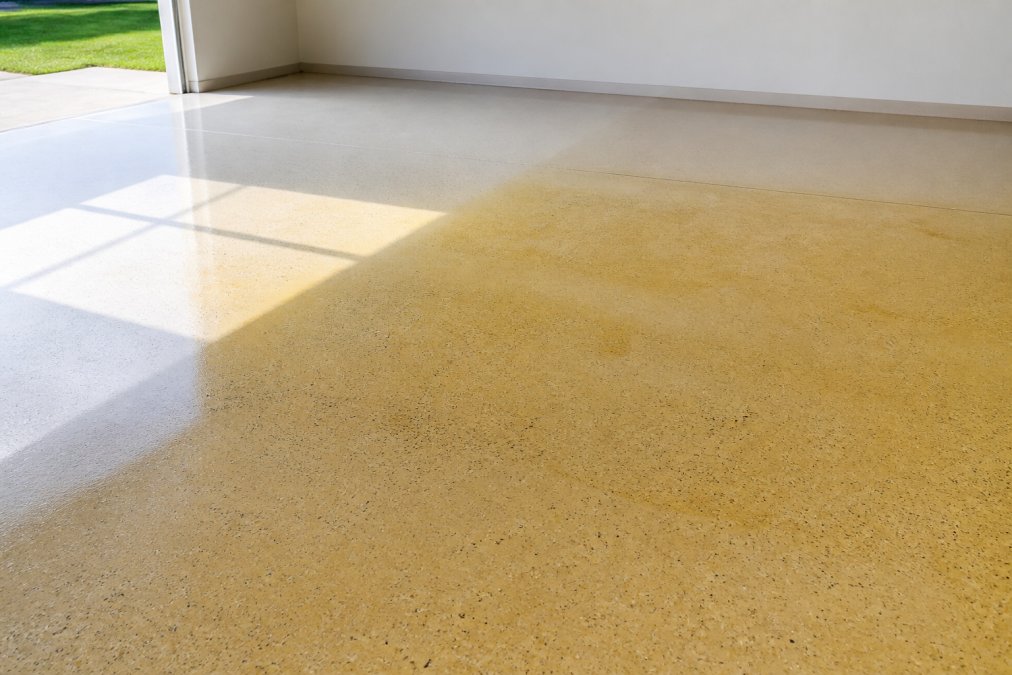
Table of Contents
- The Real Reason Epoxy Flooring Yellows in Sunlight
- How Fast Does Yellowing Happen?
- Indoor vs. Outdoor Epoxy: Know the Difference
- Polyaspartic vs Epoxy for Outdoor Use: The UV-Stable Choice
- The Best Topcoat for Epoxy Floors to Block UV Damage
- How to Fix Yellowed Epoxy: Repair vs. Recoat
- Is the Yellowing Permanent? What You Need to Know
- Prevention Starts with the Right System
- Frequently Asked Questions
Last Updated: September 8, 2026
The Real Reason Epoxy Flooring Yellows in Sunlight
Epoxy flooring yellows in sunlight primarily because of a chemical reaction called photo-oxidation, triggered by ultraviolet (UV) radiation from the sun. This process occurs when UV rays break down the polymer structure of the resin, causing a visible amber or yellow discoloration over time. We have seen this issue countless times on garage floors, patios, and pool decks, and the root cause is almost always the same: standard epoxy was never designed to withstand direct sunlight.
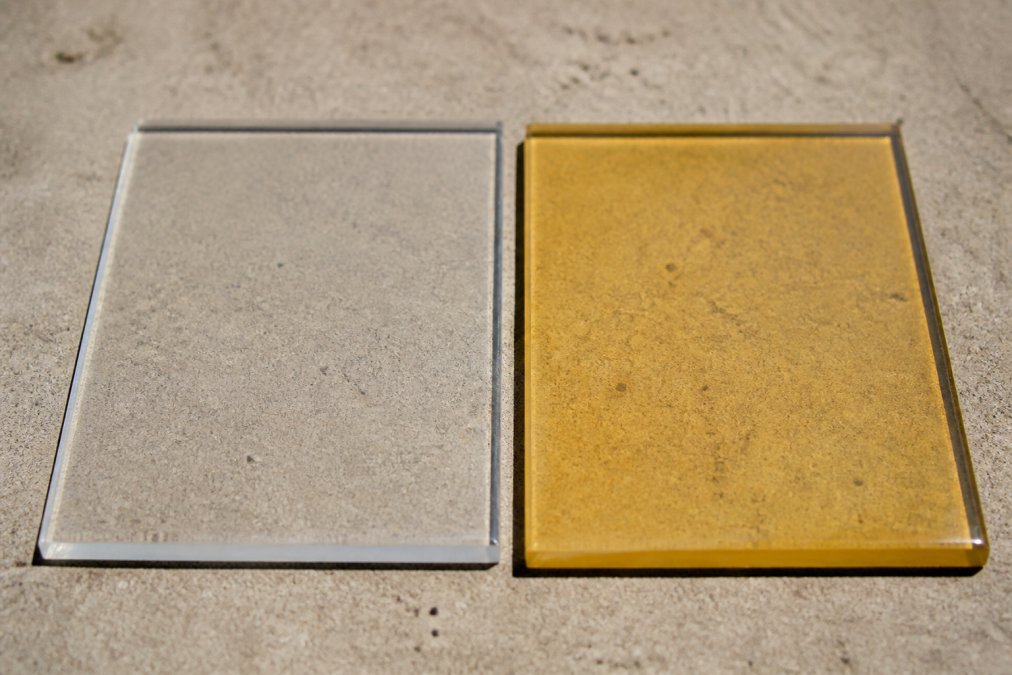
The culprit is a component called bisphenol A (BPA), which is part of the resin chemistry in most standard epoxy systems. When UV radiation hits the cured surface, it energizes the aromatic chemical bonds in BPA, leading to oxidation and a gradual yellowing that worsens with exposure. This is not a surface stain; the chemical breakdown happens throughout the coating's depth, which is why simple cleaning never restores the original clarity.
UV Radiation and Polymer Breakdown
UV radiation does more than darken the surface; it physically alters the molecular structure of the coating. The energy from sunlight breaks polymer chains, creates free radicals, and accelerates oxidation. This process, known as photo-oxidation, is the single most important factor in why epoxy flooring yellows in sunlight. Over time, the degradation also reduces gloss retention and can make the surface more brittle, though the color change is usually the first visible sign.
How Fast Does Yellowing Happen?
Yellowing isn't a question of if, but when. However, the timeline is not a mystery, it follows a predictable curve driven by UV intensity. The American Society for Testing and Materials (ASTM) uses a standard test (ASTM G154) to simulate UV exposure, and most standard epoxy systems begin showing measurable color shift (a Delta E of 2-3, which is perceptible to the naked eye) after roughly 500 to 1,000 hours of direct, intense UV radiation (astm.org). In real-world terms, that translates to:
- Direct, full-sun exposure (UV Index 8-10, typical of a summer afternoon in the South or Southwest): Noticeable amber tones in 2 to 4 weeks. Significant yellowing within 2 to 3 months.
- Partial sun exposure (UV Index 4-7, typical of a garage door open for a few hours daily or a covered patio): First signs of yellowing in 1 to 3 months, with pronounced discoloration by 6 to 12 months.
- Indirect sunlight through windows (UV Index 1-3, typical of a room with large glass doors): Yellowing is slower but inevitable. Expect a subtle, gradual amber shift over 2 to 5 years, depending on the glazing. Standard window glass blocks most UVB but transmits a significant portion of UVA, which is sufficient to drive the photo-oxidation reaction.
The UV Index is a useful proxy. The Environmental Protection Agency (EPA) publishes daily UV Index forecasts; a floor exposed to a cumulative UV Index of 1,000 (roughly 100 days of moderate sun) will show measurable yellowing on a clear, unpigmented epoxy (the EPA). Pigmented systems (e.g., gray or tan) will mask the shift longer, but the degradation is still occurring beneath the surface.
Thickness also plays a role. A 20-mil (0.020 inch) epoxy coating will yellow more visibly than a 10-mil coating because there is more resin volume to oxidize. High temperatures accelerate the reaction, for every 10°C (18°F) increase in surface temperature, the oxidation rate roughly doubles (nist.gov). This is why a dark-colored epoxy on a hot pool deck yellows faster than the same product on a shaded interior slab.
A common pattern is that homeowners notice the yellowing first on the edges of a floor near a garage door or along a glass wall, where the angle of the sun hits the coating most directly. If you want a more precise estimate for your specific location, the National Weather Service's UV Index tool can give you daily readings; multiply that by the number of hours of direct exposure your floor receives to estimate the cumulative dose.
Indoor vs. Outdoor Epoxy: Know the Difference
Standard epoxy is formulated for indoor use, and that distinction matters far more than most homeowners realize. Indoor epoxy performs exceptionally well in garages, basements, showrooms, and workshops where UV exposure is minimal or indirect. In these settings, the flooring system can last for years without significant discoloration.
Outdoor epoxy is a different story. When epoxy flooring yellows in sunlight, it is because the product was never engineered for that environment. For outdoor applications like pool decks, patios, and driveways, you need a coating system specifically designed to resist UV radiation. Using an indoor-grade epoxy outdoors is a common mistake that leads to premature yellowing, chalking, and loss of gloss, often within the first season.
Polyaspartic vs Epoxy for Outdoor Use: The UV-Stable Choice
When the conversation turns to polyaspartic vs epoxy for outdoor use, the answer is clear: polyaspartic wins every time. But understanding why requires looking at the chemistry on a molecular level, and that's where most articles stop short.
Standard epoxy relies on aromatic resins, specifically diglycidyl ether of bisphenol A (DGEBA). The aromatic ring structure in BPA is the culprit. When UV photons strike these rings, they excite the pi-electrons, causing the molecule to absorb light in the blue-violet spectrum and reflect yellow. This is not a surface phenomenon; the entire cross-linked matrix is affected. Over time, the excited molecules also form chromophores (color-bearing chemical groups) and free radicals, which further accelerate chain scission and oxidation.
Polyaspartic coatings, by contrast, are derived from aliphatic polyurea chemistry. They use a polyaspartic ester as the resin, which reacts with an aliphatic polyisocyanate hardener. The term 'aliphatic' means the molecular backbone is a straight or branched chain of carbon atoms, not a ring structure. Without the aromatic rings, there are no pi-electrons to excite, so the material is inherently UV-stable. This is the fundamental structural difference: aromatic = UV-absorbing, aliphatic = UV-transparent.
There is a middle-ground option worth knowing: aliphatic epoxy. Some manufacturers produce epoxy systems using aliphatic amines and modified backbones that reduce or eliminate the aromatic content. These are sometimes marketed as 'UV-stable epoxy' or 'non-yellowing epoxy.' They perform better than standard aromatic epoxy but still do not match the UV resistance of a true polyaspartic. For a high-traffic commercial pool deck, aliphatic epoxy is a compromise; for a residential patio, it may be sufficient.
Another alternative is polyurethane cement, a hybrid system that uses a polyol resin and a polymeric isocyanate hardener. Polyurethane cement is highly UV-stable, extremely impact-resistant, and can be applied at thicker builds (up to 1/4 inch) to bridge cracks in the substrate. It is a premium product, often used in parking garages and industrial food facilities, but it is overkill for most residential applications.
A practical comparison of the three viable outdoor systems:
Call (919) 824-5403 or email craigrfear@gmail.com for a free estimate →
| Coating Type | Resin Chemistry | UV Resistance | Typical Lifespan (Outdoor, Full Sun) | Relative Cost per Sq Ft |
|---|---|---|---|---|
| Standard Epoxy | Aromatic (DGEBA) | Poor; yellows in weeks | 6-12 months before visible yellowing | $ (baseline) |
| Aliphatic Epoxy | Modified, reduced aromatic | Good; slow yellowing over years | 3-5 years before noticeable shift | $ (1.5-2x epoxy) |
| Polyaspartic | Aliphatic polyurea | Excellent; no yellowing | 10+ years with no color shift | $$ (2-3x epoxy) |
The trade-off is not just cost, it is also working time. Polyaspartic has a fast cure time, often tack-free in 1-2 hours and walkable in 4-6 hours at 70°F. This is a benefit for scheduling but a challenge for DIY installers, as the material can set up in the mixing bucket before it is fully rolled out. Epoxy gives you 30-45 minutes of working time; polyaspartic gives you 15-20 minutes. Professional installers use this speed to their advantage, completing a full garage floor in a single day, whereas an epoxy job requires a two-day schedule with a primer coat and a topcoat.
For outdoor installations, the choice is not really between epoxy and polyaspartic, it is between polyaspartic and a polyurethane cement system. Both are UV-stable. The deciding factors are substrate condition (polyurethane cement is better for cracked or moving slabs), desired texture (polyaspartic can be broadcast with aggregate for slip resistance), and budget. If the floor is structurally sound and the budget allows, polyaspartic is the most balanced choice for UV resistance, durability, and aesthetics.
The Best Topcoat for Epoxy Floors to Block UV Damage
If you already have epoxy installed and want to protect it from sunlight, the best topcoat for epoxy floors is a UV-resistant polyurethane or polyaspartic clear coat. These topcoats act as a sacrificial barrier, absorbing UV radiation before it reaches the epoxy layer beneath. A quality polyurethane topcoat can extend the life of an indoor epoxy floor significantly, even in areas with windows or skylights that let in direct sunlight.
The application matters as much as the product. A thin, uneven topcoat will fail quickly, leaving gaps where UV rays can penetrate. For best results, the topcoat should be applied at the manufacturer's recommended thickness, which typically means multiple coats. This is not a DIY-friendly job; proper surface preparation, mixing, and application require experience. A professional installer will also know which topcoat systems are chemically compatible with your specific epoxy base.
How to Fix Yellowed Epoxy: Repair vs. Recoat
When epoxy flooring yellows, the damage is deep within the coating, which means surface-level fixes do not work. The only reliable way to fix yellowed epoxy is to remove the affected coating and reapply, or to cover it with a new, UV-stable system. Light sanding and a fresh topcoat rarely solve the problem, because the discolored resin underneath continues to show through.
The repair path depends on the extent of the damage. If the yellowing is mild and the coating is otherwise sound, a skilled contractor may be able to grind the surface, apply a UV-blocking primer, and install a polyaspartic topcoat. If the epoxy is severely degraded, cracked, or peeling, full removal is necessary. This involves diamond grinding or shot blasting to strip the old coating down to the bare concrete substrate, followed by a fresh installation using UV-stable materials.
Is the Yellowing Permanent? What You Need to Know
Yes, yellowing is permanent once it occurs. The chemical breakdown of the polymer chain cannot be reversed, and no cleaning product, polish, or restorative treatment will bring back the original clarity. The only options are to cover the discolored coating or remove it entirely.
This permanence is why prevention is so critical. Unlike stains that sit on the surface, yellowing represents a fundamental change in the material itself. Once you understand that epoxy flooring yellows in sunlight at the molecular level, you realize that choosing the right material from the start is the only effective strategy. For any space with meaningful UV exposure, that means skipping standard epoxy in favor of a UV-stable alternative.
Prevention Starts with the Right System
The most cost-effective way to deal with yellowing is to never let it happen. For indoor spaces like garages and basements, standard epoxy remains a solid, durable choice. For anything exposed to direct sunlight or even strong ambient light, a polyaspartic or polyurethane system is the only sensible option.
Concrete-Enhancements has over 20 years of experience installing flooring systems across the Raleigh-Durham Triangle, NC Triad, and Coastal SC. As a CTi Certified Dealer, we specify the right system for each environment, whether that is a decorative epoxy for an interior showroom or a UV-stable polyaspartic for a pool deck. We also handle professional concrete repair, so if your current floor is already yellowed or failing, we can assess whether a repair or a full recoat is the right path forward.
Choosing the right flooring system comes down to one honest assessment: how much sunlight will the surface actually receive? For sun-exposed patios, pool decks, and driveways, standard epoxy will disappoint you. Concrete-Enhancements brings 20 years of experience and CTi certification to every project, ensuring your floor is specified, installed, and finished to withstand real-world conditions. Call (919) 824-5403 or email craigrfear@gmail.com for a free estimate and get a floor that stays clear for the long haul.
Frequently Asked Questions
Will epoxy turn yellow in the sun?
Yes, standard epoxy flooring will turn yellow when exposed to direct sunlight. The UV radiation in sunlight triggers a chemical reaction in the resin's polymer structure, specifically in the bisphenol A component. This process, called photo-oxidation, causes discoloration that typically appears within weeks or months. The yellowing is not just a surface issue; it penetrates the coating, which is why simply cleaning the floor will not remove it.
How to stop epoxy from yellowing?
The most effective way to stop epoxy flooring from yellowing is to block UV radiation before it reaches the epoxy. Applying a UV-stable polyurethane or polyaspartic topcoat creates a protective barrier that absorbs UV light. For new installations in sun-exposed areas, choosing a polyaspartic or aliphatic epoxy system instead of standard aromatic epoxy is the best prevention, as these products are formulated with UV-resistant additives.
How to remove yellowing from epoxy floors?
You cannot remove yellowing from the existing epoxy layer because the discoloration is a chemical change within the resin itself. The only fix is to abrade the yellowed top layer and apply a new UV-stable topcoat. In severe cases where the epoxy has degraded deeply, you may need to grind off the entire coating and reinstall the floor system using polyaspartic or a UV-resistant topcoat to prevent the problem from returning.
Is there a difference between epoxy and polyaspartic coatings regarding UV stability?
Yes, the difference is significant. Standard epoxy uses aromatic resins containing bisphenol A, which are highly susceptible to UV degradation and yellowing. Polyaspartic coatings use aliphatic resins, which have a different polymer structure that resists UV radiation. This makes polyaspartic the better choice for outdoor use, patios, and pool decks where direct sunlight is unavoidable. Polyaspartic also cures faster and offers better thermal stability.
Tags: epoxy flooring yellows, why epoxy flooring yellows in sunlight, polyaspartic vs epoxy for outdoor use, how to fix yellowed epoxy, best topcoat for epoxy floors
Frequently Asked Questions
Yes, standard epoxy flooring will turn yellow when exposed to direct sunlight. The UV radiation in sunlight triggers a chemical reaction in the resin's polymer structure, specifically in the bisphenol A component. This process, called photo-oxidation, causes discoloration that typically appears within weeks or months. The yellowing is not just a surface issue; it penetrates the coating, which is why simply cleaning the floor will not remove it.
The most effective way to stop epoxy flooring from yellowing is to block UV radiation before it reaches the epoxy. Applying a UV-stable polyurethane or polyaspartic topcoat creates a protective barrier that absorbs UV light. For new installations in sun-exposed areas, choosing a polyaspartic or aliphatic epoxy system instead of standard aromatic epoxy is the best prevention, as these products are formulated with UV-resistant additives.
You cannot remove yellowing from the existing epoxy layer because the discoloration is a chemical change within the resin itself. The only fix is to abrade the yellowed top layer and apply a new UV-stable topcoat. In severe cases where the epoxy has degraded deeply, you may need to grind off the entire coating and reinstall the floor system using polyaspartic or a UV-resistant topcoat to prevent the problem from returning.
Yes, the difference is significant. Standard epoxy uses aromatic resins containing bisphenol A, which are highly susceptible to UV degradation and yellowing. Polyaspartic coatings use aliphatic resins, which have a different polymer structure that resists UV radiation. This makes polyaspartic the better choice for outdoor use, patios, and pool decks where direct sunlight is unavoidable. Polyaspartic also cures faster and offers better thermal stability.