listicle
Best Alternatives to Epoxy Floor Coatings
Table of Contents
- Why Homeowners and Businesses Look Beyond Epoxy
- Polyaspartic vs Epoxy Floor Coating: Speed and Durability
- Polished Concrete: A Low-Maintenance Alternative
- Interlocking Garage Floor Tiles: DIY-Friendly and Reversible
- Cost of Polyaspartic Flooring vs Other Coatings
- Concrete Stains and Self-Leveling Overlays
- Comparison Table: Epoxy Alternatives at a Glance
- How to Choose the Right Alternative for Your Space
Last Updated: August 27, 2026
Why Homeowners and Businesses Look Beyond Epoxy
Epoxy has been the industry standard for decades, but it's not the answer for everyone. Many property owners discover that epoxy's limitations, long curing times, yellowing under UV exposure, brittleness in cold climates, and susceptibility to peeling, make alternatives more practical for their specific situation.
At Concrete-Enhancements, we've worked with homeowners and commercial operators who initially considered epoxy but found better solutions. The best floor coating matches your climate, traffic patterns, maintenance tolerance, and budget. Polyaspartic coatings cure faster. Polished concrete requires minimal maintenance. Interlocking tiles offer reversibility. Self-leveling overlays provide a fresh start on damaged slabs. Understanding which one fits your space requires looking at the specifics: How much traffic will it see? What's your climate like? How much downtime can you tolerate? What aesthetic are you after?
Below, we'll break down the leading alternatives to epoxy floor coatings, compare their performance characteristics, and show you how to match each option to your actual needs.
Polyaspartic vs Epoxy Floor Coating: Speed and Durability
Polyaspartic coatings cure in hours instead of days, while delivering comparable or superior durability in most applications. You can walk on a polyaspartic floor in 8-10 hours and drive on it within 24 hours (peer-reviewed research). Epoxy typically requires 24-48 hours before foot traffic and 5-7 days before vehicles.
Polyaspartic cures through moisture rather than chemical cross-linking, meaning it hardens even in humid conditions where epoxy struggles. Durability comparisons favor polyaspartic in several categories: it resists hot tire pickup better, won't soften or mark under tire heat in direct sun, and offers superior UV stability without yellowing. For garages and outdoor-facing spaces, this matters significantly.
The trade-off is cost. Polyaspartic typically runs 20-30% higher than standard epoxy and requires more precise application. Temperature and humidity conditions matter more than they do with epoxy. A professional installer is almost always necessary, whereas some homeowners attempt DIY epoxy successfully. Finish options are also more limited; polyaspartic typically comes in high-gloss or matte, whereas epoxy offers more decorative customization.
For commercial warehouses, showrooms, and outdoor-facing residential driveways, polyaspartic delivers measurably better performance and faster return to service.
Polished Concrete: A Low-Maintenance Alternative
Polished concrete eliminates coatings entirely, transforming your existing slab into a durable, reflective surface through mechanical grinding and polishing. This is the most maintenance-friendly alternative to epoxy for spaces where durability and minimal upkeep are priorities.
The process uses diamond abrasives to progressively grind the concrete surface, exposing the aggregate and creating a smooth, sealed finish. The result is a floor harder than the original concrete, typically reaching a Mohs hardness rating comparable to marble, with engineered slip resistance.
Polished concrete requires almost no ongoing maintenance. No recoating. No stripping and waxing. A damp mop handles routine cleaning. Stains don't penetrate the sealed surface. It lasts 10-20+ years or more before resurfacing becomes necessary.
The aesthetic appeal is substantial. Polished concrete reads as high-end in retail and commercial settings and delivers a modern, minimalist look in residential spaces. The drawback is upfront cost and slab condition dependency. If your concrete is heavily damaged, cracked, or severely uneven, repair costs before polishing can exceed coating installation costs. Existing sealers or coatings must be removed first. In very cold climates, the surface can become slippery when wet, though this can be mitigated with a less-aggressive polish or slip-resistant topcoat.
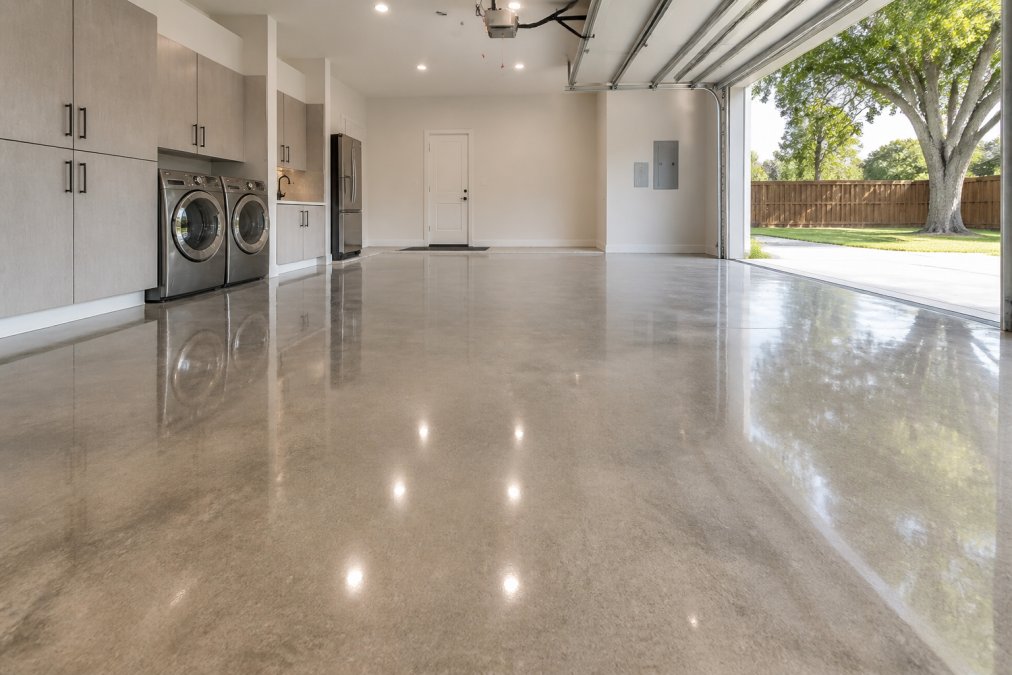
For property owners prioritizing durability and minimal maintenance over initial cost savings, polished concrete is the strongest alternative to epoxy.
Interlocking Garage Floor Tiles: DIY-Friendly and Reversible
Interlocking tiles offer a completely different approach: no coating, no adhesive, just modular pieces that lock together and can be removed or rearranged at any time. This reversibility makes tiles the best alternative to epoxy for renters, temporary installations, or owners who want flexibility.
Swisstrax Ribtrax Pro tiles exemplify the category. Made from UV-stabilized polypropylene, they self-drain through a channel system underneath and lock together without tools or adhesives. Installation is genuinely DIY-friendly; most homeowners can cover a standard two-car garage in a day. If you move, you take them with you.
Durability is legitimate. The tiles resist oil, gas, and automotive fluids and don't crack in freeze-thaw cycles because plastic lacks the brittleness of coatings. Slip resistance is built in and maintains over years. For garages, workshops, and basements, they perform reliably.
The trade-offs are meaningful. Interlocking tiles cost more per square foot than epoxy or polyaspartic coatings and can produce a slight clicking sound under heavy foot traffic. They're not suitable for seamless, monolithic appearances and don't work well on uneven concrete. In very hot climates, plastic tiles can soften slightly, though quality products are engineered to resist this.
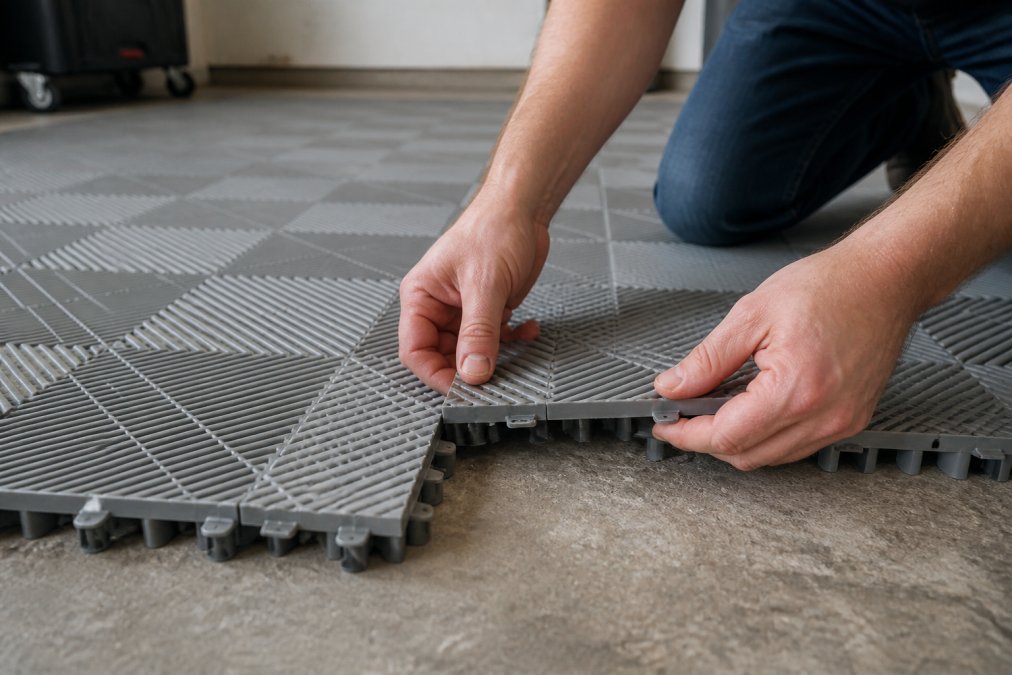
Interlocking tiles are the best choice for anyone who values reversibility, DIY installation, and flexibility.
Cost of Polyaspartic Flooring vs Other Coatings
Understanding cost requires separating material price from total installed cost, which includes substrate preparation, labor, and any necessary repairs.
Polyaspartic material costs typically run 20-30% higher than standard epoxy. Professional polyaspartic installation costs vary dramatically by region and substrate condition but often runs higher than professional epoxy. However, faster cure time can reduce labor hours, offsetting some of the material premium.
Polished concrete pricing depends heavily on existing slab condition. A well-maintained, flat slab might cost $3-10 per square foot. A slab requiring crack repair and multiple polishing passes can run $15 or higher. For a 1,000-square-foot space, that's a significant investment, but it's a one-time cost with minimal future maintenance.
Interlocking tiles carry the highest per-square-foot cost among the options discussed. A quality interlocking tile system runs $8-15 per square foot installed. For a 500-square-foot garage, you're looking at $4,000-7,500. However, this cost is spread over 15-20+ years with virtually no maintenance, and you retain the option to remove and reuse the tiles.
Call (919) 824-5403 or email craigrfear@gmail.com for a free estimate →
Self-leveling overlays fall in the mid-range cost-wise. Material is inexpensive, but labor is substantial if you're hiring a professional.
We typically recommend evaluating total cost over the expected lifespan of the floor, not just the installation price.
Concrete Stains and Self-Leveling Overlays
Concrete stains offer a decorative, low-cost approach that works only on sound concrete, while self-leveling overlays provide a resurfacing solution for damaged or uneven slabs.
Acid stains chemically react with concrete to create permanent, variegated color that becomes part of the surface (peer-reviewed research). Colors range from warm terracottas and greens to cool grays and blues. Stains work indoors and outdoors and require minimal maintenance once sealed.
The limitation is substrate-dependent. Stains only work on unsealed, uncoated concrete and won't adhere to existing epoxy or sealers. Color outcome depends on concrete chemistry and porosity, so results can be unpredictable. Stains offer no protection against traffic wear or impact; they're purely decorative. You'll typically apply a sealer over the stain for protection.
Self-leveling overlays are Portland cement-based products that create a fresh, smooth surface over damaged concrete. They're typically applied 1/4" to 1.5" thick and automatically level to create a flat plane. They accept foot traffic within hours and can be finished with stains, polishing, or additional coatings. They're ideal for uneven slabs, concrete with minor cracks, or spaces where you want a completely fresh surface without removing the existing slab.
The advantage is flexibility. Overlays can be stained, polished, sealed, or coated. The disadvantage is that they're labor-intensive if you're hiring a professional. DIY application is possible but requires precision. Overlays also add thickness to your floor, which can create transitions at doorways.
Stains work best for decorative applications where the concrete underneath is sound. Overlays are the right choice when you need to fix surface damage or create a perfectly smooth foundation for a subsequent finish.
Comparison Table: Epoxy Alternatives at a Glance
| Option | Cure Time | Durability | Maintenance | Cost Range | Best For |
|---|---|---|---|---|---|
| Polyaspartic | 8-24 hours | Excellent (UV-stable, flexible) | Minimal | $$ | Commercial, outdoor-facing, high-traffic |
| Polished Concrete | N/A (existing slab) | Excellent (10-20+ years) | Very Low | $-$$ | Long-term durability, low maintenance |
| Interlocking Tiles | Same day | Very Good (plastic durability) | Low | $$-$$ | Reversibility, DIY, flexibility |
| Concrete Stains | 24-48 hours | Fair (decorative only) | Moderate | $-$ | Artistic finishes, decorative appeal |
| Self-Leveling Overlay | 3-4 hours walk-on | Good (foundation layer) | Depends on topcoat | $-$$ | Damaged slabs, surface leveling |
| Standard Epoxy | 24-48 hours | Good | Moderate | $-$ | Budget-conscious, enclosed spaces |
How to Choose the Right Alternative for Your Space
The best alternative to epoxy depends on three factors: your climate, your traffic patterns, and your maintenance tolerance.
Start with climate. If you're in a region with intense UV exposure or significant temperature swings, polyaspartic outperforms epoxy. Polished concrete excels in stable, climate-controlled environments. Interlocking tiles handle freeze-thaw cycles better than any coating because they're plastic, not brittle.
Next, assess traffic. High-traffic commercial spaces benefit from polyaspartic or polished concrete. Moderate residential traffic works fine with epoxy, polyaspartic, or tiles. Light-traffic or decorative spaces can use stains or overlays as finishing layers.
Maintenance tolerance matters more than most people realize. If you want to mop and forget, polished concrete is the answer. If you're willing to occasionally reseal or recoat, standard epoxy or polyaspartic work fine. If you want zero long-term commitment, interlocking tiles are reversible and require no maintenance.
Substrate condition shapes the decision. A damaged slab might need an overlay before any coating. A flat, sound slab opens all options. An existing coating that's failing might be better removed and replaced with polished concrete than coated again.
Finally, consider resale value. Polished concrete and high-quality polyaspartic installations appeal to buyers and commercial tenants. Poorly executed coatings actively detract from property value.
For properties in the Raleigh-Durham Triangle, NC Triad, and Coastal SC, Concrete-Enhancements can assess your specific slab condition, climate exposure, and use case to recommend the alternative to epoxy that delivers the best long-term value. A free estimate includes a substrate evaluation and honest guidance on which option makes sense for your space.
The best floor coating isn't always the most popular one. Epoxy remains a solid choice for many applications, but alternatives like polyaspartic, polished concrete, interlocking tiles, and self-leveling overlays often deliver better performance, lower maintenance, or greater flexibility. Concrete-Enhancements specializes in evaluating your specific situation and recommending the right solution. With over 20 years of experience and CTi Certified expertise, we've guided property owners toward the alternative to epoxy that actually solves their problem. Contact us at (919) 824-5403 or craigrfear@gmail.com for a free estimate and professional assessment of your concrete floor.
=== FAQ ANSWERS (audit these too, same rules) ===
Frequently Asked Questions
Q: What floor coating is better than epoxy for residential garages?
Polyaspartic and polycuramine coatings can offer superior durability and cure time compared to epoxy. Polyaspartic cures in 24 hours versus epoxy's 5-7 days, and polyurethane-based products can offer superior resistance to UV yellowing and hot tire pickup. For DIY installation, interlocking tiles eliminate cure time entirely and require no special preparation. The best choice depends on your priorities: fastest cure time favors polyaspartic, lowest maintenance favors polished concrete, and easiest installation favors interlocking tiles.
Q: How does polyaspartic compare to epoxy in terms of cure time?
Polyaspartic cures dramatically faster than epoxy. You can walk on polyaspartic in 8-10 hours and drive on it in 24-36 hours, while epoxy requires 5-7 days for full chemical resistance and durability. This faster cure time means you regain use of your space in a single day with polyaspartic versus over a week with epoxy. The rapid curing also reduces the risk of dust and debris settling into the coating during application, resulting in a cleaner finish.
Q: What are the most cost-effective alternatives to epoxy flooring?
Concrete stains and acid etching can offer a lower upfront cost. Self-leveling concrete overlays are another option. Interlocking tiles can be a good choice for DIY installation, as they eliminate labor costs. Polished concrete is another alternative. For budget-conscious homeowners, stains or DIY polyaspartic kits can provide value, while commercial facilities might consider options like vinyl tiles for their durability-to-cost ratio.
Q: Are interlocking garage floor tiles a viable alternative to epoxy coatings?
Yes, interlocking tiles are an excellent alternative, especially for DIY installation and flexibility. They install without adhesives, require zero cure time, and drain liquids automatically beneath the surface. They resist oil, gas, and chemicals like epoxy does. However, they have a higher upfront cost per square foot and may produce slight clicking sounds under heavy traffic. Tiles are ideal if you want reversibility, easy maintenance, and customizable aesthetics, but epoxy or polyaspartic provide a more seamless, unified appearance.
This article was written using GrandRanker
Frequently Asked Questions
Polyaspartic and polycuramine coatings can offer superior durability and cure time compared to epoxy. Polyaspartic cures in 24 hours versus epoxy's 5-7 days, and polyurethane-based products can offer superior resistance to UV yellowing and hot tire pickup. For DIY installation, interlocking tiles eliminate cure time entirely and require no special preparation. The best choice depends on your priorities: fastest cure time favors polyaspartic, lowest maintenance favors polished concrete, and easiest installation favors interlocking tiles.
Polyaspartic cures dramatically faster than epoxy. You can walk on polyaspartic in 8-10 hours and drive on it in 24-36 hours, while epoxy requires 5-7 days for full chemical resistance and durability. This faster cure time means you regain use of your space in a single day with polyaspartic versus over a week with epoxy. The rapid curing also reduces the risk of dust and debris settling into the coating during application, resulting in a cleaner finish.
Concrete stains and acid etching can offer a lower upfront cost. Self-leveling concrete overlays are another option. Interlocking tiles can be a good choice for DIY installation, as they eliminate labor costs. Polished concrete is another alternative. For budget-conscious homeowners, stains or DIY polyaspartic kits can provide value, while commercial facilities might consider options like vinyl tiles for their durability-to-cost ratio.
Yes, interlocking tiles are an excellent alternative, especially for DIY installation and flexibility. They install without adhesives, require zero cure time, and drain liquids automatically beneath the surface. They resist oil, gas, and chemicals like epoxy does. However, they have a higher upfront cost per square foot and may produce slight clicking sounds under heavy traffic. Tiles are ideal if you want reversibility, easy maintenance, and customizable aesthetics, but epoxy or polyaspartic provide a more seamless, unified appearance.