listicle
Best Non-Slip Additives for Garage Epoxy Floors
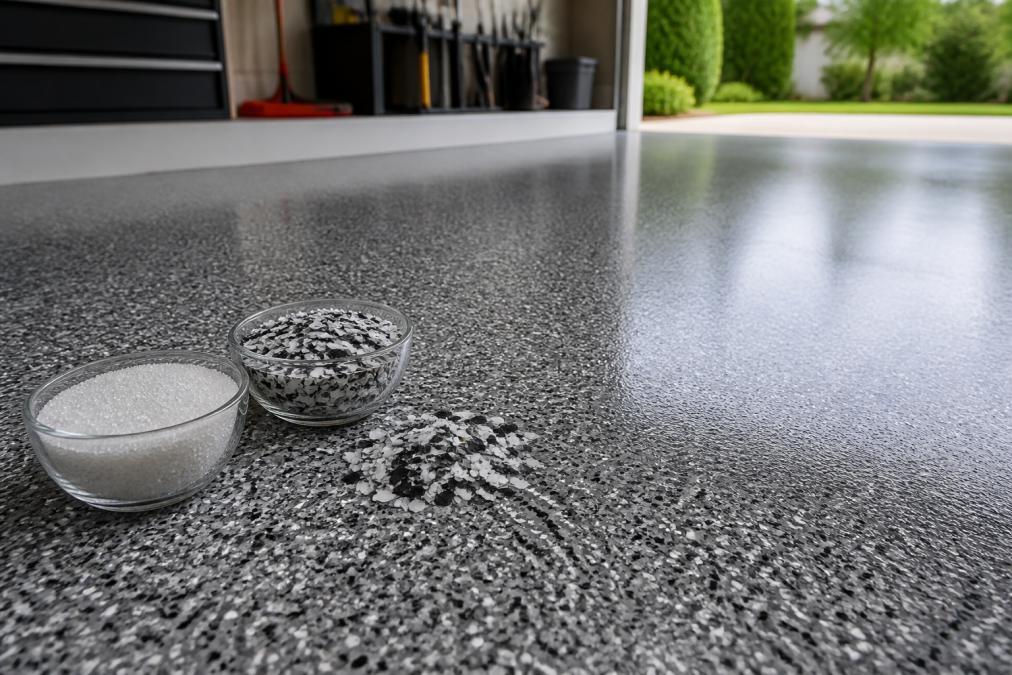
Table of Contents
- What Are Non-Slip Additives and Why They Matter for Garage Epoxy
- Top Non-Slip Additives for Garage Epoxy: Comparison Table
- Aluminum Oxide for Epoxy: The Industry Standard for Durability
- Shark Grip vs. Silica Sand vs. Polypropylene Beads: Which Additive Is Right for You?
- How to Apply Anti-Slip Additive to Epoxy: Step-by-Step
- DIY vs. Professional Application: What You Need to Know
- Conclusion
- Frequently Asked Questions
Last Updated: September 16, 2026
What Are Non-Slip Additives and Why They Matter for Garage Epoxy
Non-slip additives are abrasive or polymer particles mixed into the final coat of an epoxy floor system to create surface texture that improves traction. This guide breaks down the best non-slip additives for garage epoxy, from aluminum oxide to polypropylene beads, so you can choose the right grit and application method for your floor.
Here's the problem most homeowners discover the hard way: a bare epoxy topcoat looks fantastic and performs terribly in wet conditions. Water, oil, and even a light morning dew turn a glossy garage floor into a skating rink. Additives solve that by interrupting the smooth surface with hard particles that give tires and shoe soles something to grip.
A common mistake is treating traction as an afterthought, sprinkling sand into the last coat without considering grit size or how the additive interacts with the resin. That approach produces uneven texture, clumping, and a floor that looks worse than it performs. The additives below are the ones worth considering, and this guide will show you exactly how to apply them.
How Additives Improve Safety and Meet Epoxy Floor Slip Resistance Standards
Traction comes down to one measurable property: the coefficient of friction. Floor safety standards in the United States, including guidance from OSHA on walking-working surfaces, treat slip resistance as a function of surface texture and the presence of contaminants like water or oil. A smooth epoxy topcoat can measure well below the threshold considered safe for wet areas.
Additives raise that number by creating a textured profile. Aluminum oxide, the hardest common option, resists abrasion far longer than sand. Softer polymer beads trade some aggression for comfort underfoot. The right choice depends on whether you're coating a residential garage or a high-traffic commercial bay.
Top Non-Slip Additives for Garage Epoxy: Comparison Table
The best non-slip additive depends on your priorities: maximum durability, visual clarity, comfort, or budget. This table summarizes the leading options available for garage epoxy systems.
| Additive | Material | Best For | Key Trade-off |
|---|---|---|---|
| Aluminum Oxide | Hard mineral grit | High-traffic garages | Abrasive to bare skin |
| Shark Grip | Micronized polymer | Clear-coat finishes | Harder to find locally |
| Silica Sand | Natural sand | Budget projects | Rough, hard to clean |
| Polypropylene Beads | Spherical polymer | Residential comfort | Less grip when wet |
| Polyurea Additives | Engineered grit | Modern polyurea systems | Limited retail availability |
Aluminum oxide and silica sand dominate professional installations. Polymer options like Shark Grip and polypropylene beads appeal to homeowners who want traction without a sandpaper-like finish.
Aluminum Oxide for Epoxy: The Industry Standard for Durability
Aluminum oxide for epoxy is the additive most professional installers reach for when durability matters more than anything else. It's a diamond-hard mineral grit that resists abrasion from tires, foot traffic, and chemical exposure, and it keeps its texture far longer than softer alternatives.
The reason comes down to hardness. Aluminum oxide ranks near the top of common abrasive materials, so it doesn't wear down or polish smooth the way sand can over years of vehicle traffic. For a garage that sees daily use, that longevity matters.
Pros and Cons of Aluminum Oxide
Pros:
- Exceptional abrasion resistance and long service life
- Aggressive traction even in wet or oily conditions
- Works with epoxy, polyaspartic, and polyurethane topcoats
Cons:
- Feels rough on bare feet, which rules it out for some pool decks
- Darker grit can subtly shift the appearance of light-colored floors
- Requires even broadcasting to avoid concentrated rough patches
Shark Grip vs. Silica Sand vs. Polypropylene Beads: Which Additive Is Right for You?
Choosing between Shark Grip, silica sand, and polypropylene beads comes down to how you'll use the floor. Each offers a different balance of traction, appearance, and comfort, and the deciding factors are grit size, coverage rate, and whether the additive stays suspended in the resin.
Grit Size and Coverage at a Glance
Grit size is measured in mesh, and the number runs opposite to particle size: a 60-mesh grit is coarser than a 120-mesh grit. For garage floors, most practitioners land in the 60-to-120 mesh range. Coarser grit (60-80 mesh) gives more bite but traps more dirt; finer grit (100-120 mesh) cleans easier but feels smoother underfoot.
Coverage rates vary by product, but a common pattern for broadcast application is roughly 0.5 to 1 pound of aluminum oxide per 100 square feet, and about 1 to 2 ounces of a micronized polymer like Shark Grip per mixed gallon of topcoat. Always confirm the manufacturer's stated rate on the container, those numbers are the ones that keep your warranty intact.
Call (919) 824-5403 or email craigrfear@gmail.com for a free estimate →
| Additive | Typical Grit | Application Method | Approx. Coverage | Best For |
|---|---|---|---|---|
| Aluminum Oxide | 60-120 mesh | Broadcast | 0.5-1 lb per 100 sq ft | High-traffic garages |
| Shark Grip | Micronized polymer | Mix-in | 1-2 oz per gallon | Clear-coat finishes |
| Silica Sand | 30-60 mesh | Broadcast | 1-2 lb per 100 sq ft | Budget projects |
| Polypropylene Beads | 40-80 mesh | Mix-in or broadcast | Varies by product | Residential comfort |
How Each Additive Behaves in the Bucket
Shark Grip is a micronized polymer that stays suspended in the coating longer, so it distributes more evenly than heavier grits. It dries clear, preserving the gloss of a decorative epoxy finish. The trade-off is availability: it's typically ordered online rather than picked up at a local store.
Silica sand is the traditional, low-cost choice. It delivers serious texture and works well in wet conditions, but the rough surface traps dirt and can dull a clear coat. For a working garage where appearance matters less, it's a proven option.
Polypropylene beads sit in the middle. The spherical shape creates consistent texture that's gentler underfoot than angular grit, making them a good fit for residential garages where comfort matters. They provide less bite than aluminum oxide when the floor is soaking wet.
A Quick Decision Framework
- Daily-driven truck or SUV, wet climate, heavy traffic: aluminum oxide, 80-100 mesh, broadcast.
- Show car or decorative flake floor where gloss matters: Shark Grip, mix-in, at the low end of the ratio.
- Rental property or budget build: silica sand, broadcast, accepting the rougher finish.
- Home gym or workshop where you walk barefoot: polypropylene beads, mix-in.
How to Apply Anti-Slip Additive to Epoxy: Step-by-Step
Applying anti-slip additive correctly determines whether your floor performs for years or fails in months.
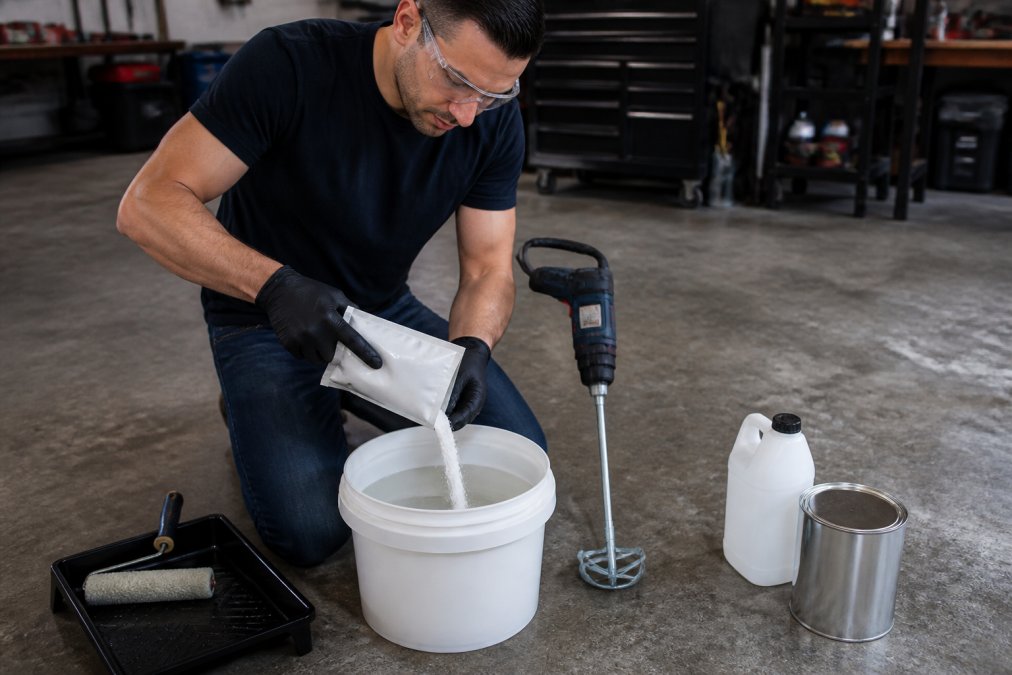
Total Time: 15-20 minutes per topcoat Difficulty: Intermediate
What You'll Need
- Non-slip additive (aluminum oxide, polymer, or sand)
- Mixed epoxy or polyurethane topcoat
- Drill mixer and mixing bucket
- Application roller with the correct nap
- Clean spiked shoes for broadcasting
Mixing and Broadcasting Techniques
Mixing method: Add the grit directly into the mixed topcoat and stir with a drill mixer until it's fully suspended.
DIY vs. Professional Application: What You Need to Know
DIY application can work well for a single residential garage with a quality off-the-shelf kit and a polymer additive.
Mix-In vs. Broadcast: Which Method Fits Your Skill Level
The two application methods demand different things from the installer.
How Much Additive to Buy
- Measure your floor's square footage (length × width, plus 10% for waste).
- Multiply by the manufacturer's coverage rate. For a broadcast aluminum oxide at 0.5-1 lb per 100 sq ft, a 500 sq ft garage needs roughly 2.5 to 5 pounds.
- Round up to the next full container size, leftover additive stores well in a sealed bucket, and running short mid-broadcast is a disaster.
Fixing a Texture That Came Out Wrong
Conclusion
Getting traction right on a garage floor comes down to matching the additive to your traffic, your climate, and how the floor will be cleaned.
Frequently Asked Questions
How to make an epoxy garage floor not slippery?
To make an epoxy garage floor less slippery, add a non-slip additive to the topcoat. Options include aluminum oxide, silica sand, polypropylene beads, or micronized polymer additives like Shark Grip. Mix the additive into the epoxy before applying, or broadcast it onto the wet coating. This creates a textured surface that improves traction, especially when wet. Always follow the manufacturer's mixing ratios for best results.
What is a good traction additive for epoxy coatings?
Aluminum oxide is widely considered the best traction additive for epoxy coatings due to its hardness and durability. It works well in high-traffic garages and provides excellent slip resistance. For a less abrasive feel, polypropylene beads or Shark Grip are good alternatives. Silica sand is a budget-friendly option but can be harder to clean. Choose based on your priorities: maximum durability, comfort, or clarity.
Does anti-slip additive change the look of epoxy floors?
Yes, anti-slip additives can affect the appearance of epoxy floors. Aluminum oxide and silica sand may dull the gloss and add a visible texture. Micronized polymer additives like Shark Grip are designed to be less visible and maintain clarity. Polypropylene beads are also less noticeable. If you want to preserve a high-gloss finish, choose a clear additive and test a small area first.
How do I meet epoxy floor slip resistance standards?
To meet epoxy floor slip resistance standards, using a quality non-slip additive and applying it correctly can help achieve appropriate slip resistance values. Test the finished floor with a slip meter if needed. Consult a professional for high-traffic commercial spaces to ensure compliance.
Tags: non-slip additives, best non-slip additives for garage epoxy, how to apply anti-slip additive to epoxy, aluminum oxide for epoxy, epoxy floor slip resistance standards
Frequently Asked Questions
To make an epoxy garage floor less slippery, add a non-slip additive to the topcoat. Options include aluminum oxide, silica sand, polypropylene beads, or micronized polymer additives like Shark Grip. Mix the additive into the epoxy before applying, or broadcast it onto the wet coating. This creates a textured surface that improves traction, especially when wet. Always follow the manufacturer's mixing ratios for best results.
Aluminum oxide is widely considered the best traction additive for epoxy coatings due to its hardness and durability. It works well in high-traffic garages and provides excellent slip resistance. For a less abrasive feel, polypropylene beads or Shark Grip are good alternatives. Silica sand is a budget-friendly option but can be harder to clean. Choose based on your priorities: maximum durability, comfort, or clarity.
Yes, anti-slip additives can affect the appearance of epoxy floors. Aluminum oxide and silica sand may dull the gloss and add a visible texture. Micronized polymer additives like Shark Grip are designed to be less visible and maintain clarity. Polypropylene beads are also less noticeable. If you want to preserve a high-gloss finish, choose a clear additive and test a small area first.
To meet epoxy floor slip resistance standards, using a quality non-slip additive and applying it correctly can help achieve appropriate slip resistance values. Test the finished floor with a slip meter if needed. Consult a professional for high-traffic commercial spaces to ensure compliance.