ultimate-guide
Cost of Professional Garage Floor Coating: 2026 Guide
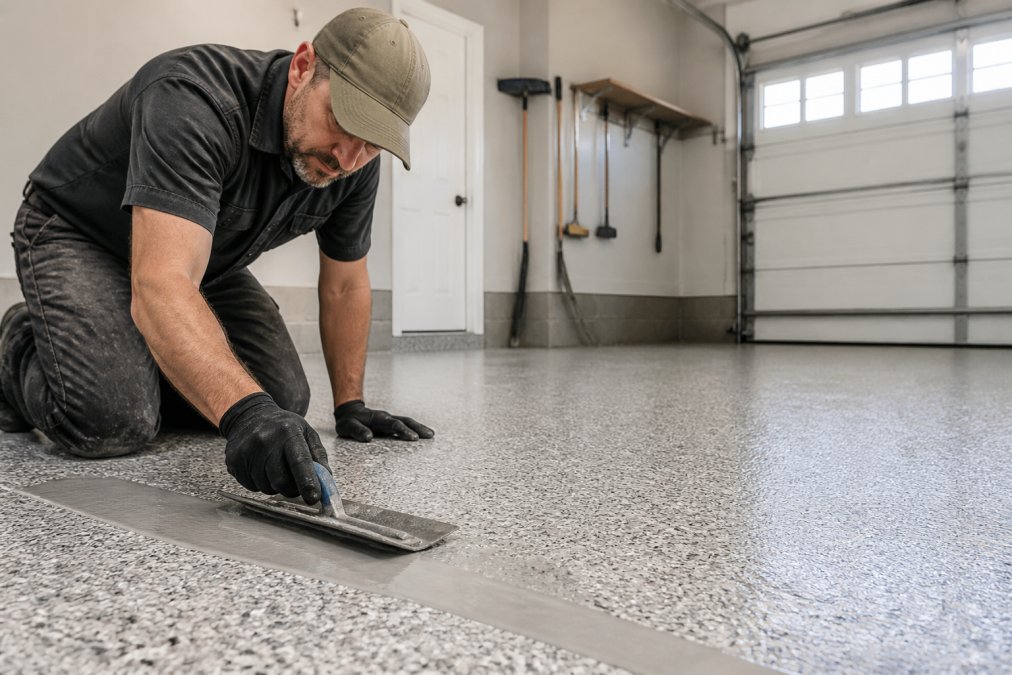
Table of Contents
- What Drives the Cost of Professional Garage Floor Coating
- Epoxy vs Polyaspartic Garage Floor Cost: Which Fits Your Budget?
- The Professional Concrete Floor Preparation Process
- How Long Does Garage Floor Coating Take to Cure?
- Hidden Costs: Moisture Testing, Site Conditions, and Maintenance
- DIY Kits vs Professional Installation: A Real Cost Breakdown
- Does a Garage Floor Coating Add Property Value?
- Conclusion
- Frequently Asked Questions
Last Updated: September 14, 2026
What Drives the Cost of Professional Garage Floor Coating
The cost of professional garage floor coating depends on three variables: slab condition, square footage, and coating system. Two identical-size garages can land thousands of dollars apart once you account for cracks, moisture, and prep work.
A low quote often assumes minimal prep; a high quote may include crack repair, moisture mitigation, and a full broadcast flake system, different jobs, different prices.
Concrete Condition and Substrate Repair
Slab condition is the largest swing factor in any estimate. A sound, dry, uncoated slab needs grinding and priming; one with spalling, oil saturation, or cracking needs repair first.
Watch for these conditions that add labor and materials:
- Existing coatings that must be mechanically removed
- Structural cracks wider than a credit card
- Oil or chemical staining that resists degreasing
- Spalled or delaminated surface concrete
- Previous DIY epoxy that has begun peeling
Each item adds prep time, and prep time is billed.
Square Footage and Garage Size
Square footage sets your baseline. A one-car garage runs roughly 250 to 300 square feet, a two-car 400 to 550, and a three-car 700 to 900 (houselogic.com). Larger slabs cost more in materials, but the per-square-foot rate often drops because setup and mobilization spread across more area.
| Garage Size | Typical Square Footage | Cost Pattern |
|---|---|---|
| 1-car | 250-300 sq ft | Highest cost per sq ft |
| 2-car | 400-550 sq ft | Mid-range cost per sq ft |
| 3-car | 700-900 sq ft | Lowest cost per sq ft |
Epoxy vs Polyaspartic Garage Floor Cost: Which Fits Your Budget?
Polyaspartic costs more per square foot than standard epoxy, but cures faster and holds color under UV exposure. Epoxy is the budget-friendly workhorse for interior slabs that never see direct sun.
Epoxy is a two-part thermoset that builds a thick, chemical-resistant film and handles impact and most household chemicals. Its weakness is UV stability: prolonged sunlight causes ambering, so epoxy belongs indoors or under a top coat.
Polyaspartic is a faster-curing cousin of polyurea. It cures in hours rather than days, resists yellowing, and tolerates cold temperatures. The trade-off is material cost and a shorter working window.
| Feature | Epoxy | Polyaspartic |
|---|---|---|
| Relative material cost | Lower | Higher |
| Cure speed | 24-72 hours | 2-6 hours |
| UV stability | Poor (ambers) | Excellent |
| Best for | Interior garages | Sun-exposed slabs, fast turnarounds |
| Slip resistance | Good with additive | Good with additive |
The Professional Concrete Floor Preparation Process
The professional concrete floor preparation process separates a coating that lasts a decade from one that peels in a year: grinding or shot blasting to open the slab's surface profile, then crack repair, moisture testing, and priming.
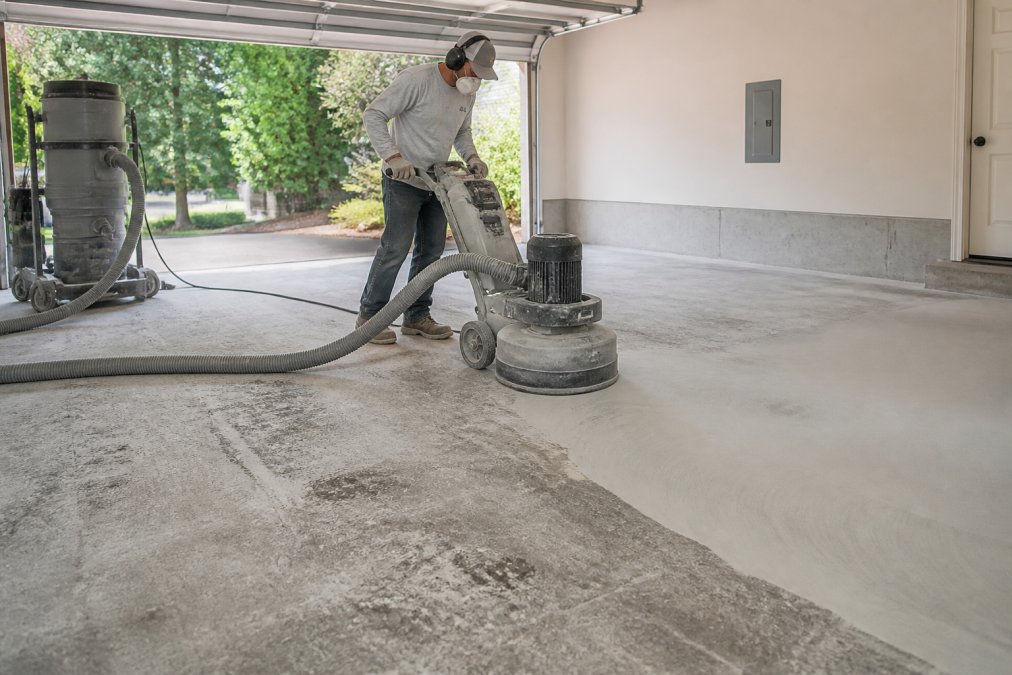
Coatings bond mechanically to a profiled surface. A smooth, sealed, or contaminated slab gives the coating nothing to grip, and adhesion failure follows.
Why Surface Prep Is the Largest Labor Line Item
Surface prep typically consumes the largest share of labor on any coating job. Grinding, edge work, crack chasing, and cleanup take time, and time is the bulk of what you pay for.
On a typical two-car slab, prep involves:
- Diamond grinding the full field and edges
- Shot blasting or grinding stubborn coatings
- Filling cracks and spalls with a repair mortar
- Testing for moisture vapor transmission
- Vacuuming and priming the profiled surface
Skip any one and the base coat may not bond, the difference between a floor that lasts and one that lifts at the edges.
How Long Does Garage Floor Coating Take to Cure?
Garage floor coating cure time ranges from a few hours for polyaspartic to several days for standard epoxy. Full chemical cure takes longer than the walk-on time most installers quote.
Curing happens in stages: the coating skins over and becomes walkable first, then reaches full hardness and chemical resistance. The practical timeline:
- Polyaspartic: walkable in 4-6 hours, drive-on in 24 hours
- Standard epoxy: walkable in 12-24 hours, drive-on in 48-72 hours
- Full chemical cure: up to 7 days for epoxy
Plan around the drive-on window, not the walk-on window. Parking a car on a coating that hasn't fully hardened can leave permanent tire marks.
Hidden Costs: Moisture Testing, Site Conditions, and Maintenance
Moisture testing and site conditions are the costs homeowners never see coming. A slab that emits too much moisture vapor will delaminate any coating, so testing is not optional, and the fix is often the largest line item on the estimate.
Concrete is porous. Moisture moves through it from the soil below, and a coating traps that vapor. If vapor pressure exceeds the coating's tolerance, it pushes the film off from underneath. The industry measures this as moisture vapor emission rate (MVER). The calcium chloride test reports MVER in pounds per 1,000 square feet per 24 hours; in-situ relative humidity probes report internal slab humidity (F1869 Standard Test Method for Measuring Moisture Vapor Emission Rate of Concrete...). Most manufacturers publish a maximum MVER their system tolerates, and a qualified installer runs at least one test before quoting.
When a slab fails the test, you have three paths, and they are not priced the same:
- Moisture-tolerant primer system. A specialized epoxy or urethane primer formulated to tolerate higher vapor pressure. Lowest added cost, but only works up to the manufacturer's stated limit.
- Moisture vapor barrier (MVB) coating. A dedicated barrier coat applied before the base coat. Mid-range cost, adds a day to the schedule, and is the most common fix on residential slabs that test marginally high.
- Full mitigation. Abrasive blasting plus a cementitious or epoxy MVB system. Highest cost, reserved for slabs with severe vapor drive or hydrostatic pressure.
A common pattern: a slab passes visual inspection but fails a calcium chloride test by a wide margin. Without testing, it gets coated, looks fine for six to eighteen months, then blisters and peels from the bottom up. The homeowner pays for the original install, then pays again to strip, mitigate, and recoat.
Other Site Conditions That Move the Number
Beyond moisture, a handful of conditions routinely add cost to a quote:
Call (919) 824-5403 or email craigrfear@gmail.com for a free estimate →
- Slab-on-grade with no vapor barrier under the concrete. Common in older homes. Raises the odds of a failed moisture test and pushes you toward an MVB.
- Downward-sloping or uneven slabs. Ponding areas need self-leveling underlayment before coating, which is a separate material and labor line.
- Tight access. A garage packed with stored items, a narrow driveway, or a steep apron slows mobilization and adds labor hours.
- Cold slab temperatures. Below roughly 60°F, many epoxy systems cure slowly or not at all (pubmed.ncbi.nlm.nih.gov). Installers may need heaters or a faster-curing polyaspartic, both of which add cost.
- Existing coatings. Removal is mechanical, not chemical, and it is billed by the hour.
Post-Installation Maintenance: A 5-Year Cost-of-Ownership Model
Post-installation maintenance is the other cost most guides skip. A coated floor is not maintenance-free, but the ongoing spend is small compared to the install, and modeling it is the only honest way to compare a coating against bare concrete or a DIY job.
Here is a realistic 5-year ownership picture for a typical two-car garage with a full-broadcast flake system. Figures are illustrative ranges, not quotes:
| Cost Category | Year 1 | Years 2-5 (annual) | 5-Year Total |
|---|---|---|---|
| Professional install (2-car, flake system) | One-time | , | , |
| pH-neutral cleaner and microfiber mop | Low | Low | Low |
| Recoat or top-coat refresh (high-traffic slabs) | , | Occasional | Varies |
| Spot repair (chipped flake, tire scuff) | , | Rare | Low |
| Bare concrete alternative (sealer refresh every 1-2 years) | Low | Recurring | Higher cumulative |
Two things drive the long-term number: cleaning discipline (a pH-neutral cleaner preserves the top coat, while harsh degreasers and acid washes dull it) and traffic. A daily-driver two-car garage with winter road salt wears faster than a weekend-project garage, and salt is the most common cause of premature top-coat failure in cold climates.
A recoat or top-coat refresh is not a failure, it is scheduled maintenance, like repainting a deck. Budgeting for it up front turns a surprise expense into a known line item.
DIY Kits vs Professional Installation: A Real Cost Breakdown
DIY kits look cheaper on the shelf and often cost more over time. The kit price excludes tools, prep equipment, and the cost of a failed install.
A DIY kit gives you coating, a roller, and instructions, not a diamond grinder, a moisture test, or the experience to diagnose a slab needing repair. When DIY epoxy fails, the homeowner pays twice: once for the kit, once for a professional to strip it and start over.
Professional installation bundles labor, equipment, and material warranty into one number. You're paying for the prep that makes the coating last, not just the coating.
| Factor | DIY Kit | Professional Installation |
|---|---|---|
| Upfront cost | Lower | Higher |
| Surface prep | Limited | Full grinding and repair |
| Moisture testing | Rarely included | Standard |
| Failure risk | High | Low |
| Warranty | None | Included |
Does a Garage Floor Coating Add Property Value?
A coated garage floor improves perceived value and marketability, especially for buyers who treat the garage as usable living space. It won't appraise like a kitchen remodel, but it changes how a property shows, and for some buyers, what they'll pay.
Buyers walk into a garage and read the floor. A cracked, stained slab signals deferred maintenance; a clean, coated floor signals a well-kept property. That signal matters during showings, and it's one of the few upgrades a seller can complete in a weekend-to-two-week window before listing.
How to Think About the Return
A garage floor coating is a presentation and durability upgrade, not a line item an appraiser adds to your home's value. Appraisers work from comparable sales, and a coated garage floor rarely shows up as a discrete adjustment. Where it can move the needle is at the margin: in a competitive market, a garage that reads as finished space can help a listing stand out against similar homes with bare, stained slabs.
Frame it as cost-per-year-of-use rather than payback. If a professional coating lasts 10 to 15 years with a mid-life top-coat refresh, the annualized cost is a fraction of what most homeowners spend on a single seasonal project. Compare that to bare concrete, which dusts, stains, and spalls, and to a failed DIY job that must be stripped and redone.
The Commercial and Rental Angle
For commercial property managers and landlords, the calculus shifts from perception to operating cost:
- Cleaning labor. A coated floor resists dusting and cleans faster than bare concrete, which reduces janitorial hours in warehouses, showrooms, and service bays.
- Durability under traffic. A properly specified coating stands up to forklift and vehicle traffic better than sealed concrete, which means fewer patching and repair cycles.
- Turnover speed. In a rental or leased industrial space, a floor that looks maintained can shorten vacancy between tenants.
- Compliance and safety. Slip-resistant additives and clearly marked walkways are easier to maintain on a coated surface, which supports workplace safety programs.
For a landlord, the comparison is not 'coating versus nothing' but 'coating versus the recurring cost of sealing, patching, and cleaning bare concrete.' Over a 5-to-10-year hold, the coated floor often wins on total cost of ownership even before any rent or resale benefit. Maintaining these surfaces effectively reduces the long-term reliance on commercial floor cleaning services while preserving the structural integrity of the underlying slab.
What Actually Moves the Resale Number
If resale is your goal, three choices matter more than the coating brand:
- Color and finish. Neutral flake blends and solid tones read as clean and intentional. Loud custom colors can narrow your buyer pool.
- Coverage. A fully coated slab, including the apron and any stem walls, looks more finished than a partial job.
- Condition at listing. A floor with peeling edges or tire scuffs undercuts the upgrade. A mid-life top-coat refresh before listing is a low-cost way to restore the 'new floor' impression.
Conclusion
Every garage slab is different, and so is every estimate. The variables that move your number are the ones most quotes gloss over: slab condition, moisture, prep labor, and coating chemistry. Get those right and the price makes sense.
Concrete-Enhancements has spent over 20 years resurfacing concrete for homeowners and commercial clients, and as a CTi Certified Dealer we bring tested coating systems and proper surface preparation to every job. We handle decorative overlays, epoxy floor coatings, and professional concrete repair, so your floor is prepped, tested, and built to last.
Call (919) 824-5403 or email craigrfear@gmail.com for a free estimate and get a clear, itemized number for your project.
Frequently Asked Questions
How much does it cost to coat a 2-car garage floor?
A 2-car garage typically runs 400 to 500 square feet. The cost of professional garage floor coating for that size depends on the coating system you choose, the condition of your concrete, and whether any crack repair or moisture mitigation is needed. Most installers price by the square foot, so a larger garage with a solid slab and no repairs will cost less per square foot than a smaller one with heavy prep work. Request a free estimate for an exact figure based on your slab.
Are professional garage floor coatings worth the investment?
Professional coatings last longer and resist peeling better than most DIY kits because the concrete is properly ground, not just etched, and a moisture vapor barrier is applied when needed. A well-installed epoxy or polyaspartic floor can hold up for 10 to 20 years with basic maintenance. If you plan to stay in your home or use the garage for heavy traffic, the upfront cost of professional installation usually pays off compared to recoating a failed DIY job every couple of years.
What is the downside of an epoxy garage floor?
Epoxy has two main drawbacks. First, it can yellow or chalk when exposed to UV light, so it is not ideal for garages with direct sun exposure unless a UV-stable top coat is added. Second, epoxy needs a fully cured, moisture-free slab. If the concrete has high moisture vapor emission, the coating can bubble or peel. Polyaspartic coatings solve both problems but cost more per square foot. A moisture test before installation tells you which system your slab can handle.
How long does a garage floor coating last?
A professionally installed epoxy floor typically lasts 10 to 20 years, while polyaspartic systems can last 15 to 20 years or more. Lifespan depends on surface preparation quality, coating thickness, and how the floor is used. Hot tire pickup, heavy impact, and chemical spills shorten the life of any coating. Choosing a system with a high durability rating and adding a clear top coat for slip resistance and chemical resistance will extend the service life of your garage floor finish.
Tags: cost of professional garage floor coating, epoxy vs polyaspartic garage floor cost, how long does garage floor coating take to cure, professional concrete floor preparation process
Frequently Asked Questions
A 2-car garage typically runs 400 to 500 square feet. The cost of professional garage floor coating for that size depends on the coating system you choose, the condition of your concrete, and whether any crack repair or moisture mitigation is needed. Most installers price by the square foot, so a larger garage with a solid slab and no repairs will cost less per square foot than a smaller one with heavy prep work. Request a free estimate for an exact figure based on your slab.
Professional coatings last longer and resist peeling better than most DIY kits because the concrete is properly ground, not just etched, and a moisture vapor barrier is applied when needed. A well-installed epoxy or polyaspartic floor can hold up for 10 to 20 years with basic maintenance. If you plan to stay in your home or use the garage for heavy traffic, the upfront cost of professional installation usually pays off compared to recoating a failed DIY job every couple of years.
Epoxy has two main drawbacks. First, it can yellow or chalk when exposed to UV light, so it is not ideal for garages with direct sun exposure unless a UV-stable top coat is added. Second, epoxy needs a fully cured, moisture-free slab. If the concrete has high moisture vapor emission, the coating can bubble or peel. Polyaspartic coatings solve both problems but cost more per square foot. A moisture test before installation tells you which system your slab can handle.
A professionally installed epoxy floor typically lasts 10 to 20 years, while polyaspartic systems can last 15 to 20 years or more. Lifespan depends on surface preparation quality, coating thickness, and how the floor is used. Hot tire pickup, heavy impact, and chemical spills shorten the life of any coating. Choosing a system with a high durability rating and adding a clear top coat for slip resistance and chemical resistance will extend the service life of your garage floor finish.