listicle
Garage Floor Coating Color Trends 2026: Top Palettes
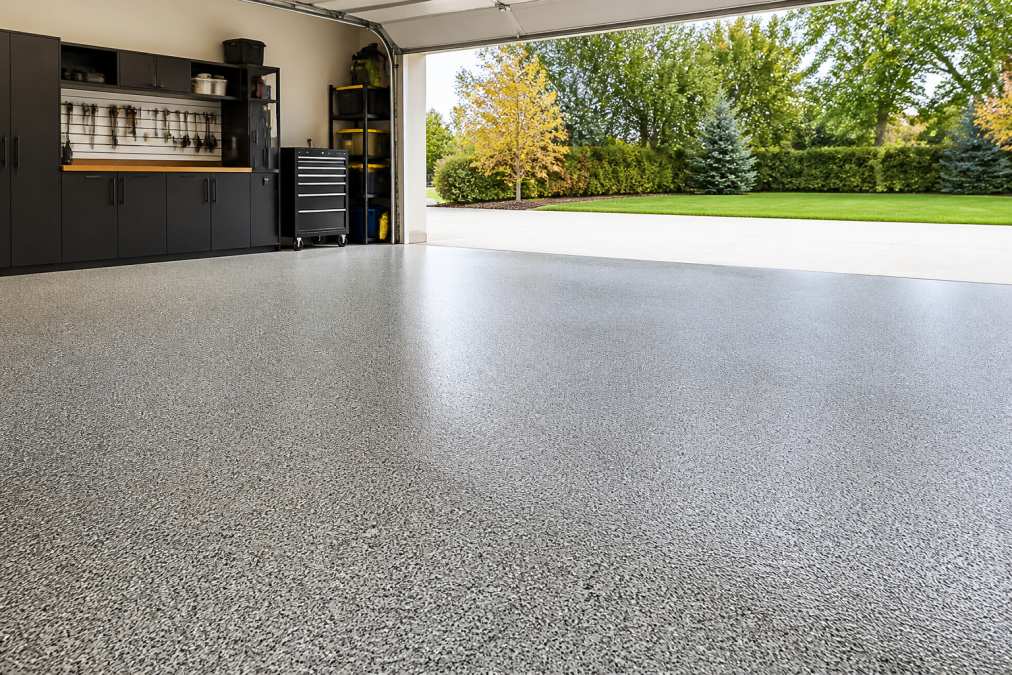
Table of Contents
- Top Garage Floor Coating Color Trends for 2026
- Garage Floor Flake Color Combinations That Define the Year
- Best Garage Floor Coating Types for 2026
- How to Choose Garage Floor Coating Colors for Your Space
- Color Longevity and UV Resistance in Garage Coatings
- Conclusion
- Frequently Asked Questions
Last Updated: September 18, 2026
Top Garage Floor Coating Color Trends for 2026
Warm neutrals dominate garage floor coating color trends 2026, replacing the cool grays that defined the past decade. This shift reflects a broader move in interior design toward earthy, inviting tones that make garages feel like extensions of the home rather than afterthoughts.
Homeowners increasingly request greige, taupe, and sandstone finishes instead of stark charcoal or silver.
The practical reason matters as much as aesthetics. Warm tones hide dust and tire marks better than cool grays, which show every speck of dirt. For anyone who actually parks cars in their garage, that's a real advantage.
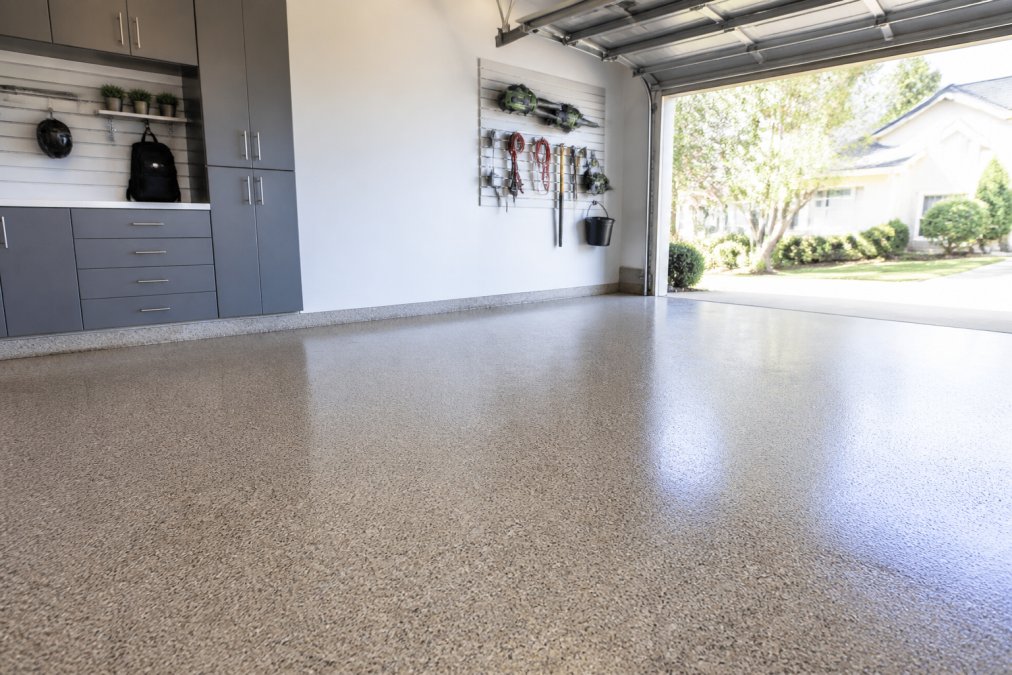
Warm Neutrals Replace Cool Grays
Greige, a blend of gray and beige, has become the defining color of 2026 garage floors. It pairs with nearly any wall color and feels intentional rather than industrial.
Espresso and taupe flake blends offer similar warmth with more depth. These work particularly well in garages that double as workshops or home gyms.
Metallic Epoxy and 3D Marble Effects
Metallic epoxy creates swirling, marbled patterns that look nothing like traditional coatings. The 3D marble effect uses layered pigments to simulate natural stone, and no two floors turn out identical.
This finish suits show garages and spaces where the floor is meant to be noticed. The tradeoff: metallic surfaces show scratches more readily than flake systems, so they demand more careful maintenance.
Garage Floor Flake Color Combinations That Define the Year
Flake blends remain the most popular choice for garage floor flake color combinations because they balance visual interest with practical durability. The vinyl chips add texture that masks imperfections and improves slip resistance, but the blend you pick matters as much as the coating system underneath it.
Three combinations lead demand this year:
- Charcoal and light gray: High contrast, hides dirt, works in modern and industrial spaces
- Desert sandstone and tan: Warm, earthy, complements Southwestern and transitional architecture
- Platinum and white: Bright, clean look for showrooms and retail spaces
Flake Size Changes the Whole Look
Most homeowners don't realize that flake size, not just color, drives the final appearance. The three standard grades behave very differently:
- 1/4-inch flakes read as bold, high-contrast speckles. They hide dust and tire marks best but can look busy in small garages.
- 1/8-inch flakes are the most common residential choice. They balance coverage and subtlety and pair well with warm neutrals.
- 1/16-inch flakes create a fine, almost terrazzo-like texture. They look refined but show oil drips more readily than larger chips.
A common pattern is to combine two sizes, a full broadcast of 1/8-inch flake topped with a light scatter of 1/4-inch, to add depth without overwhelming the floor.
Blend Ratios and the 70/30 Rule
Full-broadcast flake systems typically use a base color plus accent flakes. A practical starting point many installers use is roughly 70% base to 30% accent. Push the accent above 40% and the floor starts to look mottled; drop it below 20% and the accent disappears under garage lighting.
How 2026's Trending Colors Hold Up to UV
This is where most trend articles stop, and where the real decision lives.
Call (919) 824-5403 or email craigrfear@gmail.com for a free estimate →
- Charcoal and dark gray flakes hide dirt and tire marks better than any other family, and because they're already dark, UV fading is far less visible. They're the safest long-term pick for a garage with a south- or west-facing door.
- Deep blue and navy flakes look striking but fade toward a washed-out gray-blue when exposed to direct sun. If you love the look, pair it with a UV-stable polyaspartic topcoat rather than standard epoxy.
- Warm greige, taupe, and sandstone flakes hold their tone well and hide dust, which is why they dominate this year's requests. They're the best compromise between trend and longevity.
- White and platinum flakes show every tire mark and yellow fastest under UV. They belong in show garages and retail spaces, not daily-driver garages with sun exposure.
A common mistake is choosing flakes based only on a small sample. Flake blends look different across an entire floor, and the ratio of base to accent shifts under natural light. Always request a larger mockup, ideally a 2-foot by 2-foot panel, before committing.
Best Garage Floor Coating Types for 2026
Epoxy and polyaspartic systems remain the two dominant options, and each suits different situations. Understanding the difference helps you avoid a coating that peels within a year.
| Coating Type | Cure Time | UV Resistance | Best For |
|---|---|---|---|
| Standard epoxy | 24-72 hours | Moderate | Climate-controlled garages |
| Polyaspartic | 4-12 hours | High | Sunny exposures, fast turnaround |
| Metallic epoxy | 24-48 hours | Moderate | Show garages, statement floors |
How to Choose Garage Floor Coating Colors for Your Space
Most guides tell you to "pick what you love" and "sample first." That's not a method. Here's a repeatable process that accounts for how the space actually works.
Step 1: Read the Room Before You Read the Color Chart
Start with the walls and lighting, not the floor. A color that looks warm under showroom lights can read completely different under fluorescent garage lighting. Two things to check:
- Lighting temperature: Cool white (roughly 4000K-5000K) tubes push warm greiges toward gray and make blues look colder. Warm white (2700K-3000K) does the opposite. Match your flake family to the bulbs you actually have.
- Wall color: A warm-neutral floor under cool gray walls looks muddy. Pull one accent from the walls into the flake blend so the floor reads as intentional.
Step 2: Use Color Psychology to Size the Space
Color changes how large and how calm a garage feels, a factor most trend articles ignore entirely.
- Light, warm tones (sandstone, platinum, light greige) make a small or cluttered garage feel larger and brighter. They reflect more light, which matters in a space with one or two bulbs.
- Mid-tone neutrals (taupe, mid-gray) feel grounded and calm. They're the safest pick for a garage that doubles as a workshop or home gym, where you want focus without glare.
- Dark tones (charcoal, espresso, deep blue) make a large garage feel more intimate and hide stains best, but they absorb light and can make a tight space feel closed in.
- High-contrast blends add energy and visual motion. Great for show garages; distracting in a working shop.
Step 3: Match the Finish to How You Use the Space
- Working garage: mid-tone flakes that hide oil stains and dust, with a satin or matte topcoat to reduce glare under task lighting.
- Show garage: bolder choices like metallic swirls or high-contrast blends, with a high-gloss topcoat that amplifies the pattern.
- Home gym or workshop: warm neutral flake with a textured finish for slip resistance underfoot.
Step 4: Preview Before You Pour
Sampling on the actual floor is still the gold standard, but you can narrow the field first with digital tools:
- Manufacturer color visualizers: Most major coating brands offer online tools that let you drop a flake blend or metallic color onto a photo of a garage floor. They're not perfectly color-accurate, but they eliminate obviously wrong choices fast.
- Augmented reality apps: Several paint and coating apps use your phone's camera to overlay a finish on your real floor. Useful for judging how a color reads under your actual lighting.
- Physical mockups: Once you've narrowed to two or three, request a 2-foot by 2-foot sample panel installed on your concrete. Live with it for a few days, in morning and evening light, before you commit.
Manufacturer color visualizer tools for previewing garage floor coatings
Color Longevity and UV Resistance in Garage Coatings
Color fading is the most common complaint about garage floors, and UV exposure is the usual culprit. Standard epoxy yellows and fades when sunlight hits it regularly.
Conclusion
Choosing the right garage floor coating color comes down to matching trends with how you actually use the space. Warm neutrals and flake blends dominate 2026 for good reason: they look good and hold up under real-world conditions.
Frequently Asked Questions
What is the most popular garage floor color for 2026?
Warm neutrals like greige, taupe, and espresso are leading garage floor coating color trends in 2026, replacing the cool grays that dominated previous years. These tones pair well with natural stone accents and modern interior design palettes. Charcoal gray remains a strong choice for high-traffic areas because it hides tire marks and dirt effectively.
What are the best garage floor flake color combinations for a modern look?
Popular garage floor flake color combinations for 2026 include charcoal with light gray and white flecks, greige with tan and cream chips, and espresso with copper accents. These blends create depth while masking dust and minor surface imperfections. A professional installer can custom color match flakes to your home's exterior or interior palette.
How do I choose the right garage floor coating color for my home?
Start by considering how you use the space. A show garage benefits from a glossy metallic epoxy finish, while a working garage needs a slip-resistant flake system in a mid-tone that hides dirt. Look at your home's exterior siding and roofing colors, then pick a coating that complements them. Order samples and view them in your actual garage lighting before committing.
Do lighter garage floor colors show more dirt and tire marks?
Lighter solid colors can show tire marks and oil stains more readily than mid-tone or darker flake blends. Decorative chips in a multi-color flake system break up visual uniformity, making smudges less noticeable. If you want a light look without constant cleaning, choose a flake blend with contrasting chips rather than a solid color coating.
Tags: garage floor coating, garage floor coating color trends 2026, garage floor flake color combinations, best garage floor coating types 2026, how to choose garage floor coating colors
Frequently Asked Questions
Warm neutrals like greige, taupe, and espresso are leading garage floor coating color trends in 2026, replacing the cool grays that dominated previous years. These tones pair well with natural stone accents and modern interior design palettes. Charcoal gray remains a strong choice for high-traffic areas because it hides tire marks and dirt effectively.
Popular garage floor flake color combinations for 2026 include charcoal with light gray and white flecks, greige with tan and cream chips, and espresso with copper accents. These blends create depth while masking dust and minor surface imperfections. A professional installer can custom color match flakes to your home's exterior or interior palette.
Start by considering how you use the space. A show garage benefits from a glossy metallic epoxy finish, while a working garage needs a slip-resistant flake system in a mid-tone that hides dirt. Look at your home's exterior siding and roofing colors, then pick a coating that complements them. Order samples and view them in your actual garage lighting before committing.
Lighter solid colors can show tire marks and oil stains more readily than mid-tone or darker flake blends. Decorative chips in a multi-color flake system break up visual uniformity, making smudges less noticeable. If you want a light look without constant cleaning, choose a flake blend with contrasting chips rather than a solid color coating.