comparison
Industrial Concrete Floor Finishes Comparison: 2026 Guide
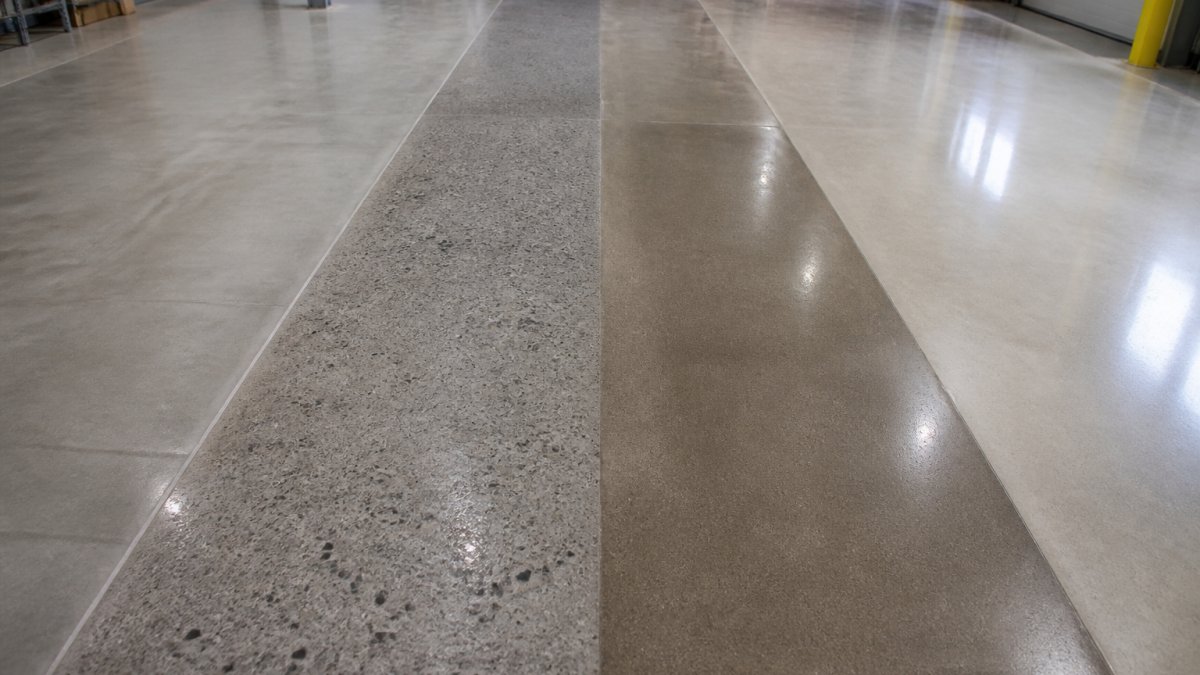
Table of Contents
- Quick Comparison: Industrial Concrete Floor Finishes at a Glance
- Epoxy Floor Coating vs Polished Concrete: Which Wins for Your Facility?
- Heavy-Duty Options: Urethane Cement and Polyaspartic Systems
- Cost of Industrial Concrete Floor Finishes: What Drives the Number
- How Long Do Industrial Concrete Finishes Last?
- Maintenance and Repairability: The Long-Term Cost Story
- Environmental Impact and Industry-Specific Compliance
- Frequently Asked Questions
Last Updated: September 29, 2026
Quick Comparison: Industrial Concrete Floor Finishes at a Glance
Choosing among industrial concrete floor finishes starts with what each system delivers. Epoxy offers chemical resistance and a seamless surface. Polished concrete delivers low maintenance and high light reflectivity. Urethane cement handles thermal shock. Polyaspartic provides rapid return-to-service. The right pick depends on your chemical exposure, traffic patterns, and downtime tolerance.
| Finish Type | Best For | Chemical Resistance | Typical Lifespan | Maintenance Level |
|---|---|---|---|---|
| Epoxy coating | Warehouses, showrooms | High | 5-10 years | Moderate |
| Polished concrete | Retail, high-traffic areas | Low-moderate | 10-20+ years | Low |
| Urethane cement | Food processing, thermal shock | Very high | 10-15 years | Moderate |
| Polyaspartic | Fast-turnaround projects | Moderate-high | 7-12 years | Moderate |
| Concrete sealing | Exterior, budget projects | Low | 1-3 years | High |
Epoxy Floor Coating vs Polished Concrete: Which Wins for Your Facility?
Epoxy wins when chemical resistance matters most; polished concrete wins on lowest long-term maintenance cost. It's the most common comparison we field from facility managers, and picking wrong means paying twice.
Epoxy Coatings: Chemical Resistance and Seamless Finish
Epoxy coatings bond to prepared concrete and cure into a seamless, non-porous surface that resists oils, solvents, and industrial chemicals that would stain bare concrete. Cleaning is straightforward: no grout lines, no seams for debris to collect.
Polished Concrete: Low Maintenance and High Light Reflectivity
Polished concrete is a multi-step mechanical process that grinds and densifies the slab to a high-gloss finish. No topical film means nothing to peel, chip, or wear away. High light reflectivity can reduce lighting costs, and the surface resists tire marks and heavy traffic.
Heavy-Duty Options: Urethane Cement and Polyaspartic Systems
When standard epoxy won't survive your environment, urethane cement and polyaspartic systems enter the conversation. Both cost more upfront and earn it back where standard coatings fail early.
Cost of Industrial Concrete Floor Finishes: What Drives the Number
The cost of industrial concrete floor finishes depends on three variables: surface preparation, material thickness, and total square footage. Material price alone tells you almost nothing about your final quote. Two facilities with identical square footage can receive quotes differing by a factor of two or more, because substrate condition and system build drive the number far more than the finish name on the spec sheet.
Installed Cost Ranges by Finish Type
| Finish Type | Typical Installed Cost (per sq ft) | Primary Cost Driver |
|---|---|---|
| Concrete sealing | $0.50 - $2.00 | Number of coats; acrylic vs. polyurethane sealer |
| Epoxy coating | $3.00 - $7.00 | Mil thickness; number of coats; flake or broadcast aggregate |
| Polyaspartic | $4.00 - $9.00 | Fast-cure chemistry; skilled labor premium |
| Polished concrete | $3.00 - $7.00 | Number of grinding passes; aggregate exposure level |
| Urethane cement | $7.00 - $12.00 | Material cost; trowel-applied thickness (typically 1/4 in.) |
These ranges move based on region, access, and schedule. Night-shift or weekend installation pays a labor premium, and tight column spacing or extensive racking raises edge work and cut-in costs.
Surface Preparation and Substrate Repair
Substrate preparation is the line item most quotes understate. Cracks need filling. Spalling needs repair. Contaminated concrete needs grinding or shot blasting before any coating touches it. Floor leveling may be required if the slab has settled or heaved.
Material Thickness and Square Footage
Thicker systems cost more per square foot but last longer in punishing environments. A thin mil coating (4-6 mils) suits light foot traffic; a high-build system (20-40 mils) with aggregate broadcast handles forklifts and chemical spills. Urethane cement is troweled at roughly 1/4 inch, which is why its material cost is several times that of thin-film epoxy.
Total Cost of Ownership Over 5-10 Years
Over a 10-year horizon:
- Sealed concrete has the lowest install cost but the highest recurring cost. Resealing every 1-3 years, plus stripping and reapplication, typically pushes 10-year ownership well above the original install price.
- Epoxy sits in the middle. Install is moderate, but recoating or patching at year 5-7 is common in high-traffic zones, and color matching on repairs is rarely invisible.
- Polished concrete has a higher install cost than sealer but near-zero recurring cost beyond dust mopping and auto-scrubbing. Over 10 years, it frequently lands as the lowest total cost in facilities with sound slabs and no aggressive chemical exposure.
- Urethane cement has the highest install cost but the longest service interval in food processing and thermal-shock environments, where epoxy would fail and require replacement within a few years.
Concrete-Enhancements provides free estimates. Pricing depends on your facility's specific requirements, and we'd rather assess the floor than guess.
How Long Do Industrial Concrete Finishes Last?
Industrial concrete finishes last anywhere from 1 to 20+ years depending on the system, substrate, and maintenance protocol. Sealed concrete may need resealing every couple of years, polished concrete can outlast the building's current tenant, and epoxy lands in the middle at 5 to 10 years with proper care.
Call (919) 824-5403 or email craigrfear@gmail.com for a free estimate →
Three factors shorten any finish's life:
- Moisture problems. Unaddressed vapor transmission destroys coatings from below.
- Chemical exposure without the right system. Standard epoxy fails fast under solvents it wasn't formulated to resist.
- Deferred maintenance. Small chips and scratches become large failures when ignored.
Maintenance and Repairability: The Long-Term Cost Story
Repairability separates finishes more than any spec sheet. Polished concrete wins here because damage is repaired by re-grinding the affected area, blending it into the surrounding floor. No patch material, no color mismatch.
Maintenance protocols differ too:
- Polished concrete: Dust mop or auto-scrub. No wax, no strippers.
- Epoxy: Regular sweeping plus occasional pH-neutral cleaning. Avoid harsh solvents that dull the finish.
- Urethane cement: Steam cleaning tolerated. Aggressive scrubbing safe.
- Sealed concrete: Frequent resealing. Stripping and reapplying every few years.
Environmental Impact and Industry-Specific Compliance
Environmental impact shapes finish selection more than it did a decade ago, and industry-specific compliance adds a layer most comparison articles skip. In regulated facilities, the finish is not just a flooring choice, it is a specification that has to survive an audit.
Sustainability and Indoor Air Quality
Polished concrete uses the existing slab, adds no topical film, and eliminates the periodic stripping and resealing sealed floors require, which is why it appears in so many sustainability-focused specifications. Coatings bring volatile organic compound (VOC) considerations into play, but low-VOC and zero-VOC epoxy and urethane formulations are widely available, and specifying them is now standard practice for occupied facilities, schools, and healthcare environments.
Food and Beverage Processing
Food processing floors face requirements no other facility type matches. The surface must be seamless, non-porous, and cleanable, and must tolerate steam cleaning, hot water washdown, and the thermal shock that comes with them. Urethane cement was built for exactly this environment. Standard epoxy fails under repeated thermal cycling because the coating and slab expand and contract at different rates, causing delamination.
Electronics and ESD-Controlled Manufacturing
Electronics manufacturing, semiconductor fabrication, and any facility handling static-sensitive components need electrostatic discharge (ESD) control built into the floor. Standard epoxy and polished concrete do not provide it. ESD flooring systems use conductive or dissipative formulations with a grounding path and must be tested after installation to confirm they meet the resistance range the process requires.
Warehouses and General Industrial
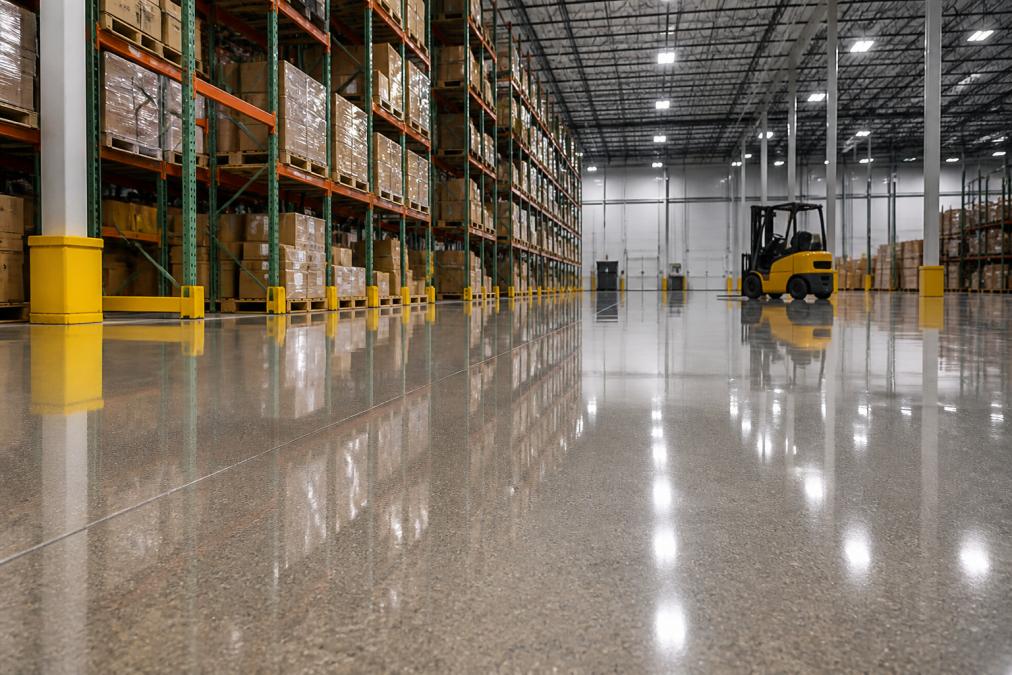
Warehouses face different requirements around dust control and slip coefficient, where the wrong finish creates safety liabilities. The Occupational Safety and Health Administration's walking-working surfaces standard addresses slip resistance requirements for industrial floors. In practice, this means specifying a coefficient of friction appropriate to the traffic and conditions, dry, wet, or oily, and adding anti-slip aggregate to coatings in areas where spills are likely.
How to Verify Compliance Before You Buy
Matching your finish to both the operational and regulatory picture prevents costly retrofits. A practical sequence:
- Identify every regulatory framework that touches your facility (FDA, USDA, OSHA, ESD process requirements, local fire code for occupied spaces).
- Ask the finish manufacturer for written documentation that the system meets the relevant standard, not a verbal assurance.
- Confirm the installer has experience in your industry, because application details (thickness, cure schedule, grounding for ESD) affect whether the finished floor actually passes inspection.
- Document the specification and test results so the next audit or tenant improvement has a baseline.
Frequently Asked Questions
What is the most durable finish for industrial concrete floors?
Urethane cement systems offer the highest durability for extreme conditions like thermal shock and heavy impact. For most warehouses and manufacturing facilities, a high-build epoxy coating provides excellent abrasion resistance and chemical resistance at a lower cost. Polished concrete also delivers outstanding durability because there is no topical film to peel or chip, making it a top choice for high-traffic areas.
What is the difference between epoxy and polished concrete?
Epoxy is a topical coating applied over prepared concrete, creating a seamless, chemical-resistant surface that can be customized with decorative flakes or anti-slip additives. Polished concrete is a mechanical process that grinds and densifies the existing slab to a high-gloss finish without any coating. Epoxy offers more design flexibility and faster installation, while polished concrete provides lower long-term maintenance and no risk of delamination.
How do I choose the right concrete floor finish for my facility?
Start by identifying your facility's biggest stressors: chemical exposure, thermal shock, heavy machinery, or UV exposure. Epoxy works well for warehouses and showrooms with moderate chemical exposure. Urethane cement suits food processing plants with steam cleaning. Polyaspartic coatings are ideal when you need minimal downtime and UV stability. Polished concrete fits retail spaces and warehouses where low maintenance is the priority. A professional assessment of your substrate condition and traffic patterns will confirm the best fit.
Which concrete floor finish is easiest to maintain in a warehouse?
Polished concrete requires the least maintenance because it has no topical film to peel or wear away. Routine dust mopping and occasional auto-scrubbing keep it looking sharp. Epoxy and polyaspartic coatings are also easy to clean with neutral pH cleaners, but they may need periodic recoating in high-traffic zones. Urethane cement stands up to aggressive sanitation protocols but costs more upfront.
Tags: industrial concrete floor finishes, industrial concrete floor finishes comparison, epoxy floor coating vs polished concrete, cost of industrial concrete floor finishes
Frequently Asked Questions
Urethane cement systems offer the highest durability for extreme conditions like thermal shock and heavy impact. For most warehouses and manufacturing facilities, a high-build epoxy coating provides excellent abrasion resistance and chemical resistance at a lower cost. Polished concrete also delivers outstanding durability because there is no topical film to peel or chip, making it a top choice for high-traffic areas.
Epoxy is a topical coating applied over prepared concrete, creating a seamless, chemical-resistant surface that can be customized with decorative flakes or anti-slip additives. Polished concrete is a mechanical process that grinds and densifies the existing slab to a high-gloss finish without any coating. Epoxy offers more design flexibility and faster installation, while polished concrete provides lower long-term maintenance and no risk of delamination.
Start by identifying your facility's biggest stressors: chemical exposure, thermal shock, heavy machinery, or UV exposure. Epoxy works well for warehouses and showrooms with moderate chemical exposure. Urethane cement suits food processing plants with steam cleaning. Polyaspartic coatings are ideal when you need minimal downtime and UV stability. Polished concrete fits retail spaces and warehouses where low maintenance is the priority. A professional assessment of your substrate condition and traffic patterns will confirm the best fit.
Polished concrete requires the least maintenance because it has no topical film to peel or wear away. Routine dust mopping and occasional auto-scrubbing keep it looking sharp. Epoxy and polyaspartic coatings are also easy to clean with neutral pH cleaners, but they may need periodic recoating in high-traffic zones. Urethane cement stands up to aggressive sanitation protocols but costs more upfront.