ultimate-guide
Preventing Epoxy Floor Yellowing Outdoors
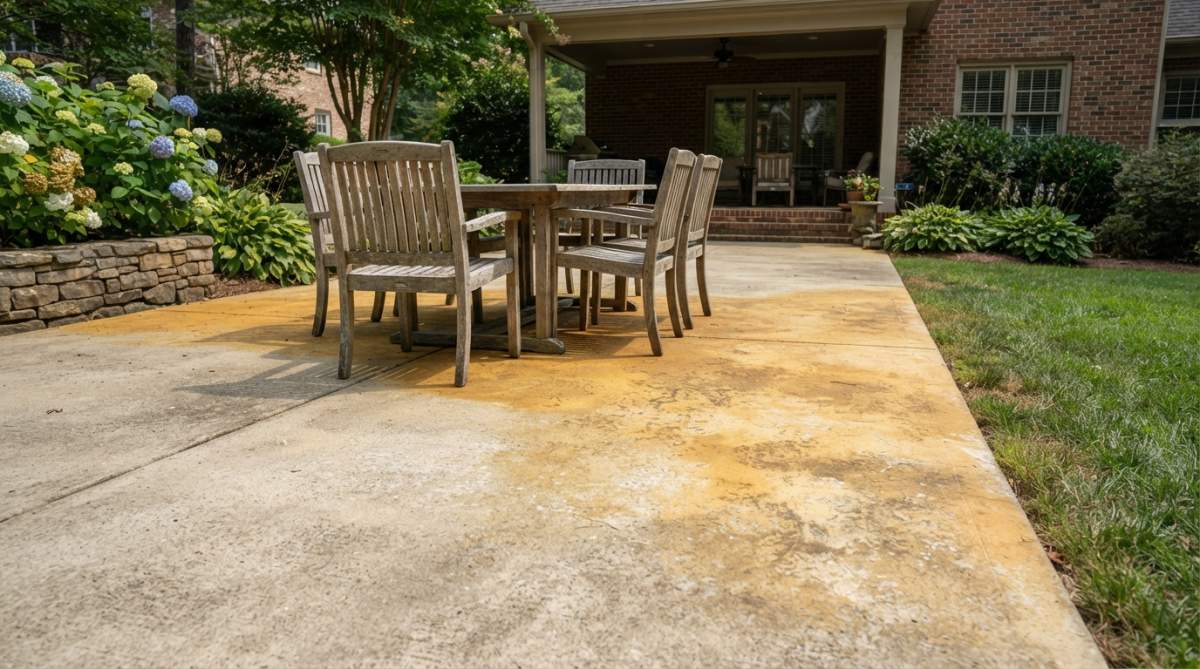
Table of Contents
- Why Epoxy Floors Turn Yellow in Direct Sunlight
- UV Resistant Epoxy Coatings That Prevent Discoloration
- Polyaspartic vs Epoxy for Outdoors: Which Lasts Longer
- Preventative Measures for Outdoor Epoxy Installations
- How to Remove Yellowing from Epoxy Floors
- Is Epoxy Really Suitable for Outdoor Use?
- Frequently Asked Questions
Last Updated: September 23, 2026
Why Epoxy Floors Turn Yellow in Direct Sunlight
Epoxy floor yellowing outdoors happens when UV radiation breaks down the resin's chemical structure through a process called photo-oxidation. This degradation occurs because standard epoxy formulations contain aromatic amines and other compounds that absorb UV light and gradually lose their molecular integrity when exposed to direct sunlight for extended periods.
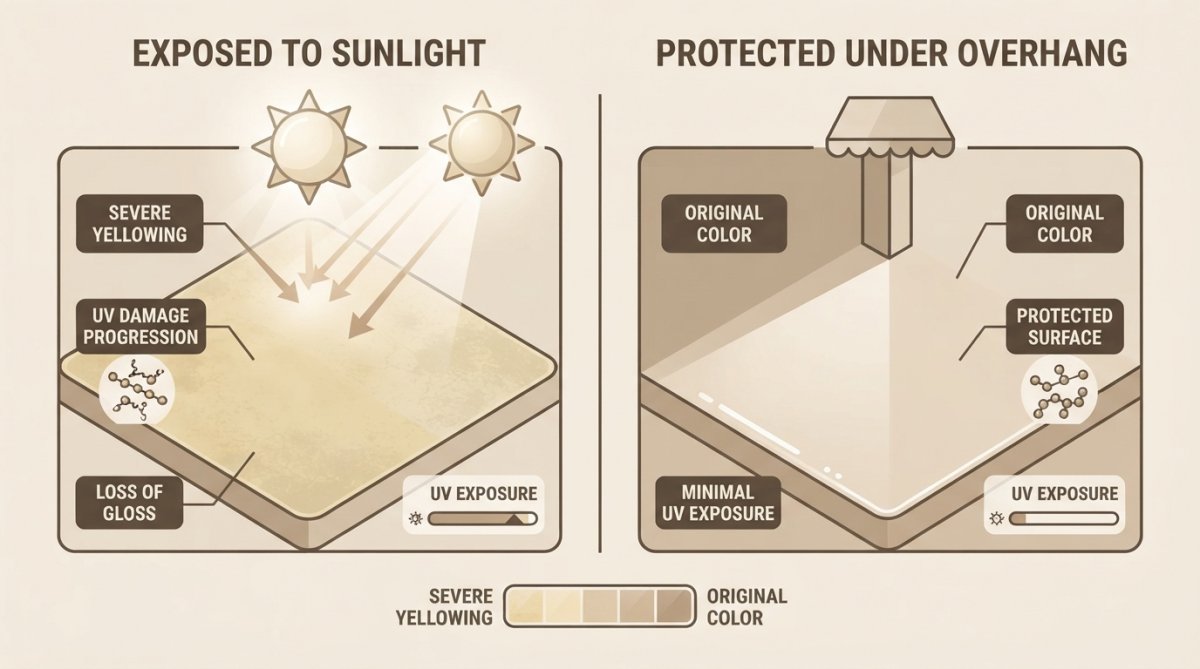
The chemistry matters here. Aromatic resin systems, the most common epoxy type, contain ring structures that are inherently susceptible to photo-oxidation. When UV rays strike these molecules, they break chemical bonds and create new compounds that appear amber or brown. This isn't a surface problem; it's structural degradation happening throughout the coating's film thickness.
Aliphatic epoxy resins perform significantly better outdoors because their saturated hydrocarbon chains resist UV attack far more effectively than aromatic systems. The difference is measurable: aliphatic coatings maintain gloss retention and pigment stability for years where aromatic versions yellow within months under direct sunlight exposure.
Thermal cycling compounds the problem. Outdoor epoxy floors experience temperature swings that cause expansion and contraction stress on the polymer network. This mechanical stress accelerates photo-oxidation by creating micro-fractures where UV light penetrates deeper into the coating. A hot summer day followed by a cool night creates conditions that degrade the substrate bond and weaken the entire system.
UV Resistant Epoxy Coatings That Prevent Discoloration
The solution to preventing epoxy floor yellowing outdoors starts with selecting the right resin chemistry from the beginning. UV-resistant epoxy coatings use aliphatic resin systems paired with UV-stable pigments and protective topcoats designed to shield the base layer from direct radiation.
A clear coat or topcoat layer acts as your first line of defense. This protective sealer sits above the decorative epoxy and absorbs UV radiation before it reaches the underlying resin. The topcoat's film thickness matters, coatings under 3 mils provide minimal protection, while 5-8 mils offer substantially better durability. Many outdoor installations fail because builders use insufficient topcoat thickness to cut costs.
Polyaspartic coatings have emerged as a superior alternative to traditional epoxy for outdoor use. Polyaspartic chemistry includes aliphatic polyols that resist UV degradation far better than aromatic epoxy systems. The trade-off is faster curing time, polyaspartic coatings cure in hours rather than days, which requires experienced applicators and proper environmental conditions during installation.
The pigment selection within your epoxy also determines how well the coating resists yellowing. Titanium dioxide and iron oxide pigments offer better UV stability than cheaper alternatives. Premium formulations use these pigments specifically because they don't undergo photo-oxidation the way organic dyes do.
Polyaspartic vs Epoxy for Outdoors: Which Lasts Longer
When comparing polyaspartic versus epoxy for outdoor installations, the data consistently shows polyaspartic as the superior choice for long-term durability. Polyaspartic coatings maintain gloss retention at 80%+ after three years of direct sunlight exposure, while standard epoxy drops to 40-50% in the same timeframe.
The chemistry difference explains the performance gap. Polyaspartic polymers contain saturated aliphatic structures throughout their backbone, not just at the topcoat layer. This means the entire coating system resists UV attack, not just the surface. Epoxy, even aliphatic epoxy, relies heavily on topcoat protection to prevent the base layer from degrading.
Curing time represents the major practical trade-off. Polyaspartic coatings cure in 4-8 hours depending on temperature and humidity, while epoxy typically requires 24-48 hours before foot traffic. Fast curing sounds convenient, but it demands precise application conditions. Temperature, humidity, and substrate moisture must all fall within tight ranges or the coating fails to cure properly. Epoxy is more forgiving, it works across a wider range of environmental conditions.
Thermal cycling resistance differs significantly between the two. Polyaspartic coatings expand and contract at rates closer to concrete substrates, which reduces stress at the bond line during temperature swings. Epoxy's higher rigidity creates more mechanical stress when exposed to the 60+ degree temperature swings common on outdoor concrete surfaces in summer months.
Call (919) 824-5403 or email craigrfear@gmail.com for a free estimate →
Preventative Measures for Outdoor Epoxy Installations
Preventing epoxy floor yellowing outdoors requires a multi-layered approach starting before any coating touches the concrete. Surface preparation determines whether the entire system succeeds or fails. Concrete must be cleaned, profiled, and dried to remove all contaminants, dust, and moisture. Moisture vapor transmission through the substrate is the #1 reason outdoor epoxy systems fail, moisture pushes up through concrete, breaks the bond, and allows UV light to penetrate beneath the coating.
Substrate protection means testing concrete moisture levels before application. A calcium chloride test or relative humidity meter should show moisture content below 3% for epoxy and below 2% for polyaspartic coatings. If your concrete sits near water sources or in areas with high groundwater, you may need a moisture barrier beneath the epoxy rather than applying it directly to damp substrate.
Maintenance schedules determine how long your coating actually lasts. Outdoor epoxy floors need inspection every six months, with thorough cleaning quarterly. UV exposure accelerates degradation, but dirt, salt spray, and chemical exposure accelerate it further. Regular cleaning removes these contaminants before they degrade the film. Power washing at low pressure (under 1500 PSI) removes surface buildup without damaging the coating.
Long-term exposure management means recoating before the existing system completely fails. Most outdoor epoxy installations need a topcoat refresh every 2-3 years to maintain UV protection. This isn't starting over, it's applying a fresh protective layer while the base coat still maintains structural integrity. Waiting until yellowing becomes severe means the base layer has already degraded significantly, requiring complete removal and reapplication.
How to Remove Yellowing from Epoxy Floors
If your outdoor epoxy floor has already yellowed, remediation depends on how severe the damage is. Light yellowing, a slight amber tint without loss of gloss, can sometimes be improved with aggressive cleaning. Pressure washing at 1200-1500 PSI combined with a degreaser designed for epoxy surfaces can restore some clarity by removing oxidized surface layers and accumulated contaminants.
Chemical restoration methods exist but have limited effectiveness. Specialized epoxy cleaners containing mild solvents can remove some surface oxidation, but they cannot reverse photo-oxidation that has penetrated through the film thickness. These cleaners work best on light yellowing caught early, not on coatings that have been exposed for years.
Re-coating represents the most reliable remediation option. This involves lightly sanding the yellowed surface to improve adhesion, then applying a new UV-resistant topcoat over the existing epoxy.
Is Epoxy Really Suitable for Outdoor Use?
The honest answer: standard epoxy isn't suitable for outdoor use in direct sunlight. It will yellow. It will lose gloss. It will eventually fail. This isn't a manufacturing defect, it's the inherent chemistry of aromatic epoxy systems when exposed to UV radiation.
| Yellowing Severity | Recommended Action | Timeline | Best For |
|---|---|---|---|
| Light (slight amber tint) | Aggressive cleaning + topcoat refresh | 1-2 weeks | Coatings under 1 year old |
| Moderate (visible yellowing, intact surface) | Sand and re-coat with UV-resistant topcoat | 2-3 weeks | Coatings 2-4 years old |
| Severe (yellowing + loss of gloss + minor peeling) | Complete removal and reapplication | 3-4 weeks | Coatings over 5 years old |
| Extreme (cracking, significant peeling, adhesion failure) | Full grinding and new system installation | 4-6 weeks | Failed installations |
Frequently Asked Questions
Will epoxy turn yellow in the sun?
Yes, standard epoxy floors are susceptible to yellowing when exposed to direct sunlight outdoors. UV radiation triggers photo-oxidation in aromatic epoxy resins, breaking down the polymer structure and causing ambering or discoloration. This process accelerates in warm climates with intense sun exposure. Aliphatic epoxy resins and UV-resistant topcoats offer better protection, but standard epoxy will degrade without proper preventative measures like protective sealers or shade structures.
What is the best alternative to epoxy for outdoor concrete?
Polyaspartic coatings outperform epoxy for outdoor use due to superior UV stability and gloss retention. They cure faster, resist thermal cycling better, and maintain pigment stability longer under direct sunlight. Polyurea also offers excellent durability and chemical resistance. For maximum protection, aliphatic epoxy with UV-stable topcoats can work if properly maintained. The best choice depends on your climate, foot traffic, and budget. Contact Concrete-Enhancements for a free estimate to determine the right solution for your specific outdoor surface.
How to get yellowing out of epoxy floor?
Existing yellowing can be addressed through professional re-coating or chemical restoration. Light discoloration may respond to specialized cleaning with appropriate chemical cleaners that don't damage the substrate. For significant yellowing, the most effective solution is to apply a new UV-resistant topcoat or re-coat the entire surface with polyaspartic or aliphatic epoxy. Surface preparation is critical, the old coating must be properly abraded to ensure chemical bond with the new layer. Professional remediation ensures long-term durability better than DIY attempts.
How long does epoxy floor last outside?
Standard epoxy floors typically last 3-5 years outdoors before visible yellowing and degradation occur, depending on sun exposure and climate. UV-resistant epoxy with protective topcoats can extend durability to 7-10 years. Polyaspartic coatings last 10-15+ years outdoors with proper maintenance. Lifespan depends on moisture vapor transmission, thermal cycling severity, and maintenance consistency. Request a free estimate to discuss expected performance for your specific location and application.
Tags: epoxy floor yellowing outdoors, preventing epoxy floor yellowing outdoors, polyaspartic vs epoxy for outdoors, uv resistant epoxy coatings, how to remove yellowing from epoxy
Frequently Asked Questions
Yes, standard epoxy floors are susceptible to yellowing when exposed to direct sunlight outdoors. UV radiation triggers photo-oxidation in aromatic epoxy resins, breaking down the polymer structure and causing ambering or discoloration. This process accelerates in warm climates with intense sun exposure. Aliphatic epoxy resins and UV-resistant topcoats offer better protection, but standard epoxy will degrade without proper preventative measures like protective sealers or shade structures.
Polyaspartic coatings outperform epoxy for outdoor use due to superior UV stability and gloss retention. They cure faster, resist thermal cycling better, and maintain pigment stability longer under direct sunlight. Polyurea also offers excellent durability and chemical resistance. For maximum protection, aliphatic epoxy with UV-stable topcoats can work if properly maintained. The best choice depends on your climate, foot traffic, and budget. Contact Concrete-Enhancements for a free estimate to determine the right solution for your specific outdoor surface.
Existing yellowing can be addressed through professional re-coating or chemical restoration. Light discoloration may respond to specialized cleaning with appropriate chemical cleaners that don't damage the substrate. For significant yellowing, the most effective solution is to apply a new UV-resistant topcoat or re-coat the entire surface with polyaspartic or aliphatic epoxy. Surface preparation is critical—the old coating must be properly abraded to ensure chemical bond with the new layer. Professional remediation ensures long-term durability better than DIY attempts.
Standard epoxy floors typically last 3-5 years outdoors before visible yellowing and degradation occur, depending on sun exposure and climate. UV-resistant epoxy with protective topcoats can extend durability to 7-10 years. Polyaspartic coatings last 10-15+ years outdoors with proper maintenance. Lifespan depends on moisture vapor transmission, thermal cycling severity, and maintenance consistency. Request a free estimate to discuss expected performance for your specific location and application.