comparison
Best Epoxy Primer for Ceramic Tile Floors
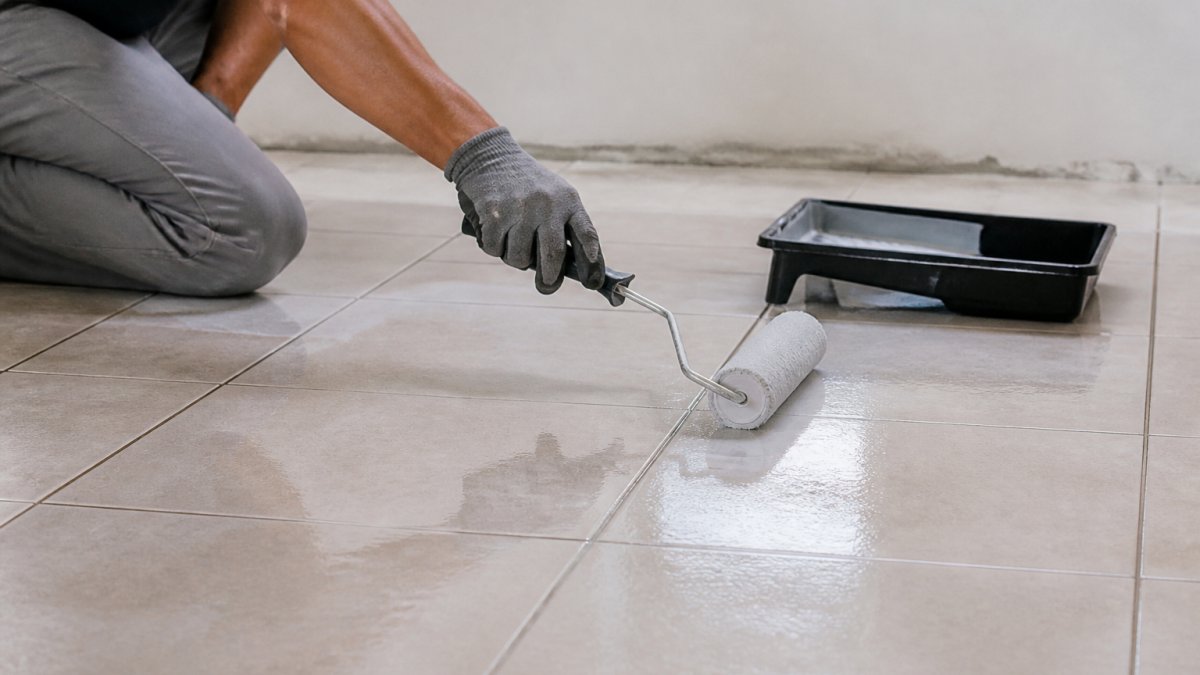
Table of Contents
- Why Epoxy Primer Matters for Ceramic Tile Floors
- How to Prepare Tile for Epoxy: Surface Cleaning and Abrasion
- Epoxy Primer vs. Urethane Primer: Which Bonds Better to Tile
- Best Primer for Tile Floors: Two-Component Epoxy Systems
- Applying Epoxy Over Ceramic Tile: Methods and Coverage
- Bonding to Glossy Tile: Adhesion Testing and Bond Strength
- Durability, Maintenance, and Long-Term Performance
- Frequently Asked Questions
Last Updated: October 10, 2026
Why Epoxy Primer Matters for Ceramic Tile Floors
Ceramic tile floors present a unique challenge: their glossy, nonporous surfaces resist adhesion. Paint or coatings applied directly to tile tend to peel within months.
An epoxy primer bonds mechanically and chemically to nonporous surfaces in ways standard primers cannot. Unlike water-based or acrylic primers that sit on top of tile, epoxy formulations penetrate and cure to form a durable substrate.
Selecting the right epoxy primer requires understanding three core factors: surface preparation, primer chemistry, and application method. Each determines whether your ceramic tile resurface becomes a durable upgrade or an expensive mistake.
How to Prepare Tile for Epoxy: Surface Cleaning and Abrasion
Preparation determines primer success more than product selection does. Even the best epoxy primer for ceramic tile floors cannot bond to a dirty or smooth surface. The tile must be chemically clean and mechanically roughened.
Degreasing and Contaminant Removal
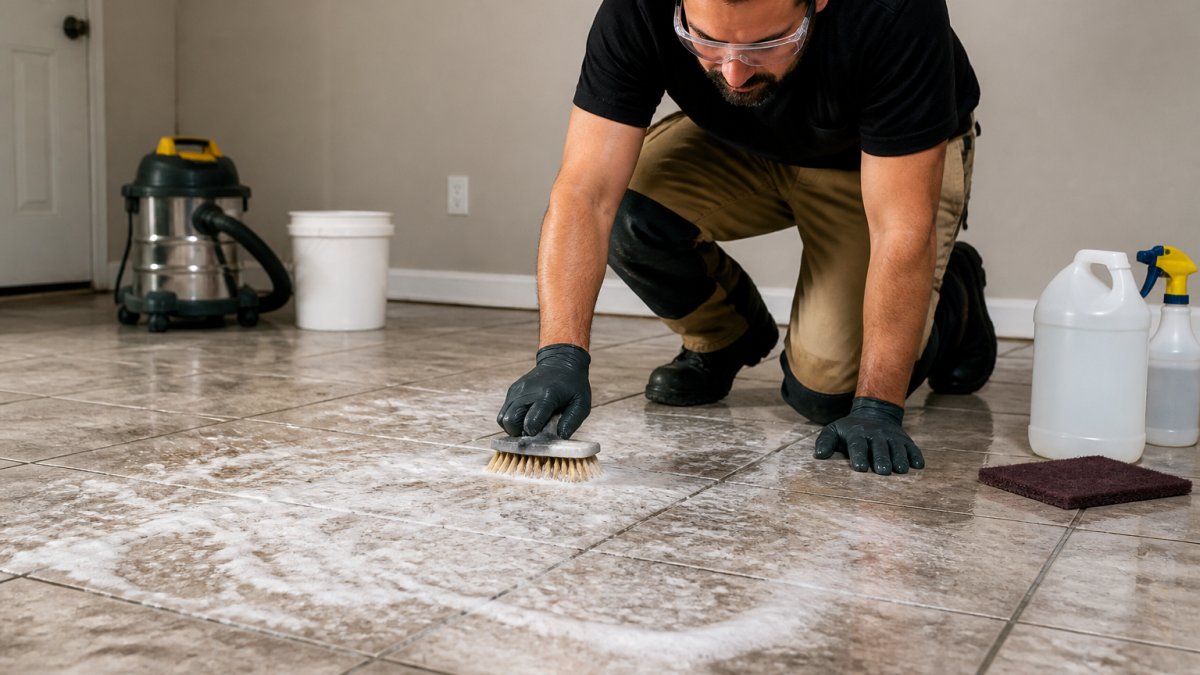
Ceramic tile accumulates soap residue, wax buildup, dust, and oils from foot traffic. Begin with a degreasing wash using an alkaline cleaner or trisodium phosphate (TSP) solution.
For heavy wax buildup, use a commercial wax stripper before degreasing. Clean grout lines separately with a grout brush, as trapped debris is a common cause of primer failure at tile edges.
Scuff Sanding and Mechanical Abrasion
After degreasing, sand the tile with 80-120 grit abrasive paper or a floor sander until the gloss disappears and the surface feels dull and slightly rough to the touch.
Vacuum thoroughly, then wipe with a damp cloth and allow to dry completely. Insufficient sanding is a common cause of DIY failure.
Epoxy Primer vs. Urethane Primer: Which Bonds Better to Tile
Both epoxy and urethane primers adhere to ceramic tile, but they perform differently in ways that matter critically for floors. Understanding these differences prevents costly adhesion failures and helps you select a system that survives foot traffic, moisture, and cleaning chemicals.
Chemical Bonding and Cure Mechanism
Epoxy primers are two-component systems that cure through chemical cross-linking, forming a rigid structure that bonds mechanically and chemically to tile and resists water penetration and wear.
Urethane primers cure by moisture absorption or solvent evaporation, forming a flexible film that relies primarily on mechanical grip from surface roughness rather than chemical bonding to tile.
Floor-Specific Performance: Adhesion Under Foot Traffic
Epoxy primers typically achieve 300-500 PSI pull-off adhesion on prepared tile, compared to 150-250 PSI for urethane. This 2-3× difference determines whether a coating survives years of foot traffic or fails within 12-18 months.
Epoxy-primed tile floors last 7-10 years before topcoat renewal, while urethane-primed tile often shows peeling and adhesion loss within 18-24 months in wet environments.
Moisture Resistance and Water-Exposure Scenarios
Epoxy primers form a moisture barrier that prevents water from reaching the tile substrate and grout lines, protecting against substrate swelling and mold growth.
Urethane primers absorb moisture readily, making them unsuitable as the sole primer for ceramic tile floors in kitchens, bathrooms, or laundry rooms.
Recoat Windows and Application Speed
Urethane primers offer faster recoat times (2-4 hours vs. epoxy's 4-8 hours), but this speed does not compensate for weaker adhesion on nonporous tile.
Epoxy primers, despite longer recoat windows, produce a more durable floor system. The extra time between coats allows the first coat to cure more fully, improving interlayer adhesion and overall system strength.
When to Use Each Primer Type
Use epoxy primers for: ceramic tile floors in kitchens, bathrooms, high-traffic areas, and any floor where moisture resistance is a priority. For ceramic tile floors, epoxy primers are the superior choice due to their chemical cross-linking and water resistance.
Best Primer for Tile Floors: Two-Component Epoxy Systems
The best epoxy primer for ceramic tile floors falls into two categories: 100% solids epoxy and water-based or hybrid epoxy formulations. Each serves different project needs.
100% Solids Epoxy Primers
100% solids epoxy primers contain no water or VOCs, producing the hardest, most durable primer layer for commercial and high-traffic residential floors.
LABPOX Primer exemplifies this category, offering strong adhesion and moisture resistance with coverage of approximately 550 square feet per 2-gallon set.
Tradeoff: 100% solids epoxies require careful mixing, proper ventilation, and PPE, with full cure extending 7-14 days before heavy use.
Water-Based and Hybrid Epoxy Options
Water-based epoxy primers reduce VOC emissions and improve indoor air quality, offering a middle ground between traditional epoxy and acrylic primers.
ArmorPoxy Fast Set Primer represents this segment, with recoat windows of 2-4 hours instead of 8 hours.
Tradeoff: water-based and hybrid systems produce softer films and may not withstand commercial or high-traffic retail spaces as reliably.
Applying Epoxy Over Ceramic Tile: Methods and Coverage
Application technique directly affects primer performance. Three methods are common: wipe-on, roller, and spray application.
Wipe-On, Roller, and Spray Application Techniques
Wipe-on application uses lint-free cloths for small areas but is labor-intensive and tends to create uneven film thickness.
Roller application with a high-nap roller (3/8 to 1/2 inch) distributes primer uniformly and produces consistent results across large surfaces.
Spray application delivers the most uniform coating but requires equipment, skill, and proper ventilation, reducing application time significantly.
Coat Count, Recoat Windows, and Cure Times
Most tile primer projects require two coats to ensure full substrate saturation and maximum adhesion.
Call (919) 824-5403 or email craigrfear@gmail.com for a free estimate →
Recoat windows depend on temperature and humidity. At 70°F and 50% relative humidity, most epoxy primers are ready for recoating within 4-8 hours. Applying too early traps moisture; applying too late may require light sanding between coats.
Full cure typically requires 7-14 days. Rushing this timeline results in adhesion failure and coating breakdown.
| Application Method | Coverage Rate | Recoat Window | Best For |
|---|---|---|---|
| Wipe-On | 150-200 sq ft per gallon | 6-8 hours | Small areas, detail work |
| Roller | 300-400 sq ft per gallon | 4-6 hours | Medium to large floors |
| Spray | 400-600 sq ft per gallon | 4-5 hours | Large commercial floors |
Bonding to Glossy Tile: Adhesion Testing and Bond Strength
Before committing to a full floor application, test the primer's adhesion on a small area.
Apply primer to a 2-foot-by-2-foot test section. After full cure, scrape with a putty knife; well-bonded primer resists scraping.
Pull-off adhesion testing measures bond strength in PSI. Most epoxy primers achieve 300-500 PSI on prepared tile, exceeding urethane or acrylic alternatives.
Weak bonding typically stems from inadequate surface preparation, insufficient sanding, or residual contaminants. Repeat the preparation phase before reapplying primer.
Durability, Maintenance, and Long-Term Performance
A properly primed ceramic tile floor resists delamination, peeling, and moisture damage for many years when the epoxy primer is matched to the topcoat system and the floor's traffic level. Understanding durability expectations and maintenance requirements prevents premature failure and extends coating life.
Durability Under Foot Traffic and Abrasion
The epoxy primer itself does not wear; it remains bonded to the tile. The topcoat applied over the primer experiences abrasion from foot traffic, furniture movement, and grit.
Residential moderate-traffic floors show minimal wear for 7-10 years. High-traffic residential floors show topcoat degradation after 4-7 years. Commercial floors may require recoating every 3-5 years. The epoxy primer ensures the topcoat adheres reliably throughout these cycles.
The epoxy primer does not degrade under foot traffic; the topcoat does. If the topcoat fails but the primer remains bonded, recoating is straightforward.
Cleaner Compatibility and Chemical Resistance
The epoxy primer's durability depends partly on the cleaners used on the floor. Epoxy is resistant to most household and commercial cleaners but can be softened or degraded by certain chemicals.
Safe cleaners for epoxy-primed tile:
- pH-neutral all-purpose cleaners
- Mild soap and water
- Commercial floor cleaners formulated for epoxy or polyurethane
- Alkaline cleaners (pH 8-10) used occasionally
Cleaners to avoid:
- Acidic cleaners (vinegar, citric acid, bathroom tile cleaners with phosphoric acid) soften epoxy over time
- Strong alkaline solutions (pH > 12) can degrade epoxy film
- Solvent-based cleaners (acetone, mineral spirits) may dissolve or soften the epoxy
- Bleach-based cleaners, while not directly harmful, can discolor epoxy and should be used sparingly
Regular cleaning with pH-neutral cleaners preserves the coating and extends durability. Floors cleaned with acidic or harsh alkaline solutions show surface softening, loss of gloss, and accelerated topcoat wear within 2-3 years. This is a common cause of premature failure that is not a primer defect but a maintenance issue.
Moisture Resistance and Standing Water
For floors exposed to standing water or constant moisture, bathrooms, kitchens, pool decks, laundry rooms, the epoxy primer's moisture resistance becomes critical to system longevity.
A quality epoxy primer application prevents water from reaching the tile substrate and grout lines. Water that penetrates grout causes substrate swelling, mold growth, and adhesion loss.
However, moisture can still penetrate at edges, seams, and grout lines if the topcoat is damaged or if the primer was not applied to grout areas.
Floors with proper epoxy primer coverage and intact topcoats resist water damage for 10+ years.
Recoating Timelines and Topcoat Renewal
The epoxy primer itself does not require renewal. Once cured and bonded, it remains effective indefinitely as long as the topcoat protects it from UV light and mechanical damage.
Topcoat renewal depends on traffic level and wear:
- Residential, low-traffic floors: Topcoat renewal every 10-15 years
- Residential, high-traffic floors: Topcoat renewal every 5-7 years
- Commercial floors: Topcoat renewal every 3-5 years
- Commercial kitchens or wet areas: Topcoat renewal every 2-3 years
When recoating, the existing epoxy primer does not need to be removed or replaced. Light sanding of the old topcoat (to improve adhesion for the new coat) is sufficient. The epoxy primer continues bonding the new topcoat to the tile substrate, extending the floor's life indefinitely.
Signs of Primer Failure vs. Topcoat Failure
Understanding the difference prevents unnecessary primer replacement:
Topcoat failure (primer is still good):
- Dulling or loss of gloss in high-traffic areas
- Minor scratches or scuffs
- Localized wear at edges or corners
- Fading or discoloration
Primer failure (requires full system replacement):
- Peeling or flaking that exposes bare tile
- Adhesion loss across large areas
- Water damage or swelling at the tile-primer interface
- Delamination that cannot be scraped away without removing the primer
Primer failure is rare when proper surface preparation and application are followed. Most "primer failures" are actually topcoat failures or inadequate surface preparation before the initial primer application.
Long-Term Cost and Value
Proper epoxy primer application is an investment that extends floor life and reduces total cost of ownership. A ceramic tile floor with a quality epoxy primer and appropriate topcoat can serve 15-20+ years with periodic topcoat renewal. Without proper primer, the same floor may fail within 2-3 years, requiring complete removal and reapplication.
The cost of initial epoxy primer application (typically $1-$3 per square foot, depending on surface preparation and application method) is recovered many times over by avoiding premature failure and the labor cost of complete system replacement.
Frequently Asked Questions
Can you apply epoxy primer directly to glossy ceramic tile without sanding?
No. Glossy ceramic tile has a nonporous, slick surface that prevents epoxy primer from bonding properly. You must mechanically abrade the surface through scuff sanding to create micro-texture. This step is critical for adhesion and prevents peeling and delamination. Clean away all dust after sanding before applying the epoxy primer.
How do you prepare ceramic tile for epoxy coating?
Start by degreasing the tile with a cleaner to remove contaminants, dirt, and residue. Allow it to dry completely. Next, scuff sand the entire surface using 80-120 grit sandpaper or a floor sander to break the gloss and improve adhesion. Vacuum or wipe away all dust. Inspect grout lines for damage or moisture. Once the surface is clean, dry, and abraded, apply your two-component epoxy primer according to the manufacturer's recoat window and cure time.
What is the difference between urethane and epoxy primer for tile floors?
Epoxy primer offers superior bond strength to nonporous surfaces like ceramic tile and provides better chemical and moisture resistance. Urethane primers are more flexible and cure faster but may not adhere as reliably to glossy tile without extensive surface prep. For tile floors, epoxy primers are the stronger choice because they form a harder, more durable film and resist foot traffic and cleaning chemicals better over time.
How long does epoxy primer take to cure on ceramic tile?
Most two-component epoxy primers cure in 24-72 hours, depending on temperature, humidity, and the specific product formulation. Check the manufacturer's technical data sheet for exact recoat windows and full cure times. Cooler temperatures and high humidity extend cure time. Avoid foot traffic or topcoat application until the primer is fully cured to prevent adhesion failure and ensure durability.
Tags: best epoxy primer for ceramic tile floors, epoxy over ceramic tile, best primer for tile floors, urethane vs. epoxy primer, how to prepare tile for epoxy
Frequently Asked Questions
No. Glossy ceramic tile has a nonporous, slick surface that prevents epoxy primer from bonding properly. You must mechanically abrade the surface through scuff sanding to create micro-texture. This step is critical for adhesion and prevents peeling and delamination. Clean away all dust after sanding before applying the epoxy primer.
Start by degreasing the tile with a cleaner to remove contaminants, dirt, and residue. Allow it to dry completely. Next, scuff sand the entire surface using 80-120 grit sandpaper or a floor sander to break the gloss and improve adhesion. Vacuum or wipe away all dust. Inspect grout lines for damage or moisture. Once the surface is clean, dry, and abraded, apply your two-component epoxy primer according to the manufacturer's recoat window and cure time.
Epoxy primer offers superior bond strength to nonporous surfaces like ceramic tile and provides better chemical and moisture resistance. Urethane primers are more flexible and cure faster but may not adhere as reliably to glossy tile without extensive surface prep. For tile floors, epoxy primers are the stronger choice because they form a harder, more durable film and resist foot traffic and cleaning chemicals better over time.
Most two-component epoxy primers cure in 24-72 hours, depending on temperature, humidity, and the specific product formulation. Check the manufacturer's technical data sheet for exact recoat windows and full cure times. Cooler temperatures and high humidity extend cure time. Avoid foot traffic or topcoat application until the primer is fully cured to prevent adhesion failure and ensure durability.