listicle
Does Concrete Flooring Help Allergy Sufferers?
Last Updated: November 10, 2026
Quick Summary
Concrete flooring can reduce allergy symptoms because its hard, non-porous surface gives dust, pollen and pet dander fewer places to hide. Concrete flooring allergies are eased mainly through easier cleaning, but only when the surface is properly sealed and cleaned regularly. It is a way to reduce exposure, not a cure.
- Carpet is linked to worse indoor air quality and symptom concerns, though the link is an association.
- Bare concrete is porous, so sealing it is needed to keep the surface non-porous and easy to clean.
- Use a HEPA-filtered vacuum and avoid dry sweeping when allergy-sensitive people are present.
- Damp-mop weekly with a mild, pH-neutral cleaner; avoid vinegar, ammonia and bleach.
- Water-based or low-VOC sealers reduce emissions, and occupants should stay out during application and curing.
Table of Contents
- Why Hard Surfaces Like Concrete Matter for Allergy Sufferers
- The Problem with Carpet, Allergens, and Indoor Air Quality
- Non-Porous Surfaces, Sealers, and Why Sealing Matters
- Best Flooring for Allergies: How Concrete Compares
- Concrete Floor Cleaning for Allergies: A Maintenance Routine
- VOC Emissions, Installation Dust, and Other Trade-Offs
- Scheduling a Concrete Assessment for Your Home or Facility
- Frequently Asked Questions
Why Hard Surfaces Like Concrete Matter for Allergy Sufferers
If you're asking whether concrete flooring helps allergy sufferers, the short answer is yes, with an important condition: concrete flooring allergies are reduced mainly because the surface gives allergens fewer places to hide. Concrete is a hard, non-porous surface. Dust, pollen and pet dander sit on top of it instead of working deep into fibers. That makes them easier to remove and less likely to be stirred back into the air. The surface itself is only part of the picture.
Hard surfaces are a common recommendation because they accumulate fewer allergens than carpet. Sweeping or damp mopping removes most of what settles on them. Carpet traps the same particles and releases them each time someone walks across it. The research on this is mostly indirect. It links carpeted floors with worse indoor air quality and symptom concerns, but it does not prove that concrete on its own treats allergies. Treat concrete as a way to reduce your exposure, not as a cure.
The Problem with Carpet, Allergens, and Indoor Air Quality
Carpet is the flooring most often linked to allergy problems. A review published in the International Journal of Environmental Research and Public Health in 2018 reported adverse effects on perceived indoor air quality and worsening symptoms in people with asthma and allergies in connection with carpeted floors (Do Carpets Impair Indoor Air Quality and Cause Adverse Health Outcomes? A Review). That's a meaningful signal, but it is an association, not proof that removing carpet fixes symptoms.
Here is why carpet is a concern. Fibers hold pollen, mold spores, pet dander and dust mite allergens. Vacuuming pulls some of them out, but the fine particles often return to the air during cleaning. A single vacuum pass rarely removes everything. Over time, the load builds up in the lower layers, where regular cleaning cannot reach. Because vacuuming can leave fine allergens behind, comparing it with steam cleaning through Carpet Cleaning In Stockport can help clarify how cleaning methods affect what remains in carpet fibers.
Concrete doesn't hold particles this way, which is why concrete flooring allergies are easier to manage. You can sweep it, mop it and wipe it down. For households dealing with dust and seasonal allergens, that simple routine can make a noticeable difference. Note the word "can." Results depend on how often you clean and what else is coming into the home.
Non-Porous Surfaces, Sealers, and Why Sealing Matters
Bare concrete is porous. Left unsealed, it can soak up spills, moisture and oils, and fine dust can sink into its surface. That undermines the main advantage of a hard floor. Sealing closes those pores so the surface stays non-porous and easy to clean.
Sealers come in several types, including acrylic, epoxy and polyaspartic coatings. Learn more about the benefits of professional concrete sealing and why sealing matters for durability and stain resistance. Each has different levels of durability, gloss and chemical resistance. A sealed floor that is cleaned regularly is what delivers the allergy benefit. A sealer that has worn thin or been scratched exposes the concrete underneath again, so resealing on schedule matters.
If you are choosing concrete for allergy reasons, make sealing part of the plan from the start. Ask the installer exactly what sealer they use and how often it should be renewed.
Best Flooring for Allergies: How Concrete Compares
Concrete is not the only hard-surface option. Sealed concrete, polished concrete, tile, vinyl and hardwood all share the advantage of not trapping allergens the way carpet does. The differences come down to maintenance, cost and how well each holds up to moisture and wear.
Sealed or polished concrete tends to be durable and easy to keep clean. Compare seven concrete floor sealing options by durability and cost to find the right coating. Tile is also durable but has grout lines that can collect dirt. Hardwood can be beautiful, but it is sensitive to moisture and needs careful finishing. Vinyl is easy to clean and affordable, but its surface can wear and its adhesives and finishes raise their own questions about indoor chemistry.
A practical comparison for allergy sufferers:
| Flooring | Allergen Trapping | Cleaning Ease | Moisture and Mold Resistance | Main Trade-Off |
|---|---|---|---|---|
| Carpet | High | Low | Low | Traps dust, dander and pollen |
| Sealed concrete | Low | High | High | Hard underfoot; needs resealing |
| Polished concrete | Low | High | High | Requires professional finishing |
| Tile | Low | Medium | High | Grout lines collect dirt |
| Hardwood | Low | High | Medium | Sensitive to moisture |
| Vinyl | Low | High | Medium | Surface wear; check finishes |
Among these, sealed or polished concrete offers the strongest combination of low allergen retention and moisture resistance, provided it is properly sealed.
Concrete Floor Cleaning for Allergies: A Maintenance Routine
Concrete helps allergy sufferers only if the cleaning routine is matched to how allergens behave. Dust, pollen and pet dander settle on the surface and are easy to lift, but a dry broom or a feather duster mainly moves them into the air.
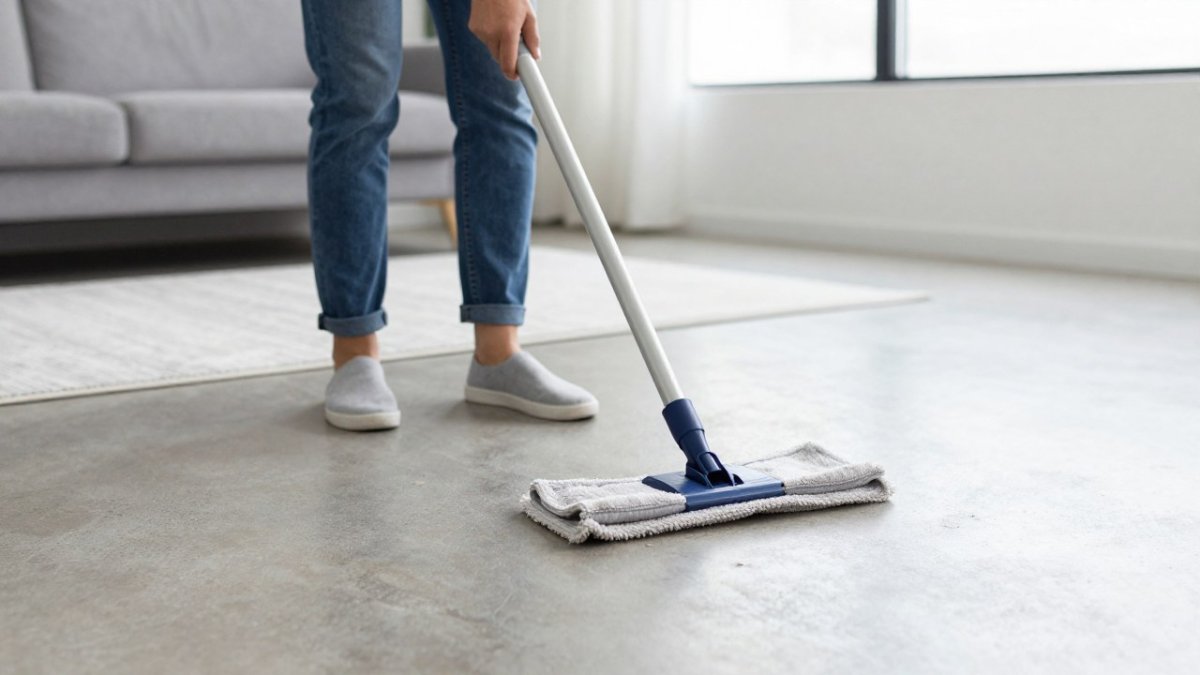
Tools that matter. A HEPA-filtered vacuum with a hard-floor brush head captures fine particles rather than blowing them out the exhaust. Reserve a dedicated microfiber mop head for wet cleaning. Avoid steam mops on sealed concrete unless the sealer manufacturer approves.
Daily or every other day. Vacuum or dust-mop high-traffic paths, under furniture edges and along the baseboards, where dust and pet hair collect. Focus on entry zones, where shoes bring in pollen. A quick pass takes a few minutes and prevents tracked-in material from being ground into the surface.
Weekly. Damp-mop the whole floor with a mild, pH-neutral cleaner diluted according to the label. Use two buckets, one for the cleaning solution and one for rinsing, and wring the mop until it is only slightly damp. Excess water can seep into seams and unsealed edges.
Monthly. Inspect the sealer. Look for dull patches, scuffs, and areas where water beads poorly, since these indicate wear that lets dust sink in. Check the edges and any cracks or control joints, where dirt tends to collect unnoticed. Spot-clean stains promptly, because oils and spilled liquids can penetrate a worn sealer.
Every one to three years, or as the sealer manufacturer specifies. Recoat or refresh the surface. Most topcoats for residential concrete last several years under normal traffic, but heavy foot traffic, pets with claws, and rolling loads shorten that interval. A simple water-drop test is useful: if water soaks in rather than beading, the sealer is due for renewal.
Entry control. Entry mats at exterior doors help capture soil and pollen before it reaches the floor. Clean them regularly, since a dirty mat can become a source of the allergens it was meant to trap.
Watch out: Dry sweeping a concrete floor in an occupied room, even with a broom that looks clean, raises dust into the breathing zone for several minutes. Use a vacuum or damp method whenever allergy-sensitive people are present.
For homeowners maintaining a coated garage or utility floor, our guide on how to maintain epoxy garage floors covers the same principles applied to heavier-use surfaces. If the concrete is older and unsealed, how to clean porous concrete floors step by step explains preparation and sealing before this routine can work as intended.
VOC Emissions, Installation Dust, and Other Trade-Offs
The products used to seal, coat and polish concrete can release volatile compounds, so they deserve attention for allergy sufferers and people with chemical sensitivity. Three trade-offs matter most: volatile organic compounds (VOCs) released during application and curing, fine dust produced when old concrete is ground or polished, and the comfort compromises that come with a hard, cool surface.
VOC emissions from sealers and coatings. Solvent-borne epoxies, urethanes and some acrylic sealers release VOCs as their solvents evaporate. Most of the off-gassing happens in the first few days, but some compounds continue to leave the material for weeks as it cures. Water-based and low-VOC formulations reduce this load considerably.
To manage VOC exposure in practice, plan the work so the space can be fully vacated during application and the first curing period. Run exhaust fans or open windows to create cross-ventilation where weather allows, and use portable air filtration with activated carbon for the adjacent rooms.
Dust during installation and grinding. Resurfacing or polishing existing concrete produces respirable silica dust, which is a hazard for workers and occupants alike. Ask the contractor whether they use dust-controlled methods, such as vacuum-connected grinders, whether the work area is sealed off, and how they clean up.
Cold, hard surfaces and comfort. Concrete is cool and unforgiving underfoot, which affects comfort in winter and for people who stand for long periods. Area rugs solve most of this, but only the right kind. Choose low-pile synthetic rugs that can be machine washed or shaken out regularly, and avoid thick wool, shag or latex-backed rugs that trap dust and dander.
Slip resistance. Sealers that are glossy when new can become slippery when wet, particularly in entryways, bathrooms and pool areas. Ask about slip-resistance additives mixed into the topcoat or applied as a broadcast texture before the final coat.
In short, the floor itself is low-allergen, but the process of getting it there and the products used to maintain it are where most avoidable exposure happens. Choosing low-VOC materials, insisting on dust-controlled installation and managing the rugs you add afterward will do more for your indoor air than the surface choice alone.
Scheduling a Concrete Assessment for Your Home or Facility
If you're considering concrete for allergy reasons, the best next step is an assessment of your existing surface. An assessment can check whether the concrete is sound, whether it's porous or already sealed, and which coating or finish suits your household or facility. Our team at Concrete-Enhancements works with homeowners and commercial clients across the Raleigh-Durham Triangle, NC Triad and Coastal SC, and we have over 20 years of experience as a CTi Certified Dealer. You can review our coating systems and overlays before you call, so you know what options exist.
Pricing depends on the size of the area, the condition of the concrete, the coating chosen and the scope of any repairs, so we can't give a flat figure without seeing the space. Contact us at (919) 824-5403 or craigrfear@gmail.com for a free estimate.
Frequently Asked Questions
Is concrete flooring good for people with allergies?
Concrete is a hard, non-porous surface, so it does not trap dust, pollen, or pet dander the way carpet fibers can. Research on carpet links it to indoor-air-quality and symptom concerns, and industry sources describe sealed concrete as easy to clean. The benefit is real but depends on proper sealing and regular cleaning. Concrete will not treat allergies on its own, so it works best as part of a broader allergy-reduction plan.
Do concrete floors need a sealer to stay allergy-friendly?
Yes. Industry guidance notes that concrete is easy to clean and does not harbor allergens when properly sealed. An unsealed or porous surface can absorb spills, moisture, and dust, which undercuts the cleaning advantage. A quality sealer closes the surface pores and makes routine damp mopping effective. Ask any contractor about the sealer system and its maintenance schedule before installation.
Is polished concrete better for allergies than carpet?
Polished concrete generally performs better than carpet for allergy-conscious homes because it has no fibers to hold dust mites, pollen, or pet dander. Carpet can hold these particles deep in its pile, where regular vacuuming may not remove them. Pricing depends on square footage, existing floor condition, and finish choice, so request a quote from Concrete-Enhancements for current figures.
What are the disadvantages of concrete flooring for allergy sufferers?
Concrete is hard and can be cold, which some households find uncomfortable without rugs. Installation or grinding can create dust, so occupants should be out of the space and the area sealed off during work. Unsealed concrete can absorb moisture and stains, and cracks may need repair. Adding washable area rugs can improve comfort, and they should be cleaned regularly to avoid reintroducing allergens.

Tags: concrete flooring allergies, benefits of concrete flooring for allergy sufferers, best flooring for allergies, concrete floor cleaning for allergies, concrete floors and indoor air quality
Frequently Asked Questions
Concrete is a hard, non-porous surface, so it does not trap dust, pollen, or pet dander the way carpet fibers can. Research on carpet links it to indoor-air-quality and symptom concerns, and industry sources describe sealed concrete as easy to clean. The benefit is real but depends on proper sealing and regular cleaning. Concrete will not treat allergies on its own, so it works best as part of a broader allergy-reduction plan.
Yes. Industry guidance notes that concrete is easy to clean and does not harbor allergens when properly sealed. An unsealed or porous surface can absorb spills, moisture, and dust, which undercuts the cleaning advantage. A quality sealer closes the surface pores and makes routine damp mopping effective. Ask any contractor about the sealer system and its maintenance schedule before installation.
Polished concrete generally performs better than carpet for allergy-conscious homes because it has no fibers to hold dust mites, pollen, or pet dander. Carpet can hold these particles deep in its pile, where regular vacuuming may not remove them. Pricing depends on square footage, existing floor condition, and finish choice, so request a quote from Concrete-Enhancements for current figures.
Concrete is hard and can be cold, which some households find uncomfortable without rugs. Installation or grinding can create dust, so occupants should be out of the space and the area sealed off during work. Unsealed concrete can absorb moisture and stains, and cracks may need repair. Adding washable area rugs can improve comfort, and they should be cleaned regularly to avoid reintroducing allergens.