listicle
7 Concrete Floor Sealing Options: Durability & Costs
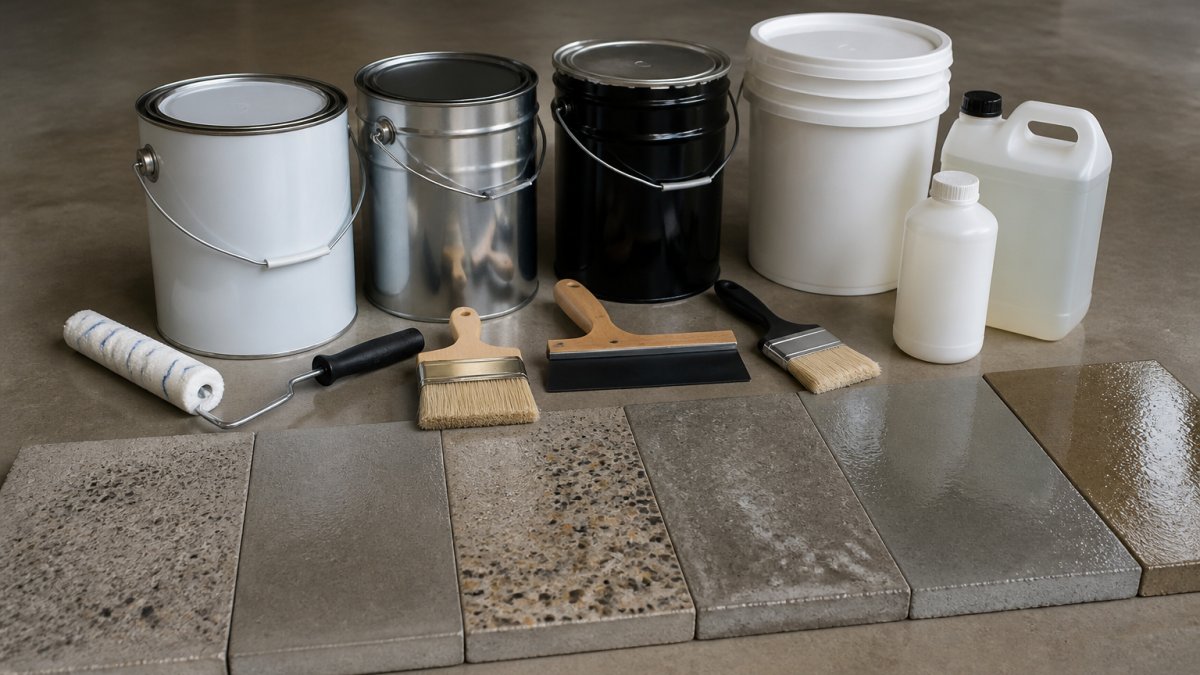
Table of Contents
- Concrete Floor Sealing Options: Quick Comparison
- Epoxy Floor Coatings
- Polyaspartic vs Epoxy Durability: Which Lasts Longer?
- Polyurea Coatings for Heavy-Duty Applications
- Concrete Sealer Lifespan: Penetrating Sealers vs Topcoats
- Polyurethane and Specialty Sealers
- How to Choose the Right Concrete Floor Sealing Option
- Frequently Asked Questions
Last Updated: October 3, 2026
Concrete Floor Sealing Options: Quick Comparison
When your concrete floor shows wear, staining, or damage, the coating you choose determines how long it lasts and what you'll pay to maintain it. Concrete floor sealing options durability varies dramatically, some coatings last 5 years, others 20. The difference isn't just longevity. It's also about how well the sealer handles chemicals, heat, moisture, and foot traffic without peeling, yellowing, or breaking down.
We've worked with homeowners and commercial property managers across the region who've made costly mistakes by picking the wrong sealer for their specific needs. Some applied DIY epoxy that failed within a year. Others chose penetrating sealers when they needed a topcoat, or vice versa. The good news: once you understand the real differences between coating types, the decision becomes much clearer.
Here's what matters most: Quick Picks
- Best Overall Durability: Polyaspartic coatings, 15-20 year lifespan with superior UV stability and heat resistance
- Best Value for Residential: Epoxy floor coatings, proven 7-10 years with lower upfront cost, ideal for garages and patios
- Best for Heavy-Duty Commercial: Polyurea coatings, extreme flexibility and impact resistance for industrial spaces
- Best Low-Maintenance Option: Penetrating sealers, invisible finish, no peeling, permanent protection against moisture
The table below gives you the full picture at a glance. Below that, we break down each option so you can match the right sealer to your space, budget, and durability expectations.
| Coating Type | Typical Lifespan | Best For | Key Strength | Main Limitation |
|---|---|---|---|---|
| Epoxy | 7-10 years | Residential garages, light-traffic areas | Cost-effective, strong chemical resistance | Can yellow in direct sunlight |
| Polyaspartic | 15-20 years | Garages, high-traffic commercial spaces | Superior UV stability, fast cure | Higher material and labor costs |
| Polyurea | 12-18 years | Industrial, outdoor, heavy-impact areas | Extreme flexibility, temperature tolerance | Premium pricing, requires professional application |
| Penetrating Sealer | 3-5 years (permanent chemical bond) | Driveways, patios, exterior concrete | No peeling, breathable, natural look | No high-gloss finish, requires reapplication |
| Polyurethane | 8-12 years | High-traffic indoor areas, commercial floors | Scratch resistance, versatile finishes | Requires multiple coats |
Epoxy Floor Coatings
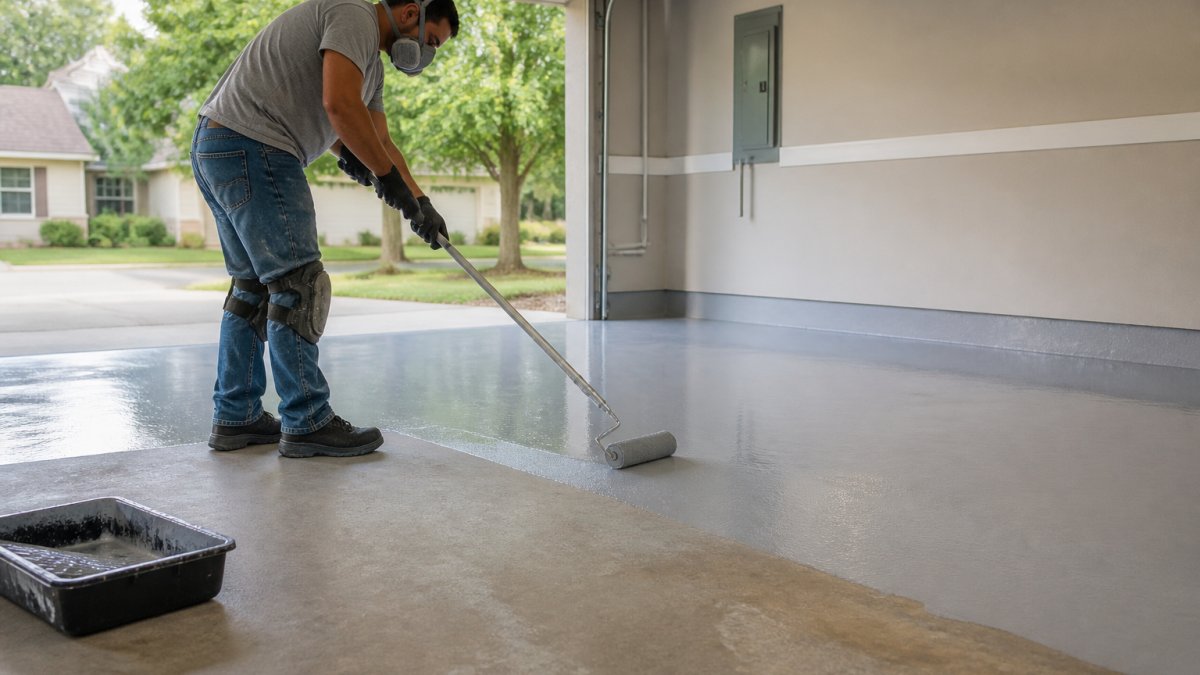
Epoxy is a two-part resin system that chemically bonds to properly prepared concrete, creating a hard, glossy surface film. It's the most common choice for residential garages and light-to-medium traffic areas because the upfront cost is reasonable and the results look professional.
The reality of epoxy durability depends entirely on surface preparation and application. A properly prepped floor with diamond grinding and the right primer coat can last 7-10 years in a garage setting. But skip the prep work or apply it over a dusty substrate, and you'll see peeling within months, which is exactly what happens with most DIY attempts.
Epoxy excels at chemical resistance. It handles gasoline spills, oil stains, and household cleaners without degrading. The high-gloss finish is easy to clean and looks sharp. However, epoxy has a real weakness in direct sunlight. UV exposure causes yellowing and can degrade the resin over time, which is why epoxy works best indoors or in covered spaces.
The curing process matters too. Standard epoxy takes 24-72 hours to cure, during which the floor is soft and vulnerable. You're looking at 3-7 days before it reaches full hardness. This downtime is acceptable for a residential garage but impractical for commercial spaces that need quick turnaround.
Polyaspartic vs Epoxy Durability: Which Lasts Longer?
Polyaspartic coatings are aliphatic polyurea systems designed specifically to overcome epoxy's main limitation: UV stability. The distinction matters because polyaspartic offers 15-20 year lifespan versus epoxy's 7-10 years, primarily due to superior UV resistance that prevents yellowing and resin degradation.
The durability advantage comes from the chemistry. Polyaspartic's aliphatic structure resists UV breakdown far better than epoxy's aromatic structure. In real terms, a polyaspartic-coated garage in direct sunlight will maintain its color and integrity for double the time. A polyaspartic driveway exposed to intense sun won't yellow noticeably, while an epoxy driveway will begin showing discoloration within 2-3 years.
Polyaspartic also cures faster, often in 4-8 hours instead of 24-72 hours. This rapid cure is a game-changer for commercial spaces. A warehouse floor can be sealed in the morning and handle light foot traffic by evening, and full traffic within 24 hours. That speed reduces operational downtime to near-zero.
The tradeoff is cost. Polyaspartic material and labor run roughly 40-60% higher than epoxy. For a 500-square-foot garage, that difference can be $1,500-$2,500 in additional expense. For a 5,000-square-foot commercial space, the gap widens significantly.
Polyurea Coatings for Heavy-Duty Applications
Polyurea is the extreme-durability option. It's an elastomer coating with high elongation properties, meaning it flexes and stretches instead of cracking when concrete moves or settles. This makes polyurea the choice for industrial facilities, outdoor concrete exposed to freeze-thaw cycles, and spaces with heavy impact loads.
Polyurea's key advantage is flexibility. Concrete naturally expands and contracts with temperature and moisture changes. Rigid coatings like epoxy can crack under this movement. Polyurea moves with the substrate, bridging minor cracks and preventing the coating from splitting. This property alone extends lifespan significantly in harsh environments.
The material also tolerates extreme temperatures. Polyurea performs in unheated warehouses, outdoor loading docks, and spaces where concrete sees direct sun and freezing winters. It won't become brittle in cold or soft in heat the way some coatings do.
Curing time is rapid, typically 2-4 hours for light foot traffic, 24 hours for full cure. For commercial operations that can't afford downtime, this is invaluable.
The downsides are substantial. Polyurea costs $7-$12 per square foot installed, compared to $2-$7 for epoxy. It also requires specialized spray application equipment and trained technicians. DIY application is not realistic.
Concrete Sealer Lifespan: Penetrating Sealers vs Topcoats
This distinction separates two fundamentally different approaches to concrete protection. Penetrating sealers work from within the concrete matrix. Topcoats form a surface film. Understanding the difference changes how you think about resealing frequency and long-term maintenance.
Penetrating sealers work by chemically bonding inside the concrete pores. They don't create a visible coating. Instead, they make the concrete itself more resistant to water, salt, oil, and other contaminants. The advantage: they never peel, flake, or wear off in the traditional sense. The chemical bond is permanent.
The catch is durability and aesthetics. Penetrating sealers don't provide the high-gloss look or the hard surface film that topcoats do. They maintain the natural concrete appearance, which is ideal for decorative stamped concrete or exposed aggregate finishes. However, they offer less protection against abrasion and impact.
Resealing frequency differs too. A penetrating sealer typically lasts 3-5 years before needing reapplication, though the chemical bond itself is permanent. A topcoat like epoxy might last 7-10 years but can fail catastrophically if the bond breaks.
For exterior concrete like driveways and patios, penetrating sealers make sense because they breathe, they allow moisture vapor transmission, preventing moisture buildup under the surface that can cause spalling or freeze-thaw damage. Topcoats trap moisture, which is why they work better indoors.
Call (919) 824-5403 or email craigrfear@gmail.com for a free estimate →
Polyurethane and Specialty Sealers
Polyurethane sealers occupy the middle ground. They offer scratch resistance and versatility without the extreme cost of polyurea or the UV limitations of epoxy. They're available in matte, satin, and gloss finishes, making them flexible for different aesthetic preferences.
Polyurethane works well for high-traffic indoor commercial spaces, retail floors, showrooms, warehouses with foot traffic but not heavy machinery. The scratch resistance is genuinely superior to epoxy. The material handles repeated cleaning and foot wear without showing scuff marks as quickly.
The durability runs 8-12 years in typical commercial settings. That's longer than epoxy but shorter than polyaspartic. The cost falls between epoxy and polyaspartic, making it a reasonable middle option.
The limitation is application. Polyurethane typically requires 2-3 coats instead of one. This extends application time and labor cost compared to polyaspartic's single-coat approach. For a space that needs quick turnaround, this matters.
Specialty sealers target specific problems, particularly moisture vapor transmission in concrete slabs. These are used as sub-floor preparation before installing flooring materials. They're not standalone decorative coatings but rather protective barriers that prevent moisture-related failures in finished floors above. If you're planning to install tile, vinyl, or wood over concrete, a moisture-blocking sealer prevents the finished floor from failing due to moisture vapor rising through the slab.
How to Choose the Right Concrete Floor Sealing Option
Start with your concrete's location and use case. Is it indoors or outdoors? High-traffic or light-traffic? Exposed to direct sunlight?
Residential garage or patio: Epoxy works if the space is covered or shaded. Polyaspartic if it gets direct sun or you want maximum durability.
Outdoor driveway: Polyaspartic or penetrating sealer. Epoxy will yellow and degrade. The UV exposure rules it out unless the driveway is heavily shaded.
Commercial warehouse or retail: Polyaspartic for fastest cure and longest life. Polyurea if you have heavy machinery or impact loads.
Pool deck or high-moisture area: Penetrating sealer or polyaspartic with proper moisture management. Standard epoxy can trap moisture and cause peeling.
Church or facility common area: Polyaspartic or polyurethane for durability and low maintenance. These spaces typically see steady foot traffic but not extreme conditions.
Surface preparation is non-negotiable regardless of coating choice. The concrete must be clean, dry, and properly profiled.
Consider the curing timeline. If downtime is expensive, polyaspartic or polyurea's rapid cure justifies the higher cost.
Budget for resealing. Penetrating sealers need reapplication every 3-5 years. Epoxy every 7-10 years. Polyaspartic every 15-20 years.
The concrete floor sealing options durability you choose today determines maintenance burden and replacement cost for the next 5-20 years.
If your concrete floor is showing wear, staining, or damage, the right sealing approach makes the difference between a floor that looks great for two decades and one that fails within a year. We're a CTi Certified Dealer specializing in epoxy floor coatings, polyaspartic systems, and decorative concrete overlays.
Frequently Asked Questions
What concrete sealer lasts the longest?
Polyaspartic and polyurea coatings offer the longest lifespan, typically lasting 15-20 years in residential settings and longer in commercial applications. These premium options resist hot tire pickup, UV degradation, and chemical damage better than epoxy. Penetrating sealers provide permanent protection by chemically bonding to concrete, though they don't create a topcoat finish. Epoxy typically lasts 7-10 years with proper maintenance. Lifespan depends on traffic volume, climate exposure, and maintenance frequency.
What is the most durable concrete floor coating?
Polyurea coatings deliver the highest durability for extreme environments. Their flexible elastomer structure bridges minor concrete cracks and tolerates heavy machinery impact and temperature swings. Polyaspartic coatings rank close behind with superior abrasion resistance and rapid curing. Both outperform epoxy in high-traffic warehouses and outdoor spaces. For residential garages and patios, polyaspartic offers the best balance of durability and faster return to service. Professional installation is critical, DIY applications typically fail within 1-3 years due to improper surface preparation and primer application.
How often should you reseal concrete floors?
Epoxy coatings need resealing every 7-10 years depending on foot traffic and sunlight exposure. Polyaspartic and polyurea extend intervals to 15-20 years or longer. Penetrating sealers are permanent and don't require resealing. High-traffic commercial spaces may need maintenance coats every 3-5 years. Pool decks and outdoor patios exposed to UV and moisture may require resealing every 5-7 years. Regular cleaning and avoiding harsh chemicals extend the interval. Professional assessment can determine when your specific surface needs refreshing.
What is the downside of sealing concrete?
Topical coatings like epoxy can peel or flake if surface preparation is inadequate, a common DIY failure. Epoxy yellows under direct sunlight, making it unsuitable for south-facing patios without UV-stable alternatives. Polyurea and polyaspartic carry higher material and labor costs. All coatings require moisture vapor transmission testing before application; improper moisture management causes adhesion failure. Penetrating sealers don't provide a high-gloss aesthetic. Maintenance is ongoing: regular cleaning prevents dirt buildup that degrades bond strength, and resealing intervals add long-term costs.
Can I seal concrete myself, or should I hire a professional?
Professional installation dramatically improves durability and longevity. DIY epoxy applications typically fail within 1-3 years due to incomplete surface preparation, improper primer application, and inadequate moisture control. Professionals perform diamond grinding or acid etching to ensure proper substrate porosity and bond strength. They test moisture vapor transmission and curing conditions to prevent peeling. Polyaspartic and polyurea require specialized equipment and expertise for rapid application. For residential patios and driveways, penetrating sealers are more DIY-friendly, but epoxy and premium coatings demand professional handling to achieve the 15-20 year lifespan manufacturers promise.
Tags: concrete floor sealing options, concrete floor sealing options durability, polyaspartic vs epoxy durability, concrete sealer lifespan
Frequently Asked Questions
Polyaspartic and polyurea coatings offer the longest lifespan, typically lasting 15-20 years in residential settings and longer in commercial applications. These premium options resist hot tire pickup, UV degradation, and chemical damage better than epoxy. Penetrating sealers provide permanent protection by chemically bonding to concrete, though they don't create a topcoat finish. Epoxy typically lasts 7-10 years with proper maintenance. Lifespan depends on traffic volume, climate exposure, and maintenance frequency.
Polyurea coatings deliver the highest durability for extreme environments. Their flexible elastomer structure bridges minor concrete cracks and tolerates heavy machinery impact and temperature swings. Polyaspartic coatings rank close behind with superior abrasion resistance and rapid curing. Both outperform epoxy in high-traffic warehouses and outdoor spaces. For residential garages and patios, polyaspartic offers the best balance of durability and faster return to service. Professional installation is critical—DIY applications typically fail within 1-3 years due to improper surface preparation and primer application.
Epoxy coatings need resealing every 7-10 years depending on foot traffic and sunlight exposure. Polyaspartic and polyurea extend intervals to 15-20 years or longer. Penetrating sealers are permanent and don't require resealing. High-traffic commercial spaces may need maintenance coats every 3-5 years. Pool decks and outdoor patios exposed to UV and moisture may require resealing every 5-7 years. Regular cleaning and avoiding harsh chemicals extend the interval. Professional assessment can determine when your specific surface needs refreshing.
Topical coatings like epoxy can peel or flake if surface preparation is inadequate—a common DIY failure. Epoxy yellows under direct sunlight, making it unsuitable for south-facing patios without UV-stable alternatives. Polyurea and polyaspartic carry higher material and labor costs. All coatings require moisture vapor transmission testing before application; improper moisture management causes adhesion failure. Penetrating sealers don't provide a high-gloss aesthetic. Maintenance is ongoing: regular cleaning prevents dirt buildup that degrades bond strength, and resealing intervals add long-term costs.
Professional installation dramatically improves durability and longevity. DIY epoxy applications typically fail within 1-3 years due to incomplete surface preparation, improper primer application, and inadequate moisture control. Professionals perform diamond grinding or acid etching to ensure proper substrate porosity and bond strength. They test moisture vapor transmission and curing conditions to prevent peeling. Polyaspartic and polyurea require specialized equipment and expertise for rapid application. For residential patios and driveways, penetrating sealers are more DIY-friendly, but epoxy and premium coatings demand professional handling to achieve the 15-20 year lifespan manufacturers promise.