how-to
Driveway Resurfacing Permits and Regulations in 2026
Last Updated: October 31, 2026
Quick Summary
Most driveway resurfacing projects need no permit when the work only changes the surface and leaves the footprint, slope, and street connection unchanged. You likely need a right-of-way, access, or culvert permit once driveway resurfacing changes width, the apron or curb cut, drainage, or a ditch crossing.
- Driveway replacement permit requirements are stricter than resurfacing rules because many agencies treat a full replacement as new construction.
- A right-of-way permit applies when work touches the apron and the first few feet back from the curb.
- A driveway culvert permit applies when your driveway crosses a drainage ditch or swale along the road.
- Ask the permit desk which fee method applies and whether the review clock restarts on resubmittal.
- Starting work before the permit is issued is the most common compliance failure and the most expensive to fix.
Table of Contents
- When Driveway Resurfacing Needs a Permit and When It Does Not
- Driveway Replacement Permit Requirements Versus Simple Resurfacing
- Right-of-Way Permit for Driveway Work and Road Jurisdiction
- When a Driveway Culvert Permit Applies
- Driveway Permit Application Checklist: Plans, Fees, and Timelines
- How to Check Local Regulations Before You Resurface
- Planning Your Resurfacing Project with Concrete-Enhancements
- Frequently Asked Questions
When Driveway Resurfacing Needs a Permit and When It Does Not
Most homeowners assume driveway resurfacing permits and regulations apply to every project. They usually don't. A simple surface refresh, where you recoat the existing slab without changing its size, slope, or connection to the street, often needs no approval at all.
The rule of thumb is simple: if you are only changing what the driveway looks like, you probably don't need a permit.
Surface Work Versus Changes to Access, Footprint, or Drainage
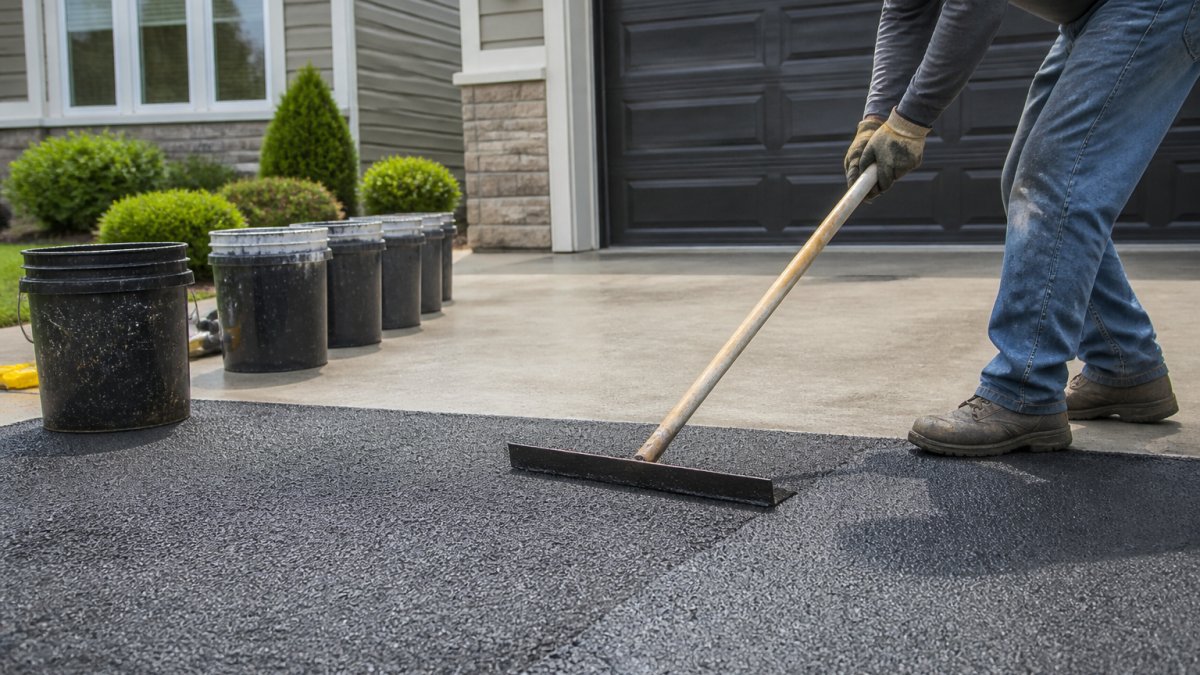
Surface work means overlays, sealing, staining, and patching cracks or spalls. The slab stays put. Access, footprint, and drainage stay the same.
Changes to access, footprint, or drainage are a different category:
- Widening the driveway or adding a lane
- Moving the curb cut or apron
- Regrading so water flows a new direction
Those changes touch the public right-of-way or stormwater flow. As the NCHRP synthesis on driveway regulation practices notes, driveway rules vary widely between state and local agencies, so the only reliable answer comes from your own building department.
Driveway Replacement Permit Requirements Versus Simple Resurfacing
Driveway replacement permit requirements are stricter than resurfacing rules in most jurisdictions.
Resurfacing sits at the other end. Local codes often exempt it outright, but the exact line varies by agency.
That's the pattern you should expect. If you're weighing which path makes sense for your property, our concrete resurfacing vs replacement guide compares cost, lifespan, and durability side by side.
Watch out: assuming your neighbor's resurfacing permit covers your project. Permits attach to a specific scope and address, not to a type of work.
Right-of-Way Permit for Driveway Work and Road Jurisdiction
A right-of-way permit for driveway work applies when your project touches the strip of land the public controls, usually the apron and the first few feet back from the curb. The first question isn't what you're building.
Road jurisdiction breaks down roughly like this:
| Road Type | Typical Authority | What It Means for You |
|---|---|---|
| City street | City building or public works department | Apply locally, follow city access standards |
| County road | County public works | County permit, county inspection |
| State-maintained road | State transportation agency | District office review, longer timeline |
| Private road or easement | HOA or property owner | No public permit, but private approval still applies |
If your driveway meets a state-maintained road, the state transportation agency may review the road access portion in addition to any local review.
When a Driveway Culvert Permit Applies
A driveway culvert permit applies when your driveway crosses a drainage ditch or swale along the road. The culvert carries stormwater under your driveway so it doesn't pool or wash out the shoulder.
You'll likely need one if:
- Your driveway crosses an open ditch
- You're replacing or resizing an existing culvert
- Your resurfacing changes the grade at the ditch crossing
Ask the public works department for their culvert standard before you buy pipe.
Driveway Permit Application Checklist: Plans, Fees, and Timelines
Driveway permit application checklist items vary by agency, but most packages ask for the same core set. The difference between a package that gets routed for review the same week and one that sits in limbo is usually whether each document answers the reviewer's next question before they ask it. Gather these before you apply:
Call (919) 824-5403 or email craigrfear@gmail.com for a free estimate →
- Completed application form with property owner signature, if the property is in a trust or LLC, include proof of signing authority
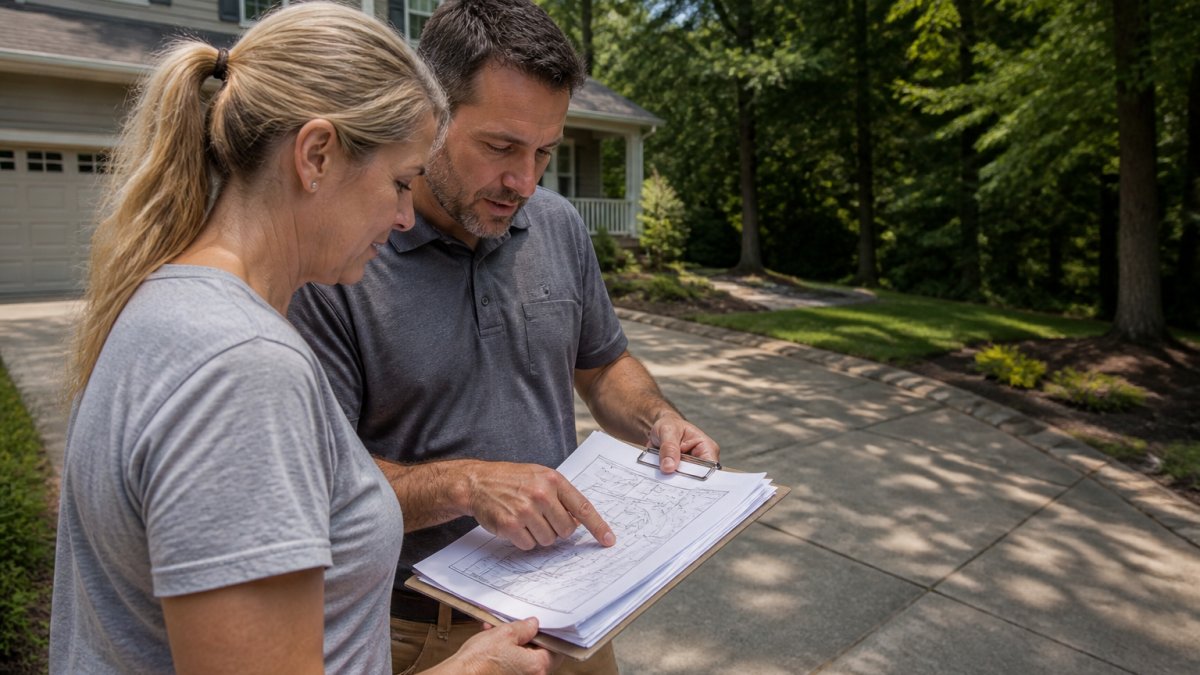
- Site plan or instrument survey showing the driveway location, dimensions, and distance to property lines
- Construction plans for any apron, culvert, or grading work, drawn to a legible scale
What Each Document Actually Needs to Show
A site plan that only sketches the driveway outline will usually be sent back.
For culvert work, the construction plan needs the pipe diameter, material, invert elevation, and the alignment relative to the ditch centerline. A common pattern is for agencies to reject a culvert submittal because the proposed pipe is undersized for the drainage area, so ask public works for the sizing standard before you buy pipe.
How Permit Fees Are Typically Calculated
Fees follow one of four common methods, and knowing which one your agency uses tells you how to budget:
| Fee Method | How It Works | What Drives the Number |
|---|---|---|
| Flat fee | One price per permit type | Permit category, not project size |
| Square-footage fee | Rate multiplied by right-of-way area disturbed | Apron width and length |
| Project-value fee | Percentage of declared construction cost | Contract price or owner-declared value |
| Escrow or deposit | Up-front deposit drawn down for inspections | Number of inspections required |
A modest flat fee is common for a simple residential apron, while agencies that charge by right-of-way area or project value can produce a fee several times higher for the same visual result. Ask the permit desk which method applies and whether inspection fees are included or billed separately.
What Drives Approval Timelines
Approval timelines range from a few business days for a simple apron handled entirely in-house to several weeks when a state transportation agency reviews the road-access portion. Three factors stretch the timeline: state review of access on a state-maintained road, stormwater review when added impervious surface crosses a local threshold, and incomplete submittals that restart the review clock. Build the extra time into your schedule before you book a contractor.
While you budget, our 2026 driveway resurfacing cost guide breaks down material, labor, and the fees that catch people off guard.
How to Check Local Regulations Before You Resurface
Local regulations live with your city or county, not with a national rulebook. Calling your building department is a good first step, but the harder question is which department, and the answer depends on what your resurfacing actually changes. Use the decision tree below to sort your scope before you pick up the phone.
Permit Decision Tree by Project Scope
Work through these questions in order. Stop at the first "yes", that is the review your project triggers.
- Does the work change the driveway's width, length, or location? If yes, expect a right-of-way or access permit and a site plan showing existing and proposed conditions.
- Does the work change the curb cut, apron, or the point where the driveway meets the road? If yes, expect a right-of-way permit from whoever owns the road, plus inspection of the apron.
- Does the work change grading, slope, or where water leaves the slab? If yes, expect drainage review, and possibly stormwater review if added impervious surface crosses a local threshold.
- Does the work cross, replace, or resize a culvert or ditch? If yes, expect a culvert permit with pipe sizing and alignment requirements.
- Is the work an overlay, seal, stain, or patch that leaves footprint, slope, and access unchanged? If yes, most agencies exempt it, but confirm in writing, because exemptions are local.
A Jurisdiction-Checking Workflow
The authority that controls your project is generally set by the road your driveway meets. Run this sequence:
- Identify the road owner. Check your property records, the plat, or call public works. City, county, state, or private changes everything.
- Confirm the right-of-way line. The strip the public controls usually includes the apron and the first few feet back from the curb. Work inside that line triggers right-of-way review even when the rest of the slab is untouched.
- Call the building department with your decision-tree answer. Describe the exact scope: overlay only, or any change to width, apron, or drainage.
- Ask two questions. Does this scope need a permit? Which department issues it?
- Request the written standard. Get the access standard or culvert spec in writing if right-of-way work is involved.
- Check HOA and easement rules. Private covenants can be stricter than the city, and an easement holder may have approval rights the building department never mentions.
- Get the answer in writing. An email from the permit desk settles disputes later.
Compliance During Construction
Approval is not the finish line. Most right-of-way permits carry conditions that apply while work is underway, and violating them can trigger a stop-work order or a re-inspection fee.
- Inspections. Many agencies require an inspection of the subgrade or culvert before the surface is placed, and a final inspection after. If the inspector cannot see the work because it was covered, expect to expose it.
- Work hours and traffic control. Right-of-way work often carries restricted work hours and a requirement to keep the road passable or flag traffic. Confirm both before the crew mobilizes.
- Contractor responsibility. The permit holder is usually responsible for compliance, even when a subcontractor performs the work. Confirm who pulls the permit and who answers for conditions.
Once you know the rules, our guide on finding professional concrete resurfacing services covers how to vet contractors and compare bids.
Planning Your Resurfacing Project with Concrete-Enhancements
Permits are the paperwork. Understanding the scope of these improvements often requires a clear perspective on driveway repair cost estimates to ensure your investment aligns with both local regulatory standards and long-term property value.
Contact Concrete-Enhancements for a free estimate at (919) 824-5403 or craigrfear@gmail.com to learn what your project involves. Before you call, read our guide to what a free concrete resurfacing estimate includes. You can also visit our driveway repair and resurfacing in Raleigh page to see the services we offer.
Driveway resurfacing permits and regulations reward the homeowner who checks first and builds second. The good news is that most resurfacing work stays simple, and the permit question usually has a short answer once you know who owns your road.
Frequently Asked Questions
Do I need a permit to resurface my driveway?
It depends on what the work changes. Resurfacing that only refreshes the top layer without altering the driveway's location, footprint, width, or connection to public infrastructure is often exempt, . A permit is more likely when the project changes dimensions, materials, drainage, or anything in the public right-of-way. Call your city or county building department and describe the scope in plain terms before you book the work.
Does replacing a driveway require a permit?
Usually yes, or at least more often than resurfacing. Driveway replacement permit requirements typically kick in when the footprint, grade, material, or curb-cut changes, because those affect drainage and the public road connection. Many agencies require a site plan and inspection before approval. Ask your local building department which documents apply to a full replacement versus a surface-only refresh so you do not over- or under-apply.
Who issues permits for driveway work, and how do I check the rules?
Permits can come from your city or county building department, and sometimes from a state or county transportation agency if the driveway connects to a state-maintained road. Start with your local building department, describe the project scope, and ask whether a right-of-way permit for driveway work or a culvert permit applies. Get the answer in writing and keep it with your project file in case an inspector asks later.
Can driveway work affect drainage or stormwater requirements?
Yes. Changing the surface material, slope, or impervious area can trigger stormwater or grading review, especially where runoff reaches a storm drain, ditch, or neighboring property. That is one reason resurfacing rules differ from replacement rules. If your project adds impervious surface or alters how water leaves the driveway, ask the building department whether a drainage review is required before construction starts.

Tags: driveway resurfacing, driveway resurfacing permits and regulations, driveway replacement permit requirements, driveway culvert permit, right-of-way permit for driveway work
Frequently Asked Questions
It depends on what the work changes. Resurfacing that only refreshes the top layer without altering the driveway's location, footprint, width, or connection to public infrastructure is often exempt, . A permit is more likely when the project changes dimensions, materials, drainage, or anything in the public right-of-way. Call your city or county building department and describe the scope in plain terms before you book the work.
Usually yes, or at least more often than resurfacing. Driveway replacement permit requirements typically kick in when the footprint, grade, material, or curb-cut changes, because those affect drainage and the public road connection. Many agencies require a site plan and inspection before approval. Ask your local building department which documents apply to a full replacement versus a surface-only refresh so you do not over- or under-apply.
Permits can come from your city or county building department, and sometimes from a state or county transportation agency if the driveway connects to a state-maintained road. Start with your local building department, describe the project scope, and ask whether a right-of-way permit for driveway work or a culvert permit applies. Get the answer in writing and keep it with your project file in case an inspector asks later.
Yes. Changing the surface material, slope, or impervious area can trigger stormwater or grading review, especially where runoff reaches a storm drain, ditch, or neighboring property. That is one reason resurfacing rules differ from replacement rules. If your project adds impervious surface or alters how water leaves the driveway, ask the building department whether a drainage review is required before construction starts.