how-to
How Long Does Concrete Overlay Last Outdoors
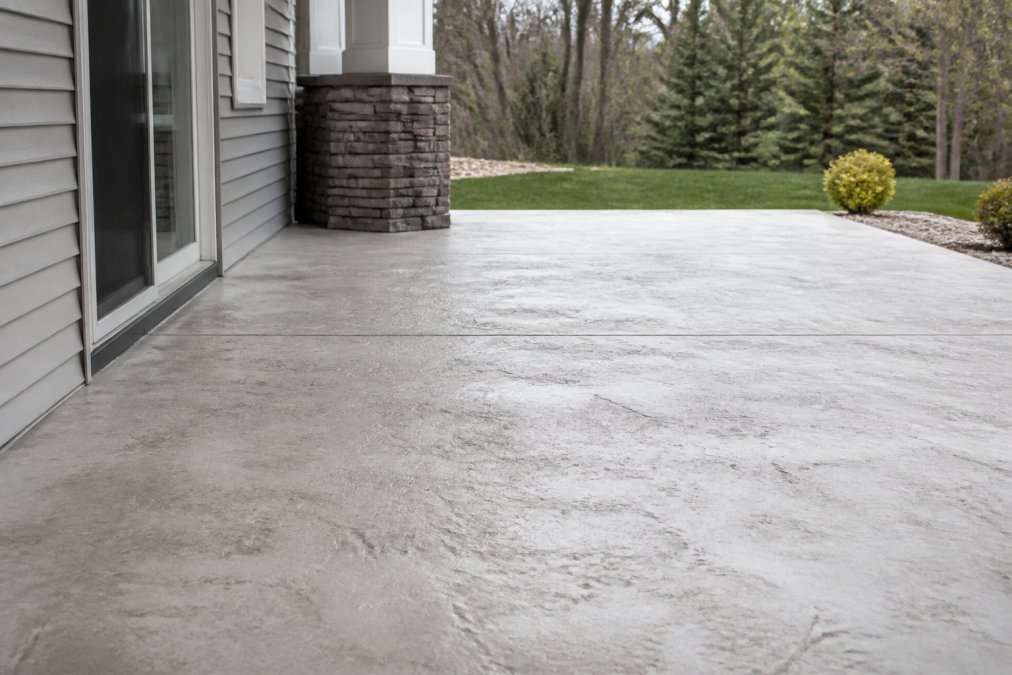
Table of Contents
- How Long Does Concrete Overlay Last Outdoors
- Factors Affecting Concrete Overlay Durability
- Concrete Overlay vs. Coating: What's the Difference
- Best Concrete Sealer for Outdoor Overlays
- Concrete Overlay Maintenance Tips for Long-Lasting Results
- Signs Your Concrete Overlay Is Failing
- Cost of Concrete Resurfacing Per Square Foot
- DIY vs. Professional Application: Impact on Longevity
- Frequently Asked Questions
Last Updated: September 3, 2026
How Long Does Concrete Overlay Last Outdoors
A concrete overlay applied outdoors typically lasts between 10 to 20 years, though this varies significantly based on environmental conditions, installation quality, and maintenance practices. Durability depends far more on decisions made before, during, and after installation than on the overlay material itself.
Factors Affecting Concrete Overlay Durability
Several interconnected factors determine how long your concrete overlay will hold up outdoors.
Substrate Preparation and Bond Strength
This is where most overlay failures originate. A concrete overlay is only as durable as its bond to the existing concrete slab beneath it. If the substrate isn't properly prepared, the overlay will eventually delaminate and fail.
Proper substrate preparation requires pressure washing to remove all dirt, algae, and contaminants. The concrete surface must be clean enough that water beads up on it rather than soaking in. Any existing sealers, coatings, or curing compounds must be completely removed. The surface should have a slightly rough texture, what concrete professionals call "profile", which allows the overlay material to mechanically grip the substrate.
Bond strength determines whether the overlay stays attached under stress from freeze-thaw cycles, foot traffic, and thermal expansion. A properly bonded overlay can last 20+ years. A poorly bonded one may fail within 3 to 5 years.
Climate and Freeze-Thaw Cycles
Freeze-thaw cycles are particularly damaging to concrete overlays in northern regions. When water penetrates the overlay and freezes within the substrate, it expands, creating internal pressure that eventually causes spalling, the flaking or chipping away of concrete surface material.
The overlay material must have low moisture vapor transmission rates to prevent water from wicking up through the substrate. Additionally, the concrete substrate must be sound and free of existing cracks before the overlay is applied, as these become failure points when freeze-thaw stress occurs.
In warmer, drier climates without significant freeze-thaw exposure, overlays can perform reliably for 20 years or longer with minimal maintenance. In regions with frequent temperature swings and moisture exposure, even a well-installed overlay may show deterioration after 12 to 15 years.
Overlay Type and Composition
Different overlay systems have different durability characteristics. Polymer-modified overlays tend to be more flexible and resistant to cracking than traditional cement-based systems. Epoxy overlays offer superior chemical resistance and bond strength but may be more sensitive to UV exposure. Polyurethane overlays provide good flexibility and weather resistance but are typically more expensive.
Micro-toppings and thin overlays (under 1/4 inch) are more susceptible to damage from heavy traffic and freeze-thaw cycles than thicker systems. Higher compressive strength generally means better resistance to abrasion and impact, though it can also mean less flexibility to accommodate substrate movement.
Concrete Overlay vs. Coating: What's the Difference
A coating is a thin, topical layer, typically 1/16 inch to 1/4 inch thick, applied to the concrete surface. Coatings are easier and faster to apply, making them less expensive upfront. However, coatings typically last 5 to 10 years outdoors before requiring reapplication and are more prone to peeling if the substrate isn't perfectly prepared.
A concrete overlay is a thicker resurfacing layer, usually 1/4 inch to several inches thick, that bonds directly to the substrate. Overlays are designed to resurface damaged, worn, or stained concrete. Because they're thicker and more substantially bonded, overlays last significantly longer than coatings, typically 10 to 20 years or more with proper maintenance.
If your concrete is structurally sound but stained or worn, a coating may be sufficient. If your concrete has cracks, spalling, or significant deterioration, an overlay is the better choice.
Best Concrete Sealer for Outdoor Overlays
Sealer selection dramatically impacts how long your concrete overlay lasts outdoors. The right sealer protects the overlay from moisture penetration, UV damage, and chemical attack.
Topical vs. Penetrating Sealers
Topical sealers sit on the surface and form a protective film. Acrylic and polyurethane sealers are common options. They provide excellent UV protection and enhance appearance but require reapplication every 2 to 3 years.
Penetrating sealers absorb into the concrete and form a barrier within the pores (astm.org). Siloxane and silane sealers are primary options. They're invisible, don't change appearance, and last longer than topical sealers, typically 5 to 7 years before reapplication is needed. For outdoor overlays in freeze-thaw climates, a penetrating sealer is often the better choice because it prevents water from wicking up into the substrate.
UV Resistance and Weather Protection
UV exposure degrades concrete overlays over time, especially if they contain pigments or decorative elements. Sealers with UV inhibitors protect the overlay from fading. Polyurethane sealers generally offer the best UV protection among topical options.
The ideal sealer allows moisture vapor transmission while preventing liquid water from penetrating the surface. For outdoor overlays, look for sealers specifically formulated for exterior concrete. Concrete-Enhancements recommends sealers with proven performance in outdoor conditions, tested for UV resistance, moisture vapor transmission rates, and durability in freeze-thaw cycles.
Concrete Overlay Maintenance Tips for Long-Lasting Results
The maintenance you perform after installation is as important as the installation itself. A well-maintained overlay can easily reach or exceed 20 years.
Regular Cleaning and Pressure Washing
Dirt, algae, and debris accumulate on concrete overlays and trap moisture against the surface. Regular cleaning every 6 to 12 months prevents moisture from causing damage.
Pressure washing is effective but must be done carefully. Use moderate pressure, typically 1500 to 2000 PSI, and keep the nozzle at least 12 inches away from the surface (the CDC). Avoid pressure washing directly into expansion joints or existing cracks. Allow the concrete to dry completely before applying sealer.
Call (919) 824-5403 or email craigrfear@gmail.com for a free estimate →
Resealing Schedule and Frequency
Topical sealers require reapplication every 2 to 3 years (peer-reviewed research). Penetrating sealers last longer, typically 5 to 7 years. High-traffic areas wear through sealer faster than low-traffic areas. Overlays in freeze-thaw climates may need more frequent resealing.
The water-beading test indicates when resealing is needed. Spray water on the sealed surface. If the water beads up and rolls off, the sealer is still effective. If the water soaks in, it's time to reseal. Resealing preventatively is far more cost-effective than repairing damage from unsealed overlays.
Addressing Cracks and Damage Early
Small cracks in concrete overlays are often just surface cracks caused by normal concrete shrinkage. However, if cracks aren't sealed, water will penetrate and cause damage to the substrate.
Inspect your overlay regularly for cracks, especially after winter. Hairline cracks should be sealed with flexible concrete crack sealant. Larger cracks, wider than 1/8 inch, may indicate more serious issues and should be evaluated by a professional.
Spalling (flaking or chipping) is more serious than cracking. Small spalls can be patched with concrete patching compound, but widespread spalling indicates that the overlay is failing and may need professional repair or replacement.
Signs Your Concrete Overlay Is Failing
Recognizing early warning signs of overlay failure allows you to address problems before they become expensive.
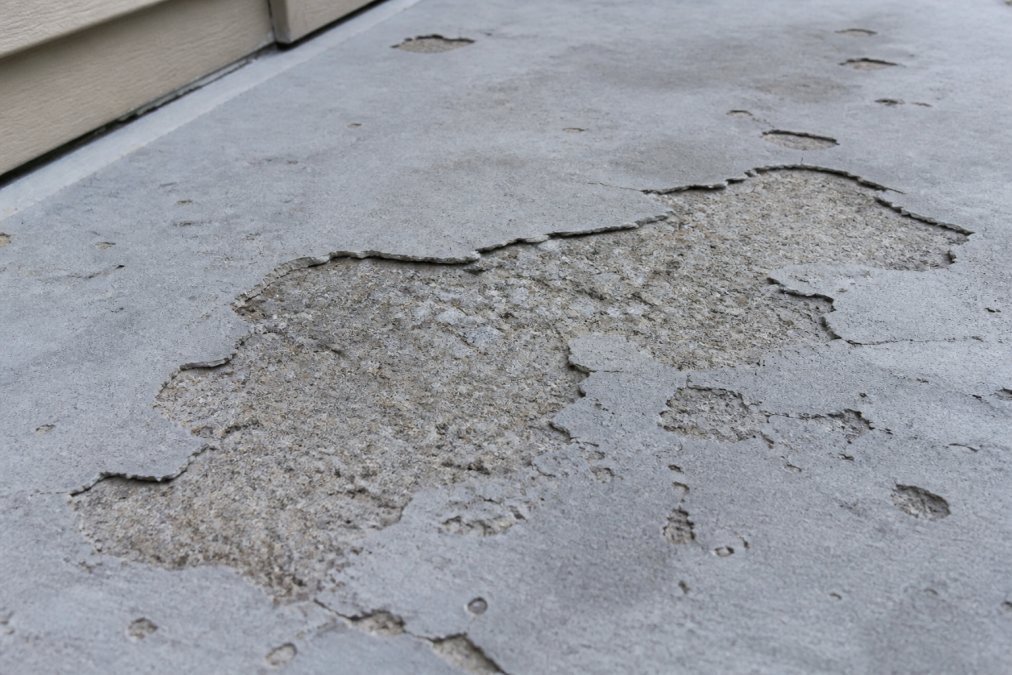
Delamination is the most serious failure mode. The overlay separates from the substrate concrete, usually starting at edges or in low spots where water collects. You'll see hollow areas or hear a hollow sound when you tap on the surface. Once delamination has started, it spreads progressively and must be removed and reapplied.
Spalling appears as chips, flakes, or chunks missing from the overlay surface. In freeze-thaw climates, spalling is often caused by water penetrating the overlay and freezing within the substrate.
Crazing consists of fine, hairline cracks forming a pattern across the overlay surface. While often cosmetic, crazing does allow water to penetrate the overlay, which can eventually cause more serious problems.
Staining or discoloration that doesn't wash away may indicate water infiltration or chemical attack. Rust stains suggest water is reaching reinforcing steel beneath the overlay. Efflorescence, white powdery deposits, indicates water is carrying salts to the surface.
Loss of sealer is visible when water no longer beads on the surface. Resealing should happen immediately.
Cost of Concrete Resurfacing Per Square Foot
Pricing for concrete resurfacing varies based on overlay type, surface preparation requirements, existing damage, and regional labor costs. Concrete-Enhancements provides free estimates for concrete resurfacing projects. During an estimate, we evaluate the existing substrate, determine what preparation is needed, and recommend the overlay system that will provide the best longevity for your specific conditions. Contact us at (919) 824-5403 or email craigrfear@gmail.com for a free estimate.
The cost per square foot is less important than understanding what you're paying for. A lower-cost overlay that fails in 5 years is far more expensive than a higher-cost overlay that lasts 20 years.
DIY vs. Professional Application: Impact on Longevity
Many homeowners consider DIY concrete overlay application to save money. The reality is that substrate preparation and application quality have enormous impact on longevity. Professional application typically results in overlays that last significantly longer than DIY work.
Substrate preparation is the most critical step and the one most often done inadequately in DIY projects. Removing all old sealers, coatings, and contaminants requires specialized equipment and knowledge. Application technique matters enormously, overlay materials must be mixed correctly, applied at the right temperature, and cured under proper conditions. Thickness must be uniform, and joints must be properly cut and sealed.
A professional contractor like Concrete-Enhancements has the equipment, knowledge, and experience to ensure proper installation. A DIY overlay might cost 30 to 40 percent less upfront, but if it fails in 5 years instead of lasting 15, the total cost per year of service is actually much higher.
| Aspect | DIY Application | Professional Application |
|---|---|---|
| Substrate preparation | Often inadequate | Thorough and verified |
| Application technique | Variable quality | Consistent, proven methods |
| Material curing conditions | May not be controlled | Properly managed |
| Expected lifespan | 5-10 years | 15-20+ years |
| Warranty or guarantee | None | Often included |
| Cost per year of service | Higher overall | Lower overall |
Concrete overlays can serve your outdoor surfaces reliably for 15 to 20 years or longer when installed and maintained correctly. The key is starting with proper substrate preparation, selecting the right sealer for your climate, and following a maintenance schedule that keeps water out of the concrete. Concrete-Enhancements brings over 20 years of experience to every project, ensuring your overlay is installed to last. Call (919) 824-5403 or email craigrfear@gmail.com to schedule your free estimate and learn how we can extend the life of your concrete surfaces.
Frequently Asked Questions
Q: How long does a concrete overlay typically last?
A: A well-installed concrete overlay typically lasts 10-20 years outdoors, depending on substrate preparation, climate conditions, and maintenance. Overlays in high-traffic areas or regions with harsh freeze-thaw cycles may fail sooner if the substrate was not properly prepared or if sealer maintenance is neglected. Professional installation and consistent resealing significantly extends longevity.
Q: What are the downsides of using a concrete overlay?
A: Concrete overlays require proper substrate preparation to bond effectively, poor preparation leads to delamination and failure. They can be sensitive to moisture vapor transmission if the base slab has moisture issues. Overlays also demand regular maintenance, including periodic resealing and cleaning. In freeze-thaw climates, surface spalling and hairline cracks may develop over time, and repairs can be more complex than maintaining solid concrete.
Q: Does weather affect the lifespan of concrete overlays?
A: Yes, weather significantly impacts overlay durability. Freeze-thaw cycles cause expansion and contraction, leading to spalling and cracking. UV exposure degrades topical sealers and can fade decorative overlays. High humidity and standing water increase hydrostatic pressure, promoting delamination. Coastal environments introduce salt spray, which accelerates deterioration. Proper sealer selection and regional maintenance schedules are essential to combat these environmental stressors.
Q: How often should you reseal an outdoor concrete overlay?
A: Outdoor concrete overlays should be resealed every 2-3 years, though high-traffic areas or harsh climates may require annual resealing. Check for water beading on the surface, if water no longer beads, the sealer has worn away and needs reapplication. A consistent resealing schedule prevents moisture penetration and significantly extends overlay life.
This article was written using GrandRanker
Frequently Asked Questions
A: A well-installed concrete overlay typically lasts 10-20 years outdoors, depending on substrate preparation, climate conditions, and maintenance. Overlays in high-traffic areas or regions with harsh freeze-thaw cycles may fail sooner if the substrate was not properly prepared or if sealer maintenance is neglected. Professional installation and consistent resealing significantly extends longevity.
A: Concrete overlays require proper substrate preparation to bond effectively—poor preparation leads to delamination and failure. They can be sensitive to moisture vapor transmission if the base slab has moisture issues. Overlays also demand regular maintenance, including periodic resealing and cleaning. In freeze-thaw climates, surface spalling and hairline cracks may develop over time, and repairs can be more complex than maintaining solid concrete.
A: Yes, weather significantly impacts overlay durability. Freeze-thaw cycles cause expansion and contraction, leading to spalling and cracking. UV exposure degrades topical sealers and can fade decorative overlays. High humidity and standing water increase hydrostatic pressure, promoting delamination. Coastal environments introduce salt spray, which accelerates deterioration. Proper sealer selection and regional maintenance schedules are essential to combat these environmental stressors.
A: Outdoor concrete overlays should be resealed every 2-3 years, though high-traffic areas or harsh climates may require annual resealing. Check for water beading on the surface—if water no longer beads, the sealer has worn away and needs reapplication. A consistent resealing schedule prevents moisture penetration and significantly extends overlay life.