listicle
Top 10 Pool Deck Resurfacing Options for 2026
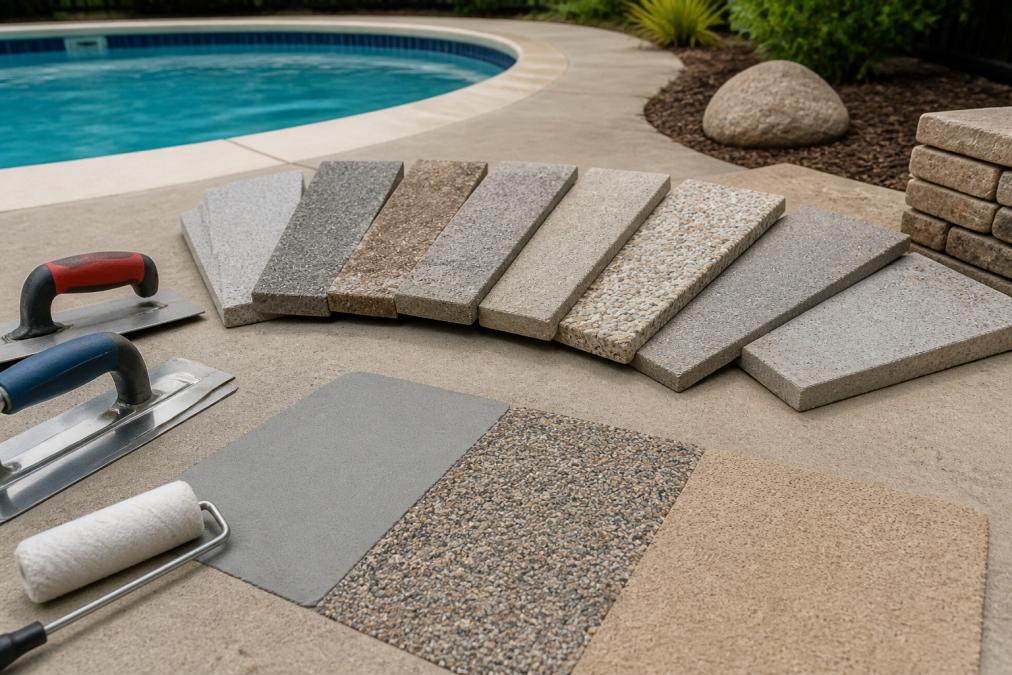
Table of Contents
- Pool Deck Resurfacing Options: Quick Comparison Table
- 1. CTi AcryliCrete Polymer Overlays
- 2. Polyaspartic Cool-Touch Coatings
- 3. Stamped Concrete Overlays
- 4. Kool Deck Textured Topping System
- 5. Rubber Overlay Surfacing
- 6. Epoxy and Polyurea Coatings
- 7. Concrete Staining
Last Updated: August 25, 2026
Pool Deck Resurfacing Options: Quick Comparison Table
When your pool deck shows signs of wear, cracked concrete, faded color, or slippery surfaces, resurfacing becomes essential for safety, comfort, and protecting your investment. At Concrete-Enhancements, we've worked with hundreds of homeowners to transform aging pool decks into durable, beautiful surfaces.
The right option depends on three factors: your budget, the current condition of your concrete, and your priorities, whether that's heat reduction, slip resistance, aesthetics, or durability.
| Resurfacing Option | Surface Temperature | Slip Resistance | Durability | Best For |
|---|---|---|---|---|
| CTi AcryliCrete Polymer Overlay | 30°F cooler | Excellent | 10-15 years | Homeowners wanting aesthetics + comfort |
| Polyaspartic Cool-Touch Coating | 20-30°F cooler | Excellent | 15+ years | Long-term durability seekers |
| Stamped Concrete Overlay | Standard temp | Good | 10-20 years | Those wanting premium stone/wood look |
| Kool Deck Textured System | 20-30°F cooler | Excellent | 10-15 years | Budget-conscious heat reduction |
| Rubber Overlay Surfacing | Standard temp | Excellent | 15+ years | Comfort and impact resistance |
| Epoxy and Polyurea Coatings | Moderate reduction | Excellent | 12-20 years | Commercial or high-traffic areas |
| Concrete Staining | Standard temp | Varies | 3-7 years | Quick cosmetic refresh |
1. CTi AcryliCrete Polymer Overlays
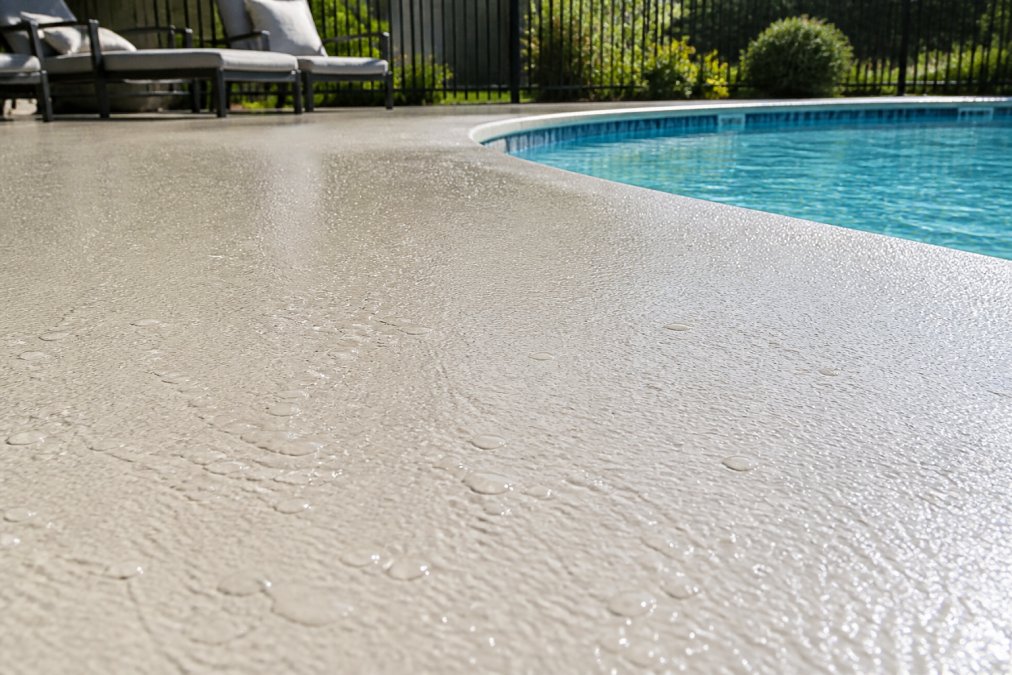
CTi AcryliCrete is a polymer-modified concrete overlay that mimics natural stone, brick, slate, or wood without the cost or maintenance of the real thing. The surface reflects heat instead of absorbing it, staying up to 30°F cooler than standard concrete in direct sun, critical for families with young children (peer-reviewed research).
The slip-resistant texture performs well when wet, essential for pool safety. Durability sits at 10-15 years with proper maintenance, and the polymer technology makes it 200% stronger than traditional concrete. UV stability is built in, so color won't fade dramatically under intense sun exposure.
The limitation: this requires professional installation by a certified dealer. If your existing concrete has significant structural damage or deep cracks, the overlay won't fix the underlying problem. Concrete-Enhancements specializes in this application and can assess whether your deck substrate is solid enough for an overlay system.
2. Polyaspartic Cool-Touch Coatings
Polyaspartic coatings deliver exceptional durability. This self-priming coating system cures in roughly one day, allowing the deck to be used almost immediately. The polyaspartic base combined with a polyurea topcoat creates a mechanical bond that resists peeling and delamination far better than traditional epoxy.
Surface temperatures drop 20-30°F compared to untreated concrete, and the coating resists chlorine, sunscreen, and pool chemicals. Slip resistance is excellent both wet and dry. Real-world durability data shows these systems lasting 15+ years when applied correctly, with warranties typically running 15 years. The system handles freeze-thaw cycles better than acrylic-based overlays.
Professional installation is required; this isn't DIY-friendly. The application window is tight, material costs more than basic acrylic systems, and mistakes are expensive to correct. Pricing for a typical 500-square-foot deck runs higher than some alternatives, but longevity often justifies the upfront cost.
3. Stamped Concrete Overlays
Stamped concrete overlays transform a plain gray deck into something resembling expensive slate, natural stone, or wood grain. The cement-based coating is applied over existing concrete, then stamped before it sets.
You get the look of premium materials at a fraction of the cost, a stamped overlay mimicking slate might cost $10 per square foot versus 3-4 times that for actual slate. Durability depends heavily on sealer maintenance; a well-maintained overlay lasts 10-20 years. Without regular sealer reapplication (every 2-3 years), the finish degrades faster.
This option works best for homeowners prioritizing aesthetics and willing to maintain the sealer schedule. It's less suitable if your concrete has structural damage or if heat reduction is important.
4. Kool Deck Textured Topping System
Kool Deck is a polymer-modified cementitious topping that reduces surface temperature by 20-30°F through reflectivity and textured finish that promotes air circulation. The texture provides excellent slip resistance and can be stamped to mimic natural stone if desired.
It's durable in freeze-thaw climates and resistant to cracking from thermal expansion. While some contractors offer it as a DIY option, professional application is strongly recommended. The curing process takes several days, and foot traffic must be kept off during that window. Lighter colors reflect more heat; darker colors absorb it, diminishing the cooling benefit.
Kool Deck is a middle-ground option: more affordable than polyaspartic systems, more heat-reducing than basic stains, and more durable than simple paint.
5. Rubber Overlay Surfacing
Rubber overlays create a softer, more forgiving surface than bare concrete, beneficial for those with joint issues or anyone preferring comfort underfoot. The material is highly slip-resistant, even when wet, making it one of the safest options for active families.
The surface is durable and flexible, less likely to crack from thermal expansion than rigid systems. It handles freeze-thaw cycles well and performs consistently across temperature ranges. The limitation is that rubber doesn't reduce surface temperature. On a 95-degree day, a rubber overlay will still be hot underfoot. It also carries higher initial cost than some alternatives.
6. Epoxy and Polyurea Coatings
Epoxy and polyurea coatings are industrial-strength finishes that excel in high-traffic or commercial environments. They create a hard, stain-resistant, easy-to-clean surface with exceptional durability, 12-20 years is realistic with proper maintenance. pool deck hardware.
For residential pool decks, these are often overkill unless the deck serves multiple purposes with heavy foot traffic. The slip resistance is excellent, but the finish can feel industrial rather than warm. They also don't provide heat reduction. These coatings make sense for commercial facilities; for a residential pool deck, a cooler-touch system or polymer overlay typically delivers better value.
7. Concrete Staining
Staining is the quickest, most affordable refresh option. Acid or water-based stains add color to existing concrete, and a sealer provides protection. The process is fast, disruption is minimal, and cost is low compared to overlays or coatings.
The limitation is obvious: staining doesn't address surface imperfections, cracks, or spalling. It's purely cosmetic. Durability is shorter, 3-7 years before resealing becomes necessary. Slip resistance depends on the sealer used; some are slippery when wet.
Staining works for homeowners wanting a quick color update without major investment. It's not suitable if your deck has significant damage or if safety is a top priority.
How to Repair Cracks in Pool Deck Concrete
Cracks in pool deck concrete should be repaired before applying any resurfacing system. Water penetrates cracks, weakens the substrate, and causes overlays or coatings to fail prematurely.
The repair method depends on crack width. Hairline cracks (less than 1/8 inch) can be sealed with liquid crack sealers or epoxy injections (aci.org). Wider cracks (1/8 inch to 1/2 inch) require concrete crack repair compounds, flexible polyurethane or epoxy-based materials that bond to both sides and flex with thermal expansion. Cracks wider than 1/2 inch may indicate settling or shifting and require professional assessment.
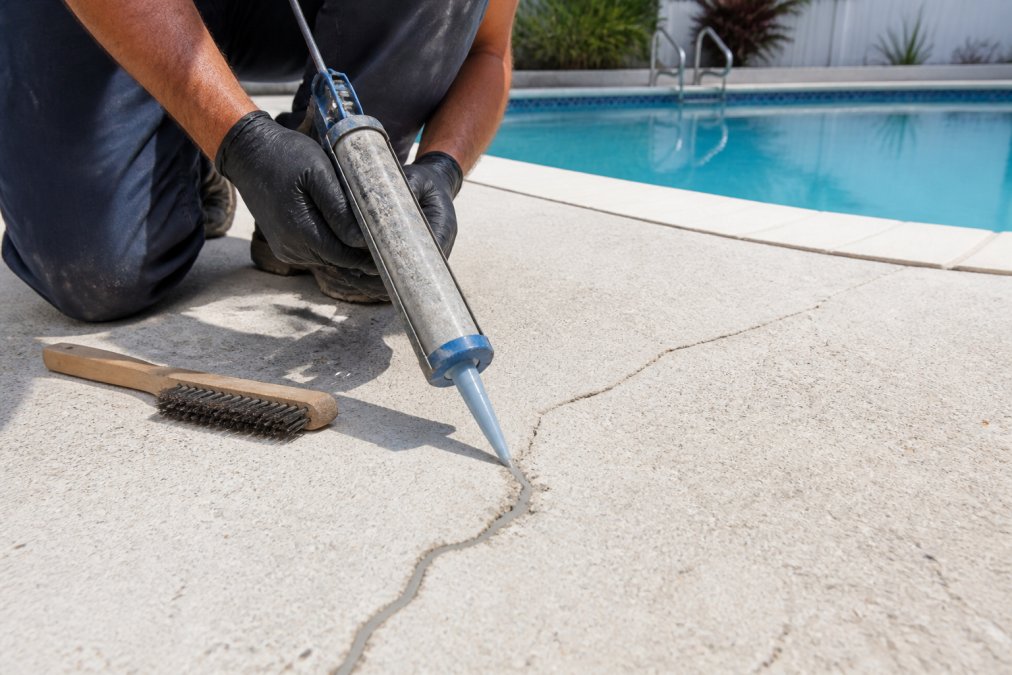
The process is straightforward: clean the crack thoroughly (pressure wash or wire brush), allow it to dry completely, apply the repair compound according to product instructions, and allow full curing before applying any overlay or coating.
Factors Influencing Your Choice
Budget is obvious; staining is cheapest, polyaspartic systems are most expensive. Climate matters significantly. In hot regions, heat-reducing systems outperform others. In freeze-thaw climates, durability and flexibility are critical; polyaspartic and rubber overlays excel here.
Current deck condition determines what's possible. Structurally sound but cosmetically worn decks work well with overlays and coatings. Significant damage may require structural repair before resurfacing. Maintenance tolerance varies by homeowner. Stamped overlays require sealer reapplication every 2-3 years. Polyaspartic and epoxy systems need occasional cleaning but minimal maintenance.
Call (919) 824-5403 or email craigrfear@gmail.com for a free estimate →
Aesthetic preference is personal. Safety requirements matter if you have young children or elderly residents. Slip-resistant surfaces are non-negotiable in those cases.
Non-Slip Pool Deck Coatings: Safety Standards
Slip resistance is measured by a coefficient of friction (COF). For pool decks, a wet COF of 0.60 or higher is considered safe for barefoot traffic. Most systems discussed here achieve this threshold when properly applied.
Concrete staining alone may not meet safety standards unless the sealer includes anti-slip additives. If slip resistance is your primary concern, specify it upfront when getting quotes. Many contractors can add aggregate or textured finishes to boost COF ratings.
Test the finished surface before full installation if possible. A wet surface should feel secure underfoot.
Pool Deck Resurfacing Cost Per Square Foot
Concrete staining runs lowest, typically $2-5 per square foot. Stamped overlays average $8-15. Polymer overlays like CTi AcryliCrete range $12-20. Polyaspartic coatings typically cost $15-25. Rubber overlays run $15-25. Epoxy and polyurea systems range $12-20.
These figures assume the existing concrete is structurally sound and requires only standard surface preparation. For a typical 500-square-foot residential pool deck, a stain refresh might run $1,000-2,500, while a polyaspartic system could run $7,500-12,500.
Get quotes from multiple contractors. Concrete-Enhancements provides free estimates so you can compare options without obligation.
Maintenance Requirements for Long-Term Performance
Every resurfacing option requires some maintenance, though intensity varies. Polymer overlays need sealer reapplication every 2-3 years and regular cleaning with mild soap and water. Avoid harsh chemicals or pressure washers.
Polyaspartic and polyurea coatings are low-maintenance. Sweep regularly, clean with mild detergent, and avoid abrasive scrubbing.
Stamped overlays require sealer reapplication every 2-3 years. Cracks should be sealed promptly.
Kool Deck needs occasional cleaning and may require sealer touch-ups.
Rubber overlays require minimal maintenance, regular cleaning and occasional inspection for wear.
Epoxy and polyurea coatings are very low-maintenance, needing only regular cleaning.
Concrete stains require sealer reapplication every 1-2 years and regular cleaning.
The key to longevity is addressing issues early. Small cracks, stains, or worn areas should be repaired promptly before they expand.
Why Professional Installation Matters
DIY pool deck resurfacing rarely produces professional results. Surface preparation is the most critical step, and it's where most DIY attempts fail. Pressure washing alone isn't sufficient; acid etching, crack repair, and moisture testing are necessary for proper adhesion.
Application technique matters enormously. Overlay thickness, texture consistency, and curing conditions all affect final quality. A professional contractor has equipment, experience, and quality control that homeowners typically lack.
Professional installation also comes with accountability. If the work fails prematurely, a reputable contractor will address it.
Concrete-Enhancements has over 20 years of experience in pool deck resurfacing across the region. We're a CTi Certified Dealer, meeting strict standards for material handling and application technique. We can assess your deck's condition, recommend the best system for your situation, and execute the work to professional standards.
Choosing the right pool deck resurfacing system affects your deck's appearance, safety, and longevity for years to come. The best option depends on your priorities: heat reduction, durability, aesthetics, budget, or comfort. Concrete-Enhancements specializes in all these systems and can guide you through the decision with a free assessment of your current deck condition. Call us at (919) 824-5403 or email craigrfear@gmail.com to schedule your consultation and get a detailed quote for your specific project.
Frequently Asked Questions
What is the best concrete resurfacing material for pool decks?
The best material depends on your priorities. Polyaspartic and polyurea coatings offer superior durability and cool-to-the-touch properties, making them ideal for hot climates. Stamped concrete overlays provide aesthetic flexibility and can mimic natural stone. Rubber overlays prioritize comfort and slip resistance. For maximum heat reduction, products like Kool Deck and acrylic quartz coatings reduce surface temperatures by 20-30°F, making barefoot walking comfortable even in intense sun.
How much does pool deck resurfacing cost per square foot?
Pool deck resurfacing cost per square foot varies by material and complexity. Polyaspartic coatings typically range from $6-$12 per square foot, while stamped concrete overlays average around $10 per square foot. Rubber overlays and epoxy systems require custom quotes based on surface condition and design specifications. Contact Concrete-Enhancements for a free estimate tailored to your deck's specific needs and location.
How long does pool deck resurfacing last?
Durability depends on the material and maintenance. Polyaspartic coatings often come with 15-year warranties. Stamped concrete overlays and polymer-modified systems can last 10-20 years with proper care. Concrete staining requires periodic sealant reapplication. Environmental factors, freeze-thaw cycles, UV exposure, chlorine contact, and foot traffic, affect lifespan. Regular maintenance, including cleaning and resealing, extends the life of any resurfacing option significantly.
Can I resurface my pool deck myself, or do I need a professional?
Most pool deck resurfacing requires professional installation for optimal results. Polyaspartic, epoxy, and polyurea systems demand precise surface preparation, proper curing conditions, and specialized equipment. Incorrect application causes peeling, poor adhesion, and premature failure. While some homeowners attempt DIY concrete staining or basic sealers, complex overlays and coatings benefit from professional expertise. Concrete-Enhancements can assess your deck and provide a professional solution with guaranteed durability.
What makes non-slip pool deck coatings different from regular concrete finishes?
Non-slip pool deck coatings incorporate textured surfaces, aggregate materials, or specialized polymers that increase traction even when wet. Products like Kool Deck use textured cementitious toppings, while polyaspartic and epoxy coatings add slip-resistant additives. These coatings maintain grip in wet conditions and prevent dangerous slipping around pools. Most modern resurfacing options include slip-resistance as a standard feature, making them safer than bare concrete for families and high-traffic areas.
This article was written using GrandRanker
Frequently Asked Questions
The best material depends on your priorities. Polyaspartic and polyurea coatings offer superior durability and cool-to-the-touch properties, making them ideal for hot climates. Stamped concrete overlays provide aesthetic flexibility and can mimic natural stone. Rubber overlays prioritize comfort and slip resistance. For maximum heat reduction, products like Kool Deck and acrylic quartz coatings reduce surface temperatures by 20-30°F, making barefoot walking comfortable even in intense sun.
Pool deck resurfacing cost per square foot varies by material and complexity. Polyaspartic coatings typically range from $6-$12 per square foot, while stamped concrete overlays average around $10 per square foot. Rubber overlays and epoxy systems require custom quotes based on surface condition and design specifications. Contact Concrete-Enhancements for a free estimate tailored to your deck's specific needs and location.
Durability depends on the material and maintenance. Polyaspartic coatings often come with 15-year warranties. Stamped concrete overlays and polymer-modified systems can last 10-20 years with proper care. Concrete staining requires periodic sealant reapplication. Environmental factors—freeze-thaw cycles, UV exposure, chlorine contact, and foot traffic—affect lifespan. Regular maintenance, including cleaning and resealing, extends the life of any resurfacing option significantly.
Most pool deck resurfacing requires professional installation for optimal results. Polyaspartic, epoxy, and polyurea systems demand precise surface preparation, proper curing conditions, and specialized equipment. Incorrect application causes peeling, poor adhesion, and premature failure. While some homeowners attempt DIY concrete staining or basic sealers, complex overlays and coatings benefit from professional expertise. Concrete-Enhancements can assess your deck and provide a professional solution with guaranteed durability.
Non-slip pool deck coatings incorporate textured surfaces, aggregate materials, or specialized polymers that increase traction even when wet. Products like Kool Deck use textured cementitious toppings, while polyaspartic and epoxy coatings add slip-resistant additives. These coatings maintain grip in wet conditions and prevent dangerous slipping around pools. Most modern resurfacing options include slip-resistance as a standard feature, making them safer than bare concrete for families and high-traffic areas.