how-to
Is Epoxy Flooring Suitable for Outdoor Patios?
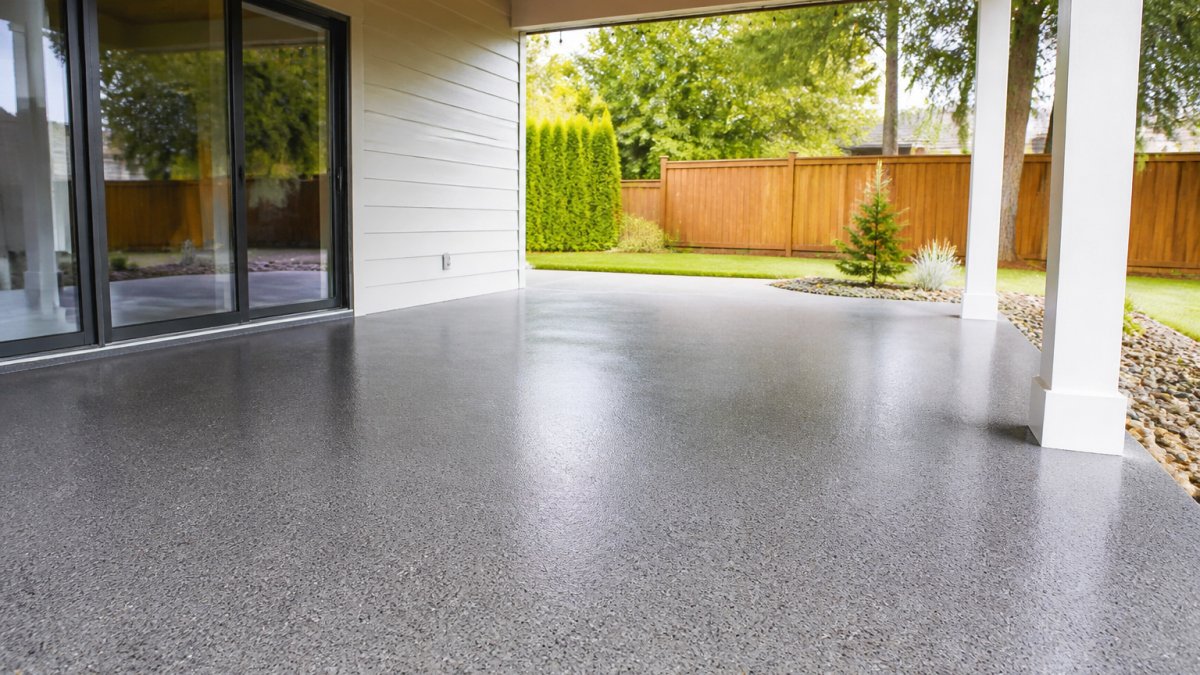
Table of Contents
- Epoxy Patio Flooring Pros and Cons: The Honest Breakdown
- Where Epoxy Wins on an Outdoor Patio
- Where Epoxy Falls Short Outdoors
- UV Exposure, Yellowing, and Color Fading on Outdoor Epoxy
- Choosing a UV-Resistant Patio Floor Coating That Lasts
- Slip-Resistant Outdoor Concrete Coating for Wet Conditions
- How to Apply Epoxy to a Concrete Patio: Step-by-Step
- Climate and Seasonal Installation Limits for Outdoor Epoxy
- Conclusion: Matching Epoxy to Your Patio's Exposure
- Frequently Asked Questions
Last Updated: October 16, 2026
Epoxy Patio Flooring Pros and Cons: The Honest Breakdown
Is epoxy flooring suitable for outdoor patios? Sometimes. It works well on covered patios with shade and stable temperatures, but it fails fast when slapped onto open slabs that take full sun, standing water, and hard freezes. At Concrete-Enhancements, we have resurfaced concrete across the Raleigh-Durham Triangle, the NC Triad, and Coastal SC for more than 20 years, and the pattern is always the same: exposure decides everything, not the brand of resin.
An outdoor patio is a hardscape surface, usually concrete, that sits exposed to sun, rain, and temperature swings. That exposure is what separates an indoor garage floor from a patio slab, and it is the reason so many do-it-yourself epoxy jobs peel within a year.
Here is the honest split:
- Epoxy wins on covered, shaded, or screened patios with dry, stable conditions
- Epoxy falls short on open slabs with direct sunlight, pooling water, or freeze-thaw cycles
- UV exposure is the number one killer, breaking down the resin and turning clear coats yellow
- Surface preparation decides whether any coating sticks, indoors or out
Get those four factors right and epoxy can last years. Get them wrong and you will be scraping up flakes by next spring.
Where Epoxy Wins on an Outdoor Patio
Covered patios are where epoxy earns its keep, but "covered" is not a single condition. The right call depends on how much sun, rain, and temperature swing the slab actually sees.
Tier 1, Fully covered and shaded. A roof, awning, or screen enclosure blocks direct UV and most rain. This is the only tier where a standard epoxy base coat with no UV-stable topcoat is a defensible choice, and even here a topcoat extends the service life.
Tier 2, Partially shaded or screened. The slab sees a few hours of direct sun a day, or rain blows in at the edges.
Tier 3, Fully exposed. Direct sun all day, rain, and freeze-thaw in cold regions. Plain epoxy is the wrong product here.
Tier 4, Pool decks and splash zones. Constant wetting, chlorinated or salt water, and barefoot traffic.
A quick self-check: stand on the patio at noon and again at 4 p.m. If you cast a hard shadow on the slab at either time, you are in Tier 2 or worse.
- Best for Tier 1 and Tier 2 slabs with stable temperatures and good drainage
- Best for homeowners who want color, flake, or metallic finishes and easy cleaning
- Workable on Tier 3 only with a UV-stable topcoat and mild winters
- Not for open slabs in freeze-thaw regions or slabs that hold standing water
Where Epoxy Falls Short Outdoors
Direct sunlight is epoxy's weak point. Standard epoxy has poor UV resistance, so it yellows, chalks, and fades when the sun hits it day after day. That is not a defect in one brand. It is the chemistry. The same applies to water: epoxy is not fully waterproof, and a slab that holds standing water will eventually blister and peel.
Temperature swings add another problem. In cold climates, freeze-thaw cycles push moisture through the slab, and a rigid epoxy coating can crack under the stress. Add poor drainage or a damp slab, and adhesion fails.
- Yellows and fades under direct UV exposure
- Blisters when moisture gets trapped under the coating
- Cracks under freeze-thaw movement
- Slippery when wet unless you add grip
- Needs near-perfect surface preparation to stick
UV Exposure, Yellowing, and Color Fading on Outdoor Epoxy
UV exposure is the single biggest reason outdoor epoxy fails. Sunlight breaks down the resin's chemical bonds, and the first sign is a yellow or amber tint, especially on light and clear coats. Next comes chalking, a powdery film that dulls the finish. Then color fading sets in and the surface looks tired.
The fix is not more epoxy. It is a UV-stable topcoat. A protective topcoat made from polyurethane, polyaspartic, or polyurea sits over the epoxy and absorbs the UV hit. According to coatings performance guidance from the American Concrete Institute, the topcoat, not the base resin, is what determines how a coating weathers in the sun.
Choosing a UV-Resistant Patio Floor Coating That Lasts
Not every coating handles the outdoors the same way. Here is how the main options compare for a patio slab.
Call (919) 824-5403 or email craigrfear@gmail.com for a free estimate →
| Coating | UV Resistance | Best For | Watch Out For |
|---|---|---|---|
| Standard epoxy | Low | Covered patios | Yellowing, chalking |
| Epoxy + polyurethane topcoat | High | Sun-exposed patios | Extra prep and cure time |
| Polyaspartic | High | Fast-cure jobs | Higher material cost |
| Polyurea | High | Wet, humid slabs | Needs skilled application |
The pattern is clear. Plain epoxy belongs under a roof. For open, sun-baked concrete, pair epoxy with a UV-stable topcoat or step up to polyaspartic or polyurea. A concrete surface preparation standard from the International Concrete Repair Institute backs this up: the coating is only as good as the prep underneath it.
Slip-Resistant Outdoor Concrete Coating for Wet Conditions
A wet epoxy patio is a hazard. Smooth coatings turn slick the moment rain or pool water hits them, and that is a real problem around a pool deck or any surface kids run across barefoot. The answer is an anti-slip additive mixed into the topcoat or broadcast as an aggregate across the surface.
Grip comes from texture, so you trade a little smoothness for traction. Options range from fine polymer grit to coarser silica aggregate, and the right pick depends on how wet the area stays. A safety guidance on walking surfaces from the National Safety Council notes that most slip-and-fall injuries happen on surfaces that look dry but hold a thin film of water, which is exactly the condition a slick patio coating creates.
- Add grip to any patio near a pool, spa, or outdoor shower
- Use finer aggregate on barefoot areas, coarser grit on walkways
- Reapply topcoat with additive every few years to keep traction
- Test the finish wet before you commit to the whole slab
How to Apply Epoxy to a Concrete Patio: Step-by-Step
Applying epoxy to a concrete patio is a prep-heavy job: most of the work happens before the first drop of resin. Skip a step and the coating peels. Follow this order and give each stage time to finish.
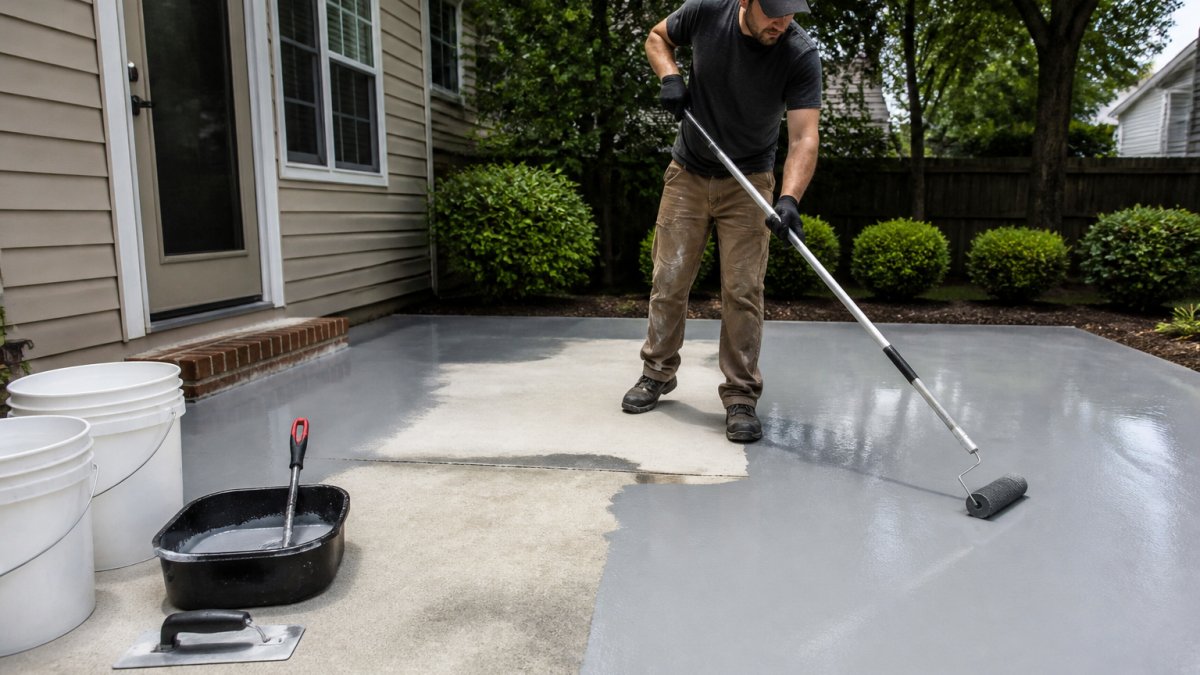
Total time: 3 to 5 days including cure Difficulty: Intermediate to advanced
- Check the weather. You need 2 to 3 dry days with temps between 60°F and 80°F.
- Clean the slab. Remove dirt, oil, and loose material with a degreaser and a stiff brush.
- Test for moisture. Tape a plastic sheet down for 24 hours and check for trapped damp.
- Prep the surface. Grind or etch the concrete so the coating has a rough profile to grip.
- Repair cracks. Fill cracks and patch spalls so the slab is flat and sound.
- Prime the slab. Roll on a primer made for your coating system.
- Mix the resin and hardener. Combine exactly per the label and mix for the full time.
- Apply the base coat. Roll it on at the recommended thickness, working in sections.
- Add the topcoat. Apply the UV-stable topcoat and broadcast anti-slip aggregate if needed.
- Cure and wait. Keep foot traffic off for at least 24 hours and heavy use off longer.
Moisture Testing and Drainage Checks Before You Start
Moisture is the silent coating killer. A slab that holds damp will push vapor up through the epoxy and blister it from below, no matter how well you prep the top. Test before you coat, not after.
Tape a 2-foot square of plastic to the slab, seal the edges, and wait 24 hours. Condensation under the sheet means the slab is holding moisture and needs more cure time or a moisture-tolerant system. Then check drainage: water should sheet off the patio, not pool in low spots. Fix the slope or add a drain before coating, because trapped water will wreck any finish over time.
Climate and Seasonal Installation Limits for Outdoor Epoxy
Temperature and humidity decide when you can install. Most epoxy systems want air and slab temps between 60°F and 80°F, with low humidity. Coat too cold and the resin will not cure properly. Coat too hot and it sets before you can roll it out. High humidity traps moisture and clouds the finish.
Seasonal timing matters too. In colder regions, avoid coating within weeks of a freeze, since freeze-thaw cycles can crack a fresh coating. In hot, humid summers, work early in the day and watch the slab temperature, not just the air. As a guide to coating application conditions from the Portland Cement Association explains, the slab's own temperature and moisture content often matter more than the weather report.
Conclusion: Matching Epoxy to Your Patio's Exposure
The honest answer to whether epoxy suits your patio comes down to exposure. Covered and shaded slabs do great with epoxy plus a UV-stable topcoat. Open slabs that bake in the sun and hold water need polyaspartic, polyurea, or a different approach entirely. Getting that match right is the difference between a finish that lasts a decade and one you scrape up in a year.
That is exactly the call we make every day. Concrete-Enhancements brings 20+ years of experience and CTi Certified Dealer status to every patio, driveway, and pool deck we resurface. We handle decorative overlays, epoxy floor coatings, and professional concrete repair, and we will tell you straight whether epoxy fits your slab or whether a UV-resistant system is the smarter buy.
Frequently Asked Questions
Can epoxy flooring be used on an outdoor patio?
Yes, but with conditions. Standard epoxy resins break down under direct sunlight, so an outdoor patio needs a UV-resistant topcoat such as polyurethane or polyaspartic over the epoxy base. Covered patios hold up far better than fully exposed slabs. A patio with partial shade and proper drainage can last years, while a south-facing slab in full sun will need more frequent recoating. The base concrete must be sound, dry, and free of cracks before any coating goes down.
Does sunlight damage outdoor epoxy?
Direct sunlight degrades standard epoxy over time. UV exposure causes yellowing and color fading, especially in lighter shades, and the surface can turn chalky. The epoxy itself usually stays intact structurally, but the appearance suffers. A UV-resistant patio floor coating, typically a polyurethane or polyaspartic topcoat, blocks most of that damage. Even with a topcoat, expect some color shift after several years of full sun, which is why many installers recommend darker or earth-toned finishes for exposed patios.
Is epoxy patio flooring slippery when wet?
Smooth epoxy is slippery when wet, which matters on a patio near a pool or in rainy conditions. The fix is a slip-resistant outdoor concrete coating: an anti-slip additive or fine aggregate broadcast into the topcoat while it is still wet. This creates texture without ruining the finish. For pool decks, many installers use a polyaspartic or polyurea topcoat with aggregate because those cure faster and hold texture well. Test the finished surface with wet shoes before calling the job done.
How long does an outdoor epoxy patio coating last?
A covered patio with a UV-stable topcoat can go 10 to 15 years before needing a recoat. A fully exposed slab in direct sun and freeze-thaw cycles typically needs attention sooner, often within 5 to 8 years, depending on coating thickness and maintenance. Peeling and blistering usually trace back to moisture in the concrete or poor surface preparation, not the coating itself. Regular cleaning and prompt crack repair extend the lifespan of any outdoor epoxy system.
Tags: outdoor patios, is epoxy flooring suitable for outdoor patios, epoxy patio flooring pros and cons, uv-resistant patio floor coating, slip-resistant outdoor concrete coating
Frequently Asked Questions
Yes, but with conditions. Standard epoxy resins break down under direct sunlight, so an outdoor patio needs a UV-resistant topcoat such as polyurethane or polyaspartic over the epoxy base. Covered patios hold up far better than fully exposed slabs. A patio with partial shade and proper drainage can last years, while a south-facing slab in full sun will need more frequent recoating. The base concrete must be sound, dry, and free of cracks before any coating goes down.
Direct sunlight degrades standard epoxy over time. UV exposure causes yellowing and color fading, especially in lighter shades, and the surface can turn chalky. The epoxy itself usually stays intact structurally, but the appearance suffers. A UV-resistant patio floor coating, typically a polyurethane or polyaspartic topcoat, blocks most of that damage. Even with a topcoat, expect some color shift after several years of full sun, which is why many installers recommend darker or earth-toned finishes for exposed patios.
Smooth epoxy is slippery when wet, which matters on a patio near a pool or in rainy conditions. The fix is a slip-resistant outdoor concrete coating: an anti-slip additive or fine aggregate broadcast into the topcoat while it is still wet. This creates texture without ruining the finish. For pool decks, many installers use a polyaspartic or polyurea topcoat with aggregate because those cure faster and hold texture well. Test the finished surface with wet shoes before calling the job done.
A covered patio with a UV-stable topcoat can go 10 to 15 years before needing a recoat. A fully exposed slab in direct sun and freeze-thaw cycles typically needs attention sooner, often within 5 to 8 years, depending on coating thickness and maintenance. Peeling and blistering usually trace back to moisture in the concrete or poor surface preparation, not the coating itself. Regular cleaning and prompt crack repair extend the lifespan of any outdoor epoxy system.