ultimate-guide
What Is Concrete Microtopping: A Complete Guide
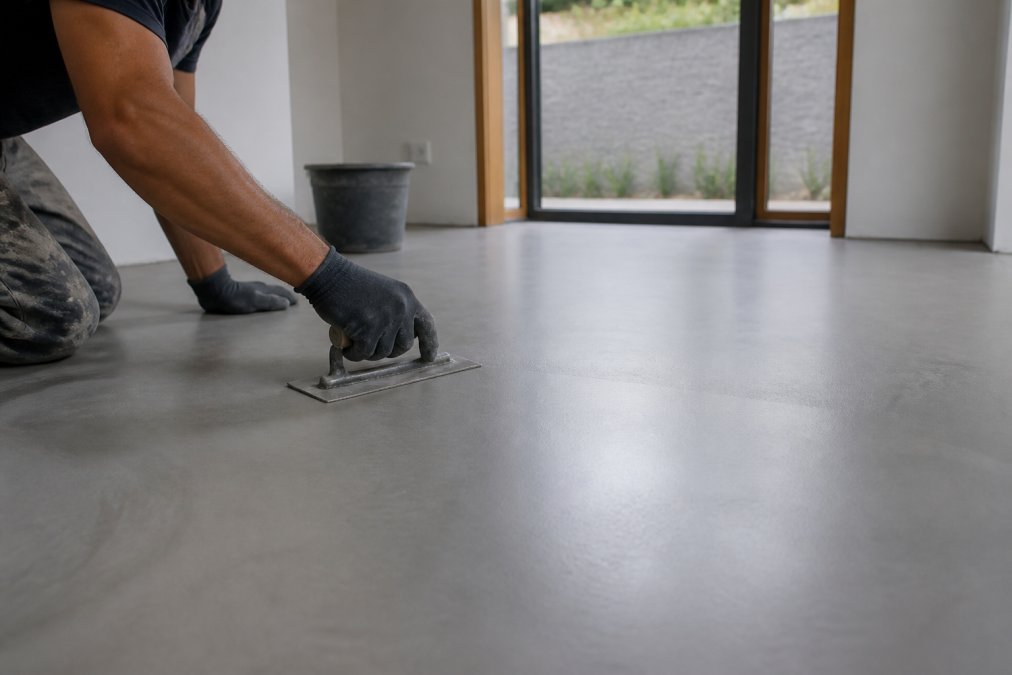
Table of Contents
- What Is Concrete Microtopping?
- How Microtopping Works
- Pros and Cons of Concrete Microtopping
- Concrete Microtopping Installation Process
- Decorative Concrete Overlay Cost Per Square Foot
- Maintenance and Repair Protocols
- Interior vs. Exterior Applications
- Troubleshooting Common Failures
- Frequently Asked Questions
Last Updated: September 1, 2026
What Is Concrete Microtopping?
A concrete microtopping finish is a thin cementitious coating applied over existing concrete surfaces to create a seamless, decorative layer. Unlike traditional concrete overlays that can be several inches thick, microtopping typically ranges from 1/8 inch to 1/4 inch in depth, making it an efficient resurfacing solution for residential patios, driveways, pool decks, and interior floors.
The coating combines polymer-modified cement with fine aggregates and specialized additives to bond directly to the substrate. This creates a durable surface that can be integrally colored, textured, or sealed to match virtually any design aesthetic. Because the application layer is so thin, curing time is significantly shorter than traditional concrete pours. A properly prepared surface can be sealed and ready for light use within 24 to 48 hours.
How Microtopping Works
Microtopping works by creating a mechanical and chemical bond between the polymer-modified cement coating and the existing concrete substrate. The polymer modification is critical to performance, these synthetic resins improve flexibility, tensile strength, and water resistance compared to plain cement-based coatings. Fine aggregates provide texture and visual interest while contributing to compressive strength.
The application process involves multiple stages: the substrate is mechanically ground to expose concrete pores and remove contaminants, a bonding agent is applied to promote adhesion, the microtopping is troweled on in thin, even passes, and finally a protective sealer is applied once the base coat has cured. Environmental factors like temperature and humidity affect curing speed and final durability.
Pros and Cons of Concrete Microtopping
Advantages:
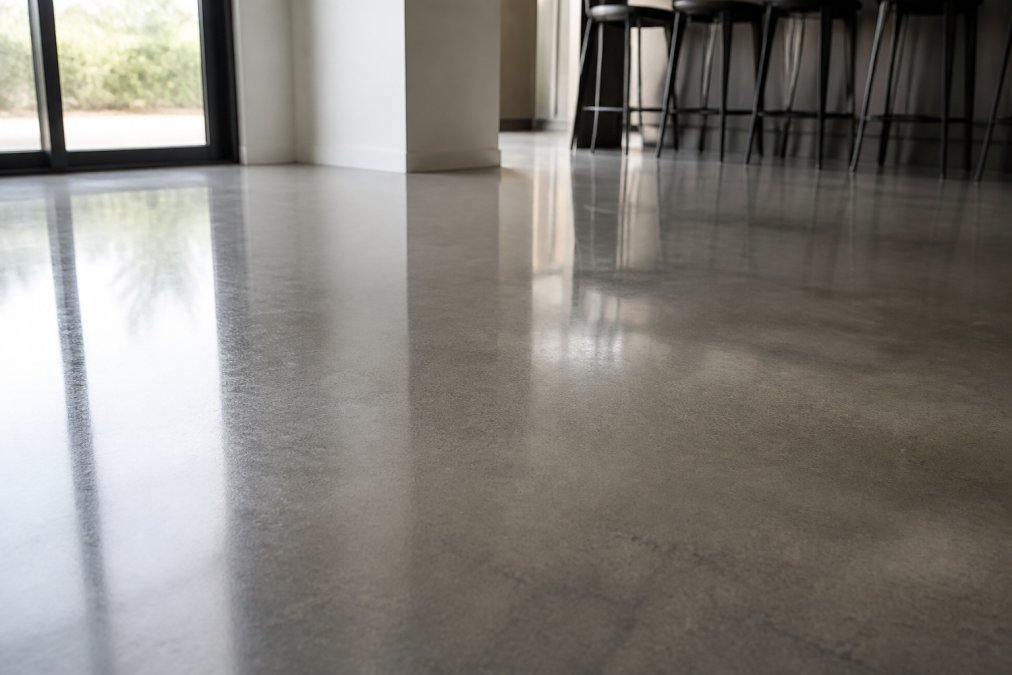
Microtopping offers several compelling benefits. The thin application means minimal substrate removal and lower labor costs compared to traditional concrete replacement. The seamless finish eliminates grout lines and joints that trap dirt and moisture, making the surface easier to clean and maintain. Decorative options are extensive: integrally colored formulations, textured finishes, and various sealer options allow customization to match nearly any design vision.
The rapid curing time is significant for both residential and commercial applications. A patio or pool deck can be resurfaced in a single day and ready for light use within 48 hours. The finish is also more sustainable than full replacement, as it reuses existing concrete rather than requiring demolition and disposal. When properly installed and maintained, a well-sealed microtopping in a residential setting typically lasts 10 to 15 years or longer.
Disadvantages:
Microtopping is not appropriate for all situations. High-traffic commercial environments with heavy equipment or abrasive materials can wear through the thin coating faster than thicker concrete overlays. The finish is more prone to damage from point loads or sharp impacts than solid concrete.
Substrate condition is critical. If the underlying concrete is severely damaged, has active moisture issues, or is structurally compromised, microtopping alone will not solve the problem. The application also requires skilled labor, poor technique during troweling results in visible marks, inconsistent texture, or uneven color. Inadequate surface preparation leads to adhesion failure and peeling.
Cost, while lower than full replacement, still represents a significant investment. Concrete-Enhancements provides free estimates to help property owners understand the investment required for their specific project.
Concrete Microtopping Installation Process
Surface Preparation and Substrate Inspection
The foundation of any successful microtopping project is thorough substrate preparation. The existing concrete must be inspected for structural integrity, moisture issues, and surface contaminants. Cracks larger than 1/8 inch should be routed out and filled with appropriate repair material. Any areas showing spalling, delamination, or significant damage must be addressed before microtopping can be applied.
Mechanical grinding is the standard preparation method. A concrete grinder removes the top layer of concrete, exposing fresh aggregate and opening the pores to accept the bonding agent. This process typically removes 1/16 to 1/8 inch of concrete and creates a profile that the microtopping can grip.
After grinding, the surface must be thoroughly cleaned using industrial vacuums and, in some cases, pressure washing. A clean surface is essential because any remaining particles will prevent proper adhesion. Moisture testing is critical, especially for interior applications or areas with a history of dampness. Concrete that retains excessive moisture will reject the microtopping coating or trap moisture beneath it, leading to failure.
Application and Trowel Technique
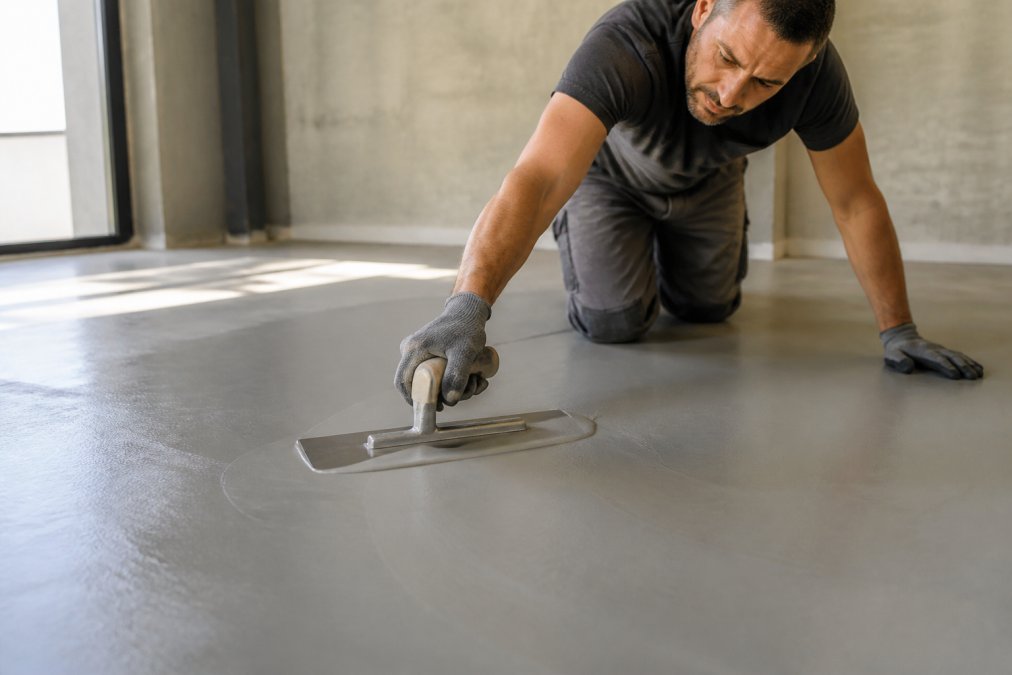
Once the substrate is prepared and dry, a bonding agent is applied to further promote adhesion. The microtopping itself is mixed to the correct consistency and applied using stainless steel trowels. The trowel angle, pressure, and speed directly affect the final finish. A skilled applicator maintains consistent pressure and trowel angle to create an even, seamless surface.
Trowel technique requires experience. Too much pressure creates a dense, overly smooth surface; too little pressure leaves the texture uneven and the coating thinner than intended. The goal is a consistent, monolithic appearance with uniform color and texture throughout. Temperature, humidity, and air circulation all affect how the material sets and cures. Ideal conditions are 50 to 85 degrees Fahrenheit with moderate humidity.
Curing and Sealer Application
After the final coat is applied, the microtopping must cure before sealer is applied. Initial set typically occurs within 24 hours, but full strength development takes longer. Once cured, a protective sealer is applied to the microtopping surface. The sealer protects against moisture penetration, enhances stain resistance, and provides UV protection to prevent color fading. For exterior applications, UV-resistant sealers are essential. For interior high-traffic areas, sealers with enhanced durability are recommended.
Sealer application is typically done with a roller or sprayer. Multiple thin coats are preferable to one thick coat, as this ensures even coverage and better protection. The sealer must cure fully before the surface is exposed to heavy use, moisture, or foot traffic.
Decorative Concrete Overlay Cost Per Square Foot
Pricing for a concrete microtopping finish varies based on surface size, existing concrete condition, desired finish complexity, and local labor rates. Surface preparation typically represents 30 to 40 percent of total project cost. If the substrate is in good condition and requires only grinding and cleaning, preparation is straightforward and less expensive. If extensive repair, crack filling, or moisture remediation is needed, costs increase.
Material costs depend on the specific microtopping formulation selected, the thickness of application, and whether decorative elements like integral coloring or special texturing are included. Labor costs reflect the skill and experience required for proper installation. A qualified applicator familiar with microtopping techniques ensures the finish is applied correctly and will perform as intended.
For accurate pricing on your specific project, Concrete-Enhancements recommends requesting a free estimate. Call (919) 824-5403 or email craigrfear@gmail.com to schedule your consultation.
Maintenance and Repair Protocols
A properly installed and sealed microtopping finish requires minimal maintenance to perform reliably. Regular cleaning with pH-neutral cleaners removes dirt and prevents buildup. Avoid acidic cleaners, which can etch the sealer, and harsh abrasive scrubbing, which can wear the protective coating.
The sealer is the primary defense against moisture, stains, and UV damage. Depending on traffic level and environmental exposure, the sealer should be reapplied every 1 to 3 years for residential applications, or every 1 to 2 years for high-traffic commercial areas. Regular sealer maintenance is far less expensive than addressing damage caused by sealer failure.
Minor scratches or small damaged areas can often be repaired without refinishing the entire surface. Small chips can be filled with matching repair compound. Light surface wear can sometimes be addressed with targeted sealer reapplication. Moisture control is ongoing, ensure proper drainage and ventilation to prevent moisture accumulation beneath the finish.
If more significant damage occurs, such as large cracks, widespread peeling, or substrate failure, the affected area may need to be ground out and recoated. This is more involved than routine maintenance but far less expensive than full replacement.
Call (919) 824-5403 or email craigrfear@gmail.com for a free estimate →
Interior vs. Exterior Applications
Microtopping performs differently depending on whether it's used indoors or outdoors.
Interior Applications:
Interior microtopping is ideal for residential and commercial spaces where durability and aesthetics matter. Living rooms, kitchens, bathrooms, and commercial showrooms benefit from the seamless, customizable finish. Interior applications typically experience less UV exposure and temperature fluctuation than exterior surfaces, which simplifies material selection. Interior microtopping can incorporate a wider range of decorative finishes because UV resistance is less critical. Moisture control is still important indoors, particularly in bathrooms and kitchens, which require moisture-resistant formulations and proper sealer maintenance.
Exterior Applications:
Exterior microtopping faces greater environmental stress. UV radiation, temperature cycling, moisture exposure, and freeze-thaw cycles all demand strong material selection. UV-resistant sealers are essential to prevent color fading and surface degradation.
Pool decks present specific challenges. Constant moisture, chlorine exposure, and foot traffic from wet feet create a demanding environment. Microtopping for pool decks must be slip-resistant and formulated to resist chlorine damage. The sealer must be reapplied more frequently than on other exterior surfaces.
Driveways and patios experience temperature extremes and moisture cycling. In climates with freeze-thaw cycles, the microtopping must be formulated with adequate flexibility to accommodate expansion and contraction without cracking. The choice of color should balance aesthetic preference with practical maintenance considerations.
Troubleshooting Common Failures
Understanding why microtopping fails helps prevent problems. Most failures result from substrate issues, inadequate preparation, or sealer failure rather than defects in the microtopping material itself.
Peeling or Delamination:
The microtopping separates from the substrate, typically starting at edges or high-traffic areas. This is almost always caused by inadequate surface preparation or substrate contamination. Moisture trapped beneath the coating can also cause delamination. Prevention requires meticulous substrate preparation and moisture testing. If peeling occurs, the affected area must be ground out and the substrate re-prepared before recoating.
Cracking:
Fine hairline cracks in the microtopping surface can result from excessive thickness, rapid curing in hot conditions, or substrate movement. Prevention includes applying microtopping at the correct thickness, protecting fresh coatings from direct sun during curing, and ensuring the substrate is stable.
Color Inconsistency:
Blotchy or uneven color typically results from inconsistent trowel technique, uneven sealer application, or substrate absorption variations. Prevention requires consistent application technique and proper material mixing.
Sealer Failure:
The protective sealer degrades, allowing moisture and stains to penetrate. This is often simply the result of normal wear and aging. Prevention includes resealing on the recommended schedule.
Substrate Failure:
If the underlying concrete is cracked, spalling, or moving, the microtopping will not prevent further deterioration. Prevention requires substrate inspection before microtopping is applied. Significant substrate damage must be repaired before coating.
A concrete microtopping finish transforms worn or dated concrete surfaces into durable, attractive installations. The combination of thin application, rapid curing, and decorative flexibility makes microtopping an efficient solution for residential patios, commercial floors, and pool decks. Concrete-Enhancements brings over 20 years of experience and CTi Certified expertise to every project, ensuring proper substrate preparation, skilled application, and lasting results. Contact us at (919) 824-5403 or craigrfear@gmail.com for a free estimate and discover how microtopping can revitalize your concrete surfaces.
| Application Type | Best Use Case | Key Consideration | Maintenance Frequency |
|---|---|---|---|
| Interior residential | Living areas, kitchens, bathrooms | Moisture control in wet areas | Reseal every 2-3 years |
| Interior commercial | Showrooms, retail, offices | High-traffic durability | Reseal every 1-2 years |
| Exterior patio | Residential outdoor living | UV protection and weather resistance | Reseal every 1-2 years |
| Pool deck | Residential or commercial pools | Slip-resistance and chlorine resistance | Reseal every 6-12 months |
| Driveway | Residential or light commercial | Freeze-thaw durability in cold climates | Reseal every 1-2 years |
According to the Concrete Polishing Association technical guidelines, proper substrate preparation is the foundation of any successful decorative concrete overlay. A study on concrete coating adhesion failures found that over 80% of premature coating failures were attributable to inadequate surface preparation rather than material defects. For commercial applications, OSHA guidelines on slip-resistant floor surfaces recommend specific texture and coefficient of friction values for safety-critical areas like pool decks and commercial kitchens.
Frequently Asked Questions
What is the difference between microtopping and standard concrete overlays?
Microtopping is a thin polymer-modified cement coating, typically 1/16 to 1/8 inch thick, that bonds directly to existing concrete. Standard overlays are thicker (often 1/4 inch or more) and may not require as much substrate preparation. Microtopping creates a seamless, decorative finish with fine aggregates, while standard overlays focus more on leveling and structural repair. Both are cementitious coatings, but microtopping offers a more refined architectural finish for aesthetic applications.
Can concrete microtopping be applied over existing tile or wood?
Microtopping can be applied over tile if the surface is properly prepared through mechanical grinding and bonding agent application. However, application over wood is not recommended because wood expands and contracts with moisture changes, causing adhesion failure and cracking. For tile, success depends on secure installation and thorough surface preparation. Always consult a professional to evaluate your specific substrate before proceeding.
What are the primary maintenance requirements for microtopping finishes?
Microtopping requires regular cleaning with pH-neutral cleaners and routine sealer reapplication every 1-3 years depending on traffic and exposure. Avoid acidic cleaners and harsh chemicals that damage the finish. In high-traffic areas, inspect for wear and recoat as needed. Moisture vapor transmission must be managed, especially on exterior surfaces. Proper maintenance extends the life significantly and keeps the surface looking new.
How much does concrete microtopping typically cost?
Microtopping pricing depends on surface area, substrate condition, design complexity, and local labor rates. Factors like extensive surface preparation, color customization, and sealer type affect the final cost. For accurate pricing tailored to your project, contact a professional for an on-site estimate. Concrete-Enhancements offers free estimates to help you understand the investment for your specific space.
This article was written using GrandRanker
Frequently Asked Questions
Microtopping is a thin polymer-modified cement coating, typically 1/16 to 1/8 inch thick, that bonds directly to existing concrete. Standard overlays are thicker (often 1/4 inch or more) and may not require as much substrate preparation. Microtopping creates a seamless, decorative finish with fine aggregates, while standard overlays focus more on leveling and structural repair. Both are cementitious coatings, but microtopping offers a more refined architectural finish for aesthetic applications.
Microtopping can be applied over tile if the surface is properly prepared through mechanical grinding and bonding agent application. However, application over wood is not recommended because wood expands and contracts with moisture changes, causing adhesion failure and cracking. For tile, success depends on secure installation and thorough surface preparation. Always consult a professional to evaluate your specific substrate before proceeding.
Microtopping requires regular cleaning with pH-neutral cleaners and routine sealer reapplication every 1-3 years depending on traffic and exposure. Avoid acidic cleaners and harsh chemicals that damage the finish. In high-traffic areas, inspect for wear and recoat as needed. Moisture vapor transmission must be managed, especially on exterior surfaces. Proper maintenance extends the life significantly and keeps the surface looking new.
Microtopping pricing depends on surface area, substrate condition, design complexity, and local labor rates. Factors like extensive surface preparation, color customization, and sealer type affect the final cost. For accurate pricing tailored to your project, contact a professional for an on-site estimate. Concrete-Enhancements offers free estimates to help you understand the investment for your specific space.